avatarJames Marinero, MSc, MBA

Free AI web copilot to create summaries, insights and extended knowledge, download it at here

3751

Abstract

oats are tracked by <a href="https://en.wikipedia.org/wiki/Automatic_identification_system">AIS </a>(mandatory in some countries).</p><p id="7f16">Flying the Q flag does not guarantee that pratique will be granted. The vessel will still need to submit to a health inspection and meet all other requirements for entry.</p><p id="ac53">It’s a rigorous process. In Cuba we had 7 officials aboard at once, plus a drug sniffer dog. They were polite and charming, and our temperatures were taken (infrared, non invasive)!. We were made very welcome, but that’s not always the case.</p><p id="8dfc">In Tunisia the officials (secret police) asked for a ‘present’. Cigarettes or whisky was the currency. I was out of both.</p><h1 id="22c7">Biosecurity</h1><p id="712e">Pratique now involves much more than just the health of the crew and passengers. Countries are very nervous about inadvertently importing animal diseases (e.g. foot & mouth) and pests which could devastate crops and forestry. Invasive species of plants are a major concern.</p><p id="4518">If you have flown internationally you will know about the sensitivity of carrying foodstuffs — ham sandwiches and honey being particular examples.</p><p id="64ad">Rats are another problem as they are disease vectors as well as devastating to wildlife. Larger vessels are required to have re-ratting certificates, now known as Ship Sanitation Certificates.</p><p id="cf9f">So, in many countries, gaining free pratique can now involve extensive interviews about the vessel’s build and travel history and expensive inspections of her wood (some boats are entirely wooden).</p><p id="88a1">A couple of years ago, when I entered Australia from Tonga on my boat (which is built of steel with a wood interior), the timber inspection took 2 hours and the whole process cost in excess of $500 — a big hole in our cruising budget.</p><p id="7250">Our garbage was double-bagged and locked in a freezer to await incineration.</p><p id="f157">The Galapagos Islands is, understandably, another very sensitive region and I was required to have proof of fumigation when we arrived there from Panama a few years ago. I also had to have a ‘garbage management plan’ with colour-coded tags attached to the bags.</p><h1 id="9af0">Maritime patrols</h1><p id="84d7">So seriously is biosecurity taken nowadays that Australia, for example, has aircraft permanently patrolling the Torres Strait between its territory and that of Papua New Guinea to ensure the biosecurity of its borders.</p><p id="43b0">Fire ants are an unwelcome invasive species in the country that our biosecurity man told us about.</p><p id="4b42">In New Zealand, the <a href="https://marinebiosecurity.org.nz/sabella-spallanzanii/">Mediterranean Fanworm</a> is an invasive marine species of concern and much work is being done to eliminate it. Boats have to be cleaned and have movement restricted without a permit.</p><h1 id="b90d">What happens to ‘diseased vessels’?</h1><p id="687c">Well if you’ve been following the Covid crisis (who hasn’t) you know a little about quarantine. In many cases arriving vessels were simply turned away if the borders were closed. Some vessels were confiscated for entering territorial waters without permission (happened in New Zealand). In other cases they were sent to a quarantine berth or anchorage to await expiry of a quarantine period.</p><p id="0823">In some cases, in centuries past vessels, were burned, so great was the fear of disease.</p><h1 id="d0ac">Island of the Dead</h1><p id="2e13">A final bit of macabre quarantine history, about an island in France which I’ve sailed past a few times.</p><figure id="168b"><img src="https://cdn-images-1.readmedium.com/v2/resize:fit:800/1*29cGQY0Up_N4_x5WjdiCxw.

Options

png"><figcaption>Image credit: By Rama — Own work, CC BY-SA 2.0 fr, <a href="https://commons.wikimedia.org/w/index.php?curid=9565801">https://commons.wikimedia.org/w/index.php?curid=9565801</a></figcaption></figure><blockquote id="6842"><p><b>Île des Morts</b> (<i>Island of the Dead</i>) is a 7-hectare island in the Bay of Roscanvel, to the south-west of the roadstead of Brest, between the Quélern peninsula and Île Longue.</p></blockquote><blockquote id="07fa"><p>In 1720, the neighbouring island of Trébéron became a quarantine island or lazaret for lepers, with Île des Morts as its cemetery. —<a href="https://en.wikipedia.org/wiki/%C3%8Ele_des_Morts"> <i>Wikipedia</i></a></p></blockquote><p id="7991">These days, Île Longue is the base of the SNLE, the <b>French ballistic missile nuclear submarines</b>, and one of the most secretive and heavily defended places in France — but I could sail past just a mile away. And I did.</p><h1 id="0022">There’s no escaping it</h1><p id="50d8">No, bureaucracy is everywhere and grows incessantly. The reasons are sound but the freedom of the seas is disappearing quickly.</p><p id="a908">Parting is not such sweet sorrow either. I have to get a clearance form to leave a country, with a declared destination.</p><p id="c268">And yes, the searches continue — when I left the Galapagos Islands my boat had to be searched by a sniffer dog trained to find tortoises. People had been stealing Galapagos tortoises, exporting them by boat and selling them online.</p><p id="56ec">It’s a crazy world.</p><p id="bae9">Q Flag.</p><p id="23aa">Cue Milligan.</p><p id="9ce1">Q5</p><p id="9955">Enjoy!</p> <figure id="f39b"> <div> <div> <img class="ratio" src="http://placehold.it/16x9"> <iframe class="" src="https://cdn.embedly.com/widgets/media.html?src=https%3A%2F%2Fwww.youtube.com%2Fembed%2F_hNZAMoBTwA%3Ffeature%3Doembed&amp;display_name=YouTube&amp;url=https%3A%2F%2Fwww.youtube.com%2Fwatch%3Fv%3D_hNZAMoBTwA&amp;image=https%3A%2F%2Fi.ytimg.com%2Fvi%2F_hNZAMoBTwA%2Fhqdefault.jpg&amp;key=a19fcc184b9711e1b4764040d3dc5c07&amp;type=text%2Fhtml&amp;schema=youtube" allowfullscreen="" frameborder="0" height="480" width="640"> </div> </div> </figure></iframe></div></div></figure><p id="0b3c"><i>About me: If you follow me I guarantee variety in your inbox! I write on a wide range of topics including humor, tech and travel, together with daily news events and the minutiae of my daily life living on a boat. I also write techno-thrillers…and about…</i></p><p id="298e"><b>…bureaucracy, boats and Q5 madness</b></p><p id="2e48"><i>If you appreciate stories like these and want to support other writers and me, consider signing up to become a Medium member. It’s only $5 a month, giving you unlimited access to incredible stories on Medium. If you sign up using my link below, I’ll earn a small commission at no extra cost to you.</i></p><div id="25be" class="link-block"> <a href="https://james-marinero.medium.com/membership"> <div> <div> <h2>Join Medium with my referral link - James Marinero</h2> <div><h3>As a Medium member, a portion of your membership fee goes to writers you read, and you get full access to every story…</h3></div> <div><p>james-marinero.medium.com</p></div> </div> <div> <div style="background-image: url(https://miro.readmedium.com/v2/resize:fit:320/0*KSET1yqLOuFgA2HS)"></div> </div> </div> </a> </div><p id="2140">Or just <a href="https://ko-fi.com/jamesmarinero"><i>buy me a coffee?</i></a></p></article></body>

Living and writing on a boat

Pratique — the Practice

Covid has brought the word ‘quarantine’ to everyone’s lips, but on boats that cross borders ‘pratique’ has been an everyday reality for centuries. And now it’s even more complicated…
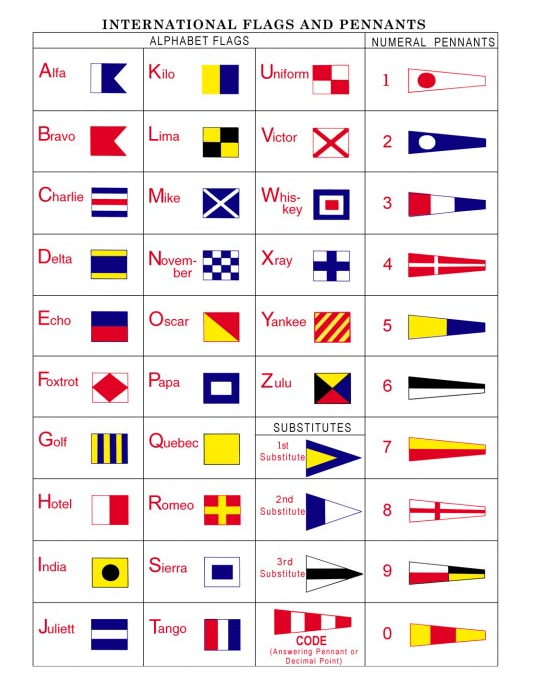
International code of signals. The Q flag (Quebec) is used for requesting pratique. Image credit: Wikimedia

The boring formality

Pratique is a legal term that refers to the process of acquiring permission to enter a port or harbour. In order to do so, a vessel must fly the proper flag (‘Q’) and submit to a health inspection. The flag must be hoisted when a ship enters a country’s territorial waters (12 nautical miles from shore).

In order to obtain pratique, the captain of a vessel must present themselves to the authorities with the proper documentation. This includes a list of all crew and passengers, as well as any cargo that is on board. The captain must also declare their intentions for entering the port or harbour — tourism (me), business and so on.

Once all of this information has been submitted, the authorities will decide whether or not to grant pratique. If everything is in order, they will issue a certificate of pratique. This document must be kept on board the vessel at all times and presented to any other port or harbour authorities that may request it.

It’s not used when travelling between EU countries (Schengen) for vessels registered within those countries and not carrying foreign nationals.

The Q flag
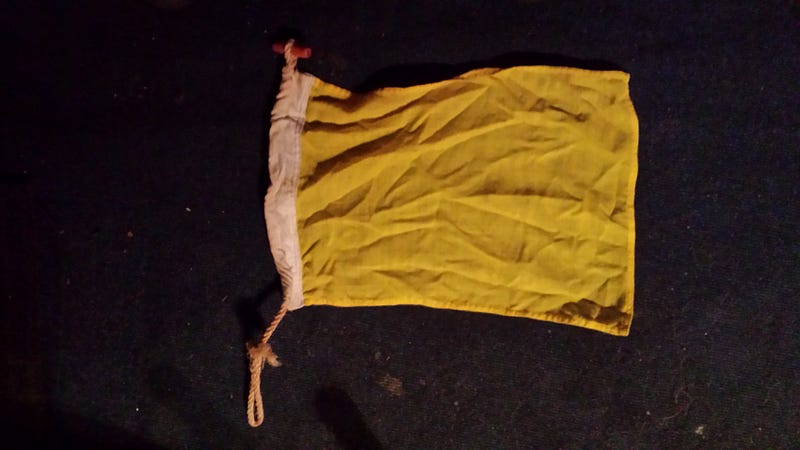
The author’s well-travelled Q flag

My own Q flag was bought by my father many years ago when planning a trip to Eire (pre-EU). The trip didn’t happen and he gave the flag to me.

Since then I’ve hoisted it in about 20 countries and counting, and I’m inoculated against yellow fever and a few other nasties.

The Q flag is part of the international code of signals. This code is used by ships to communicate with each other and with shore-based authorities. The Q flag has the signal pennant number 21.

When flown from the crosstrees, the Q flag indicates that a vessel is under quarantine. It should be displayed prominently so that it can easily be seen by authorities and should be lit at night. When flown from the stern, it indicates that the vessel is diseased and dangerous.
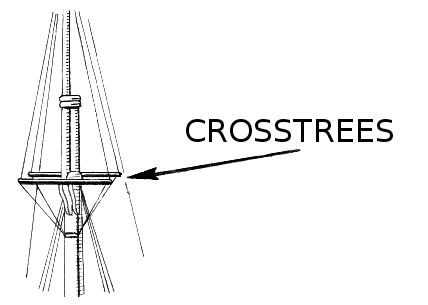
A ship’s crosstrees. Modern ships have them too, although less obvious. Image credit: Wikimedia

The practice of flying the Q flag originated in medieval Europe, when ships were required to fly a yellow flag to indicate that they were carrying yellow fever victims. This practice was adopted by maritime nations and is still in use today — but much widened in scope.

No guarantees

Advance notice

Many countries now require advance notice of arrival by boat and boats are tracked by AIS (mandatory in some countries).

Flying the Q flag does not guarantee that pratique will be granted. The vessel will still need to submit to a health inspection and meet all other requirements for entry.

It’s a rigorous process. In Cuba we had 7 officials aboard at once, plus a drug sniffer dog. They were polite and charming, and our temperatures were taken (infrared, non invasive)!. We were made very welcome, but that’s not always the case.

In Tunisia the officials (secret police) asked for a ‘present’. Cigarettes or whisky was the currency. I was out of both.

Biosecurity

Pratique now involves much more than just the health of the crew and passengers. Countries are very nervous about inadvertently importing animal diseases (e.g. foot & mouth) and pests which could devastate crops and forestry. Invasive species of plants are a major concern.

If you have flown internationally you will know about the sensitivity of carrying foodstuffs — ham sandwiches and honey being particular examples.

Rats are another problem as they are disease vectors as well as devastating to wildlife. Larger vessels are required to have re-ratting certificates, now known as Ship Sanitation Certificates.

So, in many countries, gaining free pratique can now involve extensive interviews about the vessel’s build and travel history and expensive inspections of her wood (some boats are entirely wooden).

A couple of years ago, when I entered Australia from Tonga on my boat (which is built of steel with a wood interior), the timber inspection took 2 hours and the whole process cost in excess of $500 — a big hole in our cruising budget.

Our garbage was double-bagged and locked in a freezer to await incineration.

The Galapagos Islands is, understandably, another very sensitive region and I was required to have proof of fumigation when we arrived there from Panama a few years ago. I also had to have a ‘garbage management plan’ with colour-coded tags attached to the bags.

Maritime patrols

So seriously is biosecurity taken nowadays that Australia, for example, has aircraft permanently patrolling the Torres Strait between its territory and that of Papua New Guinea to ensure the biosecurity of its borders.

Fire ants are an unwelcome invasive species in the country that our biosecurity man told us about.

In New Zealand, the Mediterranean Fanworm is an invasive marine species of concern and much work is being done to eliminate it. Boats have to be cleaned and have movement restricted without a permit.

What happens to ‘diseased vessels’?

Well if you’ve been following the Covid crisis (who hasn’t) you know a little about quarantine. In many cases arriving vessels were simply turned away if the borders were closed. Some vessels were confiscated for entering territorial waters without permission (happened in New Zealand). In other cases they were sent to a quarantine berth or anchorage to await expiry of a quarantine period.

In some cases, in centuries past vessels, were burned, so great was the fear of disease.

Island of the Dead

A final bit of macabre quarantine history, about an island in France which I’ve sailed past a few times.
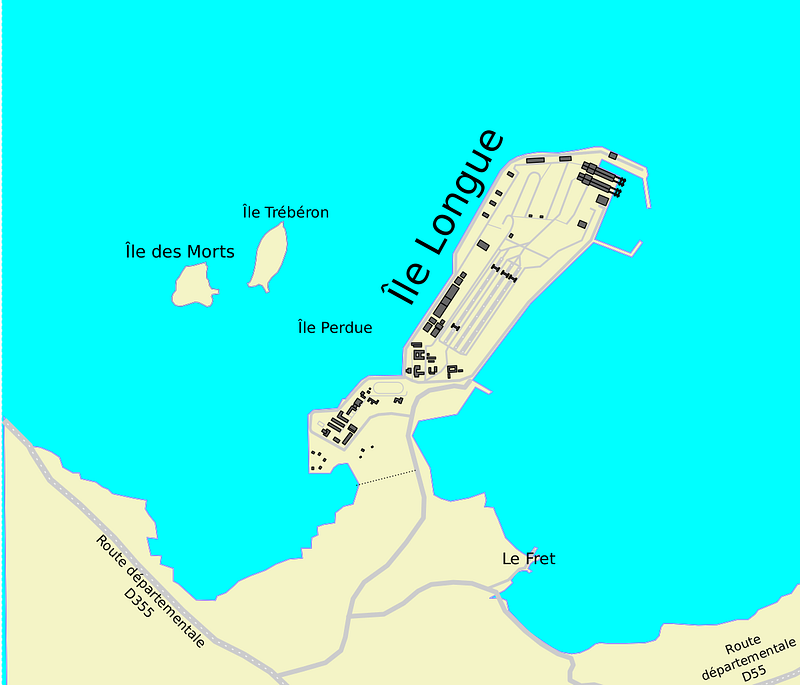
Image credit: By Rama — Own work, CC BY-SA 2.0 fr, https://commons.wikimedia.org/w/index.php?curid=9565801

Île des Morts (Island of the Dead) is a 7-hectare island in the Bay of Roscanvel, to the south-west of the roadstead of Brest, between the Quélern peninsula and Île Longue.

In 1720, the neighbouring island of Trébéron became a quarantine island or lazaret for lepers, with Île des Morts as its cemetery. — Wikipedia

These days, Île Longue is the base of the SNLE, the French ballistic missile nuclear submarines, and one of the most secretive and heavily defended places in France — but I could sail past just a mile away. And I did.

There’s no escaping it

No, bureaucracy is everywhere and grows incessantly. The reasons are sound but the freedom of the seas is disappearing quickly.

Parting is not such sweet sorrow either. I have to get a clearance form to leave a country, with a declared destination.

And yes, the searches continue — when I left the Galapagos Islands my boat had to be searched by a sniffer dog trained to find tortoises. People had been stealing Galapagos tortoises, exporting them by boat and selling them online.

It’s a crazy world.

Q Flag.

Cue Milligan.

Q5

Enjoy!

About me: If you follow me I guarantee variety in your inbox! I write on a wide range of topics including humor, tech and travel, together with daily news events and the minutiae of my daily life living on a boat. I also write techno-thrillers…and about…

…bureaucracy, boats and Q5 madness

If you appreciate stories like these and want to support other writers and me, consider signing up to become a Medium member. It’s only $5 a month, giving you unlimited access to incredible stories on Medium. If you sign up using my link below, I’ll earn a small commission at no extra cost to you.

Or just buy me a coffee?

Quarantine
Living On A Boat
Travel
Galapagos
Biosecurity
Recommended from ReadMedium