Travel and Military History
How I Got Into the Bomb Bay of a B52
It’s a long story of travel and military history with a bit of detective work thrown in…
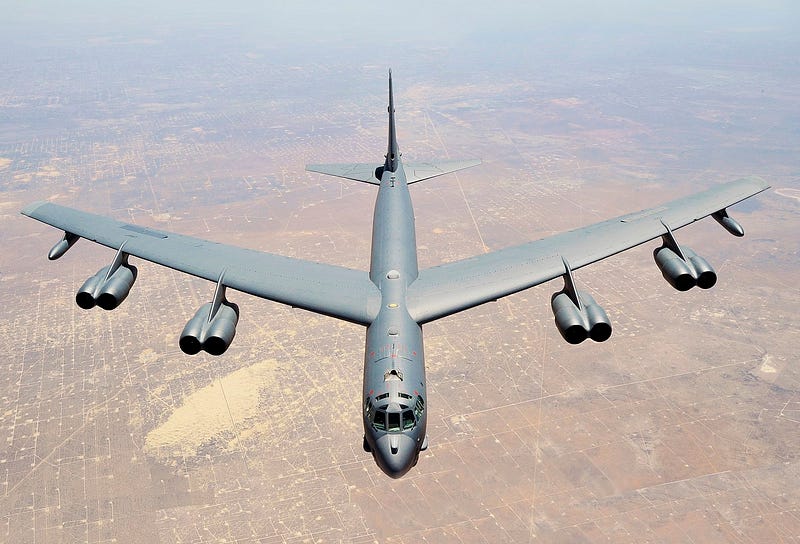
Yes, it was a real B52 — not a cocktail or a member of a US new wave band — remember ‘Love Shack’?
You may have been wondering why I haven’t written much recently or been able to reply to readers’ responses. It’s because I’ve been on a long voyage of 2,200 miles through the Great Barrier Reef and along the top of Australia on my boat.
This story is a longish and personal travelogue with various threads (as is my style) drawn together and revolving around WWII in the Pacific, aviation and the recent AUKUS pact (which I’ll get to later).
A book started it
The plan was to head from Bundaberg (famous for its rum) along the coast to Thursday Island (1200 miles) and then on to Darwin (850 miles). Searching for voyage reading material in the marina at Bundaberg, I’d picked up a few books, one of which was ‘The Korean War’ by Cameron Forbes.
I had the book, but our rum was from the West Indies…
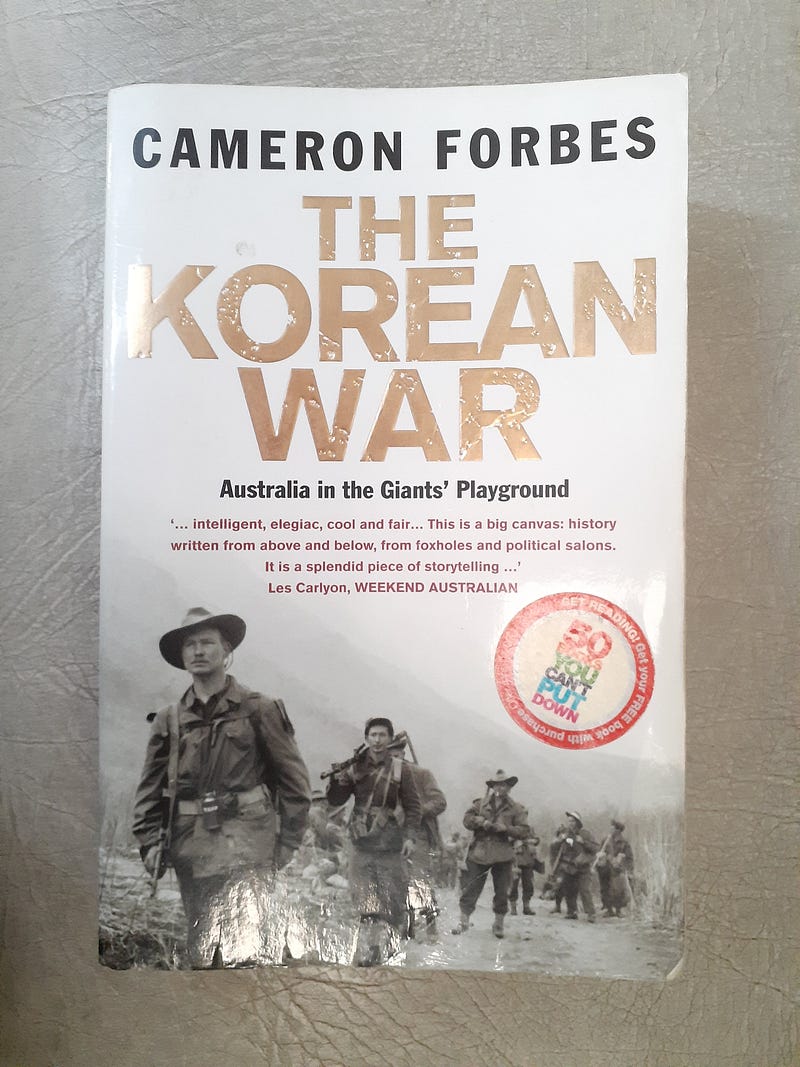
The book is a big piece of work, excellent reading, and actually covers wars with Australian involvement from Gallipoli/WWI through WWII, Korea and on to Vietnam, although the primary focus is on Korea.
If you follow me you’ll know that I have a passing interest in military history, writing recently about my night at the D-Day Beaches. I also write about current military conflicts.
Anyway, the first mate and I sailed up the Australian coast, spending a few nights in the Whitsunday Islands, and arrived at Townsville after a couple of weeks. We booked into the marina.
And that’s where the pieces started to fit together.
Townsville
This is the largest Australian tropical city, with a population of 180,000. It was also home to a large US and Australian bomber fleet in WWII besides being an important naval port during the war in the Pacific.
Townsville is on the Coral Sea and if you know anything about WWII you’ll know that the Battle of the Coral Sea was a major turning point.
During the Second World War, the city was host to more than 50,000 American and Australian troops and air crew, and it became a major staging point for battles in the South West Pacific. A large United States Armed Forces contingent supported the war effort from seven airfields and other bases around the city and in the region. The first bombing raid on Rabaul, in Papua New Guinea, on 23 February 1942 was carried out by six B-17s [Flying Fortresses] based near Townsville. — Wikipedia
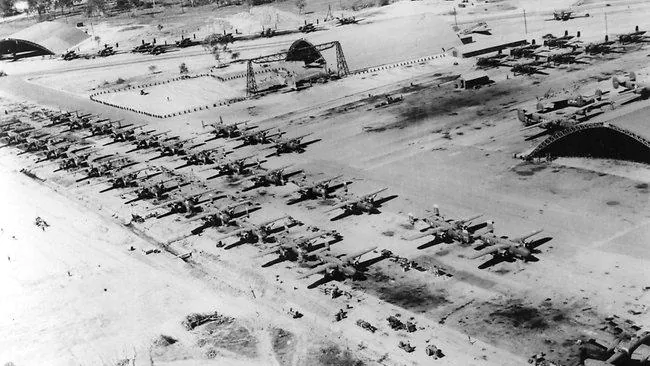
The main Townsville airbase was home to a fleet of B25 Mitchell bombers.
As an aside, Townsville was also the site of a US Army mutiny in WWII.
The Battle of the Coral Sea, from 4 to 8 May 1942, was a major naval battle between the Imperial Japanese Navy and naval and air forces of the United States and Australia. Taking place in the Pacific Theatre of World War II, the battle is historically significant as the first action in which the opposing fleets neither sighted nor fired upon one another, attacking over the horizon with aircraft carriers instead. — Wikipedia
While in Townsville we visited the Battle of the Coral Sea Memorial in the Anzac Memorial Park which was a 5 minute walk from our marina berth.
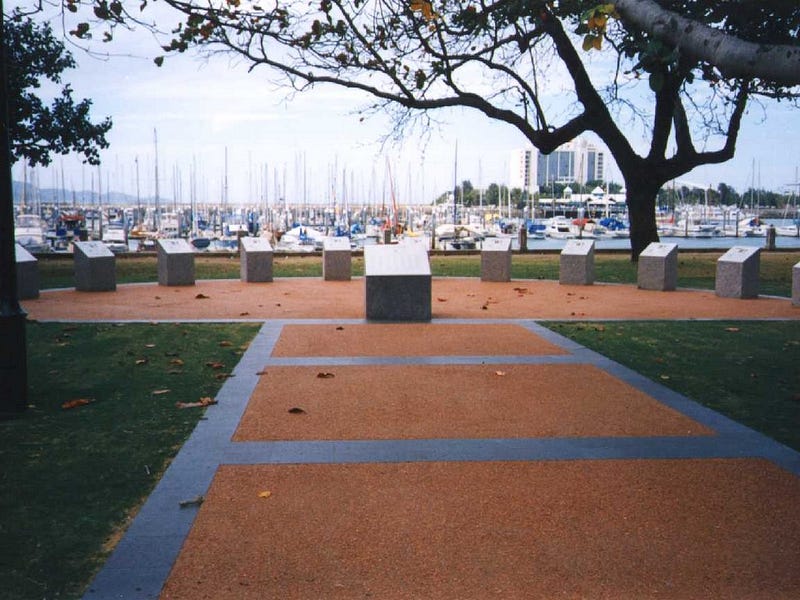
It was very moving experience. Both sides in the conflict were treated with equal respect at the memorial but, frankly, I found that a bit hard to take.
Onward and northward through the reefs
We headed north from Townsville and after another couple of weeks or so we stopped in Cairns for a few rainy days. This had been another important naval base in WWII, but I didn’t find it particularly enthralling. Maybe it was the rain?
Today, this coast is all about sugar and sweetness, and every small port has a sugar loader.
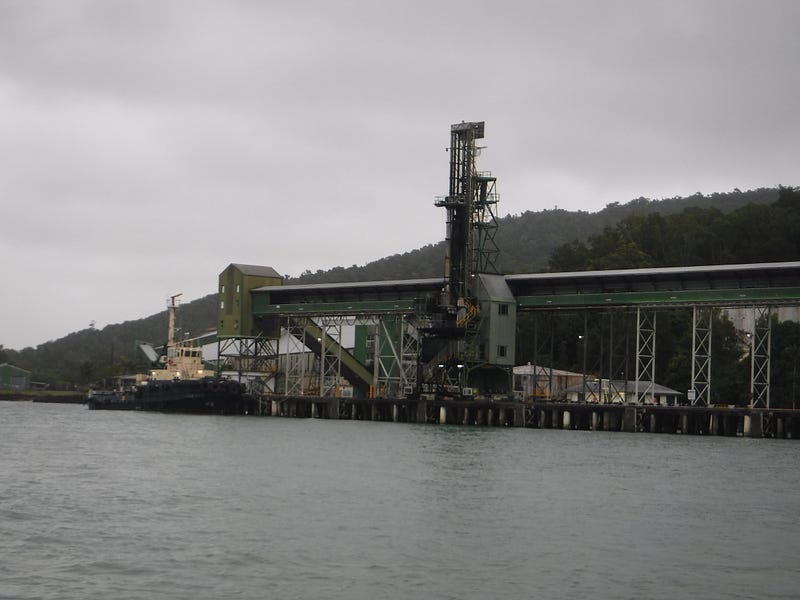
The navigation in the Barrier Reef is complex, and big ships with up to 12 metres draft use the narrow channels and cannot deviate from their course. And they don’t stop at night, but their channels are well marked. All must carry pilots (ships pilots that is)!
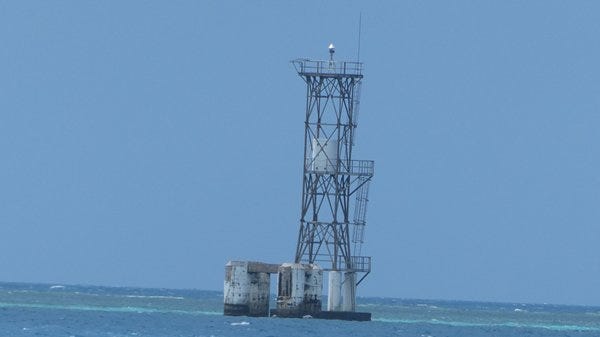
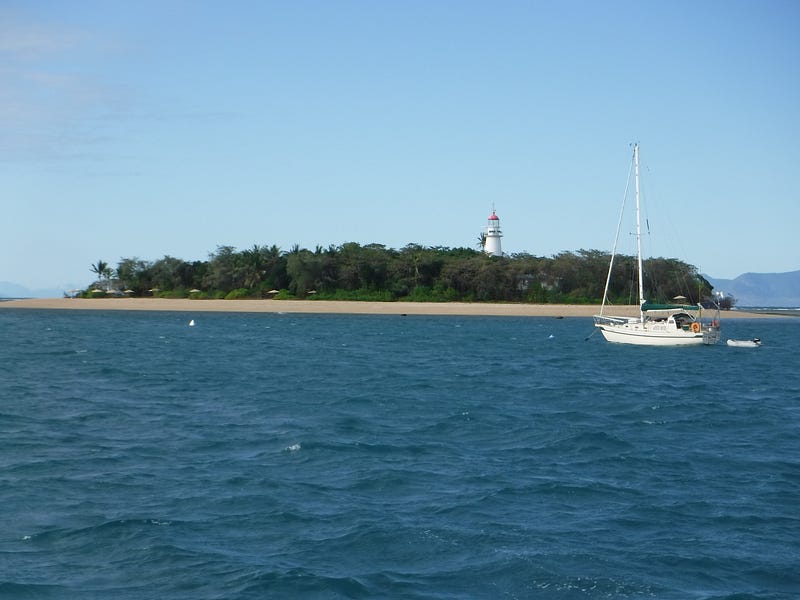
With strong trade winds (for once in a useful direction), we’d opted to day sail (as most cruisers do on this coast) finding a new island anchorage every night. Some nights we anchored inside headlands, averaging about 50 miles a day.
Captain James Cook had first charted this coast in the 1770s and named most of the islands and headlands. It was quite an amazing task. His ship Endeavour had nearly sunk on one of the reefs which he discovered the hard way…today it’s called, yes, the Endeavour Reef. The crew towed the ship for over 25 miles using rowing boats into what is today known as the Endeavour River, for repairs. The town is today called Cooktown and was another important WWII base.
Cooktown
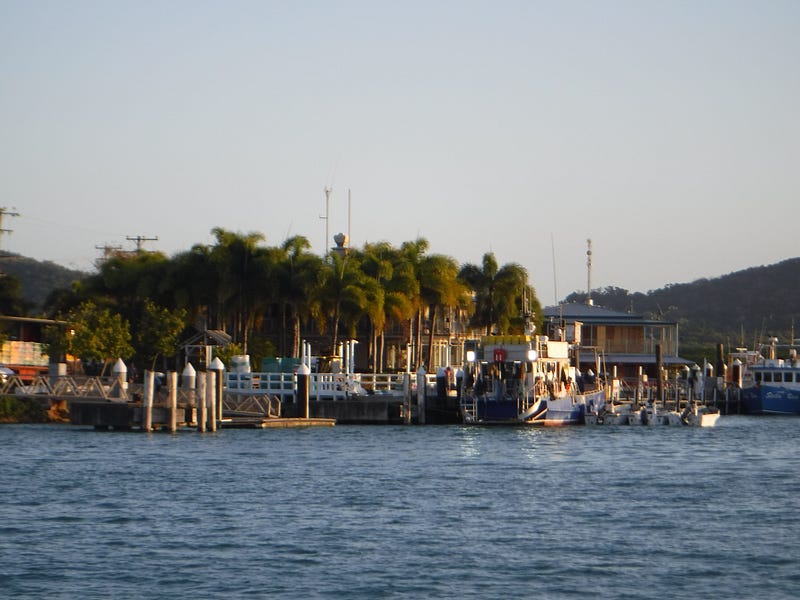
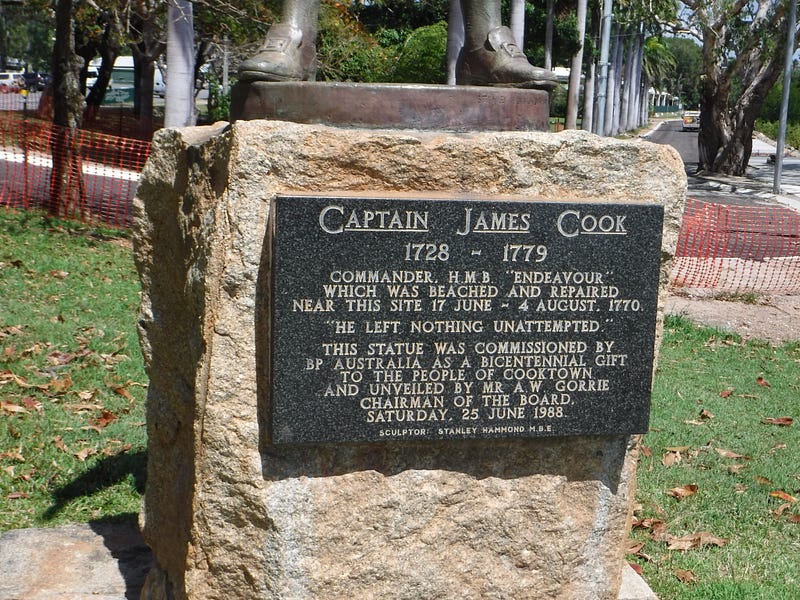
We stopped in Cooktown for one difficult night anchored in strong tides and winds in the very narrow channel, but managed to stock up on food and beer.
It made a change from fish…
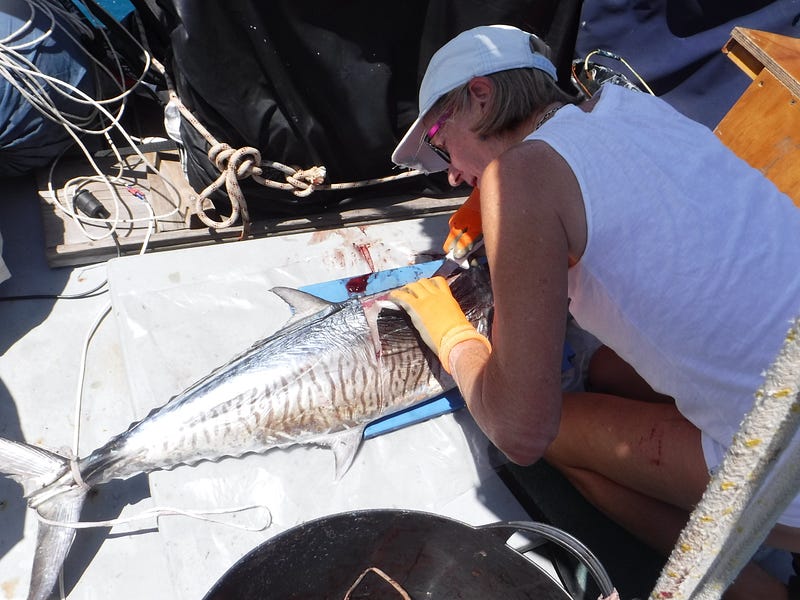
Cooktown is very important if you are interested in botany or zoology — not my thing — but it is an area of outstanding scientific significance and colonial architecture…
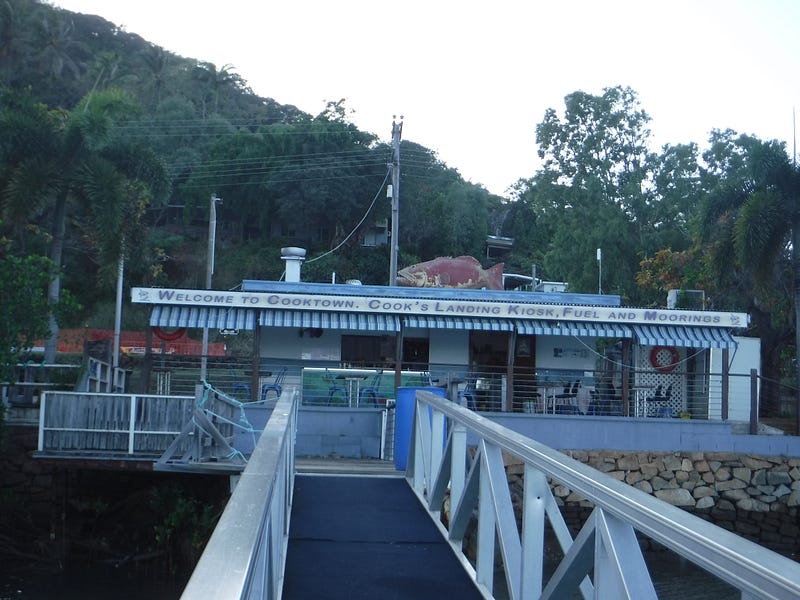
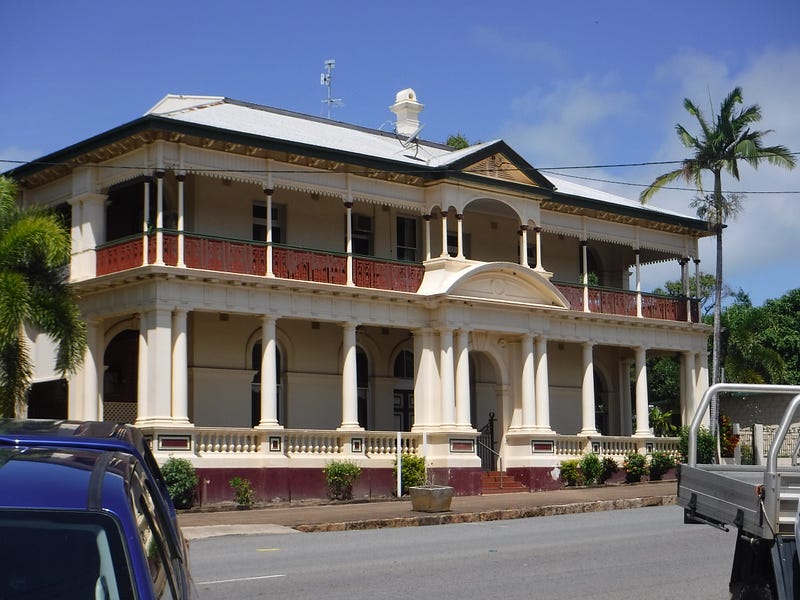
After we left Cooktown, the last vestige of civilization, well behind (we were now 900 miles from Bundaberg by crow), the land is hot and desolate for 400 miles to the top of Australia.
We tucked inside Cape Bedford for the night and next day headed on past a silica sand loader (it’s not all sugar loaders after all)! It’s white sand, mostly quartz and used in glassmaking.
We were getting weather forecasts via satphone and one particular day there had been a forecast for stronger winds coming. There were no more harbours. Safe anchorages were now few and far between, so we slung our hook in Margaret Bay inside Cape Grenville, 250 miles from Cooktown.
There were a few other boats at anchor there including one we’d met in New Zealand the year previous and which we’d been ‘leapfrogging’ up the coast. We expected to be there a couple of days until the wind blew itself out or at least toned down a notch.
That evening an Aussie — let’s call him Bruce— on one of the boats came calling and offered to take us ashore to see a crashed WWII plane the next day. As the plane was awash below the high water mark we thought is was OK to go without a permit (the land is under Traditional ownership — i.e. Aboriginal tribal ownership).
The planewreck
Another piece of the jigsaw of my story.
Keeping a sharp lookout for crocodiles (there’s known to be at least one in the creek), we paddled around the wrecked plane which was heavily encrusted with oysters. Bruce told us that it had run out of fuel and crash landed on its way back to its base at the Lockhart River.

It was an interesting wreck, not least because the V12 engine was, unusually, situated behind the pilot. The prop was driven by a shaft which passed between the pilot’s feet. What was it?

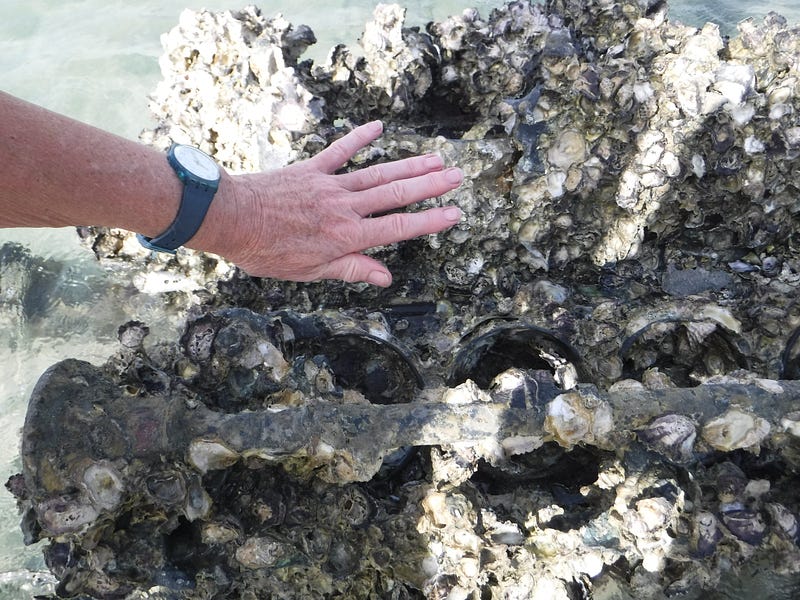
Some later research would almost solve the mystery, but I’ll tell you now that it was an Allison V-1710–7 engine.

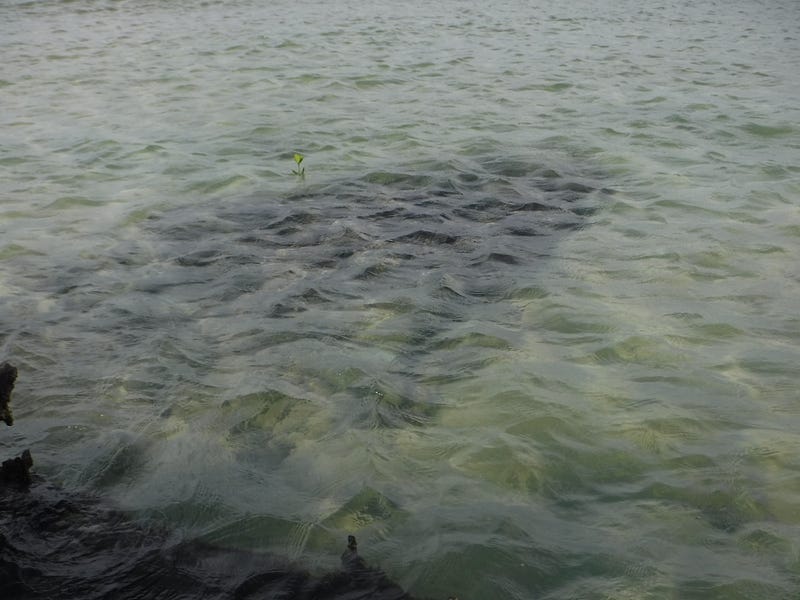
Onwards to the top of Australia
Thursday Island, the most northerly town in Australia, was still 250 miles away, but within a week we were anchored (avoiding wrecks) in Ellis Strait between Thursday and Horn Islands (about 1 mile across).
This is the windiest tradewind location in the world but it is well sheltered and so the sea is relatively benign. But the wind certainly howls.
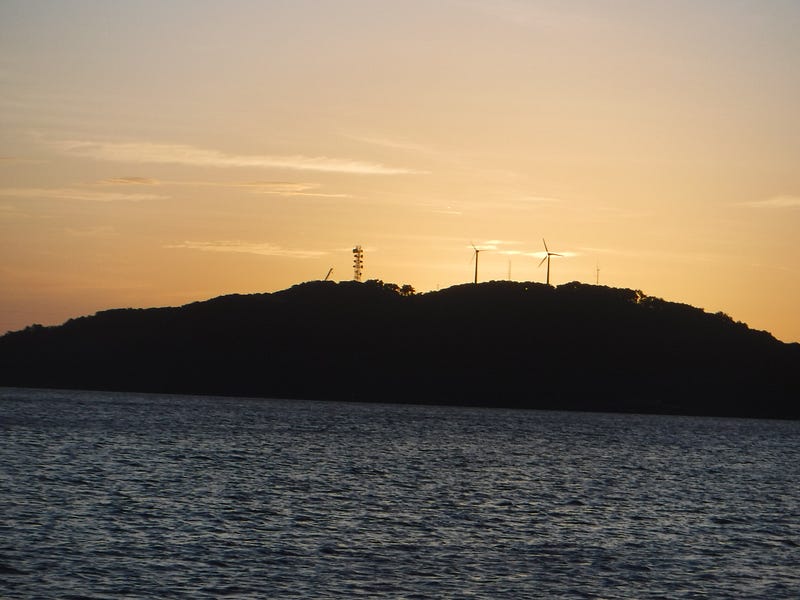
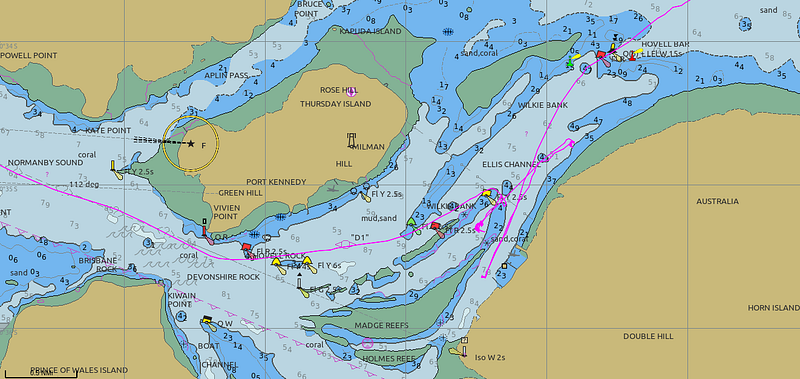
We were there for a few days resting and preparing for the 850 mile leg to Darwin.
This area was literally on the front line with Japan in WWII, less than 100 miles from New Guinea which they had invaded.
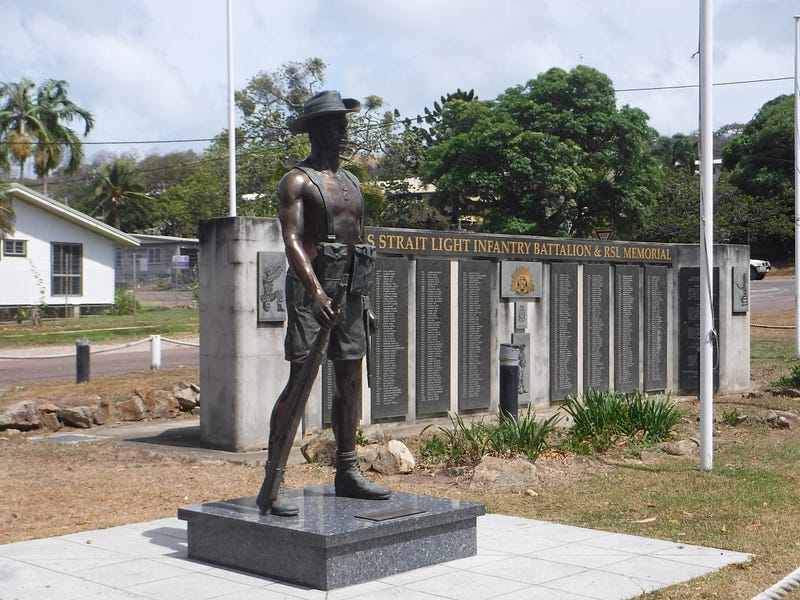
Japan unsuccessfully bombed the airstrip at Horn Island, which today has a WWII museum.
And there I went.
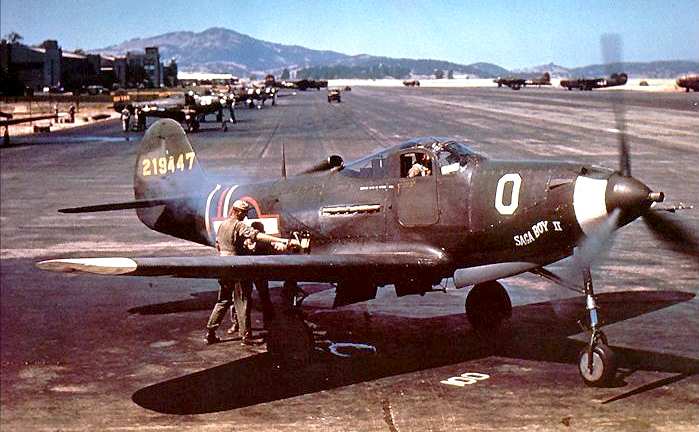
There is a lot of memorabilia there, including an Allison V12 aircraft engine. And a photograph of a plane, a Bell P39 Aeracobra.
With its engine behind the pilot it was an unusual and groundbreaking design built around a gun — not an engine — and about which I’ll write in another story.

In the photograph you can see the muzzle of the 37mm Browning T9 cannon which fired 1.2 lb explosive shells through the propeller hub.

Puzzle solved?
Not quite.
Bell produced a much improved version, the Kingcobra.
So the wreck was either an Airacobra or a Kingcobra.
I later discovered that the Airacobra had no turbocharger (which led to poor high-altitude performance), but the Kingcobra had one. If I’d known then what I know now then I might have been able to precisely identify the plane type even encrusted with oysters.
Next stop Darwin
We left Thursday Island for Darwin, sailing through the Prince of Wales Channel. It is the only big ship commercial shipping link between the Pacific and Indian Oceans unless you travel south of Australia or north around Papua New Guinea and through Indonesia. So it’s a busy channel.
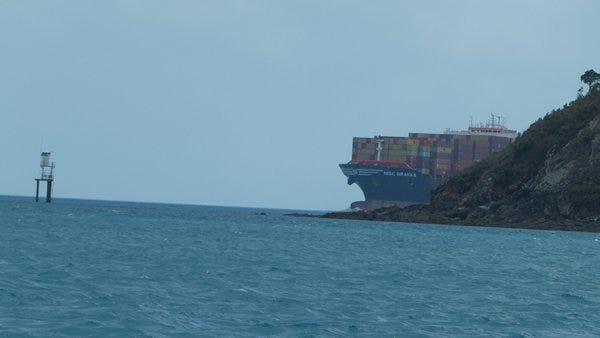
We allowed 10 days for the leg to Darwin, making two overnight stops along the way to rest up at the Wessel Islands and Croker Island. At Darwin we booked into a marina. The tides here are up to 10 metres, reminiscent of sailing in Brittany, but the weather is a bit better. As is the beer. Not sure about the wine and cuisine, though.
Darwin Aviation Museum
The Darwin Aviation Museum was on my must-visit list. It claims to be the only museum outside the US which has a B52G on display (as well as a B-25 Mitchell, an F-111C and a recently added F-15).
And you might have heard of the Australian flying doctor service, but what about the Salvation Army’s flying padre service?
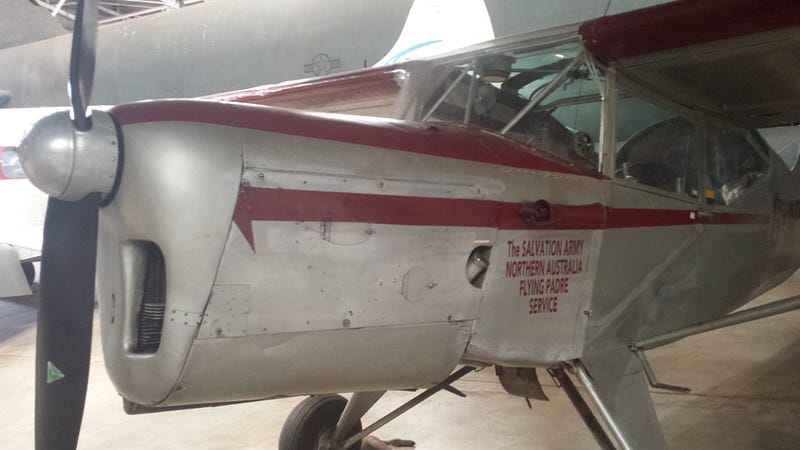
I thought those guys already had winged assistants…
And some would say that the B52s worked for the other side…
Anyway, this B52G is called Darwin’s Pride and the bomb racks and guns were removed before the plane was gifted to Darwin by the US Government.
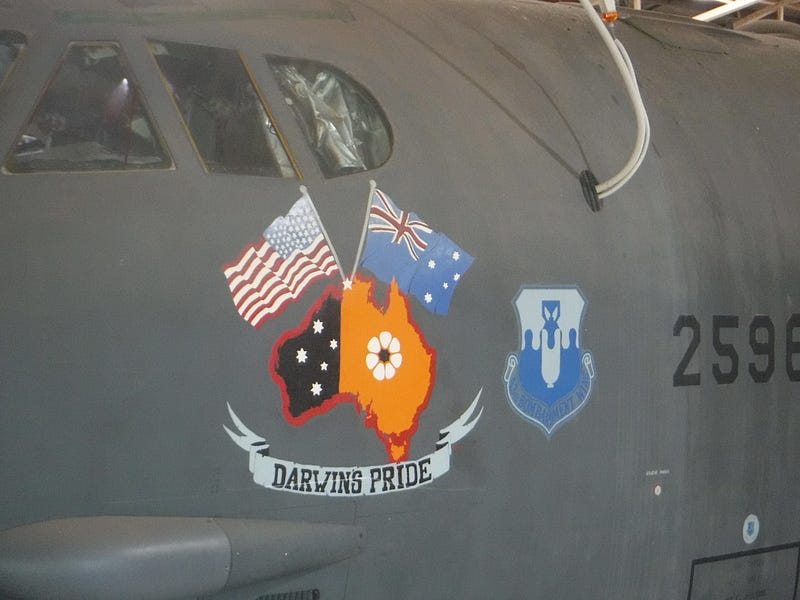
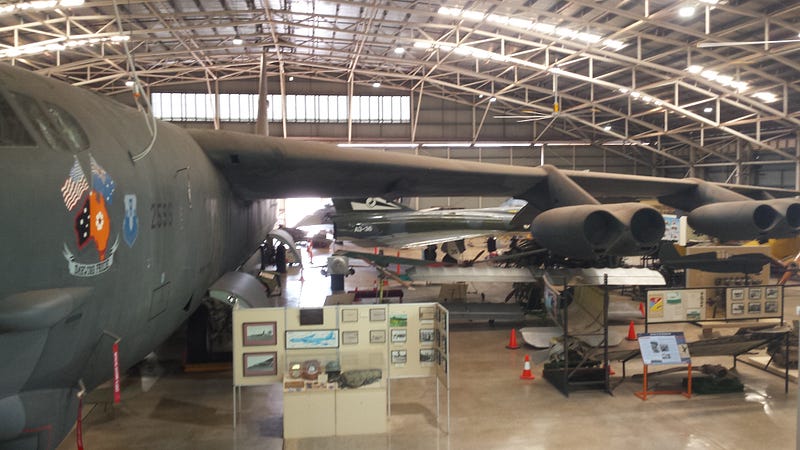
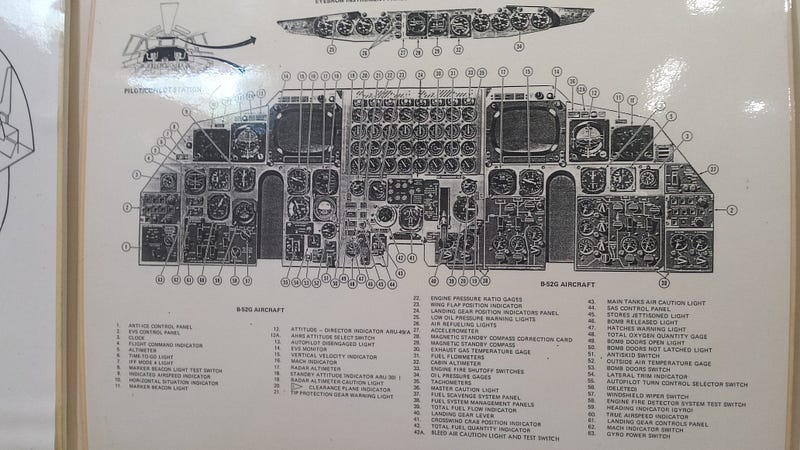
And that’s where I got into one of the bomb bays of a B52 Stratofortress.
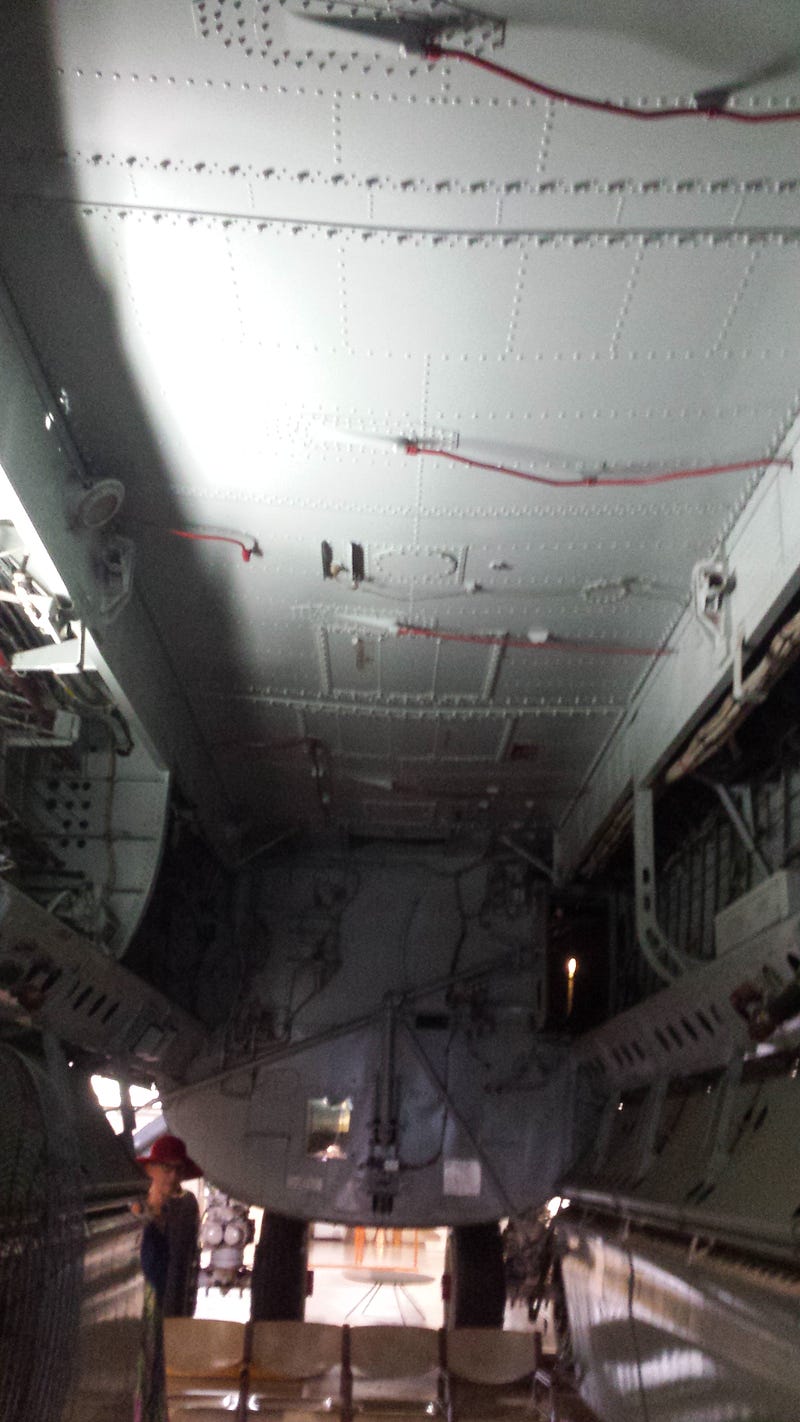
Not like Slim Pickens in Dr Strangelove, who got out of the bomb bay…
There is an operational photo of Darwin’s Pride at AirHistory.net taken when she was landing at RAF Brize Norton in the UK.
Darwin was a huge naval and airbase in WWII, with seven airfields in the area. It was heavily bombed by the Japanese with over 100 air raids. Its ‘claim to fame’ is that there were more aircraft used and more tonnage of bombs dropped on Darwin than on Pearl Harbour.
The US, UK and Australia have a long history of fighting wars together in Europe and the Pacific. And winning. But don’t mention Vietnam.
Japan may now be an ally, but there are serious concerns about the aspirations of China. With sabre-rattling and face-offs in the Taiwan Strait, China now has a fleet of 3 aircraft carriers and is building its first nuclear submarine. So, China is seriously preparing for blue-water power projection.
And that’s where AUKUS comes in.
AUKUS
AUKUS is the recently announced trilateral security pact between the US, UK and Australia. In the run up to the announcement, Australia scrapped a contract to buy conventional French submarines and will instead acquire nuclear submarines (but not nuclear weapons) from the US. France was mightily pissed off by the announcement.
But it’s a sign of the times.
As I write, Xi Jinping is set to be voted a third term as Chinese ‘president’ having changed the law to allow it. As if ‘law’ means anything in China.
Remember how Putin changed ‘the law’ to allow him to become president for life?
Look where are we now.
The world is becoming a more dangerous place, yet again.
What would WWIII look like? It may not be that far away.
And Australia could again be on the front line.
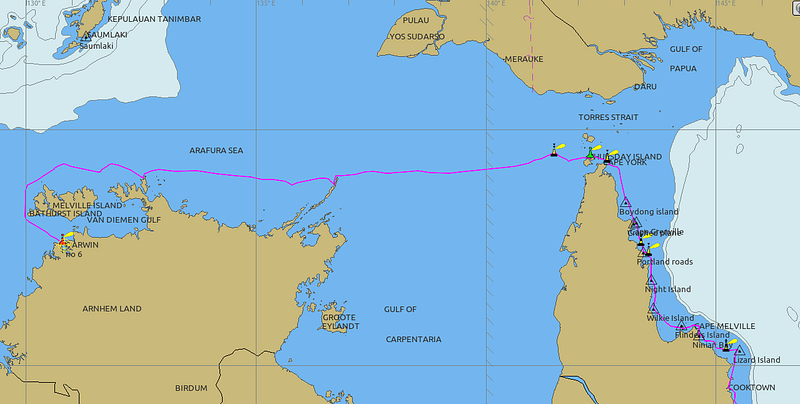
If you’re interested, here’s the route I followed from Cooktown to Darwin:
A final note
If you like madcap black comedy then enjoy:
Authors note: When we visited the plane wreck in Margaret Bay we were unknowingly trespassing. I have since discovered that Aboriginal land ownership extends down to the low water mark and we should not have landed below the high water mark without a permit. Apologies to the owners.
About me: If you follow me I guarantee variety in your inbox with some unusual perspectives! I write on a wide range of topics including humor, tech, space, geopolitics and travel, together with daily news events and the minutiae of my daily life living on a boat. Yes, I really do live on a boat (some readers don’t believe that). I also write about…
…military history with a twist
If you appreciate stories like these and want to support other writers and me, consider signing up to become a Medium member. It’s only $5 a month, giving you unlimited access to incredible stories on Medium. If you sign up using my link below, I’ll earn a small commission at no extra cost to you.
Or maybe just buy me a coffee? and tell me what you liked reading (or not)!