
Platy
The Mickey Mouse fish
Today’s New York Times Spelling Bee letters:
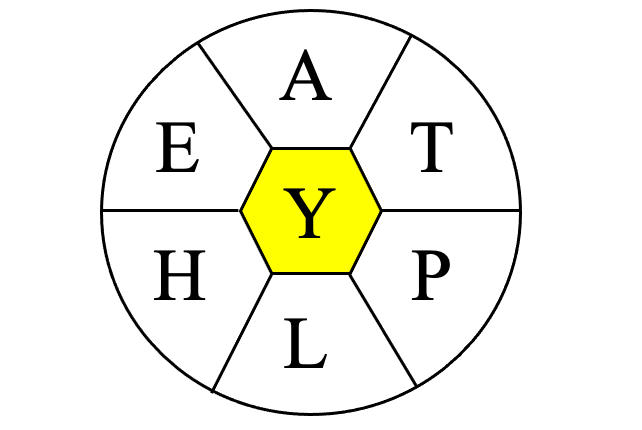
A, E, H, L, P, T, and center Y (all words must include Y)
Merriam-Webster says…
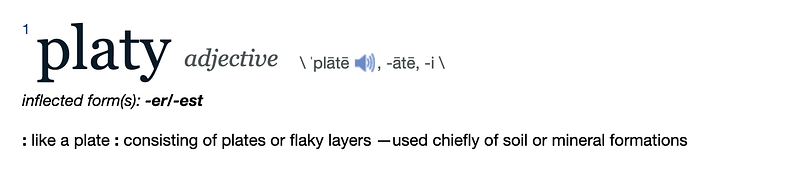
…and…
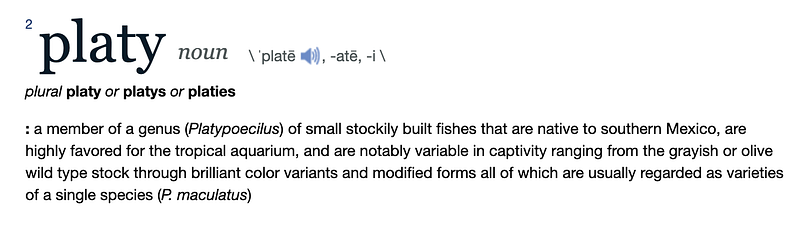
Silly little dictionary! Don’t you know that platy can’t possibly be a word if The New York Times says it ain’t?
For further fascinating facts, check out the Spelling Bee Master.
What’s your favorite dord* from today’s puzzle?
My Two Cents
Our friends at Merriam-Webster sometimes make mistakes. But they are open to being corrected. In fact, they have a contact form in which you can specify the topic about which you’re to them.

I picked “Example Sentences on Definitions” because one of the sample sentences they provide for platy not only has nothing to do with the word, but was probably a typo in its original published form. And because Merriam-Webster’s search engine is automated, it’s liable to make mistakes. How do I know this? Well, because the dictionary itself has the following disclaimer:

When you click on the feedback link, it opens to the form I mentioned earlier.
What was the erroneous example sentence? This one:

Unless Shaw Williams was playing aquatic football, I doubt he intercepted a large tropical fish during the game. It seems likely that John Fay intended to write “play”, not “platy”. Or maybe he did write “play”, but somehow the word was mistyped on its way to being published online. In fact, the error lives on in the original article as of my writing today’s column. Hmmm… I could alert John Fay, but apparently he retired a couple of years ago.
I will write to Merriam-Webster, however, about removing Fay’s example sentence. I’ve contacted them before about similar issues, with positive results and a friendly thank-you from them.
By the way, today’s pangram (the puzzle’s seven letters that always form at least one word) has appeared three previous times! Once in 2019, once in 2020, and last year, on February 3rd, with center letter H. The word I wrote about that day was hypha. It’s interesting to see how much we’ve advanced here at Silly Little Dictionary! Back when I wrote that article, we didn’t have the advanced futuristic tech that allows us to make art showing the hive with the letters. Thank goodness for that DeLorean!
Earth; no wind or fire
I found a definition of platy that was not including in the dictionary, although it’s related to the first meaning, “consisting of plates or flaky layers — used chiefly of soil or mineral formations”. Except it’s used as a noun, not an adjective. This platy is pronounced as if you were describing something that looks like a dish: PLAY-tee.
Earthy platy is a type of soil configuration, or structure. According to the Guidelines for Soil Description of the United Nations’ Food and Agriculture Organization, platy soil is “flat with vertical dimensions limited; generally oriented on a horizontal plane and usually overlapping”.
Platies are known as peds, or aggregates of soil particles formed as a result of a process known as pedogenesis. You’re probably thinking the same thing I am. How did the person who coined this term not think twice about how horrible it sounds? I mean, I hear that word and don’t exactly think of soil, plants, agriculture, or anything healthy.
Anyway, those U.N. guidelines I mentioned before include a nifty chart summing up pedogenic formation. (Ughhh, I’m going to have to take a shower after writing today’s article.)
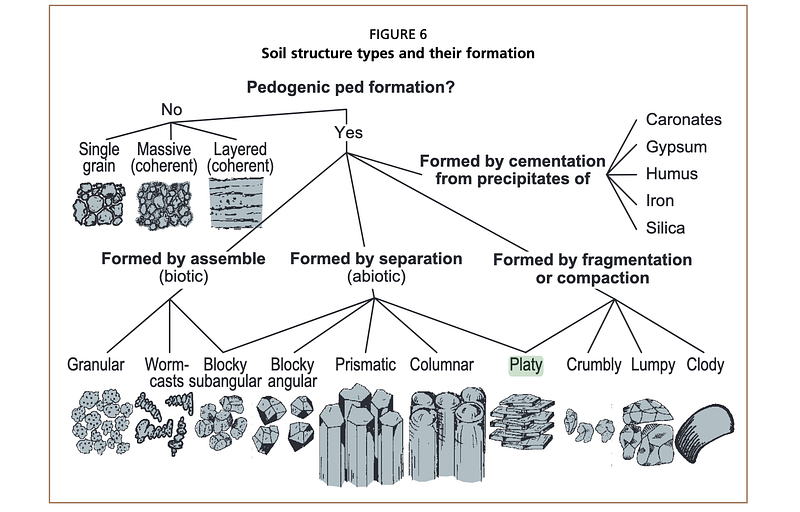
Pedogenesis is a branch of pedology, the study of soil in its natural environment.
Okay, you know what? I’m getting sick of typing “pedo” over and over. Let’s move on to the other platy. (Trust me, this whole soil thing is not as interesting as the fish.)
Water, water everywhere
First things first. Water platy (the fish) is pronounced as though it had a double “t”: PLA-tee.
Our friends at Merriam-Webster tell us that platy the aquatic being comes from the abbreviation of the genus Platypoecilus, to which the platy belongs. Except it doesn’t. I assume it did at one point; otherwise this entry wouldn’t exist:

I never rely solely on Wikipedia’s information because despite their best efforts they are not foolproof. Which is why I check the references they provide, as well as any other references my intense, 15-minute research allows. Here is what the Britannica has to say about this fish:
platy, (species Xiphophorus maculatus), popular tropical aquarium fish of the live-bearer family, Poeciliidae (order Atheriniformes). The platy is a compact fish, about 5 cm (2 inches) long and extremely variable in colour. It has been bred in many attractive colour varieties, and, like the related swordtail (Xiphophorus helleri) with which it has been crossed, has been used in a variety of genetic and medical studies.
My eagle-eyed readers surely noticed that the genus mentioned above is Xiphophorus, not Platypoecilus. Meanwhile, the dictionary shows this entry for Xiphophorus:

Which is accurate, in a way; as the Britannica mentioned, swordtails do belong to that genus…
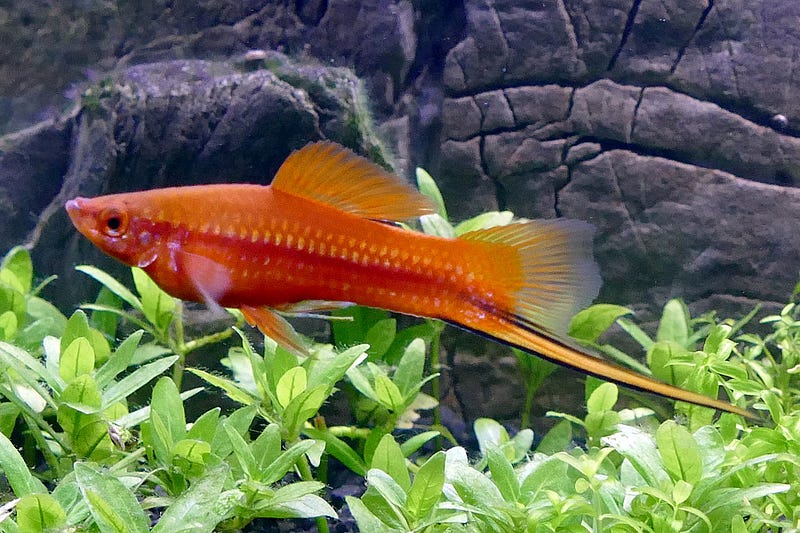
…and do, in fact, crossbreed with the platy (the fish shown below):
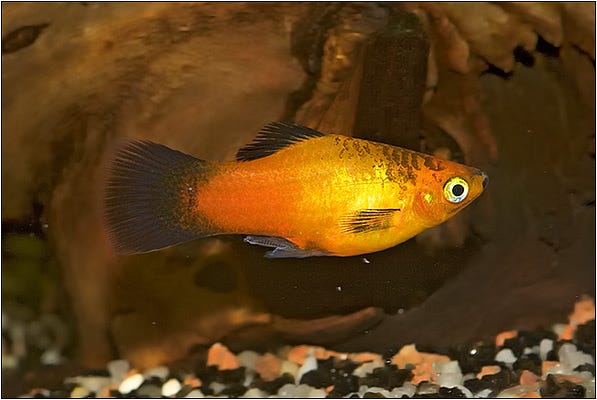
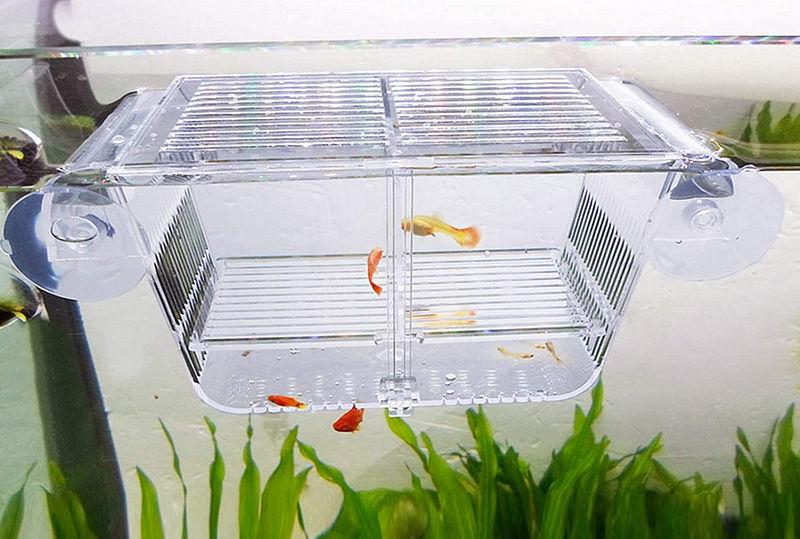
Platies are live-bearers, which means they don’t lay eggs, but give birth to tiny tiny versions of themselves known as fries. The females give birth to about 20 to 40 fries at a time, most of which will be eaten by the adults in the aquarium unless they are given plants to hide amongst, or their mommies are placed in a breeder box (like the one shown below) while still pregnant. This allows the fries to slip through the slots to the lower half of the box, where the adults can’t reach them. After the females finish birthing, they are returned to the aquarium. The fries stay in the breeder box until they get big enough to avoid being eaten by others.
Platies are hardy and easy to keep in aquariums. Because they come in a variety of colors, you can actually achieve a nice mix by filling your tank with just this one type of fish. There are two species ––the southern platyfish and the variatus platy — and they have been interbred so much that they are now almost indistinguishable. Most platies now sold in aquariums today are hybrids of both.
According to Animal-World.com, common types of variatus are the Sunset Platy, Marigold Platy, and Hawaii Platy. Common types of southern platies are the Comet, Two-spot, Halfmoon, Moon, Salt and Pepper or Pepper and Salt, Coral, Blue Mirror, Bleeding Heart, and the last-but-not-least Mickey Mouse platy I mentioned at the very top of today’s column. (See? It wasn’t clickbait!)
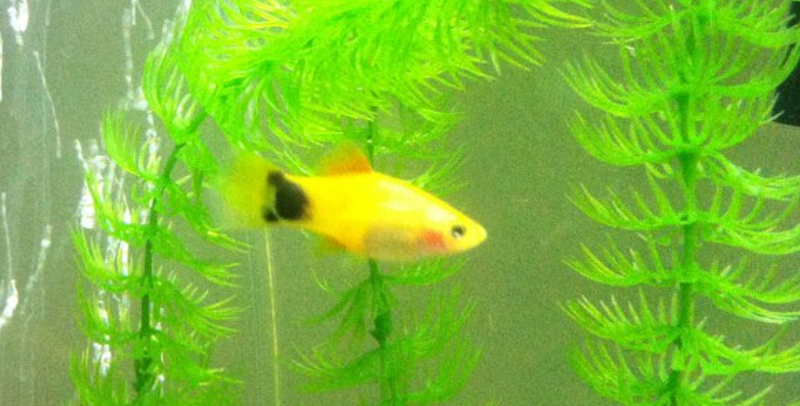
I’m sure you can figure out why it’s called that.
Now you know. If you ever feel like starting your own tropical home aquarium, just go to your local pet store and ask if you can buy an assortment of platies. Don’t be surprised if they sell you some guppies instead… because the editors of the Spelling Bee decided that platy is a dord*.
You can check out my previous entry on another dord* here:
*What the heck is a dord, you ask? Here’s the answer: