
Dhole
A dog and his whistle
Today’s New York Times Spelling Bee letters:
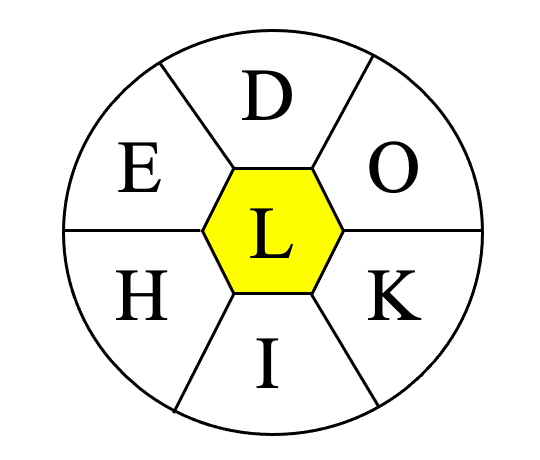
D, E, H, I, K, O, and center L (all words must include L)
Merriam-Webster says…
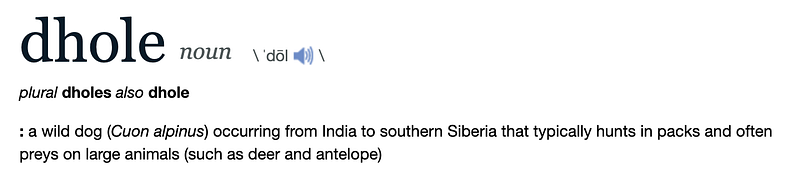
Silly little dictionary! Don’t you know that dhole can’t possibly be a word if The New York Times says it ain’t?
For further fascinating facts, check out the Spelling Bee Master.
What’s your favorite dord* from today’s puzzle?
My Two Cents
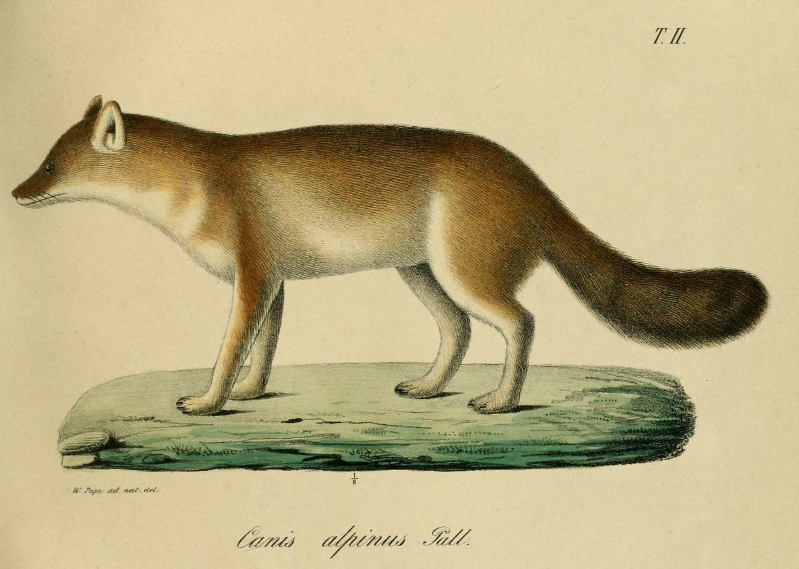
The illustration at the top of today’s article was done by Peter Leopold von Schrenck, a 19th century Russian zoologist, geographer and ethnographer. Amazingly, he based it on only the skin of the animal that had been purchased during his travels. The image is considered to be one of the first accurate depictions of this animal that looks like a cross between a fox and a dog.
I was surprised to find out that dhole is also a fictional animal that has nothing to do with dogs or any other types of canines. Those of you who love speculative fiction may already know what I’m hinting at. Read on to find out.
(As an aside, this puzzle appeared last August 4th, with center letter O. That day I picked an animal to write about, too. But it was a bird.)
The dog
The dhole is known by several other monikers, including Asian wild dog, Asiatic wild dog, Indian wild dog, whistling dog, red dog, and mountain wolf. Merriam-Webster tells us the term dhole may have come from the Kanarese (a language in India) tōḷa, meaning “wolf”.
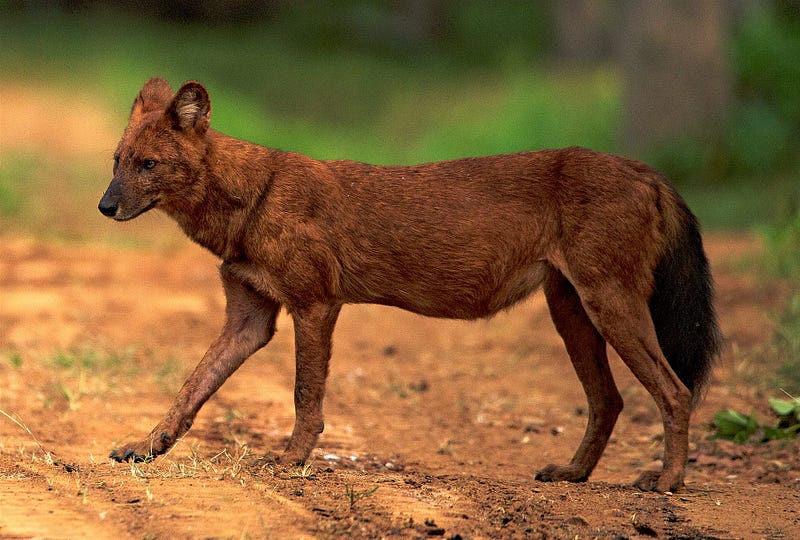
Hmmm. Not so much wolf as fox-dog hybrid, like I mentioned earlier.
The 11th edition of the Encyclopedia Britannica used the scientific names Cyan primaevus (Central Asian dhole) and Cyan javanicus (Indo-Malaysan dhole) for the animal, but this has changed since that text was published in 1911. Today there is only one species, Cuon alpinus, with seven subspecies recognized by 2005.
The modern, online version of the Britannica has this entry for the Asian wild dog:
dhole, (Cuon alpinus), also called red dog, wild Asian carnivore of the dog family (Canidae), found in central and southeastern wooded areas and distinguished structurally by the lack of one pair of lower molars. Its length ranges between 76 and 100 cm (30 and 40 inches), exclusive of the 28–48-centimetre (11–19-inch) tail, and its weight is from 14 to 21 kg (30 to 46 pounds). Coloration varies from yellowish to reddish brown, often with lighter underparts. Dholes hunt various mammals, generally associating in packs of up to 30 individuals; they usually hunt such prey as deer and wild sheep but are reported to attack animals as large as tigers and bears. A litter usually contains two to six pups, born after a nine-week gestation period.
You can see an example of pack hunting in this photo of dholes attacking a sambar, a type of large deer found in India.
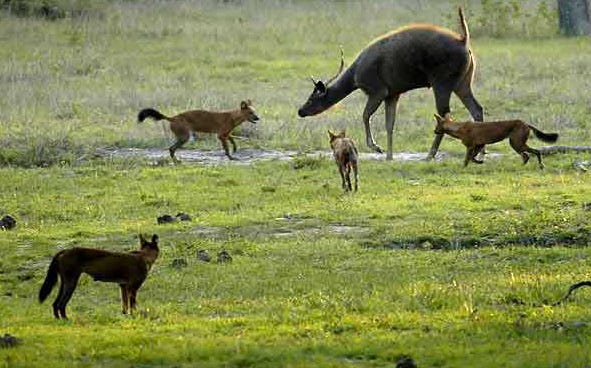
Speaking of hunting, dholes produce a distinctive whistle. Although experts are not sure how the sound is made, they think it helps these dogs coordinate pack actions, like walking through thick brush or the above-depcited hunting scenario.
These wild dogs are very vocal. They can whine, growl, scream, chatter, and yap. But unlike domesticated dogs, the two things they cannot do is bark and howl.
Oh, one more interesting tidbit. Apparently dholes have quite a unique way of urinating. If you want to see a couple of them peeing while performing a handstand, you can check out this oddly-narrated National Geographic video.
The worm
Howard Phillips (H.P. to friends and family and everyone else, too) Lovecraft was an American writer of science fiction, fantasy, and horror. During his relatively short life ––he died at the age of 46–– he wrote almost exclusively for pulp magazines and was mostly unknown outside that publishing microcosmos.
It was in the 1970s that his writing had a renaissance, and the characters and settings associated with what is known as the “Cthulhu Mythos” slowly started seeping into the collective unconsciousness of many Americans in the next couple of decades. A more recent revival happened a couple of years ago with HBO’s Lovecraft Country series.
Lovecraft has become a controversial figure today as more attention has been paid to his ideas about race and class. Although his opinions changed over time, he wrote “disparagements of various races in his journalism and letters” and depicted non-human races in his fiction accordingly.
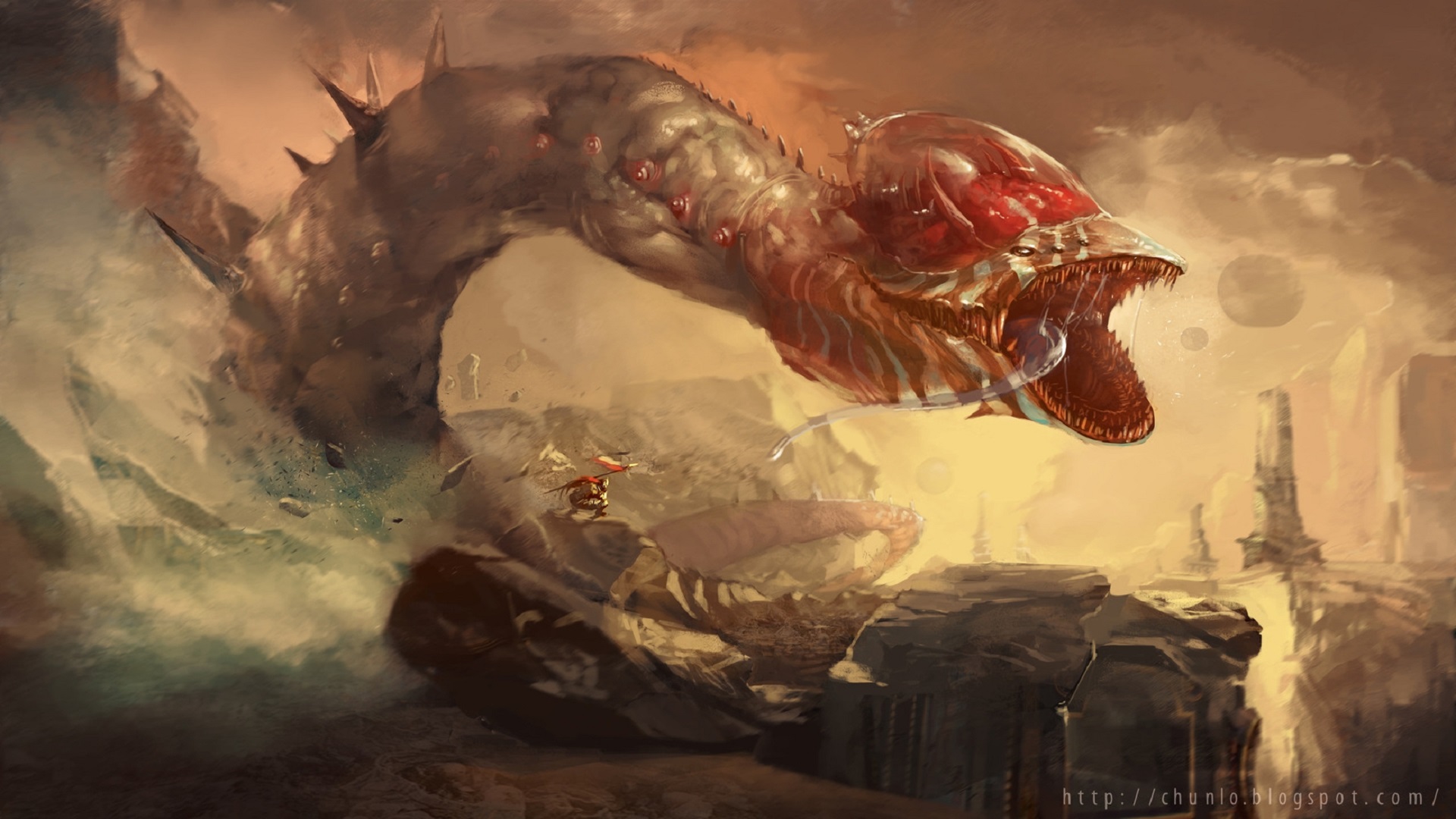
One of the creatures he created was known as Dhole, but it had nothing to do with dogs or any other canine animals. One fandom website describes the Dholes as “huge, slimy worm-like creatures, at least several hundred feet long” that “inhabit dungeons of Yaddith… they avoid daylight and are covered in viscous goo, their features are nearly impossible to discern. Similar creatures called bholes exist in the Vale of Pnath.”
The short story “Through the Gates of the Silver Key”, written by Lovecraft in collaboration with E. Hoffmann Price, the main character encounters the huge worms:
Below him the ground was festering with gigantic Dholes, and even as he looked, one reared up several hundred feet and leveled a bleached, viscous end at him.
Several artists have illustrated their visions of what Dholes may have looked like. Unfortunately I’m not sure if I can post their images here without risking copyright complaints, so instead I’ll provide links here, here, and here.
Now you know. Next time you’re in Asia and see a wild dog peeing while standing only on its front paws and whistling, you can tell your friends and family that you got to see a dhole. Don’t be surprised if they think you’re inventing creatures just like H.P. Lovecraft did… because the editors of the Spelling Bee decided that dhole is a dord*.
You can check out my previous entry on another dord* here:
*What the heck is a dord, you ask? Here’s the answer: