
Piki
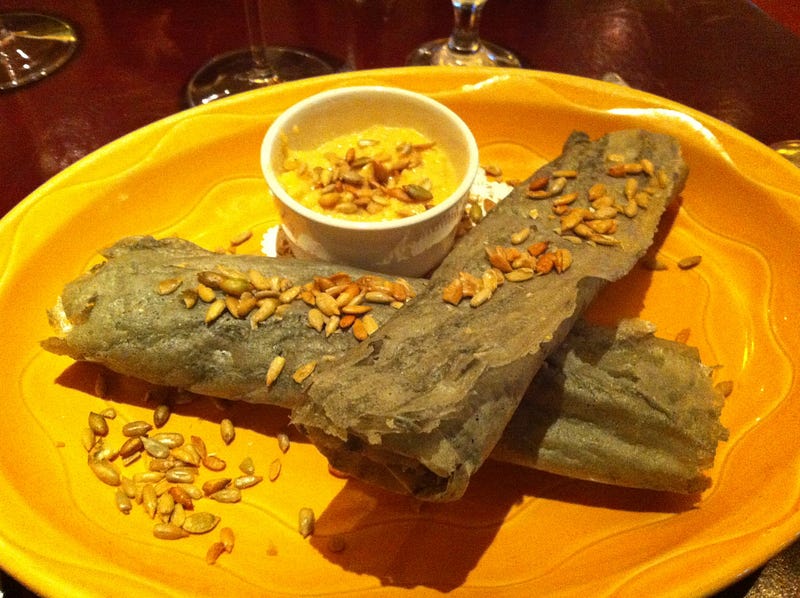
A Hopi delicacy I hope to try one day
Today’s New York Times Spelling Bee letters:
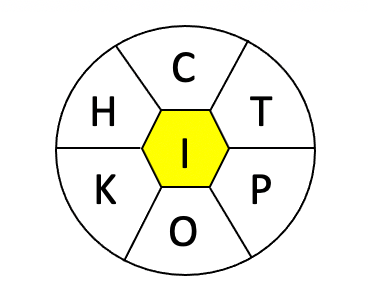
C, H, K, O, P, T, and center I (all words must include I).
Merriam-Webster says…
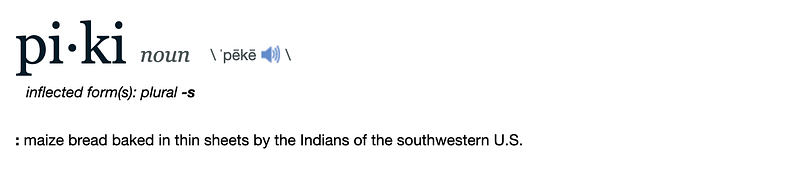
Silly little dictionary! Don’t you know piki can’t possibly be a word if the New York Times says it ain’t?
Also, for further fascinating facts, check out the Spelling Bee Master.
What’s your favorite dord* from today’s puzzle?
My Two Cents
Today I was inspired to “double dip”, in a manner of speaking. As I was researching the word piki, and finding out more about this traditional bread, I bumped into a video made by Victoria Spencer and Marlene Sekaquaptewa that explains how to make piki. So I decided to investigate about these two creators. It turns out Ms. Sekaquaptewa, who was Hopi, passed away last summer from Covid-19.
Aside from this column, I write daily obits about lesser-known people who have recently passed away and that I find interesting. I was moved by what I learned about Marlene Sekaquaptewa and decided to write today’s obituary about her, even though she died last year.
Corn
What can I say, I’m a big fan of corn. It probably has a lot to do with my upbringing. I grew up in Venezuela, where corn is a food staple. Although many of the traditional indigenous dishes are made with the cassava root (including casabe, an unleavened bread), corn is more widespread. Three Venezuelan foods come to mind when I think of corn: arepas, cachapas, and empanadas.
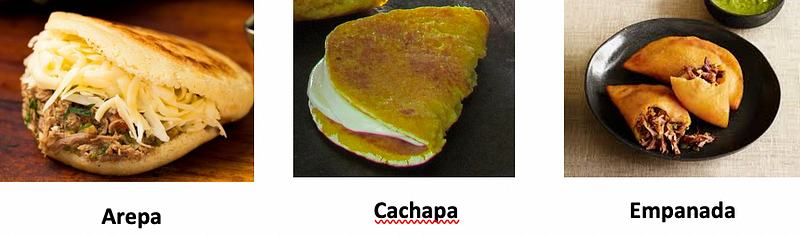
Most people are probably familiar with empanadas, be they made of corn or wheat flour. Arepas are similar to pita pockets, except they are smaller, thicker, and made of finely-ground cornmeal. But the basic idea is a pocket in which you stuff the fillings. Cachapas are pancakes made with sweet corn kernels and corn flour, and topped with salty cheese. These three food items can be eaten at any time during the day.
As for my love for corn, it extends to snacks; I’ll take corn chips over potato chips any day… and thrice on Sunday. And blue corn chips… well don’t even get me started. You have no idea what a huge fan of the Garden of Eatin’ Sesame Blues I am. I became addicted to them when I moved to the United States. And it’s one of the many things I miss living here in Spain.
So, having said all this, you can imagine how excited I was when I found out about…
Piki
The word piki comes from the Hopi word píki. The dictionary records its first known use in 1859, which I find odd. It’s not like piki wasn’t made before then.
Piki is made from blue corn, a staple of the Hopi. The process is long and laborious, and is usually made by women. According to the information I found, Hopi men are in charge of obtaining the piki sandstone upon which the bread is prepared over a fire.
The stone needs to be fired. Pitch or grease (from pig or cow brains, for example) is spread over the stone as a hot fire burns underneath. After that, the stone is cured with a melon seed mixture.
After the corn is harvested, it is dried and shelled, washed, and dried again. Then it’s ground to a fine powder and mixed with water and burnt ashes (usually from greasewood, juniper, or other trees or bushes). The ashes bring out the deep blue hue and give the bread its characteristic color. They also activate the nutritional values of the piki.
The dough is spread by hand as a very thin layer on the hot stone mentioned earlier. And when I say thin, I mean barely existing. One of the things that most surprised me about the whole process of making piki is the skill with which the fragile, wispy sheets are peeled off the stone.
The bread is left flat or is folded, depending on its intended use. For example, for weddings, piki is folded and stacked as squares to be presented to the groom’s family. For religious initiation, the bread is left flat and the sheets are layered on top of each other.
Piki making can take up an entire day, and the baker will end up producing anywhere from 80 to 100 sheets.
Now, I’ve never tried piki before, but after doing all this research I ended up feeling extremely curious about it… and also very hungry.
Perhaps one day when I’m visiting the U.S. I can try to find some piki to try.
Except… how will I inquire about it? What word shall I use? I can’t say piki, right? Because the editors of the Spelling Bee game have determined that piki is a dord.*
Here is the video in which Marlene Sekaquaptewa explains how piki is made in the traditional Hopi way. I thought it was fascinating. What caught my attention is the skill required to make these incredibly thin, wafer-like sheets.
And I loved this quote by her: “For the Hopi, piki had no beginning and no end. It has always been and it always will be.”
Please check out my previous entry on another dord:
*What the heck is a dord, anyway? Here you go: