avatarAvi Kotzer

Free AI web copilot to create summaries, insights and extended knowledge, download it at here

2693

Abstract

ated by smartphone apps</li><li>OTPs sent via text or email</li><li>Access badges, USB devices, Smart Cards or fobs or security keys</li><li>Software tokens and certificates</li></ul><p id="38a6">Inherence</p><ul><li>Fingerprints, facial recognition, voice, retina or iris scanning or other Biometrics</li><li>Behavioral analysis</li></ul><p id="ff08">Other Varieties of Multi-Factor Authentication</p><p id="4248">As MFA incorporates machine learning and AI, authentication methods become more advanced, including:</p><p id="6a64">Location-Based Authentication</p><p id="b949">Location-based MFA examines a user’s IP address and, when possible, their geographical location. This information can be utilized to block access if the location doesn’t match the approved whitelist. It may also serve as an additional authentication layer alongside other factors like passwords or OTPs to verify the user’s identity.</p><p id="182b">Adaptive Authentication or Risk-Based Authentication</p><p id="f981">Another subset of MFA is Adaptive Authentication, also known as Risk-Based Authentication. Adaptive Authentication assesses additional factors by considering context and behavior during the authentication process. It utilizes these factors to evaluate the risk level associated with the login attempt. For example:</p><p id="a1f3">- Where is the user attempting to access information from?

  • Is the login occurring during the user’s typical hours or outside of normal patterns?
  • What type of device is being used? Is it consistent with previous usage?
  • Is the connection via a private or public network?</p><p id="de1b">The risk level is calculated based on these factors and determines whether the user will be prompted for an additional authentication factor or allowed to log in without further verification. This approach is often referred to as risk-based authentication.</p><p id="1f43">With Adaptive Authentication in place, a user trying to log in from an unfamiliar cafe late at night may be required to provide a code sent to their phone, in addition to their username and password. However, if they log in from their regular office location at their usual time, they may only need to enter their username and password.</p><p id="cc81">To combat cybercriminals’ continuous attempts to steal information, implementing an effective and enforced MFA strategy is crucial. An efficient data security plan can save your organization time and money in the long run.</p><figure id="0e75"><img src="https://cdn-images-1.readmedium.com/v2/resize:fit:800/1*9v22NGl6MWx61mU5hfnNvw.png"><figcaption></figcaption></figure><p id="5bc9">What’s the Difference between MFA and Two-Factor Authentication

Options

(2FA)?</p><p id="8485">MFA is often used interchangeably with two-factor authentication (2FA). 2FA is basically a subset of MFA since 2FA restricts the number of factors that are required to only two factors, while MFA can be two or more.</p><p id="f6df">What is MFA in Cloud Computing</p><p id="3643">In the realm of Cloud Computing, Multi-Factor Authentication (MFA) has become increasingly indispensable. As businesses transition their systems to the cloud, they can no longer solely depend on a user’s physical presence within the same network for security. It becomes imperative to implement additional security measures to verify the authenticity of users accessing the systems, safeguarding them against malicious actors. As users have the flexibility to access these systems from any location and at any time, MFA plays a vital role in ensuring their true identity by requiring additional authentication factors that are challenging for hackers to mimic or crack using brute force methods.</p><h1 id="b1a3">How MFA helps prevent common cyberattacks</h1><p id="6873">In 2020, global cybercrime costs exceeded $1 trillion, impacting 37% of organizations with ransomware attacks and 61% with malware attacks. These alarming statistics highlight the pressing need for organizations to confront a multitude of severe cyber threats. To safeguard their networks, systems, and data, robust cybersecurity controls and measures like Multi-Factor Authentication (MFA) are essential.</p><p id="5f54">MFA offers protection against various types of cyberattacks, including:</p><p id="190f">1. Phishing 2. Targeted spear-phishing attacks 3. Keyloggers 4. Credential stuffing 5. Brute force and reverse brute force attacks 6. Man-in-the-middle (MITM) attacks</p><p id="59a1">By implementing MFA, organizations can significantly bolster their security defenses and mitigate the risk posed by these sophisticated cyber threats.</p><h1 id="af16">Conclusion</h1><p id="abeb">MFA cannot guarantee foolproof security or stop all cyberattacks. However, it can help protect high-value systems and accounts, secure email access, and limit the usefulness of stolen credentials. Most importantly, MFA adds additional layers of authentication to protect systems and combat many types of cyberattacks. MFA is also critical to achieving <a href="https://www.onelogin.com/learn/zero-trust">Zero Trust</a>, the most reliable cybersecurity approach in the modern cyberthreat landscape.</p><ul><li><a href="https://a.co/d/b2ccU5N">https://a.co/d/b2ccU5N</a></li><li><a href="https://a.co/d/eNnZw7F">https://a.co/d/eNnZw7F</a></li><li><a href="https://a.co/d/hKu12BF">https://a.co/d/hKu12BF</a></li></ul></article></body>

Marlene Sekaquaptewa

July 10, 1940–June 24, 2020
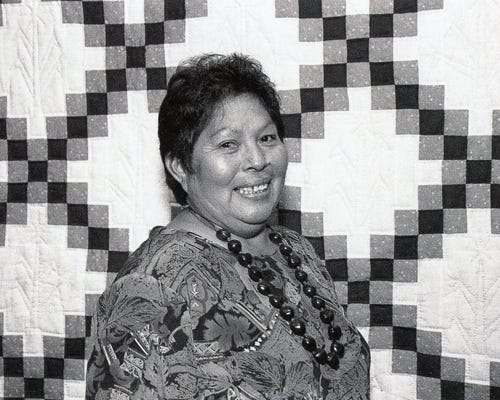
Photo credit: quiltindex.org

Why

The date of Ms. Sekaquaptewa is not a typo. She passed away last year. Although I’ve been writing the daily obits of people who have died recently, I decided to write about Marlene Sekaquaptewa today in connection with today’s Silly Little Dictionary! entry, which is about piki, a traditional bread made by the Hopi.

While I was researching information about piki, I found a YouTube video in which Ms. Sekaquaptewa explains how to make it in the traditional Hopi way. When I then tried to find more information about her, I was deeply saddened she had passed away last year from Covid. I felt compelled to write about her today.

Who

Marlene Sekaquaptewa was born on July 10, 1940, in Oraibi, Arizona. Emory Sekaquaptewa, her father, was a farmer and tribal judge. Her mother, Helen, wrote Me and Mine, a book about her life off and on the Hopi reservation. Emory, Jr., Marlene’s older brother and an anthropologist at the University of Arizona, wrote the first Hopi dictionary.

Marlene attended Central High School, in Phoenix, while her parents lived away from the reservation.

In 1956, the U.S. passed the Indian Relocation Act (Public Law 959), euphemistically called the “Adult Vocational Training Program”. The aim was, ostensibly, to encourage Native Americans to leave their reservations and traditional lands, and relocate and assimilate to larger urban areas.

Marlene Sekaquaptewa’s family moved to Los Angeles during this time period and stayed there until the 1960s. When she moved back to Arizona, she got involved with her community and became an activist. She attended Scottsdale Community College and graduated from its tribal development program. She met and married Leroy Kewanimptewa, with whom she had five children (two of them predeceased her).

After entering Arizona politics, Ms. Sekaquaptewa became governor of the village of Bacavi, serving various terms. She was also known for her quilt-making skills, and her works were displayed in museums around the United States. She was a reference for students and scholars who wanted to learn more about Hopi culture and traditions.

In 1996 she collaborated with Victoria Spencer to make a video explaining how to make piki bread, and its importance in Hopi culture. I have provided a link to the video in my article about piki (see below).

In 2012, she was part of the team that drafted the new Hopi Tribal Constitution. Last year, she helped create an assisted living facility for Hopi elders.

Marlene Sekaquaptewa passed away on June 24, 2020, from Covid-19. She was two weeks away from turning 80 years old. She is survived by her daughter Dianna Shebala; two sons, Leroy Kewanimptewa Jr. and Emory Kewanimptewa; 14 grandchildren; and 12 great-grandchildren.

What

“She was a cultural ambassador, very involved in public life.” — Patricia Sekaquaptewa, Marlene Sekaquaptewa’s niece.

Last year, The New York Times began a series of obituaries called “Those We’ve Lost”, dedicated to people who died from Covid-19. I’ve read the articles on occasion, and what has struck me is the quality of those human beings that the coronavirus took away from us. They all contributed to society, science, culture, arts, and life in general in myriad small and large ways, and many of them did so mostly anonymously, or at least hidden from the glare of celebrity spotlight.

Marlene Sekaquaptewa was certainly one of these people. One is left thinking about all the other contributions she could have made to Hopi society in particular and the United States in general if she were still alive.

In 2018, Marlene narrated a PBS special on the traditional origin story told by the Hopi. Below you can hear tell it in her native language. The video has captions in English.

Below is the link to the article I wrote about piki. At the end of that article you can see the 1996 video in which Ms. Sekaquaptewa explains how the bread is made and its importance in Hopi traditions.

Obituary
History
Feminism
Race
Culture
Recommended from ReadMedium