
Paintings Undone
Non-Finito Works in Art History and the Appeal of the Unfinished
When is a painting complete?
This question clearly haunts artists, as some will continue to work and rework the same piece over and over again. Some even attempt to make alterations after the work has been sold or collected, with English painter Francis Bacon being notorious for altering works during the course of an exhibition. Other artists never get the chance, and leave masterpieces behind, incomplete. These incomplete artworks are referred to by art historians as non-finito works.
On a recent trip to the Museum of Fine Arts in Boston, I found one such painting:
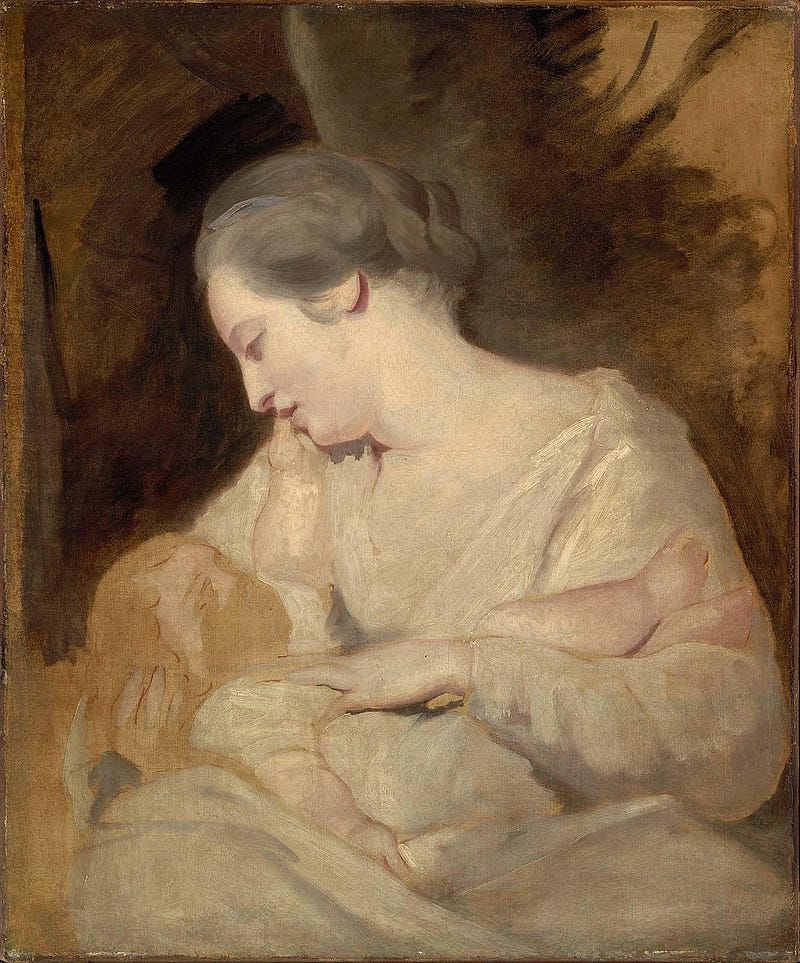

The painting, by Sir Joshua Reynolds of Mrs. Richard Hoare Holding Her Child, stopped me in my tracks. The non-finito canvas and the subject matter seemed perfectly aligned. The mother was still a sketch, blurred around the edges as if viewed through the hazy gauze of memory. The child’s defining features had not yet been filled in, leaving them a puzzle. Is it a baby boy, a little girl? What kind of personality does the child have, what does the future have in store? In an era of high infant mortality rates, it made me pause to wonder if the painting had halted at the death of the child.
Fortunately, that does not seem to have been the case. Scholars at the museum believe that this painting is an early, abandoned version of the completed portrait, now held in the Wallace Collection in London. Somehow, though, that complete painting does not strike me the same as the non-finito work. Ever since, I have been seeking out non-finito works in art history to understand their appeal.


Renaissance Non-finito
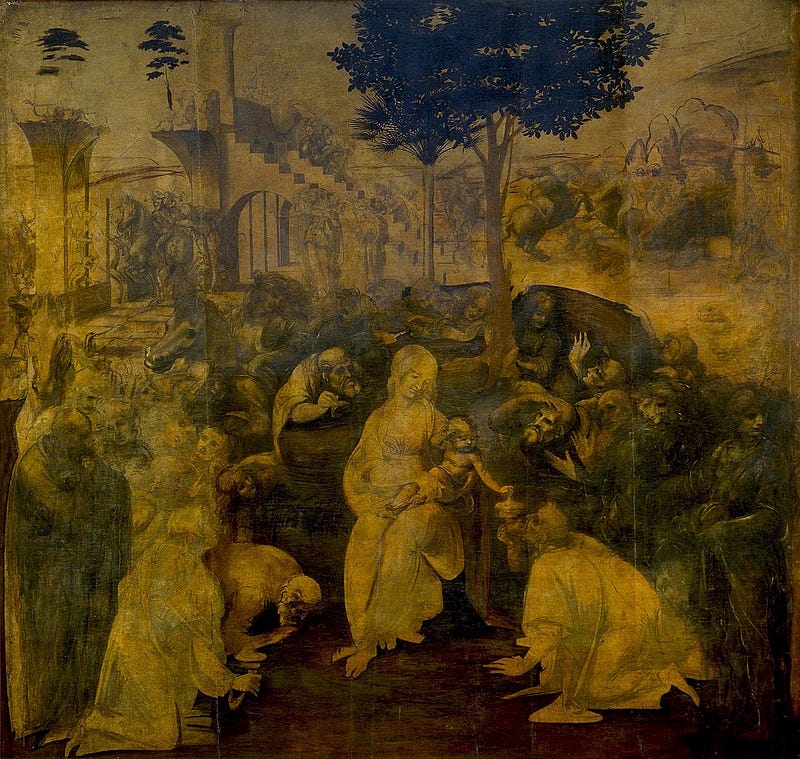
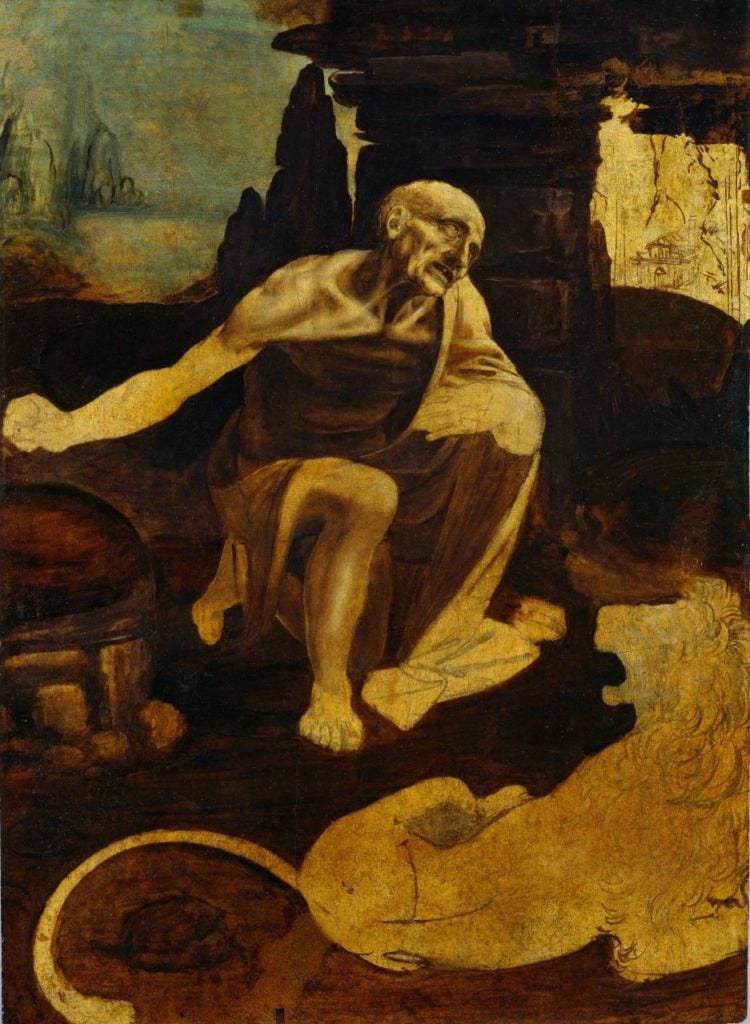
The true appreciation of non-finito works traces back to the Renaissance and the emergence of appreciation for so-called “artistic geniuses” where incomplete works exist as a record of an artist’s creativity in progress. In the case of an artist like Leonardo da Vinci, the incomplete works were precious because of his famously small output of paintings. Leonardo was famously disinterested in completing his commissions, leaving numerous unfinished works such as Adoration of the Magi, which he began in 1481 and Saint Jerome, begun 1482.
It’s generally accepted that ‘non-finito’ entered art terminology in reference to statues by other Renaissance greats, primarily Donatello and Michelangelo. Perhaps most famously Michelangelo’s series known as Saint Mathew and the Slaves which he began after 1505. It’s believed that he ceased work on the series in the 1530s, leaving significant volumes of the original marble blocks uncarved. The term was then used to compare similar sculptural works.
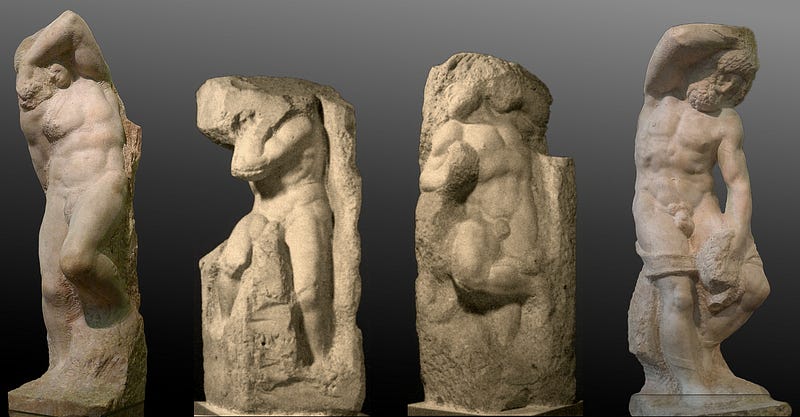


‘Non finito’ simply means ‘not finished’ in Italian and was subsequently used to describe works in other media that the artist intentionally left rough, unrefined, or incomplete. Later, it became more common to apply the term to any unfinished artwork that has an increased aesthetic appeal due to its seemingly unfinished nature, whether intentional or not.
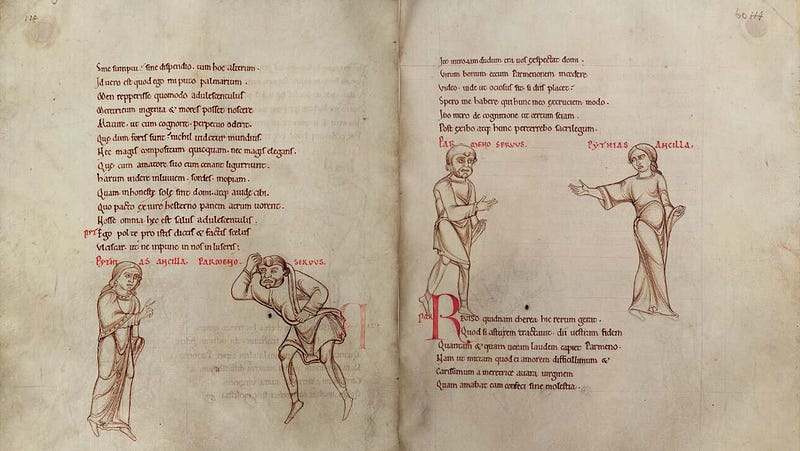
Surviving non-finito works can be found from the Middle Ages, particularly in manuscripts where illuminations exist in all phases of incompleteness. The Romanesque Winchester Bible, produced between 1150 and 1175 for Winchester Cathedral, is well-known for its examples of partially completed illuminations with non-finito lettering and illustrations. However, incomplete Medieval panel paintings are significantly less common, perhaps because these works were not considered worth preserving if they were not complete.
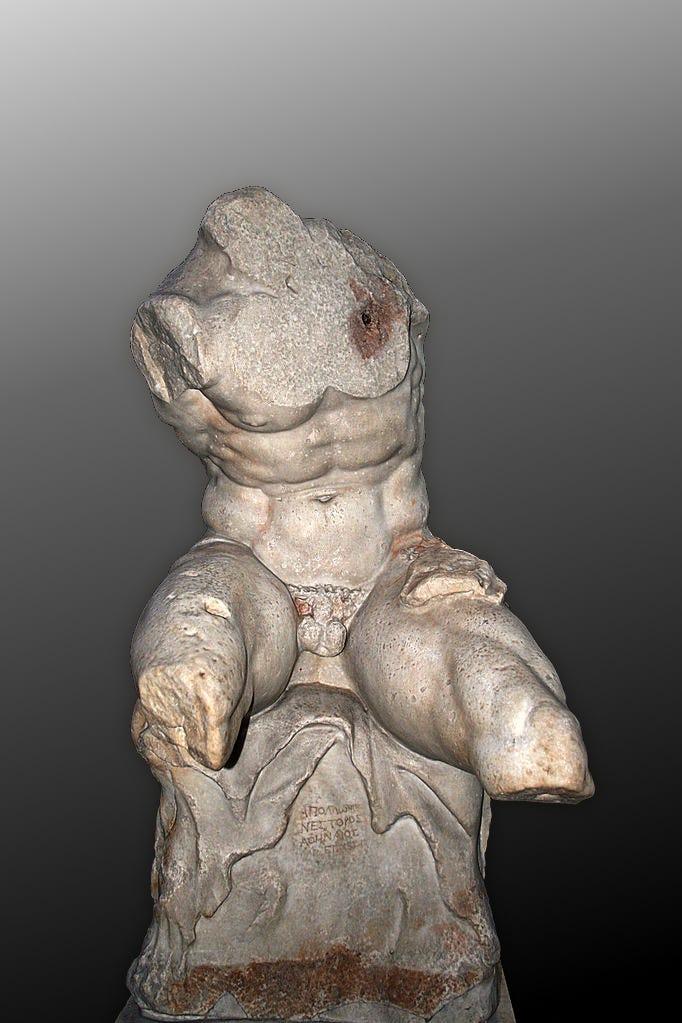
My next encounter with a non-finito work in person was a Renaissance era painting at the Philadelphia Museum of Art. In Fra Bartolomeo’s Adam and Eve with Cain and Abel, Adam’s form is incomplete. While there is some shaping around the back of his left calf, the majority of his volume remains a sketch waiting to be filled in. In this instance, we are able to see that Bartolomeo began with sketching outlines of the forms, paying particular attention to muscular anatomy. The contortion of Adam’s torso may remind us of the famous Belvedere Torso (see above), a Roman sculptural fragment referenced by many Renaissance artists.
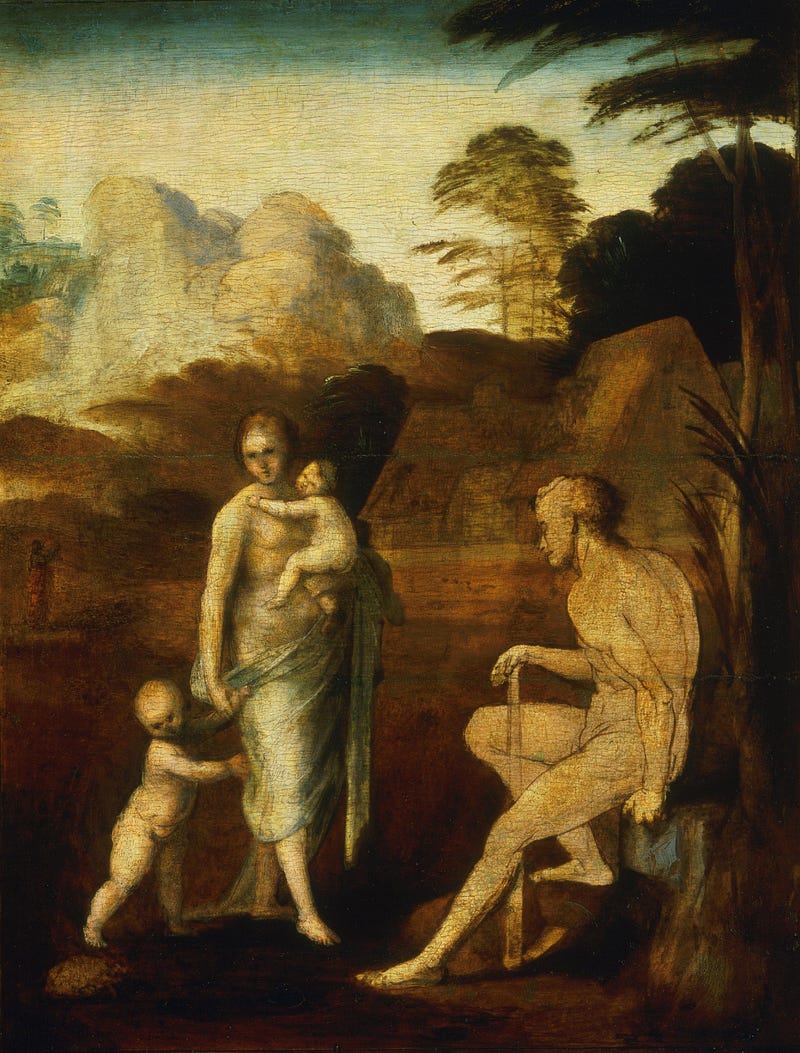

It also raises questions: Why complete Eve’s drapery before Adam’s body? Was this something that Bartolomeo struggled with, or did he leave it for last for some other reason? What else in the painting is actually incomplete that he would have altered before considering it pronounced?
We can also ask questions about the context of the work’s production. Why leave the work incomplete, when Bartolomeo continued to paint other works for five more years? Was it due to his sudden departure for Rome in 1513, or did the commission for Adam and Eve with Cain and Abel simply fall through?
Non-finito Works in the Eighteenth Century
More non-finito works continued to be produced, long after the Renaissance, such as the Reynolds painting mentioned above. Some artists are more strategic about their unfinished works.
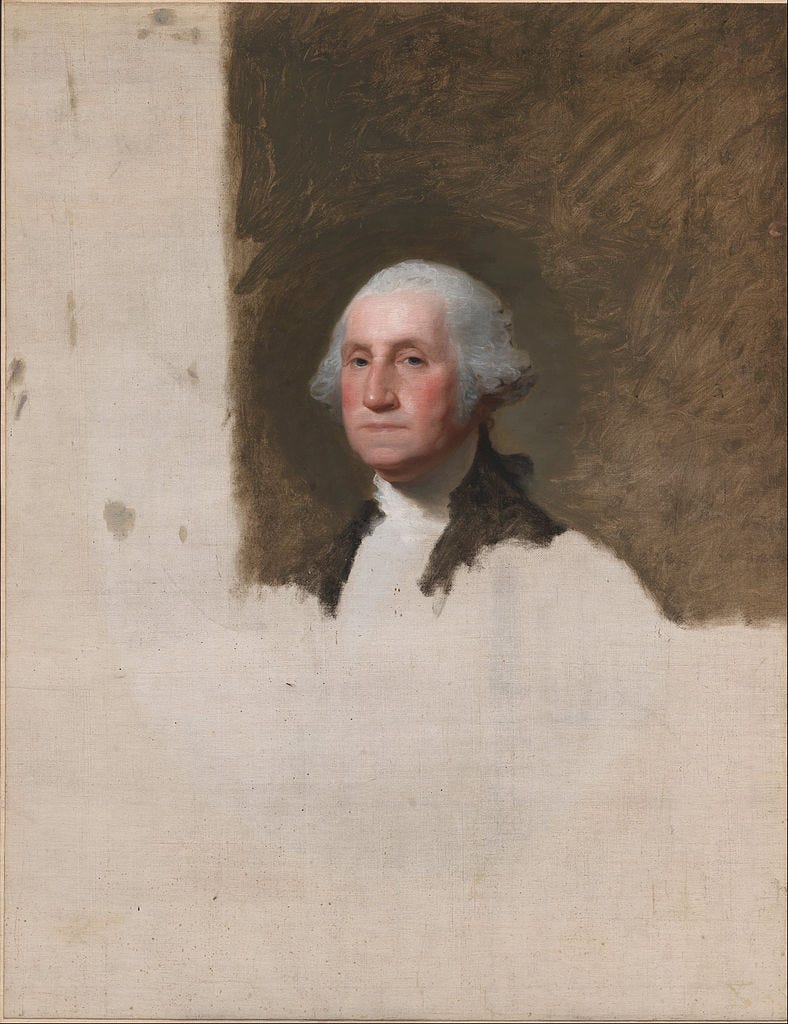
After completing a publicly commissioned painting of George Washington in 1795, the artists Gilbert Stuart received a commission from Martha Washington for another portrait. His unfinished painting of George Washington is now called the Athenaeum Portrait. If it looks familiar, that’s because it is the basis for the engraving of President George Washington on the one dollar bill.
_-_Google_Art_Project.jpg)
For decades afterwards, Stuart used this unfinished painting as a marketing tool. He made dozens of finished versions based on the incomplete example, with the portraits today in collections from George Washington’s home at Mount Vernon, to the Walters Art Museum in Baltimore, Maryland, and the Clark Art Institute in Williamstown, Massachusetts.
The Aesthetics of Incompleteness
During the Modern period, some artists cultivated an aesthetic that deliberately evoked artworks in progress. This Modern appreciation for non-finito works reminds the viewer of the human hand behind the masterpieces and of the struggles to get the work to match the artist’s vision. It is also amazing that some of these incomplete artworks survive, when so many incomplete artworks may have been recycled — as discussed previously in Signifier — or otherwise destroyed. Incomplete artworks are so fascinating to us that there have even been entire museum exhibitions dedicated to them, including the Metropolitan Museum of Art’s influential Unfinished: Thoughts Left Visible of 2016.
This interest in unfinished artworks and the aesthetics of incompleteness reaches an apex in the deliberate unfinished paintings of the contemporary era. Keith Haring’s Unfinished Painting from 1990 is perhaps the most famous example. Haring was famous throughout his life for his intensely joy-filled, graffiti-inspired artworks. He created Untitled Painting while dying of complications arisen from AIDS. In this instance, the non-finito work is laden with the suggestion of the art that Haring and, by extension other artists of his generation who died of AIDS, could have produced.
Non-finito works in art history allow us to better understand the artist’s process in many facets: their manual process, their business process, their thought process... As an audience, such works inspire us to imagine ‘what might have been.’
Hi, I’m Mary! I’m an art historian who loves teaching about art. If you enjoyed this piece and want to hear more about writing, art history, education, and museums, consider giving me a follow. Thank you for your support!