
On Waste in Asia. How Young Locals Are Making Progress
Waste management in Indonesia needs action. Should they follow in Europe’s footsteps? Or do it better?
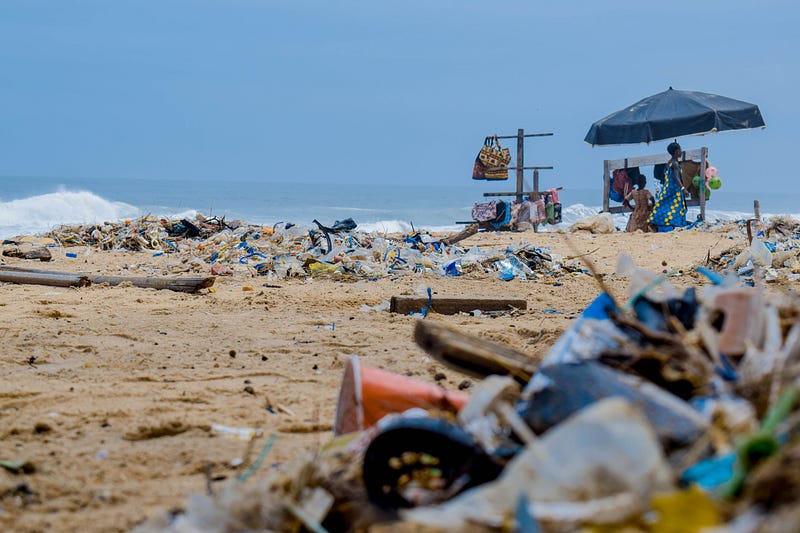
After I gave a talk at Green School Bali about how to build a strong island economy, a young woman named Sheila came to me with a question about waste.
“People all burn their waste here in Indonesia. Or they throw it in the river. The government wants to act but gives no budget for it. Laws are made but not enforced. What can we do? I made a plan, but I feel so powerless…” — Sheila.
I tossed and turned it over in my brain and here are my thoughts. Yes, Asia has a waste problem and it’s getting worse every day. I see the river banks, the beaches, the roadsides. And my heart weeps.
When the night starts to fall, the fires are everywhere along the roads. I smell burning plastic. The smoke tickles my throat. And questions start popping in my brain. Who is responsible? Who can be a force for change?
Two words light up in my mind: responsibility and care.
And then comes empowerment of the people. Young people, older people, citizens, consumers. We can make the change happen!
So what I will do in this article, is to cut the problem into smaller puzzle pieces to try and give some direction for solutions. And I will support Sheila in any project she will choose to tackle first. She is the young one being brave, taking action in her home country. And it’s up to all of us to support that…
Responsibility
Okay, let’s start with the word responsibility. In Europe, we have taken responsibility out of the hands of producers and consumers. Governments have taken the role of collecting waste, and they try to stimulate citizens, consumers to separate waste and thus recycle.
The recycling economy is a fact. But to be honest, it’s not working well. There is no direct link anymore between waste and responsibility.
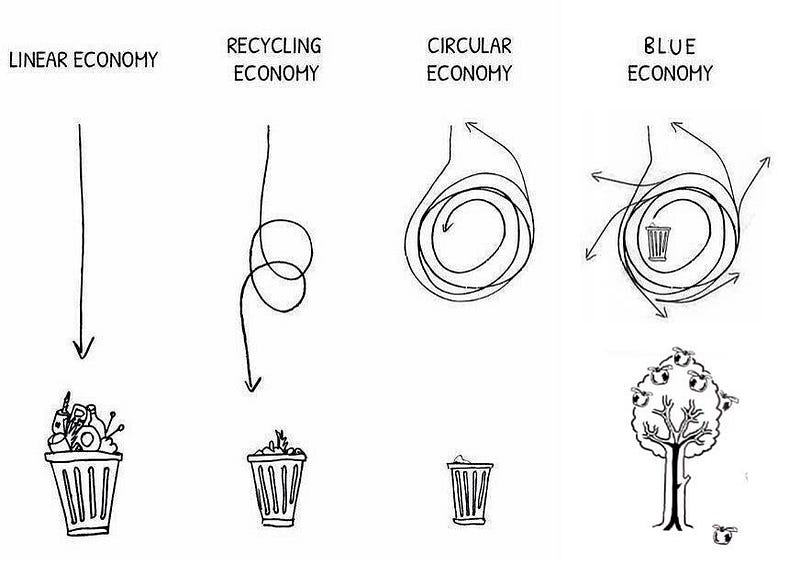
So, here is a big opportunity for Asia to do it differently. These are the puzzle pieces I see.
1 Waste is created while producing products. Producers should be held accountable for their waste streams. They should design their waste streams in such a way that they can be used as a resource for other products. They should work together with other producers in the chain to make this happen.
Let’s end linear business models in which the shareholders are getting rich while throwing their waste over the wall for society to solve. This is not society’s problem! It is a business model problem! A producers’ problem! Regenerative business models are needed.
2 Citizens are also consumers. Consumers have power over producers. Customers are kings! Customers can vote with their money and make change happen! They can choose to spend their money with companies that design their waste streams in a smart way.
They can also consume less, embrace life with as little stuff as possible and start caring again about their environment in a big way.
An example to make it practical: the waste stream of plastic water bottles. Consumers can take the following actions:
- Consumers can put pressure on the water companies to take back their plastic bottles and recycle them. The companies are responsible for that waste
- Consumers can use their community power to buy from the first company that understands this message and takes back the bottles. Others will follow or be out of business
- Consumers can start to care again. Reciprocity with nature is key. If we care for the rivers, not throw waste on the river banks, nature will give us clean drinking water in return
- The same with clean air. If we stop polluting the air with waste burning, nature will give us clean air to breathe
- Given time, there will be no need for plastic water bottles anymore. Nature will give us clean drinking water from the source. Maybe in the future, we will have drinkable rivers again…?
Care
The second word that’s leaping out at me is care. We should start to care again in a big way! Let’s care for nature, so nature can care for us in a way that makes it possible to survive on planet earth, Gaia.
Gaia is our home! Young people seem to understand this in an intense way. Look at how Greta Thunberg and many other young influencers are not taking no for an answer anymore. We should start to care again if we are ever going to change our ways.
And the good news is: abundance is possible if we shift our thinking. An abundance of a life worth living! An abundance of clean air, clean water, and healthy food. An abundance of all the things we say we care about but that we never put on the top of our priority list when it comes to spending money.
Let’s shift that, let’s care for our planet and create zero waste in the process!
Empowerment of people
The third avenue I want to talk about is the empowerment of people. We should become people with awareness who know how to act in a way that’s helping ecology forward. Well, there are tools for that.
3Let’s use Lansink’s Ladder. It is a Dutch concept that makes it very clear in my mind what people should know about waste. The ladder goes like this:
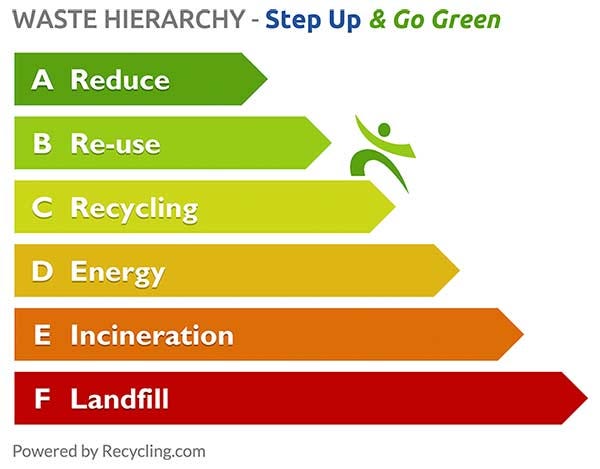
As you can see, the bottom steps of landfill and incineration should be avoided. People can make the most impact by NOT buying stuff with waste attached to it.
4Let’s create awareness that organic waste is GOLD. We need to give back to nature, we need to feed our soils. Healthy, living soil needs all the organic waste we can collect, combined with micro-organisms and fungi. And that’s needed to produce healthy food.
So what to do? It’s simple, we can teach the children how they can turn organic waste into soil feed. And the children will automatically educate their parents. Projects can be:
- Start composting. There are many recipes for composting online that groups of children can experiment with. They will be surprised how an abundance of little useful soil insects starts to arrive when you make sure the environment is right and welcoming…
- Start making terra preta, the kind of very fertile soil found in the Amazon rainforest with lots of carbon in it. The advantages are two-fold: we will create very fertile soil and capture carbon at the same time. Here is a recipe for making terra preta, drawn by the very inspiring Berlin artist Ayumi Matsuzaka
- Start a project stimulating farmers to create compost or terra preta from their own organic rest streams. The next step can be to look around for more organic waste from their neighbors, restaurants, etc. As said, organic waste is gold. Farmers should be collecting it, turning it into healthy, living soil for their regenerative farming practices
- Start a worm farm. Children will be mesmerized by the worms and will care for them like pets. Worms are like little compost factories. They eat organic waste and their poop is a very high-quality fertilizer for the soil! Instructions can be found online for creating a small scale worm farm at home and compost worm farming by Geoff Lawton
- Start a project with restaurants using worm farms. Here are some larger-scale products for creating worm farms in a hygienic way
- Start breeding micro-organisms and fungi as feed for the soil. Korean natural farming and the creation of IMO (indigenous micro-organisms) are great to experiment with and learn from
5 Create awareness that organic waste can be a resource for many new creations. One great example is the creation of oyster mushrooms on coffee waste.
Mushrooms are a rich source of protein that can be farmed in a purely natural way. Ekofungi is doing it on many cellulose-containing waste streams. Rotterzwam is doing it in city environments. And Chido Govera is empowering children and women in Africa and Asia with her Future of Hope Foundation and natural mushroom farming.
Chido’s story is special! She is a person of great courage, showing how young people can step up and find their power. She struggled, cared for her grandmother and brother and is now really changing the world with her mushroom farming. Big applause and a humble bow from me to Chido!
Another example is what they do in South Africa. Large waste streams from the guacamole industry, the avocado seeds, are being ground and used for baking bread. Waste can be so much more useful than we think…
Communication
If we want the change to happen, communication is key. Of course, we can make people aware of the risks of burning waste in the open air. The health dangers, the impact on our environment, this kind of communication is important…
But there is a big BUT. People will not be intrinsically motivated to do something about it when they just feel scared. They will not know what to do. They might feel shame or fear. But they don’t know how to get past those emotions.
6 So, the way I see it, we can better communicate in a positive way. We see it with our children: they respond much better to reward than to punishment… So, please, tell people what they can do (ideas 1, 2, 3, 4, 5) and help them do it! Make it fun! Make a festival out of it!
And use the enthusiasm of young people to educate the older ones. We, older people, are set in our own ways. I still remember vividly the difficulty of changing the patterns in my own brain. It’s not easy… So, let’s empower young people and let them demand action from the ones who love them.
7 Also, think about who gives the message. Let farmers speak to farmers. They understand real-life difficulties and can give advice from their own experience. Let real people with real feelings and real experience speak up and be heard! And let’s all listen carefully and deeply…
Okay, let’s wrap up this article. I have to get to work with Sheila. Get some action going…
Everybody their own role
Often I say that we can all take our own role. Here’s what we can do:
- Government people. We can start by stopping all subsidies for triggers we do not want in our society. Only stimulate those actions that bring us forward. Help farmers transition to healthy soil and regenerative farming. Help restaurants to turn their organic waste streams into gold for farmers, etc… And stop importing waste! Stop exporting waste! Take our own responsibility and do not solve other people’s messes!
- Entrepreneurs. We can create purposeful businesses, designing waste streams as resources into our business models. We can create strong bonds within your supply chain, using each other’s waste and creating multiple value streams for people and the planet…
- Consumers. Without exception, we are all consumers! We can put our money where our words are. Let’s only buy what we need for a life of love. Stop the building of big houses just to store stuff or boost egos. Let’s buy from good companies, demanding them to be transparent and tell us what they are doing and WHY…
- Creators. We can all become creators instead of consumers. Identify the waste streams you want to decrease and start creating useful stuff with it. Also here, youtube will give you loads of examples and inspirations to make almost anything from everything…
- Women. We have the power of the heart. Use it wisely. Empower ourselves and our sisters to stand up and act. For the sake of our communities, our children, our grandchildren. Please, let’s support each other unconditionally in the process because we all know it’s not easy. We should be allowed to make mistakes, stumble, fall, stand up again and go forward. Let’s trust each other and have the faith that all our sisters are doing the best they can. Let’s motivate each other to do better next time. Without judgment, without punishment…
- Young people and children. You have the uncompromised power of creating new patterns in your brains. Use your enthusiasm, your curiosity. Your willingness to experiment. You have the power of motivating the people who love you and want a good future for you
- Ambassadors. Let’s all be ambassadors for a new world without waste. Let’s educate and motivate each other. Let’s create a community that will change the world. Together…
I’m open to all comments on this piece. How do you see your role? What are the obstacles you cannot see past? What good examples in your environment do you encounter?
And please, contact me if you want to be part of Indonesia’s transition into a waste-free country. Sheila and her Green School colleagues and students on Bali can use all the help they can get to tackle this complex issue!
To all young people, I want to say:
“You are definitely not powerless! Ever heard of the butterfly effect? Her wings can make ripples that grow exponentially and create a storm 10,000 km further on. Start spreading your wings!”
You can find me on LinkedIn or Facebook if you want to discuss this piece or follow my other work…
Thank you, Mike, for understanding me, being my sounding board and adding your calm, wise energy to my words.
Further reading
About the author
About leadership for a future where economy, ecology, and the human spirit will be aligned…
About the ReGeneration and why giving back to nature is so important


