avatarDesiree Driesenaar

Free AI web copilot to create summaries, insights and extended knowledge, download it at here

4417

Abstract

<figure id="980f"><img src="https://cdn-images-1.readmedium.com/v2/resize:fit:800/1*XCYJNQIuE-mL1U65c1jSKw.jpeg"><figcaption>A strong island economy based on basic needs, inviting in caring tourists who bring knowledge and help restore ecosystems. Illustration by Desiree Driesenaar based on ‘basic needs picture’ by unknown artist...</figcaption></figure><p id="5a4f">And then I told the audience about the island where I have seen it happen: El Hierro, the smallest Canary island in Spain. They have done it. They still do it every day. Experimenting, sometimes stumbling. Going forward, and celebrating successes.</p><div id="47cd" class="link-block">
      <a href="https://readmedium.com/heroes-of-el-hierro-part-i-e6e45fa6ee85">
        <div>
          <div>
            <h2>Heroes of El Hierro, Part I</h2>
            <div><h3>A European Regenerative Economy. It can be done!</h3></div>
            <div><p>medium.com</p></div>
          </div>
          <div>
            <div style="background-image: url(https://miro.readmedium.com/v2/resize:fit:320/1*63VdxjgT3VuTaj6NvM1VHg.jpeg)"></div>
          </div>
        </div>
      </a>
    </div><div id="2fb2" class="link-block">
      <a href="https://readmedium.com/heroes-of-el-hierro-part-ii-f5a25937a21b">
        <div>
          <div>
            <h2>Heroes of El Hierro, Part II</h2>
            <div><h3>A European Regenerative Economy. It can be done!</h3></div>
            <div><p>medium.com</p></div>
          </div>
          <div>
            <div style="background-image: url(https://miro.readmedium.com/v2/resize:fit:320/1*yB-5otILgywPrgXzcL6D-w.jpeg)"></div>
          </div>
        </div>
      </a>
    </div><p id="8b6f">They started with their energy and water supply. Merging the energy and water companies so that they wouldn’t compete but collaborate. They made the inhabitants co-owners of the renewable energy system so the money really stayed on the island.</p><p id="624c">They made their farming organic in 8 years’ time. Regenerating the soil, creating better harvests of food and animal feed than ever before.</p><p id="71d8">They built a reservation in the ocean, so fish could become old there and have loads of offspring. The spillover effect regenerates the sea. And all fishermen agreed to only fish with lines. Dedicated anchor places make sure the boats do not harm the corals.</p><p id="b207">The young people also liked the example of Bonaire. On this island, they invite young people to get their diving lessons for free if they will stay for a month and help to plant corals. Reforesting the ocean.</p><p id="2551">Many other activities enhance the economy of El Hierro systemically. A winery, sheep yogurt, a methane biodigester, and mushroom farming to name a few.</p><p id="4405">Moneywise, the self-sustaining energy project needed an investment of around € 80 million. But on an island economy of € 29 million, every year a substantial amount of € 23.5 million is kept within the local economy. That’s substantial money!</p><p id="08c4">And it will be invested in one of the next projects: electric cars with batteries that will also form a local electricity grid for the villages.</p><h2 id="df26">So how about Bali?</h2><p id="80fb">Bali can have a comparable story to tell if they will apply the same regenerative principles. Green School Bali is already the activator of several projects, such as the electric scooter entrepreneurship by a group of youngsters. And the ban on plastics arranged by other Green School students.</p><p id="5667">Green School has much knowledge about building with local, abundantly available material: bamboo. Also, their project on regenerative rice farming is famous and has many local applications.</p><p id="d6de">To give them a start, I mapped out a variety of possible projects. All building upon each other, finding synergy and multiplying the money earned. In this article, I explain the role of entrepreneurs and their business models in such a regenerative economy.</p><div id="6ead" class="link-block">
      <a href="https://readmedium.com/business-models-from-linear-to-circular-to-regenerative-9f10c19f337">
        <div>
          <div>
            <h2>Business Models: from Linear to Circular to Regenerative</h2>
            <div><h3>

Options

How can we create regenerative business models? How can business models benefit from synergy and create abundance for…</h3></div> <div><p>medium.com</p></div> </div> <div> <div style="background-image: url(https://miro.readmedium.com/v2/resize:fit:320/1*Cn2C62fhDmjAnqwwMVWfiQ.png)"></div> </div> </div> </a> </div><p id="31b9">For Bali, I made a basic recipe on how to start:</p><ul><li>Vision for Bali, made by Balinese people</li><li>Tell the story widely in every community on the island, finding ambassadors</li><li>Start with the 1st project that really keeps money on the island</li><li>Use the money earned to invest in the next project</li><li>Build more projects, linking them and finding synergy</li><li>Celebrate successes</li><li>Learn from other islands and bio-regions</li></ul><p id="1868">I hope 2020 can become the year that Bali will accelerate. I will definitely follow their progress and applaud them every step of the way! Local people have to make it happen, they have to be the entrepreneurs…</p><p id="0959">And with their strong connections to nature, culture, and spirituality, the Balinese people stand a good chance of creating the most wonderful future for their island.</p><p id="7da2">After my talk, one young woman came up to me and we talked about waste management on Bali, and in Indonesia in general. It’s on my mind.</p><div id="9fde" class="link-block"> <a href="https://readmedium.com/on-waste-in-asia-how-young-locals-are-making-progress-d2cf2ad58351"> <div> <div> <h2>On Waste in Asia. How Young Locals Are Making Progress</h2> <div><h3>Waste management in Indonesia needs action. Should they follow in Europe’s footsteps? Or do it better?</h3></div> <div><p>medium.com</p></div> </div> <div> <div style="background-image: url(https://miro.readmedium.com/v2/resize:fit:320/1*TdDIlkjF-XJGko0wmpdKVw.jpeg)"></div> </div> </div> </a> </div><p id="82ec">And to this young woman and all other young people, I want to say:</p><p id="449e" type="7">“You can make a difference! Every small project counts! It’s called the butterfly effect. One idea, started small, might have a huge impact. A complete wave of positive action might go through a community. So just do something, however small, that makes your heart sing. It matters…”</p><p id="e788">Look at <a href="https://en.wikipedia.org/wiki/Greta_Thunberg">Greta Thunberg</a>. She decided to skip school one Friday, asking action for climate change. Just look how she’s creating impact now, writing history…</p><p id="1fb8">If you want to connect, I can be found on <a href="https://www.linkedin.com/in/desireedriesenaar/">LinkedIn</a> or somewhere in the world connecting to the local people…</p><p id="f87c"><i>Thank you, Mike, for adding your energy to my talks on island economies, care, and responsibility.</i></p><h2 id="61f0">Further reading</h2><div id="5ef2" class="link-block"> <a href="https://readmedium.com/why-ecosystem-restoration-comes-first-in-the-new-business-models-e41a65be294e"> <div> <div> <h2>Why Ecosystem Restoration Comes First in the New Business Models</h2> <div><h3>We need abundant resources, resources, resources…</h3></div> <div><p>medium.com</p></div> </div> <div> <div style="background-image: url(https://miro.readmedium.com/v2/resize:fit:320/1*_PhZo4kWUt672pV1Umfpbw.jpeg)"></div> </div> </div> </a> </div><div id="be31" class="link-block"> <a href="https://readmedium.com/how-do-young-people-become-future-leaders-f5df54723e3"> <div> <div> <h2>How Do Young People Become Future Leaders?</h2> <div><h3>We Need New Leadership. Three Connections Show the Way.</h3></div> <div><p>medium.com</p></div> </div> <div> <div style="background-image: url(https://miro.readmedium.com/v2/resize:fit:320/1*lb1QdFzBRP4H0fNvo5dK8Q.jpeg)"></div> </div> </div> </a> </div></article></body>

How to Build a Strong Island Economy without Mass Tourism

El Hierro is already on it. Will Bali be next?
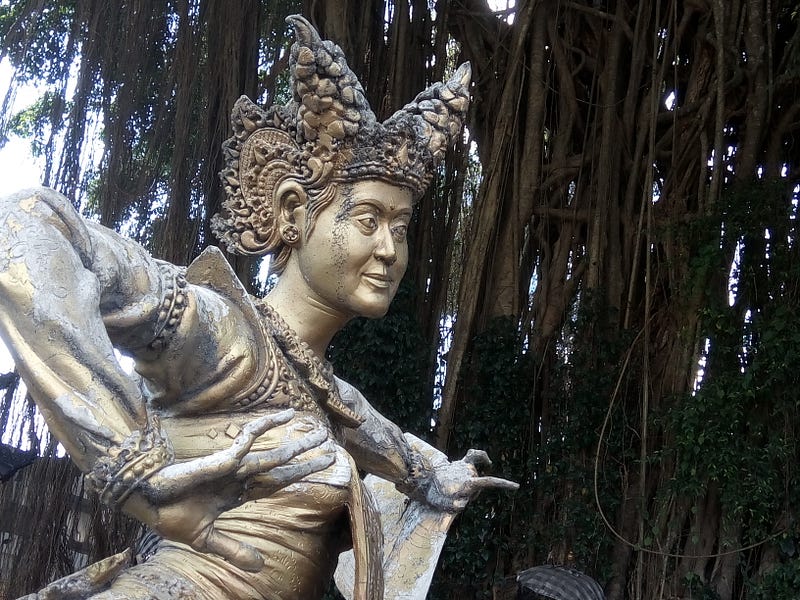
The Balinese people are so grounded in nature, culture, and spirituality. It is a great basis for a strong island economy. The picture was taken in Ubud, Bali, Indonesia by Desiree Driesenaar

One comment from my partner M. triggered me to give a talk about creating a strong island economy to the local community around Green School Bali.

We were walking the streets of Ubud. Trying to come to terms with the fact that we are definitely also tourists in this Hinduist, traditional town. No different from the bunch of cheap-stuff-buying guys and girls that crowd the streets, taking selfies.

M. said to me: “They want our money. They need it. But in their hearts they want to get rid of us. They want to go on with their normal lives.”

And it triggered me. Mass tourism changes a place. Governments think it is the only solution for economic prosperity. But it has consequences.

Loud, drunk tourists can definitely spoil the fun for locals. But what if the tourists stay away until long after an earthquake, as we’ve seen on Lombok? That spoils the fun as well. Empty resorts and unfinished concrete structures change a place too. And it can leave heartbreaking poverty in its wake…

So I decided to talk to the Balinese people about this issue. Telling them how they can have a strong island economy in another way.

My talk was scheduled among the Bahasa (Indonesian language) talks, at a time convenient for staff and students. The audience consisted of international parents and yes, luckily also staff and students.

Green School Bali is a special place in itself. Have a look at this TED talk by John Hardy and be touched by this authentic, visionary jewelry designer with a dream that came true.

Strong Island Economy

So what did I tell my local audience? It told them that most governments turn on the volume of export to stimulate an economy. They invite in more tourists and they motivate entrepreneurs to export their goods. Everything to make sure external money will be entering the economy.

But there is another side. The import side. Money is going out every day to pay for our basic needs. Food, energy, water, they often need to be imported and paid for.
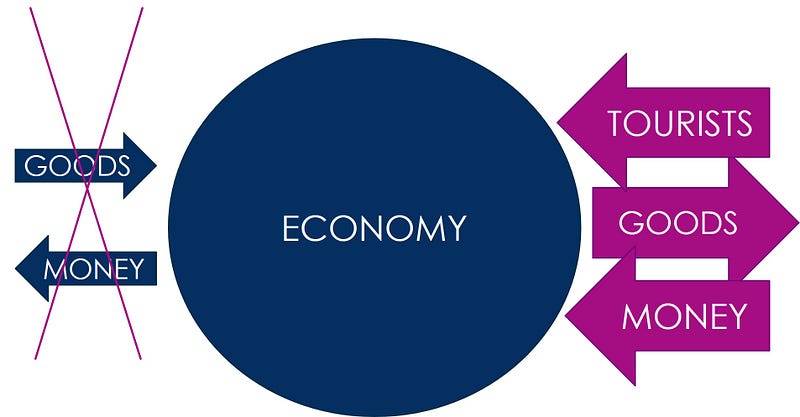
Instead of increasing exports, we can decrease imports, illustration by Desiree Driesenaar.

What if we would become self-sustaining on basic needs? What if we keep the money on the island and make it very active among its people? You would get a completely different economy. Especially on islands, this works well because of the clear bio-regional boundaries.

And of course, you can still supplement your income with ecotourism! Just invite the tourists YOU want. Caring tourists!

The tourists who connect to local people and help you restore your ecosystems. The ones who bring knowledge to the island and volunteer to share that knowledge with you.
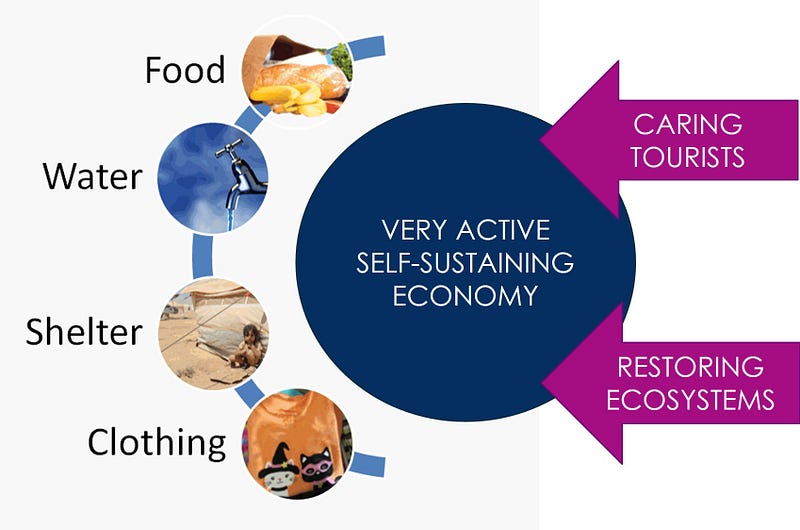
A strong island economy based on basic needs, inviting in caring tourists who bring knowledge and help restore ecosystems. Illustration by Desiree Driesenaar based on ‘basic needs picture’ by unknown artist...

And then I told the audience about the island where I have seen it happen: El Hierro, the smallest Canary island in Spain. They have done it. They still do it every day. Experimenting, sometimes stumbling. Going forward, and celebrating successes.

They started with their energy and water supply. Merging the energy and water companies so that they wouldn’t compete but collaborate. They made the inhabitants co-owners of the renewable energy system so the money really stayed on the island.

They made their farming organic in 8 years’ time. Regenerating the soil, creating better harvests of food and animal feed than ever before.

They built a reservation in the ocean, so fish could become old there and have loads of offspring. The spillover effect regenerates the sea. And all fishermen agreed to only fish with lines. Dedicated anchor places make sure the boats do not harm the corals.

The young people also liked the example of Bonaire. On this island, they invite young people to get their diving lessons for free if they will stay for a month and help to plant corals. Reforesting the ocean.

Many other activities enhance the economy of El Hierro systemically. A winery, sheep yogurt, a methane biodigester, and mushroom farming to name a few.

Moneywise, the self-sustaining energy project needed an investment of around € 80 million. But on an island economy of € 29 million, every year a substantial amount of € 23.5 million is kept within the local economy. That’s substantial money!

And it will be invested in one of the next projects: electric cars with batteries that will also form a local electricity grid for the villages.

So how about Bali?

Bali can have a comparable story to tell if they will apply the same regenerative principles. Green School Bali is already the activator of several projects, such as the electric scooter entrepreneurship by a group of youngsters. And the ban on plastics arranged by other Green School students.

Green School has much knowledge about building with local, abundantly available material: bamboo. Also, their project on regenerative rice farming is famous and has many local applications.

To give them a start, I mapped out a variety of possible projects. All building upon each other, finding synergy and multiplying the money earned. In this article, I explain the role of entrepreneurs and their business models in such a regenerative economy.

For Bali, I made a basic recipe on how to start:

  • Vision for Bali, made by Balinese people
  • Tell the story widely in every community on the island, finding ambassadors
  • Start with the 1st project that really keeps money on the island
  • Use the money earned to invest in the next project
  • Build more projects, linking them and finding synergy
  • Celebrate successes
  • Learn from other islands and bio-regions

I hope 2020 can become the year that Bali will accelerate. I will definitely follow their progress and applaud them every step of the way! Local people have to make it happen, they have to be the entrepreneurs…

And with their strong connections to nature, culture, and spirituality, the Balinese people stand a good chance of creating the most wonderful future for their island.

After my talk, one young woman came up to me and we talked about waste management on Bali, and in Indonesia in general. It’s on my mind.

And to this young woman and all other young people, I want to say:

“You can make a difference! Every small project counts! It’s called the butterfly effect. One idea, started small, might have a huge impact. A complete wave of positive action might go through a community. So just do something, however small, that makes your heart sing. It matters…”

Look at Greta Thunberg. She decided to skip school one Friday, asking action for climate change. Just look how she’s creating impact now, writing history…

If you want to connect, I can be found on LinkedIn or somewhere in the world connecting to the local people…

Thank you, Mike, for adding your energy to my talks on island economies, care, and responsibility.

Further reading

Economy
Tourism
Travel
Food
Energy
Recommended from ReadMedium