
How to Find Creativity and Inspiration as You Fall Asleep
Just as Mary Shelly and Thomas Edison did
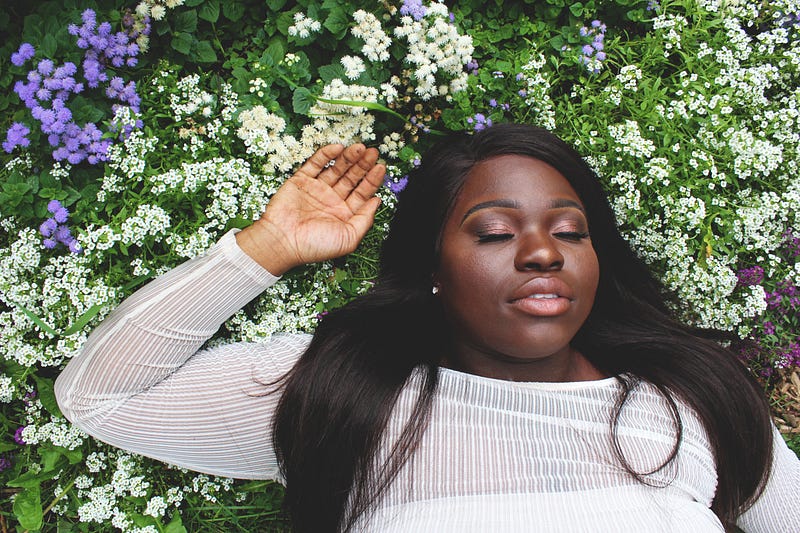
Do you ever have moments as you're falling asleep when a great idea crosses your mind? Hours later, you wake up and remember you had the most creative idea. But, you don’t remember specifically what that idea was. Same here.
This is what’s called hypnagogia, the state between sleeping and being awake in which hallucinations and lucid dreaming occur.
Painter Salvador Dali, writer Mary Shelley, and inventor Thomas Edison have tapped into this liminal state of sleep for creative inspiration.
We can tap into this inspiration and creativity, too.
Sleep, Inspiration and Creativity
Research shows we can even access a part of our creative subconscious when we easily transition from wakefulness to sleep in a truly rested, calm state.
According to Carolyn Gregoire of Huffington Post, surrealist artist Salvador Dali used hypnagogia as a source of inspiration for some of his paintings. Mary Shelley used hypnagogia for inspiration in writing Frankenstein.
The neurologist, Dr. Milena Pavlova, explains the effects of this altered state of consciousness.
You wind up in the state somewhere between sleep and wakefulness, and you experience some phenomena of sleep while you are still able to be awake and remember them,” she told The Huffington Post. — Neurologist Dr. Milena Pavlova
The key here is that when you awake from hypnagogic state before entering into any deeper kind of sleep state, you can remember your creative ideas and inspiration.
It’s no wonder many creatives tap into hypnagogic states.
Thomas Edison intentionally used hypnagogia for recording his many ideas.
Edison averaged 4 hours of sleep per night, and took short naps that he spaced throughout the day. He famously held steel balls in each hand during these naps. If Edison fell asleep during his hypnagogic sessions, his grip would reflexively relax, causing him to drop both balls.
Recently, I got the idea for this poem during a hypnagogic state before I was aware of the term hypnagogia or the creativity that can come from it. I’ve thought about tapping into this in-between state more often to access further creative potential.
This is a great reason to focus your efforts on truly restful sleep. Besides the emotional and physical payoff, there is the potential for creative insights that can be transformed into creative expression during waking hours.
I’ve been incredibly lucky to at times be consciously aware I’m in a state of hypnagogia. When I manage to rouse myself and put pen to paper, or fingers to keyboard, some amazing things happen. My recent foray into the lyric essay is a great example of this.
Resting is good for your health (and your creativity)
Although hypnagogia may sound like a fun and worthwhile activity to explore, remember you still need good rest.
Mayo Clinic has a short and helpful article about better sleep in which it gives these helpful tips:
Create a room that’s ideal for sleeping. Often, this means cool, dark and quiet. Exposure to light might make it more challenging to fall asleep. Avoid prolonged use of light-emitting screens just before bedtime. Consider using room-darkening shades, earplugs, a fan or other devices to create an environment that suits your needs.
Doing calming activities before bedtime, such as taking a bath or using relaxation techniques, might promote better sleep.
Weighted blankets help some people sleep more deeply. The Calm app helps many fall asleep or even go back to sleep waking in the middle of the night.
Blue light blocking glasses can help reduce the brain activation triggered by screen time.
Napping is a no-no according to Mayo Clinic.
Long daytime naps can interfere with nighttime sleep. If you choose to nap, limit yourself to up to 30 minutes and avoid doing so late in the day.
If you work nights, however, you might need to nap late in the day before work to help make up your sleep debt.
Resting feels like letting go into a gentle, safe, and supportive space, free of worry. It is an ultimate repair and recovery state for the human mind and body.
Here are some of my favorite ways to experience rest
- Listen to a guided meditation as you rest or fall asleep
- Listen to ambient sounds as you rest or fall asleep
- Let a hammock, bed, couch, floor, or wherever you choose to rest cradle you like an infant. Then, imagine the deepest kind of comfort experienced by a young child with no worries and her parent’s loving embrace. Let go into this deep state of relaxation
- Journal before you rest or fall asleep to get some of your thoughts out of your busy mind
- Make sure you don’t rest when you are too hungry or too full, both of which will make it difficult to rest
Let’s get hypnagogia-ing
Hypnagogic states are an interesting and proven way to tap into hidden inspiration and creative potential, as shown by Salvador Dali, Mary Shelley, Thomas Edison, and many more. It’s still imperative humans also get good rest. Experiment with hypnagogia — buy some steel balls like Thomas Edison used, or perhaps a bottled water or soda can would do the trick.
Have pen and paper ready and see what happens when you write directly after becoming conscious after a hypnagogic state. You may be surprised what you come up with. And, you won’t be wondering about that great idea you had as you were falling asleep. You’ll get it jotted down on paper. Just like Thomas Edison did.