
OK, We Need To Talk About Artificial Intelligence In Marketing
Can AI Really Pump Marketing? Know Why Marketers Can’t Stop Raving About It.
Ads! Skip. Skip. Skip.
Who even has time to see them during this fast-paced time. Marketing giants have enunciated their challenges of making and running effective ads. For the first time ever, this year people witnessed something out of the box.
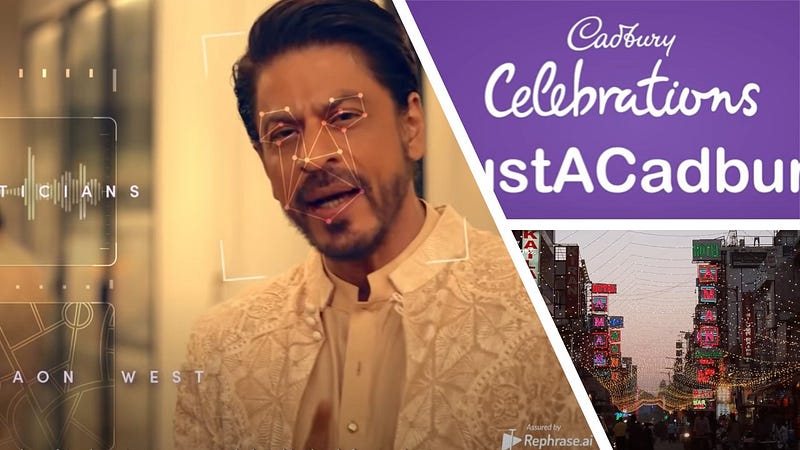
1 celebrity endorsing for multiple stores.
Are you thinking: It’s ubiquitous and what’s the big DEAL?
Well yes, according to good common sense it is not. Definitely, having famous figures onboarded as a brand ambassador is not a new practice but making them act once, and repeating the same for 100+ stores is beyond unconventional marketing.
Perhaps to accentuate the presence of this superstar celebrity, it can be rightfully said
“ShahRukhKhan is to Bollywood what Tom Cruise is to Hollywood”
Hence having him say the names of small businesses and local stores shook the audience and owners alike since making it happen for them was remotely impossible.
Deep Dive Of AI Into Marketing
All thanks to the brainchild of the company named Ogilvy and the idea was cross-fertilized by rephrase.ai to aid Cadbury to break into this new concept. Artificial Intelligence is a boon for diverse industries, but for marketing its impact and usage dominate all.
How did they do it? Using, GAN( Generative Adversarial Networks) and computer vision. Any AI enthusiasts would know the science behind this, but rank and files may struggle.
To put it plainly, the company employed generative AI techniques and tools. As the name suggests, it leverages the process of ‘creation’ from the existing sample which can be any media. Eg: text, voice, video.
By tapping the potential of Machine Learning, each business owner gets a forte to customize the video with the voice of a celebrity.
Is This Marketing Stunt Safe?
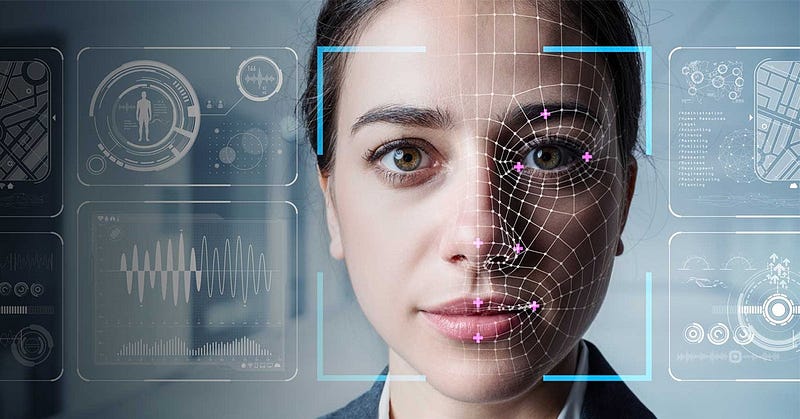
This marketing act has won laurels from all across galore on social media. Simultaneously people are skeptical about the collateral damage it can occur in the form of ‘Deep Fakes’
The company that was powering the Cadbury campaign shunned this by claiming to be not in the business of deep fakes, but rather employing “facial reenactment”.
Then arose the concern for using the intellectual property of the celebrity multiple times, with it being prone to misuse.
To add to the solution, makers had thought it through For this use case, the celebrity had given full consent and was fully aware of the softer aspect of this approach.
Time To Reshape Marketing?
Given this elaborated marketing use case, we see how Artificial Intelligence proved to be an ideal fuel for successful marketing. Evolving time and market needs call for quick solutions. According to Capgemini, 3 in 4 organizations implementing Machine Learning and AI boost their sales by more than 12%. Thanks to real-time analytics and data streaming, that helps marketers exercise personal touch and connect to the audience.
Big names like Cadbury, Castrol, Microsoft, and Amazon utilize hyper-personalized videos for booming their sale prospects, so why can’t you?
Here are a few use cases where collaboration with AI makes marketing whirs to life and how you can use them.
1. Personalizing Advertisements
What was the magic factor that made the Cadbury ad go insanely viral?
Without a grain of doubt, it was connecting the prowess of the ad with targetted accuracy. Optimized messages and connecting on the personal level serve the highest benefit. In this case to both the marketers and the audience as well. Small scale businesses can expand without much complexity while delivering to their nearby audience.
Therefore, remember to not miss the personal element.
2. Reducing customer churn using risk prediction
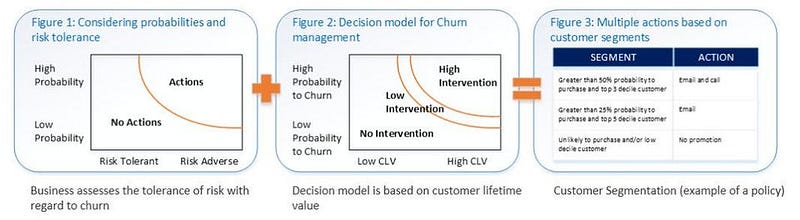
Marketers should utilize Machine learning to take in the contextual content and that will allow marketers to assess the probability of the churn rate and amount of customer lifetime value.
There are risk models that statistically indicate churn rates, by which marketers should take automation steps and run cross-channel marketing in response.
3. Prioritizing customers
Customer care and new services can be added to the value if one turns AI into concrete implementation. The application includes facial recognition, virtual assistants, and Chatbots. Marketers who are improving customer experience and support using machine learning are able to generate and predict accurate outcomes. Relying on Key Performance Indicators (KPIs) and AI leads to objective results as compared to unmeasurable ones without it.
Have quantifiable determinants which ultimately help you to keep track of customer experience.
4. Demand Forecasting
This is specifically well suited for retail marketing organizations. Machine Learning has the potential to upgrade the value chain’s production. According to McKinsey, such a focused approach owns the capability for booming efficiency up to 50% and can deliver elevated sales by employing dynamic price systems through it.
Marketers must know data drive approaches and the knack of handling Predictive Modeling and its subsequent scoring to identify possible sale projections easily.
Birth of New Marketing ERA
Cadbury laid strong footing, with an influential concept and powerful execution. Creating a WOW moment for small businesses was the ultimate aim of this agenda. Pushing the creative boundaries of marketing and combining it with a ground-breaking technology like AI was an example of good use.
This ad is a big win for syntenic media and marketers. This is the epitome for all the marketers who are aspiring to use AI in their fields.
Evolving time calls for dynamic and real-time marketing strategies. Be it commercial or personalized branding, once you merge it with AI, the sky will be the limit!
Viel Glück, from themarsgirls80✌️
Want to follow up more from me and other amazing writers on Medium?
Hop on the chance to join: