
5 Life-Transforming things in Metaverse to know ASAP
How To Survive MetaVerse Without Sounding Dumb?
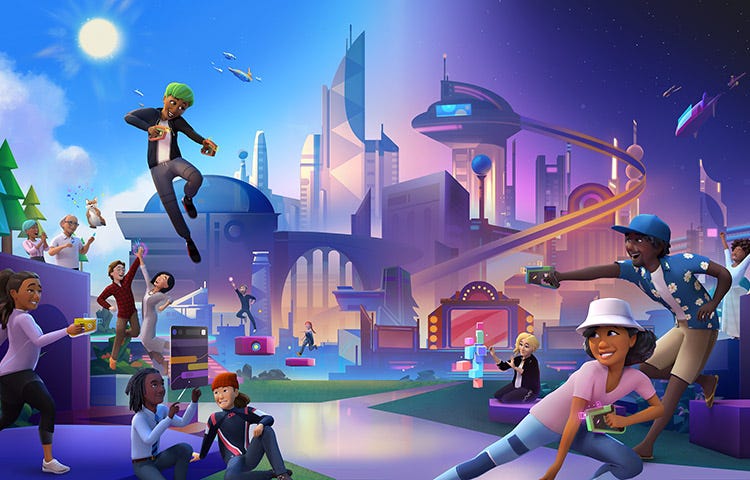
For a few, ‘Meta-verse’ comes off as a complicated future phenomenon, practically because it does not exist as of yet. But ever since tech giants like Facebook(Meta now), Epic Games and Microsoft, and Nvidia are promoting its coming, people can’t help wagging their tongues around it.
This all began with Neal Stephenson, a pioneering science fiction writer. He coined the word ‘Metaverse’ in his novel Snow Crash, 1994. The book walks through the protagonist’s encounter with Metaverse which is perceived as a persistent virtual world.
Metaverse At Its Simplest
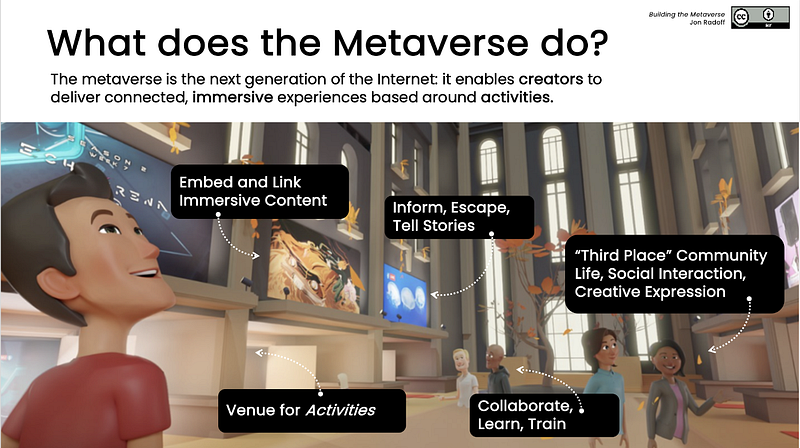
It is described as ‘Next Succession of the Internet’. Unlike the current 2D internet experience of browsing and scrolling screens. Metaverse will allow 3D space to walk while being connected to a headset and other gadgets.
Skeuomorphic Designs
UX designers might be well versed in this term which reflects enhancing the ‘feel’ using aesthetics. This philosophy aims at making things ‘familiar’ for the users from an old paradigm to a new setting. Didn’t get it? Let’s understand it via an example.
A contemporary NFT gallery consists of a view of 3D segregation of space with horizontal floors, walls, inside and outside floors.
In the real world, the essence of the wall is to separate boundaries and act as an environmental control from indoor and outdoor conditions. Like protecting us from sun, storms, rain, etc.
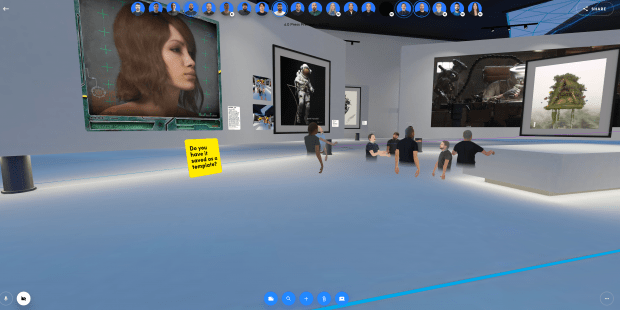
On the contrary, these things won’t be applicable in metaverse making their function void. This explains how some of the needs will be optional and used merely as anesthetics for our visual and psychological cues.
Skeuomorphism will be a powerful tool to make people adapt and feel at home to the metaverse. At the moment, the target audience stands pole apart in their view. One expects the exact unfolding of the real physical world and the other anticipates something closer to video games.
Whatever the designers of metaverse will agree on, it’s undeniable to say the efficiency of use and people’s ease will top the metaverse’s architecture via skeuomorphism.
Mirror World
Fan of sci-fi movies like Matrix, Ready one player, or Netflix’s Stranger Things? Then you may ideally know this term. It refers to a digitally rendered real-world constituting places, things, and real-life people, similar to the one experienced in video games.
Digital twin

If you have heard this word before it probably maybe because of NASA or the 1991 book Mirror Worlds. NASA used this term to perform simulation activities for its space capsule program in 2010, and the author David Gelernter impregnated the idea of humanistic advances via a network of software. The book’s tagline states “Day Software Puts the Universe in a Shoebox…How It Will Happen and What It Will Mean”.
Microsoft’s whim and popular support for digital twin were massive, which was illustrated at the ‘2021 Microsoft Inspire partner event’.
A digital twin is a digital portrayal of objects, services, and processes we have in the real world. It may have buildings, wind turbines, locomotive engines, Healthcare services, etc.
In layman's terms, one can perceive it as a computer program employing real-world data to produce simulations. The generated output would predict the performance of a particular product or process.
To curtail this concept:
For a true metaverse to exist, “digital twins” MUST come to life.
Avatars
Individuals exposed to the world of gaming know this fancy term of portraying one’s identity in the real world. Metaverse will hold a similar context to the avatars. It can be taken as a digital resemblance of one’s appearance, expression, and emotions that uniquely identifies the person.
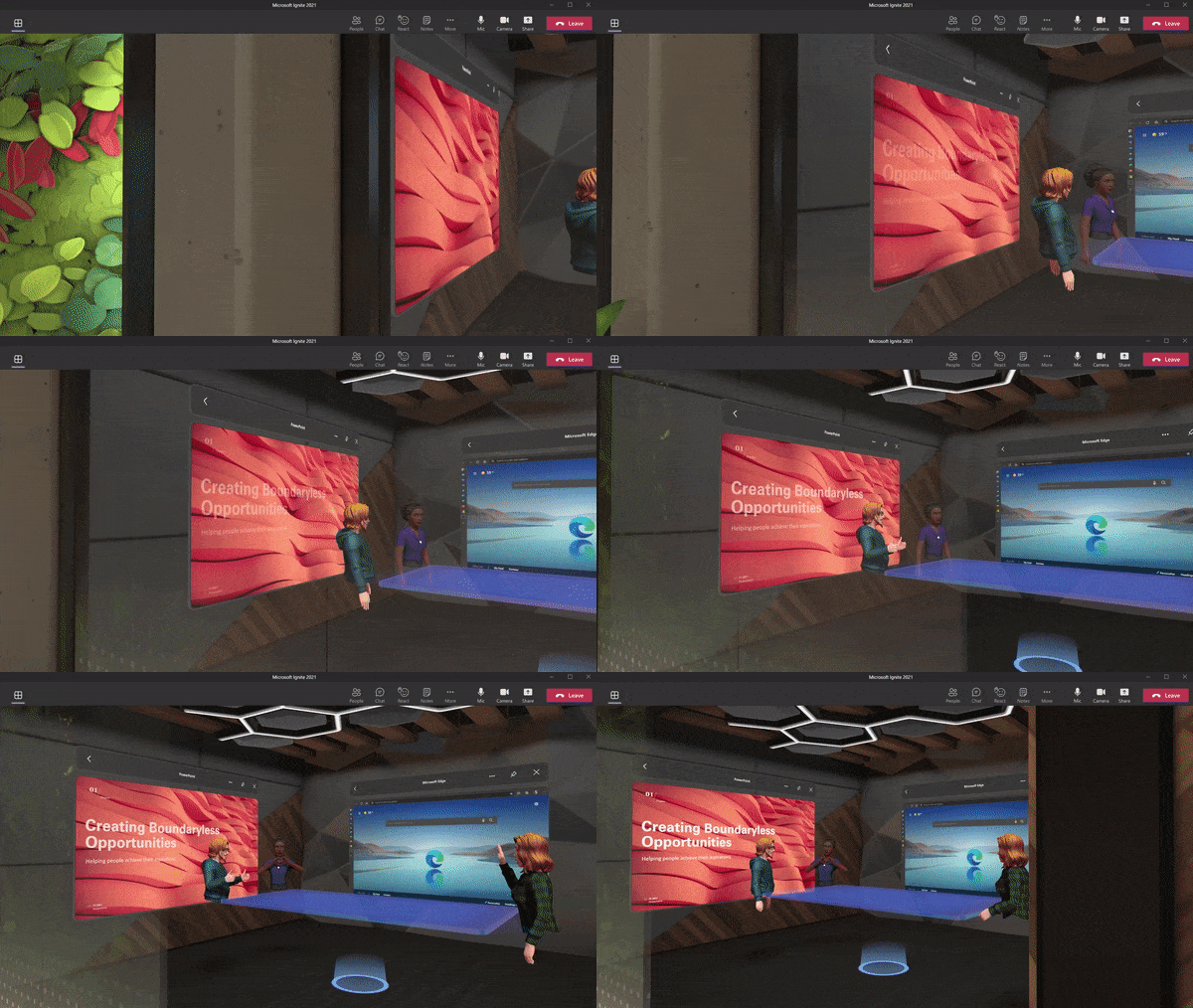
Microsoft has taken a step forward towards a metaverse environment by introducing 3D avatars. These animated versions can depict people in 2d and 3d meetings.
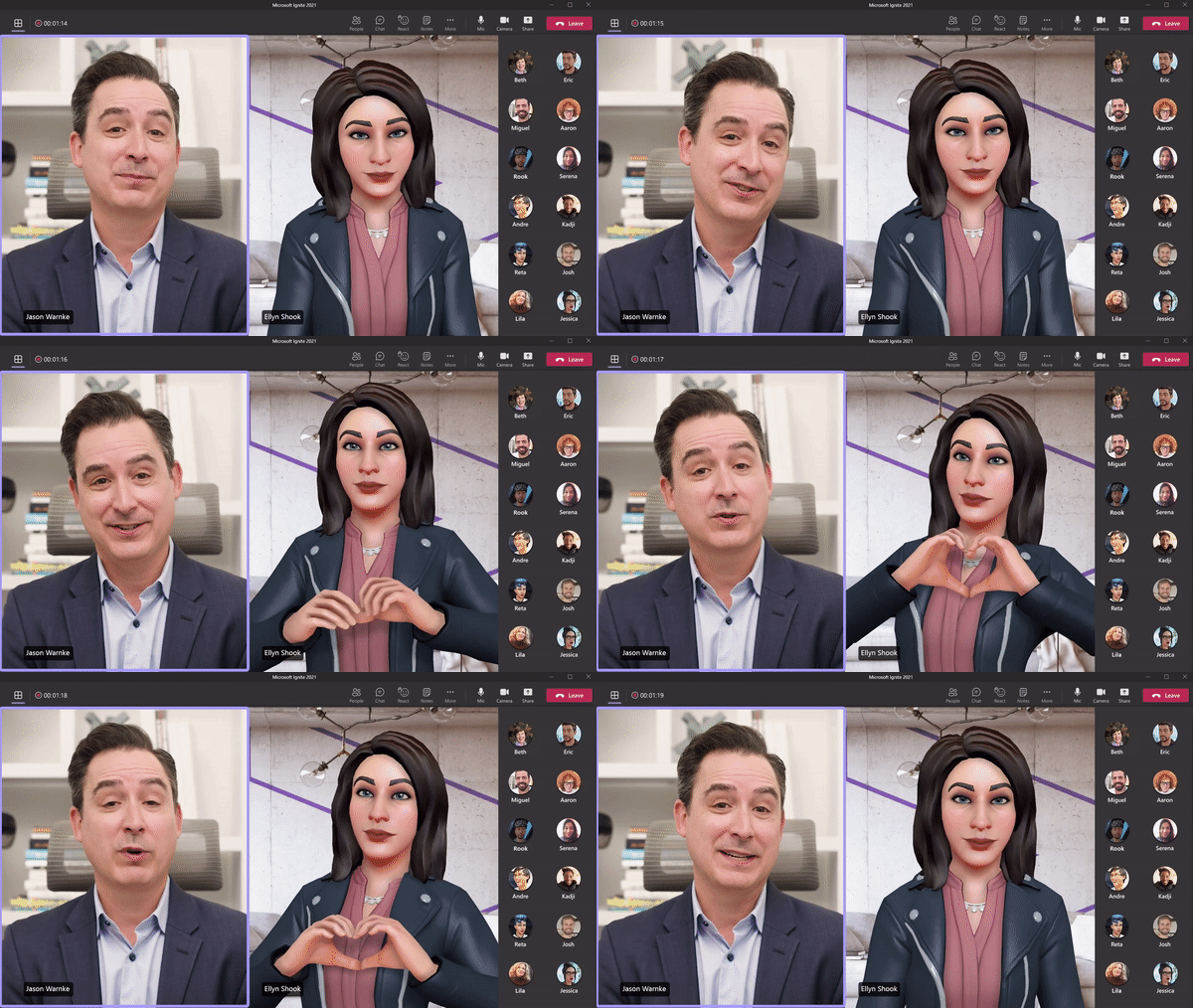
If you can’t or don't want to turn your webcam for a meeting, you can use them behind your voice. Interesting much, eh?
Has Metaverse already arrived?
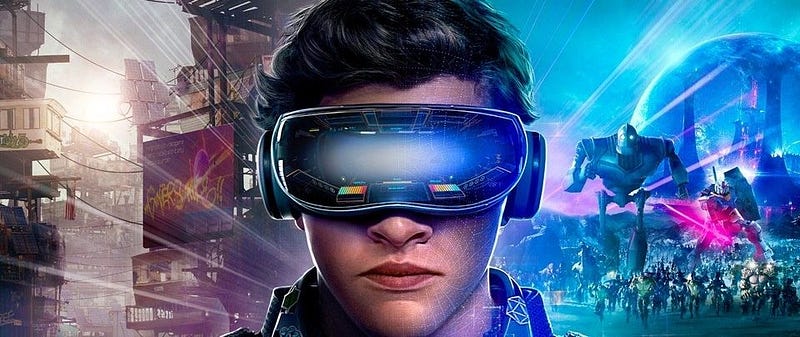
- Interactive games are the plausible and closest example of how metaverse can be like. To specify NFT-based Axie Infinity, Roblox, Minecraft, and Fortnite are immersive enough to indulge the players to build, visit virtual shops and go to concerts, etc.
- NFTs have gained deserving momentum this year. These are Blockchain-based certificates that will authenticate the ownership of digital products. This will be a preassumed transaction medium in the metaverse.
- Oculus and Meta Relation dates back to 2014 when Facebook(now Meta)acquired Oculus for $2.3 billion. Via oculus one can explore 3D graphics, sound using consoles, mobile and wearable headsets. This made people acquainted with VR -Virtual Reality which is the core feature of the metaverse.
Mars_Girls’ Two $Cents
From this moment forth, Metaverse is seen in a sloppy R&D phase compared to where it will be in 10 years. There are bombardments of questions pertaining to it, yet Nobody has all or exactly the right answers.
I deem it with fisheye speculation. It's natural to get all pumped up and excited for it. But neglecting the scary possibilities(criminality, addiction, privacy breach, freedom of speech) it could pose would be like living in a fool’s paradise. One thing is for sure: To transition into user pivoted social world:
We might have to let go + unlearn our social interactions in current physical space and truly recognize the potential of the new setting.
There is a dire need for Tech Giants to resolve their disputes so they can agree on a uniform design language to be used in the future renaissance of the advanced metaverse.
Want to follow up more from me and other amazing writers on Medium? Hop on the chance to join: