
TUSCAN SKETCHES
Nostalgia and Decadence Permeate Through Every Pore of Small-Town Italy
A slight detour off the beaten path to Colle Val D’Elsa provided an alternative narrative to that of the dream holiday destination
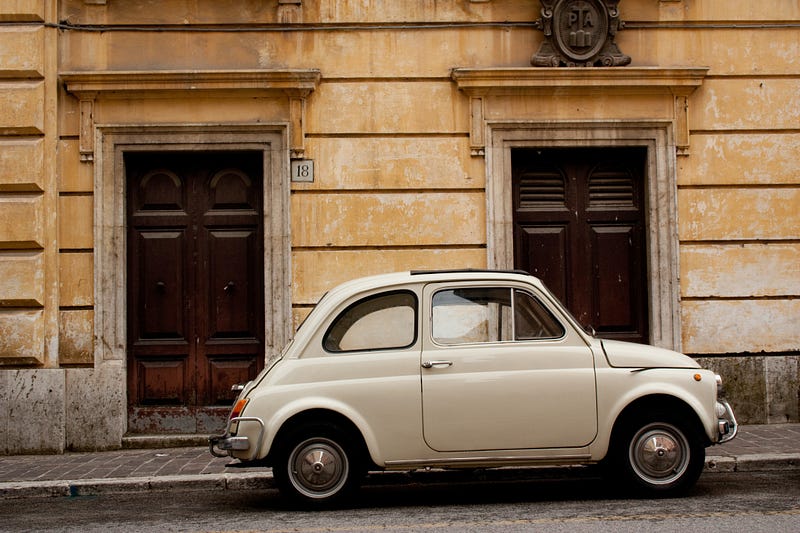
As an Italian immigrant who has lived in an at first family-imposed and now self-imposed exile for over eighty percent of his life, I have gotten used to experiencing Italy as a tourist. On many occasions, I have found myself on holiday enjoying la dolce vita and yearning for more of Italy in my life only to then be reminded that il bel paese is much more bello to visit than to live in.
There are many stark reminders that the Italy we visit — even as Italians — is not the Italy that Italians reside in. There are the luxury five-star spa retreats on Capri and Ischia and there are the violent neighborhoods a short ferry ride away in Secondigliano. There are the Belmond collection hotels in the middle of the picturesque Colli Sennesi and then there are the small decadent towns where other Tuscans live. To experience this contrast, one just needs to veer slightly off the beaten path.
In April, I accompanied my mother from our family home in San Gimignano to visit a bookstore in Colle Val D’Elsa. The so-called ‘new town’ of Colle Val D’Elsa is nestled between the rolling vineyard-laden hills and the highway connecting Firenze and Siena. It is an unremarkable town surrounded by some of the most stunning ancient villages in Europe. Most tourists have no reason to go there. And, yet, it is representative of small-town Italy in 2023.
The fascist-era architecture of the theater is set against the backdrop of brutalist low-rise nineteen-sixties apartment blocks that adorn the center’s parking lot, which is sparsely dotted with Fiat Pandas, Cinquecentos and various motorini. Arriving at three-thirty ensured we were met with ghost town vibes. The stores would only reopen after a three-hour lunch break at four, giving us all the time in the world to circle the majestic central piazza which was empty except for a few pensioners who must have cut their afternoon nap short.
The square’s perimeter was enclosed by three different farmacia’s — all undoubtedly with their niche and loyal clientele. On one corner sat the yellow Poste Italiane flagship store where pensioners can — in addition to conversing with the teller — collect their monthly checks. A few unheard-of provincial banks with dusty ATMs completed the picture of impending decadence and nostalgia for different times.
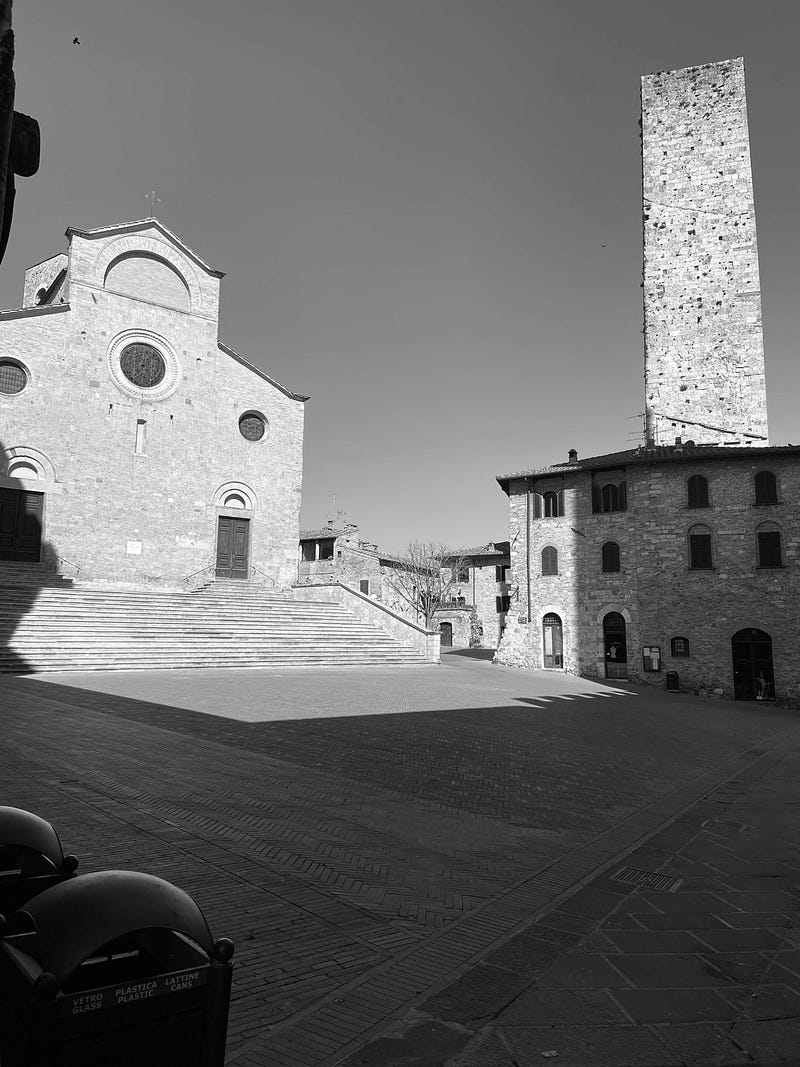
On a deeper level, towns like Colle are also emblematic of the greater societal and demographic changes Italy has undergone in the past half-century. A kebab shop serving döner pizza to high schoolers on their way home was the only thing open on the main avenue. This must be an eerie sight for older generations of Italians who consider ethnic food blasphemous, let alone mixing it with local staples.
Once the bookstore opened, nobody went in except for us. The cashier could not be less bothered to help us find anything. Inside the store, the amount of sports books, thrillers, and pregnancy books — ironically for one of the countries with the lowest birth rates in Europe — blew the Dante Alighieri collection out of the water. For a country and region that routinely touts itself as the most cultured in the world, this also made for quite a reckoning. This is small-town Italy, a place stuck in the past and unwilling to move forward.
One would be tempted to say towns like Colle, which dot the peninsula from North to South, are where dreams go to die, but I would argue the contrary, they are places that are stuck in a dreamlike sequence of what could have been.
They are places particularly vulnerable to the predatory, nostalgic, and dog-whistle-laden political campaigns of the Italian far-right, which took power last year.
They are places where the natural reaction to the mention of Mussolini — who, for some reason, I have never been able to comprehend, is not a taboo topic in Italy — can more often than not be “he also did many great things for Italy.”
They are places where I have heard racist and homophobic remarks casually sprinkled into conversation. They are places where people dream and exalt the past of what Italy was as a global superpower and cultural capital.
Most of all, they are places where pretension versus other cultures still exists. Pretension about the superiority of an Italian school system that barely ranks amongst the top thirty in the world any longer. Pretension about an Italian healthcare system that ran out of beds in intensive care units at the onset of the pandemic.
Pretensions about Italian cuisine which, although widely touted as the best in the world has failed to innovate and has had to resort to EU-mandated protectionism of names for products such as mozzarella.
Pretensions about being the most cultured country in the world — whatever that means — when if you would ask the majority of the youth in such a town about historical events, most would be perplexed.
While walking around this town with my mother, my mind trailed off into the same whatifism that I imagine is habitual for many Italians. What if the Italian state had properly allocated funds all those years ago? What if the economic miracle of the sixties re-proposed itself by some sort of divine intervention in the nineties? What if the republic had not imploded in 1992 and resulted in a power vacuum that the late Silvio Berlusconi seized on?
What if, what if, what if…?
Coming out of the bookstore we rounded another corner off of the central piazza in search of a shoe shop that had been recommended to us in San Gimignano and instead found a group of four teenage schoolboys — or, at least, we assumed they were such — jokingly fighting in a storefront. At one point one of the boys mounted one of the others who had been knocked to the ground and pretended to penetrate him from behind while laughing. Surely this was something those boys learned by reading Dante’s Divine Comedy? On that note, we got in our car and headed back to our slice of paradise in the middle of arguably the most beautiful countryside on earth to enjoy what we think is the best food on earth.
My travel storytelling centers on long-form first-hand accounts with a focus on vivid depictions of the local culture through the people I meet along the way. I also work as a travel advisor tailoring travel adventures all over the world, more info here: https://www.foratravel.com/advisor/nicola-volpi and am host of the Lost In Postulation podcast: a podcast exploring the intersection of pop culture and the mundanity of daily life.