avatarhustlelead How S.

Free AI web copilot to create summaries, insights and extended knowledge, download it at here

6118

Abstract

uote id="b341"><p>“A small company like ours simply has no real agency to reject or resist the rules set by big tech. And neither do consumers. The promise that the internet was going to cut out the middleman has been broken”</p></blockquote><p id="d577">Although this is a push in the forward direction, “rest assured” that Apple is finding some workabout around this, like that time it did with iPhone 5 and the USB-C port. For decades, the EU commission were unsuccessful in bringing down the lightning port.</p><p id="47dd">With the new App Clip cards, the company probably won’t let off another loophole for charging fees.</p><figure id="f2c3"><img src="https://cdn-images-1.readmedium.com/v2/resize:fit:800/0*UacRHIKvb6pG8Th4.jpg"><figcaption>Image by <a href="https://pixabay.com/users/NakNakNak-90985/?utm_source=link-attribution&amp;utm_medium=referral&amp;utm_campaign=image&amp;utm_content=4056171">NakNakNak</a> from <a href="https://pixabay.com/?utm_source=link-attribution&amp;utm_medium=referral&amp;utm_campaign=image&amp;utm_content=4056171">Pixabay</a></figcaption></figure><p id="9b51">If we’re lucky that there isn’t a charging fee, then it would be great news for app and web application developers. The lack of crippling fees on App Clips dev will encourage developers to migrate from the App Store to the ad-hoc cards/apps, allowing for the flourishing of mini apps.</p><h1 id="eb93">5G Tech and Capabilities.</h1><p id="3b45">5G has been popping up in the news lately, for anything from new arms race for tech dominance to the trade war to coronavirus culprit.</p><p id="8a2f">One might think little of the hype about 5G high band technology. More than a few have said they don’t see it as innovative. Well, 5G is “just faster speeds” right?</p><figure id="738f"><img src="https://cdn-images-1.readmedium.com/v2/resize:fit:800/1*[email protected]"><figcaption>youtube comments | screenshot by @hustlelead</figcaption></figure><blockquote id="0f2d"><p>“5G is just faster speeds…”</p></blockquote><p id="50ce">Faster connectivity and internet has inconceivable implications. This will fundamentally change the way data and local storage is used.</p><p id="305b">The computer architecture has for a long time been designed without cloud considerations. As network speeds improve; assets move to be hosted on content distribution networks (CDNs); and distributed computing mature, cloud computing will take over the world by storm. The relevance of local storage will diminish, especially in high human cluster regions such as <b>cities </b>where high band MIMO tech will work reliably well and provide practically fast connectivity. It would be like Spotify and Netflix to the MP3 and VCD.</p><figure id="e613"><img src="https://cdn-images-1.readmedium.com/v2/resize:fit:800/0*gsoMYXWs3TzJzAaB"><figcaption>Photo by <a href="https://unsplash.com/@ralphkayden?utm_source=medium&amp;utm_medium=referral">Ralph (Ravi) Kayden</a> on <a href="https://unsplash.com?utm_source=medium&amp;utm_medium=referral">Unsplash</a></figcaption></figure><p id="313b">The current web apps work fast if they are small in size; developers keen on making App Clips using Xcode and SDK toolkit requires the cards/apps to be <a href="https://developer.apple.com/documentation/app_clips/developing_a_great_app_clip">less than 10mb</a> to launch quickly. The introduction of 5G high band speeds will render this problem forgettable. If true, locally stored apps will quickly make way for the more feasible, cheap, and dependable web apps.</p><p id="bfc1">5G will be the great enabler.</p><h1 id="49e4">Rise of the Mini Apps</h1><p id="9e9c">The name “mini app” is actually a misnomer, it does not do well to describe it’s web-based implementation. Because mini apps are essentially web apps, they are accessible anywhere anytime as long as there is a decent internet connection; they are not necessarily “mini”.</p><p id="9031">They can also be easily managed by the layman by using web development toolkits standardised across business and industry sectors. Imagine Wix and Wordpress.</p><h2 id="5eb9">Apple App Clips</h2><p id="e614">The introduction of App clips may spell the end of traditional apps.</p><p id="c6f9">App Clips are essentially native versions of the mini web apps on iPhone, which can now be used straight from the App Clip card launched upon scanning a QR code, a dedicated App Clip code, or being positioned near a NFC tag.</p><p id="a277">The App Clip is not new. It is part of a larger phenomenon where lightweight web applications take over the functionality, practicality, and legitimacy of locally installed apps. Moreover, they are easy to use without downloading and installing from the App Store. For example, Google has its own Play Instant App.</p><div id="e412" class="link-block"> <a href="https://www.businessofapps.com/insights/why-people-arent-talking-about-google-play-instant/"> <div> <div> <h2>Why people aren't talking about Google Play Instant?</h2> <div><h3>Commitment Anxiety! A quite fancy but justifiable term for our hesitation to try new apps. Remember the times when you…</h3></div> <div><p>www.businessofapps.com</p></div> </div> <div> <div style="background-image: url(https://miro.readmedium.com/v2/resize:fit:320/0*y3w90SQChGIFVXrp)"></div> </div> </div> </a> </div><p id="401c">Why then have they not live up to their promise?</p><p id="5705">So far, the mini app experience outside of China has been messy to say the least (where payment methods are restricted). Cluttered tags crowd the front counters of food and drink stalls; confusing assortment of apps that strive to distinguish themselves from the rest than work together to improve customer experience.</p><figure id="5291"><img src="https://cdn-images-1.readmedium.com/v2/resize:fit:800/0*9ecPOMnLSVPJpaYT"><figcaption><a href="https://www.businessinsider.com/best-bubble-tea-compared-tiger-sugar-gong-cha-2019-10">Business

Options

Insider</a> | <a href="https://www.businessinsider.com/best-bubble-tea-compared-tiger-sugar-gong-cha-2019-10">Best bubble tea compared: Tiger Sugar, Gong Cha</a></figcaption></figure><p id="38aa">This is where Apple’s initiation may change. The “three-pronged” approach by Apple: QR, NFC, and App Clip Code will lead an industrial standard in retail. Companies like Samsung and Huawei might be goaded into tidying up their web app scanners, potentially creating a more unified experience for customers. We saw this happen for user experience on smartphones with the removal of audio jacks and bezel-less screens complete with notches.</p><p id="61ba">When that time comes, mini apps will become a staple as indelible as cashiers, waiters, and e-kiosks. This is already happening in China.</p><h2 id="cde5">WeChat Mini Programs</h2><p id="79de">Much like the mini-programs from the Chinese app WeChat, App Clip takes over the function and need of installed apps. In China, we already see this trend in full force, where small business enterprises deploy WeChat mini apps to smoothen their business process. Since its launch in 2017, developers can use toolkit and run their services on WeChat, allowing the platform to expand to more than 2 million mini-programs with ever-growing features.</p><p id="3c26">There are just too many small business enterprises with their own application and business process to develop full versions of apps. And every restaurant and makeshift roadside stall want a piece of the cake.</p><p id="31b2" type="7">“[….]even the unlicensed beggars have one.”</p><p id="3975">If anything, the success of WeChat in China (and other South East Asian countries) is proof that ad-hoc apps/cards are only waiting to explode in the West.</p><h2 id="c0e3">Progressive Web App</h2><p id="43fe">Progressive Web Apps are whole suites of applications for mobile, desktop, and any other compatible platforms built on common web technologies including HTML, CSS and JavaScript, delivered through the web.</p><p id="20d9">They provide app-like experience for users and have increasingly been able to function offline, closing the gap with native apps.</p><p id="5f96">Some advantages include:</p><ul><li>No need to depend on app distributors like App Store and Google Play</li><li>Works on multiple platforms</li><li>Functions like an App</li></ul><div id="4e46" class="link-block"> <a href="https://medium.com/@mi.ver.mirzoyan/why-do-brands-shift-to-progressive-web-apps-676768534bdd"> <div> <div> <h2>Why Do Brands Shift to Progressive Web Apps</h2> <div><h3>Originally published at Progressive Web Apps</h3></div> <div><p>medium.com</p></div> </div> <div> <div style="background-image: url(https://miro.readmedium.com/v2/resize:fit:320/0*NLkmW3qIhA_aWwDi.png)"></div> </div> </div> </a> </div><blockquote id="83fe"><p>Here, fellow writer Vera Mirzoyan explains why businesses are using PWAs to increase customer engagement</p></blockquote><p id="d727">On the development side, PWAs trumps native mobile apps in terms of resources and coding. To deliver a similar experience both on a website and mobile app, progressive web apps only require a single code base, therefore only a single team, tech stack, testing strategy, and product roadmap.</p><p id="36e7">It seems web apps are simply the smarter way to build applications.</p><h1 id="d2cd">Future</h1><p id="e59c">WE are always looking for the next big thing. Yet, the iPhone took everyone by surprise 20 years ago. The ubiquity of apps took only less than 5 years to be. We don’t know if apps would ever decline.</p><p id="5871">But we know that if it does, it would come as quickly as it’s growth.</p><p id="eda3">5G and App Clips will only accelerate it.</p><p id="21fe"><i>Feel free to <a href="https://twitter.com/hustlelead">drop by, connect, or say Hello</a> on my Medium and Twitter for more tech perspectives.</i></p><p id="a1e9"><i>Or, read more:</i></p><div id="b897" class="link-block"> <a href="https://readmedium.com/the-virus-has-proven-teslas-place-in-this-world-8f5ca259b4d2"> <div> <div> <h2>The Virus Has Proven Tesla’s Place in this World</h2> <div><h3>Elon Musk’s vision fits surprisingly well into a post-pandemic world.</h3></div> <div><p>medium.com</p></div> </div> <div> <div style="background-image: url(https://miro.readmedium.com/v2/resize:fit:320/0*g4CxQM9MUXjVZYRp)"></div> </div> </div> </a> </div><div id="797f" class="link-block"> <a href="https://readmedium.com/12-reasons-why-im-watching-the-iphone-12-bbb4d7f2196b"> <div> <div> <h2>12 Reasons Why I’m Watching the iPhone 12</h2> <div><h3>Two days ago (Jun 19), new leaks suggested the iPhone 12 could be the smallest iPhone since eight years ago. Yes, even…</h3></div> <div><p>medium.com</p></div> </div> <div> <div style="background-image: url(https://miro.readmedium.com/v2/resize:fit:320/0*MayI7aCKChk0vQHH.jpeg)"></div> </div> </div> </a> </div><div id="19df" class="link-block"> <a href="https://readmedium.com/internet-medium-will-soon-see-a-chinese-influx-dc587812acf5"> <div> <div> <h2>Internet, Medium Will Soon See a Chinese Influx</h2> <div><h3>Today (12th Jun), Twitter and Zoom both revealed news on China’s influence on the internet space, separated by only a…</h3></div> <div><p>medium.com</p></div> </div> <div> <div style="background-image: url(https://miro.readmedium.com/v2/resize:fit:320/0*cbqxL6TS56nRfCd_)"></div> </div> </div> </a> </div></article></body>

Nobody is Talking About 5G and Death of Apps

5G may be the nail in the coffin, as China has seen. In its wake would be mini-apps and web apps. Oh, and App Clips.

Key points:

  • The Phenomenon of Aggregator Apps
  • App Store Exorbitant Fee
  • 5G Tech and Capabilities
  • Rise of the Mini Apps
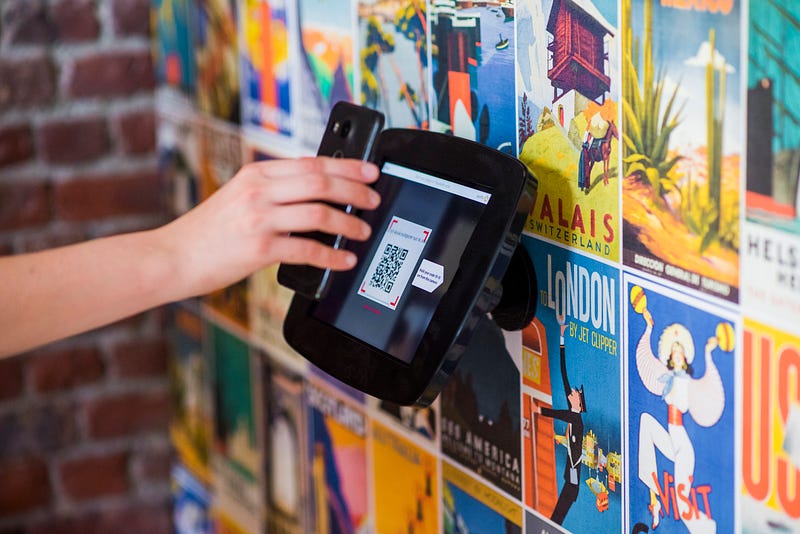
Photo by Proxyclick Visitor Management System on Unsplash

Three years ago, I went to China for a work stint. I caught on their ways pretty fast, and could navigate on my own. It helped that I could do everything on the phone. I could take many photos, book hotels, buy train tickets, hail the cab, share a bike, plan a trip to the wilder end of The Great Wall, call food delivery, and take photos again.

Whenever I needed something, I just scanned the QR code pasted on every corner of the retail and commercial stores, even the unlicensed beggars have one. Each time I was done, I merely close the application, and never had to install any more apps other than the one I already did back home: WeChat.

WWDC 2020

AS I was writing the draft of this article, Apple just concluded the first day of its annual Worldwide Developers Conference on Monday, and revealed new details about the much awaited iOS 14.

True to its name, Apple is keeping up to trends. With the introduction of “App Clips”, ad-hoc applications for iPhones.

Also, in new leaks, all models of the iPhone 12 lineup will come equipped with 5G connectivity that will bring blazing data transfer speeds. Expect 5G to enable a host of features on the iPhones, such as real-time movement tracking augmented reality and possibly on-demand apps.
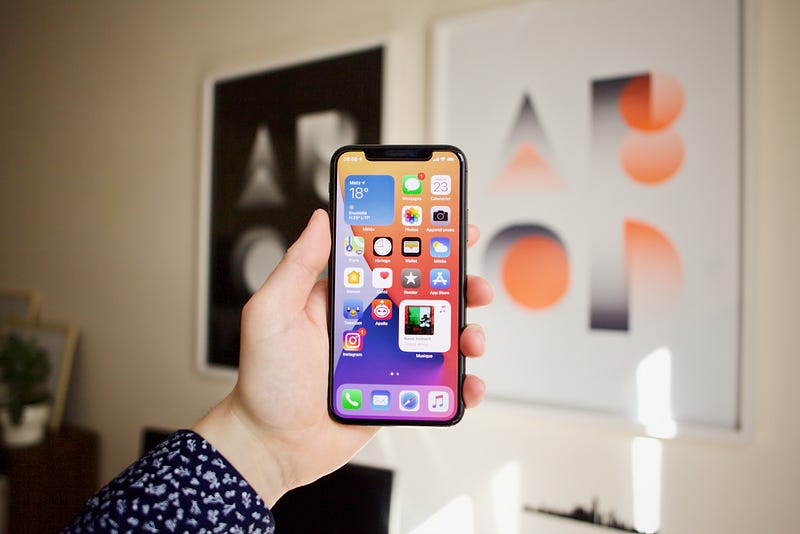
Photo by David Grandmougin on Unsplash

But what is more important is a trend that nobody is talking about: The relentless march towards the death of apps. With ever greater on-demand speeds from 5G and concerted pressures to divert resources away from the App Store most prominently from the EU commission, we may see the end of an era for apps within the decade.

And in its wake, the coming successor will take its place: the mini web app. Apple has preempted this quietly with the “App Clips”.

The Phenomenon of Aggregator Apps

DID you notice the phenomenon of aggregator apps? How about the congregation of applications into few major apps?
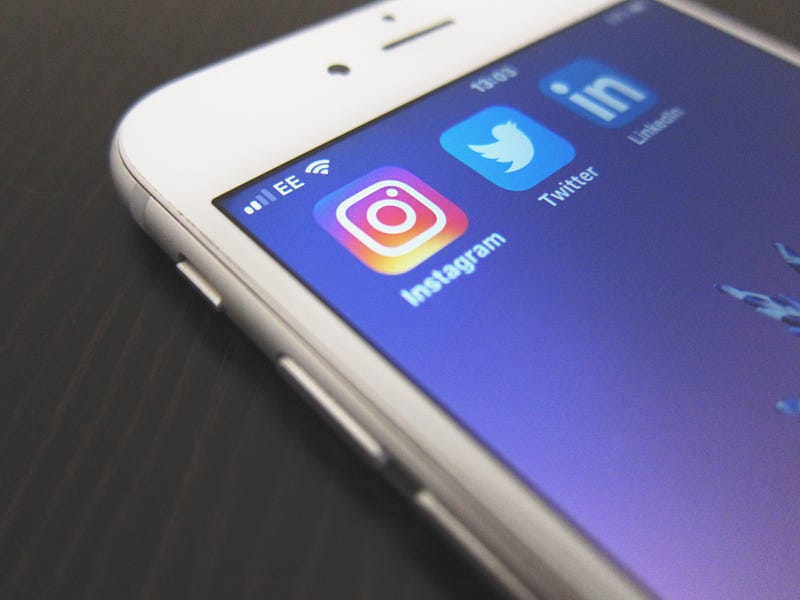
Photo by Hello I'm Nik 🎞 on Unsplash

Top Apps

Take the U.S. for example, the top 10 apps in the month of April are run by huge multi-billion companies: TikTok, ZOOM, Facebook, Google, Microsoft, and Snapchat.

The trend is likely to continue in the U.S. and other parts of the developed world. Unless app developers aim for the short-lived games market, they are unlikely to be able to compete with big name players, like those aforementioned. That new Calendar app you just made? It will never make it, not as late as now.

“That new Calendar app you just made? It will never make it, not as late as now.”

Super Apps

At the other end of the spectrum, we have “super apps” like WeChat, Go-Jek, and Grab in Asia rising quickly through the ranks, disrupting every sector in its path as they expand. As the name suggests, these “super apps” are a kind of aggregator app, where multiple services are accessible through a single interface to give an all-in-one experience.

The “super app” phenomenon, or aggregator app phenomenon, is rapidly dominating gig economy, sharing economy, group purchasing, digital payments, and e-commerce in the emerging markets. We are looking at the East in China, India, South East Asia, and Latin America.

By industry, the travel, hospitality, and retail sectors have successfully leveraged these services to increase customer engagement.

Soon, there won’t be enough room for more apps other than the top few. Developers are already witnessing/bemoaning the end of an era for App store.

As a foreboding for the techies: App developers will suddenly be in oversupply when large proportion of the commercial industries move their mobile app to merge with larger aggregate apps.

App Store Exorbitant Fee

THE App Store is also facing pressures from government bodies.

Apple has been receiving some flak lately, particularly on the 30% revenue cut on all app published on App Store indiscriminately. The European Commission always had an issue with the monopoly of both Google play store and Apple app store. This time, they are inquiring antitrust complaints based on anti-competition grounds, made by Rakuten’s Kobo subsidiary.

David Heinemeier Hansson (DHH), creator of Ruby on Rails and founder of Basecamp, testified in front of the House Antitrust Committee with his twitter rants,

“A small company like ours simply has no real agency to reject or resist the rules set by big tech. And neither do consumers. The promise that the internet was going to cut out the middleman has been broken”

Although this is a push in the forward direction, “rest assured” that Apple is finding some workabout around this, like that time it did with iPhone 5 and the USB-C port. For decades, the EU commission were unsuccessful in bringing down the lightning port.

With the new App Clip cards, the company probably won’t let off another loophole for charging fees.

Image by NakNakNak from Pixabay

If we’re lucky that there isn’t a charging fee, then it would be great news for app and web application developers. The lack of crippling fees on App Clips dev will encourage developers to migrate from the App Store to the ad-hoc cards/apps, allowing for the flourishing of mini apps.

5G Tech and Capabilities.

5G has been popping up in the news lately, for anything from new arms race for tech dominance to the trade war to coronavirus culprit.

One might think little of the hype about 5G high band technology. More than a few have said they don’t see it as innovative. Well, 5G is “just faster speeds” right?
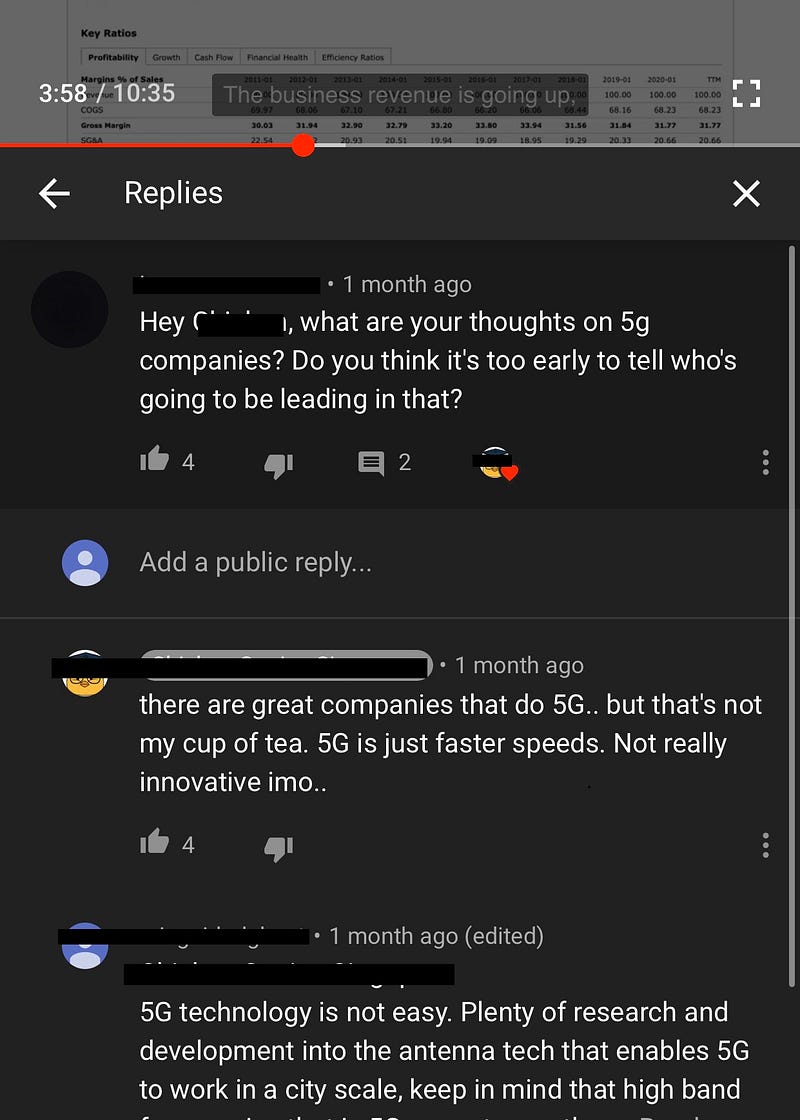
youtube comments | screenshot by @hustlelead

“5G is just faster speeds…”

Faster connectivity and internet has inconceivable implications. This will fundamentally change the way data and local storage is used.

The computer architecture has for a long time been designed without cloud considerations. As network speeds improve; assets move to be hosted on content distribution networks (CDNs); and distributed computing mature, cloud computing will take over the world by storm. The relevance of local storage will diminish, especially in high human cluster regions such as cities where high band MIMO tech will work reliably well and provide practically fast connectivity. It would be like Spotify and Netflix to the MP3 and VCD.

Photo by Ralph (Ravi) Kayden on Unsplash

The current web apps work fast if they are small in size; developers keen on making App Clips using Xcode and SDK toolkit requires the cards/apps to be less than 10mb to launch quickly. The introduction of 5G high band speeds will render this problem forgettable. If true, locally stored apps will quickly make way for the more feasible, cheap, and dependable web apps.

5G will be the great enabler.

Rise of the Mini Apps

The name “mini app” is actually a misnomer, it does not do well to describe it’s web-based implementation. Because mini apps are essentially web apps, they are accessible anywhere anytime as long as there is a decent internet connection; they are not necessarily “mini”.

They can also be easily managed by the layman by using web development toolkits standardised across business and industry sectors. Imagine Wix and Wordpress.

Apple App Clips

The introduction of App clips may spell the end of traditional apps.

App Clips are essentially native versions of the mini web apps on iPhone, which can now be used straight from the App Clip card launched upon scanning a QR code, a dedicated App Clip code, or being positioned near a NFC tag.

The App Clip is not new. It is part of a larger phenomenon where lightweight web applications take over the functionality, practicality, and legitimacy of locally installed apps. Moreover, they are easy to use without downloading and installing from the App Store. For example, Google has its own Play Instant App.

Why then have they not live up to their promise?

So far, the mini app experience outside of China has been messy to say the least (where payment methods are restricted). Cluttered tags crowd the front counters of food and drink stalls; confusing assortment of apps that strive to distinguish themselves from the rest than work together to improve customer experience.
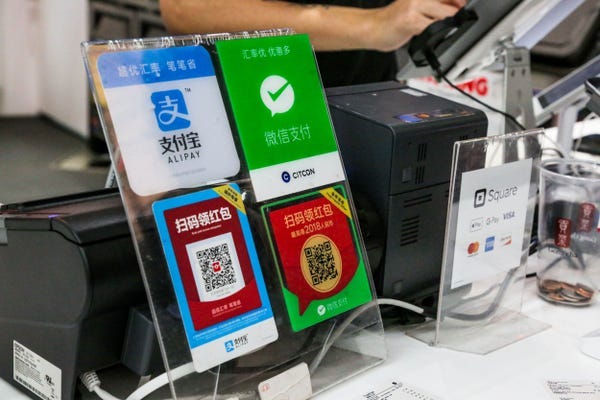
Business Insider | Best bubble tea compared: Tiger Sugar, Gong Cha

This is where Apple’s initiation may change. The “three-pronged” approach by Apple: QR, NFC, and App Clip Code will lead an industrial standard in retail. Companies like Samsung and Huawei might be goaded into tidying up their web app scanners, potentially creating a more unified experience for customers. We saw this happen for user experience on smartphones with the removal of audio jacks and bezel-less screens complete with notches.

When that time comes, mini apps will become a staple as indelible as cashiers, waiters, and e-kiosks. This is already happening in China.

WeChat Mini Programs

Much like the mini-programs from the Chinese app WeChat, App Clip takes over the function and need of installed apps. In China, we already see this trend in full force, where small business enterprises deploy WeChat mini apps to smoothen their business process. Since its launch in 2017, developers can use toolkit and run their services on WeChat, allowing the platform to expand to more than 2 million mini-programs with ever-growing features.

There are just too many small business enterprises with their own application and business process to develop full versions of apps. And every restaurant and makeshift roadside stall want a piece of the cake.

“[….]even the unlicensed beggars have one.”

If anything, the success of WeChat in China (and other South East Asian countries) is proof that ad-hoc apps/cards are only waiting to explode in the West.

Progressive Web App

Progressive Web Apps are whole suites of applications for mobile, desktop, and any other compatible platforms built on common web technologies including HTML, CSS and JavaScript, delivered through the web.

They provide app-like experience for users and have increasingly been able to function offline, closing the gap with native apps.

Some advantages include:

  • No need to depend on app distributors like App Store and Google Play
  • Works on multiple platforms
  • Functions like an App

Here, fellow writer Vera Mirzoyan explains why businesses are using PWAs to increase customer engagement

On the development side, PWAs trumps native mobile apps in terms of resources and coding. To deliver a similar experience both on a website and mobile app, progressive web apps only require a single code base, therefore only a single team, tech stack, testing strategy, and product roadmap.

It seems web apps are simply the smarter way to build applications.

Future

WE are always looking for the next big thing. Yet, the iPhone took everyone by surprise 20 years ago. The ubiquity of apps took only less than 5 years to be. We don’t know if apps would ever decline.

But we know that if it does, it would come as quickly as it’s growth.

5G and App Clips will only accelerate it.

Feel free to drop by, connect, or say Hello on my Medium and Twitter for more tech perspectives.

Or, read more:

Technology
Apps
5g
Future
Web Development
Recommended from ReadMedium