
Nietzsche vs. Stoicism
Is the Quest for Truth and Order Futile?
Is your glass of water half full or half empty?
This experiment is often thought of as a way to distinguish pessimists from optimists. Its lesson is clear — a fundamental difference of perception can lead to a profoundly different approach to living.
Nietzsche’s criticisms of the Stoics betrays this kind of fundamental difference. It’s a clash of philosophies that allows us to think about how our perception of the world informs our understanding of it, and how we can find meaning within it.
There is common ground between Nietzsche’s philosophy and the Stoics. Both believed that human beings did not have “free will” — that is, we do not have any active role to play in our own fate.
But Nietzsche is well known for his snarky attacks, and Stoicism is the target of several of them, especially in Nietzsche’s later writings.
The nineteenth century philosopher’s main contention with the Stoics is the ancient school’s insistence that its followers “live according to nature.” This is the central principle of the Stoics, who believed that the cosmos is one and the same with God and therefore had an order to it.
It’s worth mentioning here that “nature” doesn’t mean “the natural world” of just trees and animals, it means the cosmos — the absolute whole of which we are a part.
To live in accordance with nature is to live rationally. This is because the Stoics believed that mankind’s unique capability as a species is rational thinking. No other species has the capacity for rational thought. They believed that the order of the cosmos is reflected in the order of our minds.
To be rational is to find happiness and tranquillity of mind (“Eudaemonia”) because you are running with the grain of the cosmos, not against it.
A Meaningless World
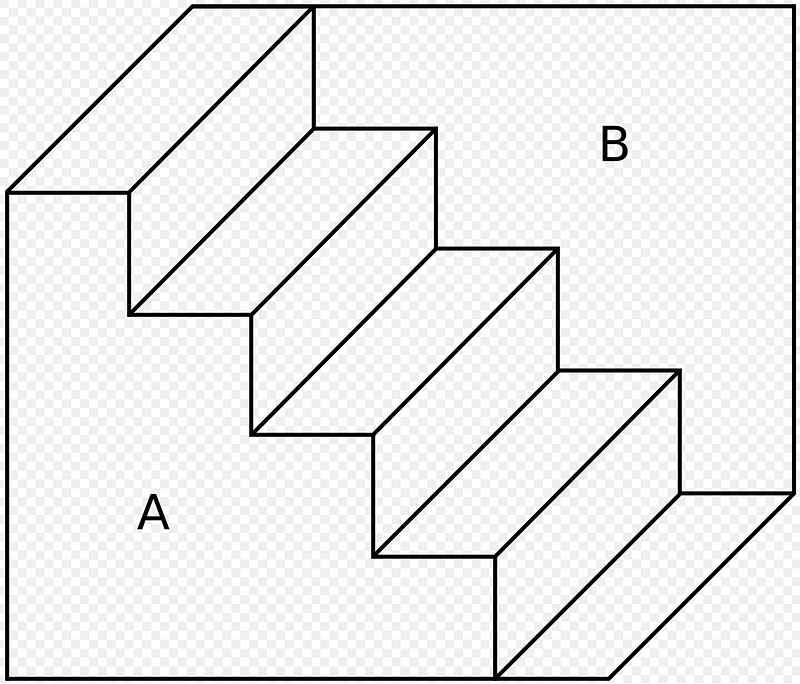
For Nietzsche, nature — the cosmos — is a godless hyper-chaos. Any “order” in the world is just accidental.
The so-called laws of nature are only the arbitrary behaviour of phenomena that may well change over time. Seeing “laws” in nature is just seeing patterns and believing them to have rules. People make laws and rules, not nature.
Nietzsche believed that the Stoics are deluded in thinking that buried within those rules of nature is an ideal path that human beings could follow. This is “virtue”, which for the Stoics was one and the same as “living according to nature.”
But for a sceptical philosopher like Nietzsche there is no ideal notion of “virtue” that is waiting for human beings to discover. Rather than conform to an imagined ideal behaviour, Nietzsche believed that people ought to find their own way.
In a meaningless and chaotic world, we should aspire to create our own ideal self on our own terms. Nietzsche’s philosophy emphasizes creativity and the exuberance of the individual over the “herd moralities” of system-building philosophies (like Stoicism) and religions.
There are two grounds on which Nietzsche took issue with the Stoic doctrine of living according to nature.
Firstly, Nietzsche pointed out that if you observe the cosmos (what the Stoics call “nature” in this context), it’s chaotic and meaningless. Unimaginably vast arrays of suns and planets are destroyed in the blink of an eye by cosmic explosions, every day on this planet millions of animals devour other animals to survive. Stuff just happens. The cosmos itself is utterly indifferent.
For Nietzsche, there is no purpose or reason in nature. Given that the Stoics believed nature to be a living being itself, Nietzsche asks us to imagine a creature like nature to make his point:
“You want to live “according to Nature”? Oh, you noble Stoics, what fraud of words! Imagine to yourselves a creature like nature, boundlessly extravagant, boundlessly indifferent, without purpose or consideration, without pity or justice, at once fruitful and barren and uncertain: imagine to yourselves Indifference itself as a power — how could you live in accordance with such indifference?” (BGE, 1:9)
Secondly, Nietzsche points out the obvious contradiction in the aspiration to live in accordance with nature: we already are nature. To live in accordance with nature is just to… live. It’s a tautology akin to giving the directive “live according to life” — well, you already are.
“your imperative, ‘living according to Nature,’ means actually the same as ‘living according to life’ — how could you do differently? Why should you make a principle out of what you yourselves are, and must be? […] is not the Stoic a part of nature?”
Nietzsche suspects that the imperative is actually to achieve the opposite: rather than nature giving the Stoic meaning and purpose, the Stoic is actually imposing a meaning and purpose on nature.
“In reality, however, it is quite otherwise with you: while you pretend to read with rapture the canon of your law in Nature, you want something quite the contrary […] In your pride you wish to dictate your morals and ideals to Nature, to Nature herself, and to incorporate them therein; you insist that it shall be Nature “according to the Stoa,” and would like everything to be made after your own image, as a vast, eternal glorification and generalism of Stoicism!”
The accusation Nietzsche is levelling here is similar to what we call the “pathetic fallacy”. This is when people project human attributes onto animals, inanimate objects or indeed nature as a whole (think, for example, of “Mother Nature”). “Purpose” and “meaning” are human concepts that exist only in our minds. We perceive “order” only because the universe behaves consistently to us.
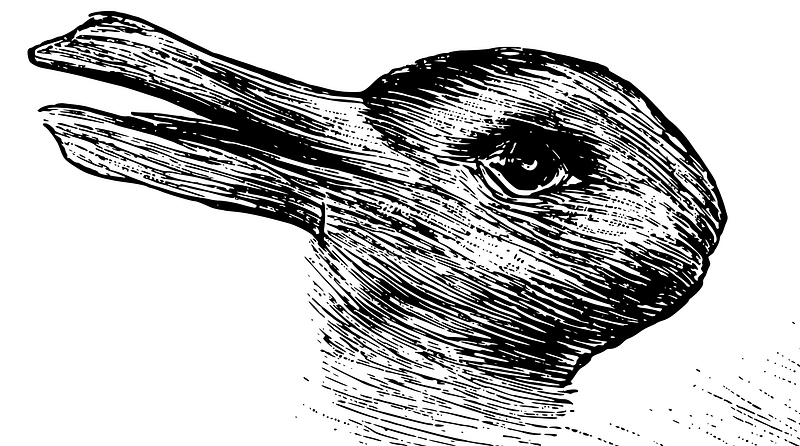
The philosophies of the ancient world that Nietzsche had most in common with were the Sceptics and the Cynics. Nietzsche was what we would call a “perspectivist” — he believed that no human being really has access to any objective truth.
We only understand the world from our particular perspective, according to Nietzsche. There is ultimately no truth to be uncovered, since “truth”, like purpose and meaning, is not a thing outside human consciousness.
A Pathological Delusion?
The Sceptics were similar in their outlook. The school’s founder, Pyrrho of Elis (c. 360 — c. 270 BCE) refused to “assent” to any opinion on any matter because it could have no firm basis in truth. In fact, opinions we hold about the world actually make us unhappy according to Pyrrho (because the world will never be how we want it).
Nietzsche, following the likes of Pyrrho, refuted the idea that human beings could really access any deeper truths. Words, after all, only refer to other words. He wrote of Stoicism:
“With all your love for truth, you have forced yourselves so long, so persistently, and with such hypnotic rigidity to see Nature falsely, that is to say, Stoically, that you are no longer able to see it otherwise — and to crown all, some unfathomable superciliousness gives you the Bedlamite [crazy] hope that because you are able to tyrannize over yourselves — Stoicism is self-tyranny — Nature will also allow herself to be tyrannized over: is not the Stoic a part of Nature?”
This is a pretty scathing take down of Stoicism — the idea that the philosophy is a more psychological symptom than a world-view.
The Stoics are painted here as crazed (“Bedlamite”) with a “self-tyranny” that they vainly hope to impose on the universe. The hope is in vain because nature subsumes all within it, including those who claim to know how it works. Their theories are instead a pathological delusion.
Nietzsche anticipated the so-called “linguistic-turn” revolution in twentieth century philosophy. Thinkers started to examine language itself as at the root of the “problems of philosophy”. The Austrian philosopher Ludwig Wittgenstein believed all philosophical problems to simply be “puzzles of language” that needed to be solved.
For philosophers like Nietzsche and particularly Wittgenstein, language is a tool that human beings use to achieve what we desire. To think of language as being capable of describing the world as it really is leads to immense confusion and muddle. When we ask philosophical questions like “what is evil?” or “what is real?” we are simply misunderstanding and misusing words like “evil” and “real”.
Nietzsche, while still criticizing Stoicism, believes it had fallen into a general trap that all philosophies seem to sink into.
“This is an old and everlasting story: what happened in old times with the Stoics still happens today, as soon as ever a philosophy begins to believe in itself. It always creates the world in its own image; it cannot do otherwise; philosophy is this tyrannical impulse itself, the most spiritual Will to Power, the will to “creation of the world,” the will to the causa prima.”
This idea is much like Borges’ allegory of the map and the territory. A cartographer wants to create a map that is so accurate that it takes on a 1:1 ratio with the territory. The map — the image of the world — becomes confused with the world itself. Philosophers, Nietzsche argues, start to believe in their theories so much that the theories shape their view of reality.
This is the kind of collective “madness” that the philosopher describes when he quipped: “In individuals, insanity is rare; but in groups, parties, nations and epochs, it is the rule.”
Reason as Self-Evident
So how would the Stoic respond to such a demolition job?
One way to respond would be to work from first principles. Epictetus, the first century-born philosopher sets out the case in his Discourses that our reason is a self-evident truth. He taught:
“What decides whether a sum of money is good? The money is not going to tell you; it must be the faculty that makes use of such impressions — reason.”
Epictetus agrees, in this sense, with Nietzsche that nothing is “good” or “bad” in life, only our thinking makes it so. The value of, say, money is only in our minds. Stoics were also perspectivists.
Nature, or rather everything in the cosmos, has no intrinsic value. Everything is “indifferent” — it means nothing until we give it meaning. This is a central part of Stoic thinking.
Only reason gives meaning and purpose to the world, and reason is self-evident — we use it every waking minute to make judgements about things.
It is probably working backwards from this principle that the Stoics constructed a more “rational” theology of pantheism that allows them to describe the workings of the world.
All that is matter — all the indifferent things in the world — are animated by a divine reason (“logos”). If we find meaning in things, then our faculty to reason must reflect a higher reason. As mere fragments of the universe, we could not hope to comprehend this higher reason, but can observe in the relative predictability of cause-and-effect.
And so the ultimate difference between Nietzsche and the Stoics is whether the cosmos is ordered or chaotic.
If you believe in ultimate order in the cosmos, you will find virtue and even happiness in the source code of existence. If you believe in ultimate chaos, then you will look inwards to find meaning within yourself.
Nietzsche’s warning was that if we fall between these stools, dogmas that impose order on the world will impose order on us as individuals.
As Nietzsche himself wrote: “One must still have chaos in oneself to be able to give birth to a dancing star. I say unto you: you still have chaos within yourselves.”
Nietzsche is a great deconstructor, a great critic. His insights are like X-rays — penetrating the surface of all the dogmas and theories that he takes issue with. His criticisms would give any Stoic pause for thought.
But the lesson of Nietzsche’s criticism is ultimately this: how we find meaning and purpose is down to how we see the world. Is your glass half full, or half empty?
Thank you for reading. I hope you learned something new.
I’m writing a philosophy book. Sign up here to get early chapter drafts and a free copy when it’s finished.
Want to learn more about Nietzsche? This is a good place to start:
https://readmedium.com/nietzsches-three-steps-to-a-meaningful-life-f063793adfc4


