
New Generation Neuroscientists Asserts that the Brain Isn’t Triune But Adaptive
Here’s how Triune Brain theory birthed the Adaptive Brain and what it means to the public within mental health, cognitive function, and emotional intelligence contexts
The limbic system is not a solely emotional center, nor is the cortex a merely cognitive part. Emotion and cognition are interdependent in the brain. I explain what this new understanding means to us and how it can shape our future. Non-members can read this important story via my friend link.
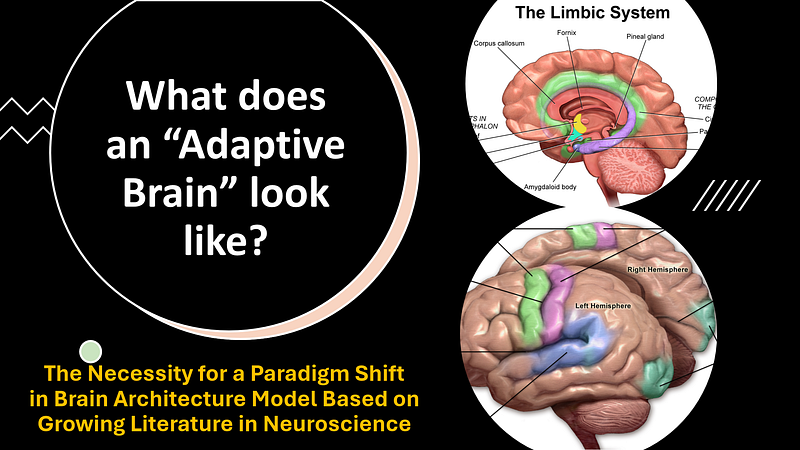
When I started systematically studying human and machine cognition in the mid-1980s, I fell in love with the influential Triune Brain theory, which esteemed neuroscientist Dr. Paul D. MacLean first developed in the 1960s. However, despite the initial infatuation, my love relationship gradually started wearing off, prompting me to look for better avenues for my intellectual satisfaction in the field.
I chose not to divorce from the theory but to find ways to improve the symbolic love relationship with new evidence. I was grateful that this theory helped me gain profound knowledge in a decade and allowed me to experiment safely to gain better cognition and manageable emotions personally and contribute to the field professionally.
This story is not about overwhelming you with convoluted brain theories, as it is impossible to cover them in an article. Besides, comprehending even the fundamentals might take a long time. It took me six years of postgraduate study just to scratch the surface tediously. Still, what I know is a drop in the ocean.
However, I want to offer some informed perspectives on the necessity of a paradigm shift from one widely accepted theory (model) that became obsolete with new evidence to another emerging one that explains the brain's known mechanisms and has real-life implications for mental health, cognitive function, and emotional intelligence.
The endeavor to formulate theories in science holds inherent value, regardless of the possibility of their refutation. Even when hypotheses are invalidated, they offer valuable insights by outlining what approaches are ineffective, guiding us toward more fruitful avenues of inquiry.
Science is characterized by its dynamic nature, wherein each attempt contributes incrementally to our understanding and approximation of truth. Consequently, unsuccessful theories are regarded as essential components of the scientific process, possessing comparable merit to their successful counterparts in advancing knowledge and discovery.
Following guidance from esteemed mentors, I have adopted a strategy of allocating less effort to proving my hypotheses and instead focusing more on debunking them. This approach has proven effective in strengthening my hypotheses and enhancing their transition into more robust and widely accepted theories.
The brain's complexity is astounding, with its neurons speculated to outnumber the galaxies in the universe. It is a remarkable feat of nature that such immense power is contained within the confines of our cranial cavity.
In 2022, three researchers wrote an eye-opening review paper published in Frontiers in Psychiatry (a peer-reviewed journal) titled The Brain Is Adaptive Not Triune: How the Brain Responds to Threat, Challenge, and Change.
They reviewed a vast amount of literature and asserted that the Triune Brain theory was an outdated and inaccurate model. I agreed due to my problematic relationship with this theory. First, let me briefly introduce this influential yet outdated theory based on my years of research.
An Overview of the Triune Brain Theory
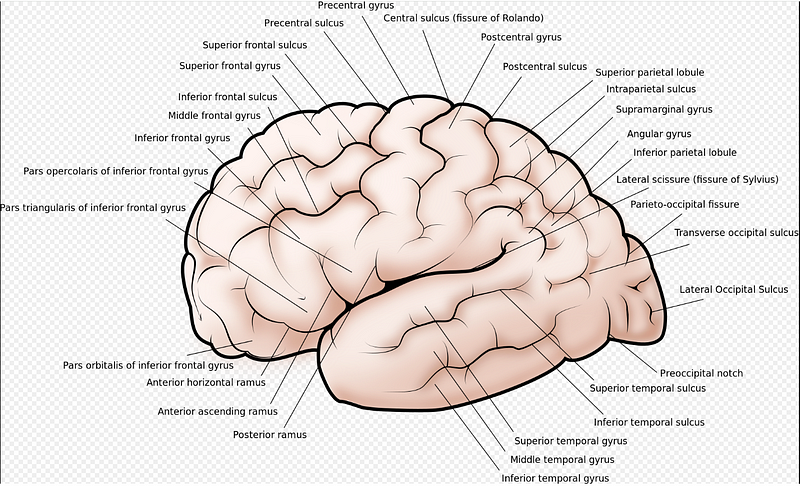
Neuroscientist Dr Paul D. MacLean introduced the Triune Brain Theory in the 1960s, articulated by Science in the 1970s. This theory suggests that the human brain consists of three distinct evolutionary layers: the reptilian complex, the limbic system, and the neocortex.
Here are the captivating words when I fell in love with this theory from Dr. MacLean’s own words:
“The human forebrain evolved to its great size while retaining features of three basic formations that reflect an ancestral relationship to reptiles, early mammals, and recent mammals. The three neural assemblies are radically different in structure and chemistry and, in an evolutionary sense, countless generations apart. Psychological and behavioral functions depend on the interplay of three quite different mentalities. The three evolutionary formations might be popularly regarded as three interconnected biological computers, each having its own special intelligence, subjectivity, sense of time and space, memory, motor, and other functions.”
My understanding was that three brain regions evolved independently and operated somewhat autonomously. He informed us that the basal ganglia and brain stem control movement and essential life functions, the limbic system manages emotional responses, particularly pronounced in mammals, and the cortex handles cognition and executive functions, primarily in humans.
I understood that evolutionary development progresses from basic behavioral responses to adding emotional responses that can modify these behaviors in the face of threats or challenges and finally to incorporating cognition to regulate emotional responses through reasoning, logic, and planning.
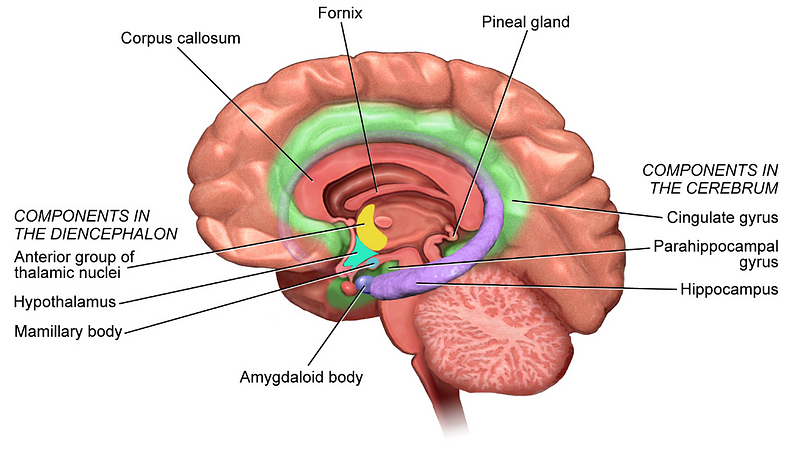
However, with further research from neuroscience and other disciplines, the Triune Brain theory has been subject to considerable debate and criticism within the scientific community. While it provided an influential framework for understanding brain evolution and function when it was proposed, many neuroscientists now consider it oversimplified and outdated.
Most critics argue that the theory’s depiction of the brain as composed of distinct, hierarchical layers is too simplistic and does not fully capture the complexity of brain structure and function based on what we learned in the last five decades.
Since the 1980s, when I started my research, subsequent research in neurobiology has provided evidence of extensive interconnectedness and overlap between brain regions, challenging the notion of clear-cut divisions proposed by the Triune Brain theory.
However, some aspects of the theory, such as recognizing the limbic system’s role in emotional processing and motivation, remain relevant and have been further elucidated by modern neuroscience research.
In my opinion, with all fairness, while the Triune Brain theory laid the groundwork for understanding brain evolution, it is no longer considered a comprehensive or accurate representation of brain anatomy and cognitive, emotional, and social functions. In the next section, I will explain the reasons in my own words, as assessed by researchers in the Frontiers paper.
The Summary of Criticism for Triune Brain Theory
These researchers, in the Frontiers paper, asserted that the triune brain theory faces several key challenges that require understanding based on a comprehensive literature review in neuroscience.
They wrote this paper because a more comprehensive evolutionary theory of brain function must integrate accurate knowledge of brain structure and function, focusing on adaptation, survival, and reproduction — core tenets of evolutionary theory. Evolving brain networks are interdependent, aiming to enhance adaptation for survival and reproduction.
Most importantly, they pointed out that evolutionary evidence does not support Dr MacLean's proposal that the brain evolved in successive stages, with newer structures layered over older ones. Primary neural regions are shared across all vertebrates, with differences in proportion and extent rather than in entirely new structures.
They used a metaphor saying that just as an elephant’s trunk is not a wholly distinct structure from a snout but a variation in proportion, the human brain similarly comprises proportionally different analogous structures compared to reptiles. The gradation of proportional shifts from reptiles to humans is not necessarily a linear progression.
Another challenge to the Triune Brain theory is related to the interconnected nature of brain structures and functions. While emotional responses involve activity in regions like the amygdala and limbic system, cortical areas and the brainstem are also active.
Furthermore, as I have discovered through my experiments, emotion and cognition are not isolated processes but are closely intertwined. I read many papers showing connections between emotional and cognitive responses in areas like the cingulate cortex as documented in this NIH book chapter.
Additionally, once thought primarily emotional, the limbic system is now understood to include regions like the hippocampus, which plays crucial roles in memory and cognition, as I explained in a previous story within the dementia context.
Consequently, the term “limbic system” has fallen out of favor in describing brain function, particularly in clinical contexts where dysregulation is better understood through a broader lens.
The critical nuance the Truin theory misses is that the brain doesn’t simply react to stimuli but rather predicts and adapts to internal and external needs based on its current state.
Recent neuroscience research findings offer new insights into how the brain responds to stress and adapts to its environment, as documented in the Brain’s Default Mode Network, further challenging the Triune Brain theory.
For instance, fear research in the journal Cell illustrates that there isn’t a distinct fear circuit in the brain that remains inactive until triggered. Instead, brain networks consistently exhibit activity, influencing how they process incoming information. What changes during a fear response is the relative activity of different brain networks activated based on demand.
These researchers asserted that these discoveries highlight the Triune Brain theory's inadequacy in aligning with contemporary research, and its application can lead to flawed hypothesis formation and study design.
As the paper cites, recent research suggests that the brain utilizes both interoceptive and exteroceptive information to predict and prepare for future conditions, facilitating optimal adaptation to dynamic internal and external environments.
In light of these advancements, they propose replacing the outdated term “triune brain” with a more fitting descriptor: “the adaptive brain.”
This conceptual framework depicts the interconnectedness and plasticity of brain regions, emphasizing the brain’s capacity to forecast and adjust to forthcoming needs and circumstances.
Rather than distinct emotional or cognitive circuits, the brain uses integrated networks to optimize bodily maintenance, emotion, and cognition and adapt to evolving demands.
Dysregulation of these interdependent circuits has significant implications for psychopathology, highlighting the relevance of this revised understanding of brain function.
An Overview of the Adaptive Brain Model from the Frontiers Paper
As the paper is very long, with 71 scientific citations to older research, and written in formal language, I will simplify and summarize them under ten descriptive headings in my own words to make it understandable to the public.
1 — Evolutionary Context
The adaptive brain has evolved over millions of years, primarily shaped by the hunter-gatherer lifestyle of early humans. This developmental period, known as the “Environment of Evolutionary Adaptation,” laid the foundation for our current brain adaptations, which were molded by challenges like resource scarcity and environmental dangers such as predators and extreme weather.
2 — Allostasis and Predictive Regulation
Allostasis (stability through change) is a fundamental concept that stresses the brain’s ability to predict and adapt to diverse environmental pressures. The brain anticipates future needs by continuously evaluating internal and external cues and orchestrates responses to maintain stability amidst uncertainty, balancing internal demands with external circumstances.
3 — Predictive Adaptation
A vital adaptation of the brain during evolutionary history is its capacity to simulate and predict potential outcomes in response to challenges and threats. The brain enhances adaptability by minimizing prediction errors and accurately forecasting outcomes, enabling rapid and efficient responses to changing environments.
4 — Network Organization and Adaptation
Contrary to the Triune Brain model, the brain operates through interdependent networks along interoceptive and exteroceptive axes. These networks integrate internal and external information, enabling the brain to shift attention between internally and externally directed activities based on predicted needs.
5 — Rapid Adaptation and Behavior
The brain’s allocation of resources and prioritization of strategies reflect its role as a predictor of internal and external environments. It aims to maintain homeostasis or initiate allostasis when necessary. Rapid adaptation, facilitated by prediction and error correction, is crucial for survival in a continually changing environment, emphasizing the brain’s focus on successful response under varying conditions.
6 — Rapid Stress Response for Survival
Affect (our current emotional state) is influenced by internal and external factors and is driven by neural circuits evolved for survival. These “survival circuits” guide our decisions, leading us to behaviors that maximize pleasure and minimize pain based on predictions of future emotional states. Emotions are not isolated but integrated responses to specific needs. Interdependent brain networks orchestrate adaptive reactions to threats or challenges.
7 — Intelligent Stress Response for Thriving
Intelligently coping with stress entails integrating cognition and emotion to tackle present challenges. Cognition, developed to solve life’s issues, draws from past experiences to envision future scenarios and strategize effectively. Emotion intertwines with cognition, shaping decision-making by assigning value to mental content. Our judgments are intertwined with our emotional states, reflecting a holistic view of our surroundings.
8 — Collaborative Stress Response
Cooperatively responding to stress involves using emotions, thoughts, and close social connections to adapt better. Throughout evolution, forming cooperative relationships has been vital for survival. This leads to strong social bonds that provide protection, resources, and mating opportunities, enhancing inclusive fitness. Pursuing social acceptance/status is deeply ingrained in human nature, reflecting a universal desire for belonging and success. Emotions, thoughts, and social bonds synergistically maximize the stress response, enabling greater adaptability in facing challenges.
9 — Emotional, Cognitive, and Social states
Over our evolution, three key adaptations have emerged to enhance our ability to predict and respond to challenges: quick emotional responses, slower cognitive processes, and seeking help from others. These responses work together to enable fast, intelligent, and cooperative reactions to life’s stressors, orchestrated by interconnected brain networks. Emotion, cognition, and social connections are broad strategies influencing specific actions in different situations. Our current emotional, cognitive, and social states shape our reactions to threats and challenges.
10 — Desired Integrated Outcomes for Better Mental Health
The brain’s primary function is to create adaptive models of external and internal environments, vital for maintaining stability and instigating adaptive responses. We know the interconnectedness of brain networks.
By integrating information from within and outside the body, the brain can forecast future metabolic needs, adjust to changing circumstances, and promote adaptation and well-being.
This process involves active inference, where the brain predicts outcomes based on potential actions. Moving beyond the constraints of previous models, understanding the brain’s adaptability provides fresh insights into health and disease.
Dysfunctions in brain regions like the insula and prefrontal cortex can contribute to conditions like depression, anxiety, and schizophrenia, highlighting the brain’s significant role in disease development and suggesting novel treatment approaches.
Theoretical & Clinical Implications of the Adaptive Brain Model
1 — Summary of Theoretical Aspects: The theoretical implications suggest that understanding the brain’s integrated and adaptive nature requires examining interconnected brain regions rather than isolated structures. Investigating how these regions functionally and anatomically connect is essential for comprehending brain function in health and disease. The brain’s adaptive capacity relies on integrating interoception, exteroception, and emotion, necessitating a shift in models of brain function. Dysfunctions in adaptive systems, like those involved in prediction and error processing, can lead to mental illness and other disorders.
2 — Summary of Clinical Aspects: Adaptive Brain theory will offer a promising model for comprehending and addressing mental illness, particularly given the challenges faced in traditional approaches to diagnosis and treatment. The NIH's Research Domain Criteria initiative represents a shift towards a dimensional understanding of mental health, integrating psychology, biology, and neuroscience. This approach aligns well with theories such as LeDoux’s survival circuits, Barrett’s constructionist view of emotions, and Lang’s psychophysiological model of affect and motivation. By considering current neuroscience findings in a broader dimensional framework, there is potential for significant advancements in mental illness prevention and treatment.
Conclusions: Goodbye Triune, Welcome Adaptive Brain
You may wonder what these remarkable statements mean to the public. I wrote this summary to highlight the evolution and adaptive nature of the human brain, shaped by millions of years of survival challenges producing magical biochemicals like β-Hydroxybutyrate.
Understanding key concepts like allostasis, predictive adaptation (neuroplasticity), and network organization emphasizes the brain’s ability to anticipate and respond to changing environments. I explained neurogenesis before.
Emotions, cognition, and social bonds are essential adaptations that work together to help us navigate stress and other challenges. Emotions are vital in guiding our responses, while cognition enables problem-solving and planning for the future.
Meaningful social connections can further enhance our ability to adapt and thrive. Understanding these adaptive mechanisms offers new insights into mental health and disease and suggests innovative approaches for diagnosis and treatment.
By integrating neuroscience findings into a broader and more accurate model, there is hope for significant progress in addressing mental health conditions like anxiety, depression, schizophrenia, and post-traumatic stress disorder better, ultimately improving our collective well-being.
Thank you for reading my perspectives. I wish you a healthy and happy life.
To inform my new readers, I wrote numerous articles that might inform and inspire you. Some of my topics include brain, mental health, cognitive function, significant health conditions, longevity, nutrition/food, valuable nutrients, ketogenic lifestyle, self-healing, weight management, writing/reading, and humor, including 100+ Insightful Life Lessons from My Circles for the Last 50+ Years.
I publish my health and wellness stories on EUPHORIA. My posts do not include professional or health advice. I only document my reviews, observations, experiences, and perspectives to provide information and create awareness.
If you are a writer, you are welcome to join my publications by sending a request via this link. I support 27K+ writers who contribute to my publications on this platform. I also have another profile to write and curate tech stories.
Importance and Value of Medium Friendship for Writers and Readers


