
Nanotechnology in Medicine
Advances in Diagnosis and Treatment
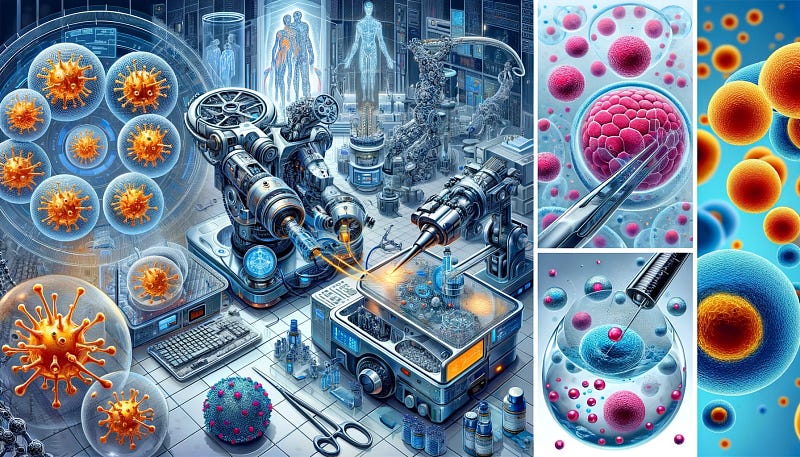
Nanotechnology is an emerging medical innovation expected to transform and redefine the diagnosis and treatment paradigms. This microscopic technology, which operates at one billionth of a meter, promises to revolutionise healthcare by offering unprecedented precision and personalized care. As nanotechnology in medicine improves its real-world applications, it will profoundly impact patient care.
The Nanotech Revolution in Diagnosis
Nanotechnology has significantly advanced medical diagnostics capabilities, enabling early disease detection with greater accuracy than ever before. By leveraging nanoparticles’ unique properties, researchers have developed highly sensitive diagnostic tools to detect biomarkers at minuscule concentrations, often well before the clinical symptoms manifest.
One striking example is the use of magnetic nanoparticles for early cancer detection. These nanoparticles are designed to bind specifically to cancer cells, making them visible under magnetic resonance imaging (MRI) with exceptional clarity. This method provides a non-invasive diagnostic tool and allows for real-time monitoring of tumour growth and response to treatment. For example, magnetic nanoparticles, such as superparamagnetic iron oxide nanoparticles, can detect sentinel lymph nodes for breast cancer and gallbladder cancer in animal models within a timeframe that would enable them to be used during surgery with a magnetic probe.
Another noteworthy advancement is the development of nanofluidic chips, which can analyze tiny blood or saliva samples to detect diseases like diabetes, HIV, and various types of cancer at an early stage. These chips offer a rapid, accurate, and cost-effective diagnostic solution, particularly beneficial in low-resource settings. Nanofluid chips are also being researched for energy conversion, water desalination and biotechnology applications.

Breakthroughs in Treatment
Nanotechnology’s role in treatment is equally groundbreaking, offering targeted therapies with reduced side effects and enhanced efficacy. Nanoparticles can be engineered to deliver drugs directly to diseased cells, sparing the healthy ones. For example, this is a significant advancement over traditional chemotherapy affecting healthy and cancerous cells.
A prime example of nanotechnology in treatment is using liposomal nanocarriers to deliver chemotherapy drugs. These nanocarriers encapsulate the drug molecules, protecting them from being degraded in the bloodstream and directing them precisely to the tumour site. This approach has been successfully applied in the treatment of ovarian cancer and Kaposi’s sarcoma, demonstrating improved outcomes and reduced toxicity.
Another innovative application is the development of dendrimer-based therapies for fighting bacterial infections and cancer. Dendrimers are nano-sized, branched molecules that can carry multiple drug molecules and imaging agents to diseased cells. Their highly controlled structure allows for the precise delivery of therapeutics, minimizing side effects and improving patient compliance.
The Future of Nanomedicine
As nanotechnology continues to evolve, its potential applications in medicine are boundless. Future advancements may include the creation of nanobots capable of performing repairs at the cellular level or developing nanosensors that continuously monitor blood glucose levels and automatically administer insulin to diabetes patients.
Integrating nanotechnology into medicine also poses new challenges, including ethical considerations, regulatory hurdles, and the need for extensive clinical trials to ensure safety and efficacy. Despite these challenges, the relentless pursuit of innovation in nanomedicine promises to transform healthcare, making diseases that are currently incurable manageable and further extending human life.
Nanotechnology in medicine represents a paradigm shift in diagnosis and treatment, offering more sensitive, precise, and personalized tools than ever before. From early detection of diseases to targeted therapies with minimal side effects, the advancements in nanomedicine are setting the stage for a future where medical care is not only about treating illnesses but preventing them at their molecular roots. As we stand on the brink of this new era, the potential for nanotechnology to improve and save lives is immense, heralding a new dawn in healthcare that was once the realm of science fiction.
Thank you for reading! If you enjoy my writing, it will help me to follow and subscribe so I can keep contributing engaging content.
Subscribe Here For an Email Reminder of my next post.
Thanks for reading
- 👏 Please clap for the story (50 claps) to help the article to be spread
- 🌐 Share the story on Social Media
- 📝 Join the Medium Membership Program for only 5$ a month, and support other writers and me to keep up the tremendous work.