
Beyond Earth: Designing Martian Habitats
A Revolution in Architecture on the Red Planet
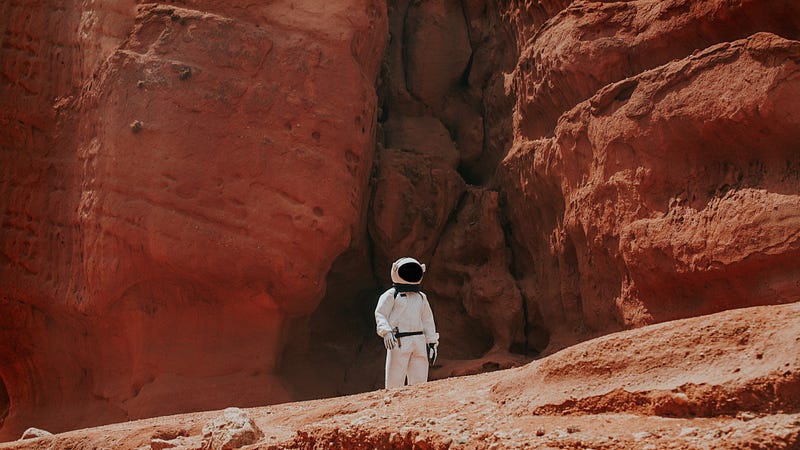
Exploring Innovative Design Concepts, Human-Centered Approaches, and Environmental Sustainability
The Pioneering Era of Martian Architecture
As the dream of human colonization on Mars becomes increasingly tangible, architects and designers are grappling with the challenge of creating habitats that are not only functional and resilient but also conducive to the psychological well-being of the inhabitants. In this exploration, we delve into the cutting-edge design concepts, human-centred approaches, and environmental sustainability strategies shaping the architecture of the Red Planet.
Innovative Design Concepts for Martian Habitats: Modular Marvels and 3D Printing Prowess
The revolutionary idea of modular structures and 3D printing technology is at the forefront of Martian architecture. As explored by leading architects and engineers, modular habitats offer flexibility in construction, adaptability to varying terrains, and the potential for rapid assembly. 3D printing, utilizing Martian regolith as a primary material, minimizes the need to transport building materials from Earth and ensures a cost-effective and sustainable construction process. Projects like ICON's "Project Olympus" showcase the possibilities of 3D-printed habitats with intricate designs that seamlessly integrate into the Martian landscape.
Advanced Materials Defying the Martian Elements
Surviving on Mars requires materials that can withstand extreme temperatures, radiation, and the thin atmosphere. Architects are exploring various advanced materials, such as aerogels and carbon-fibre composites, to create habitats that provide insulation, radiation protection, and structural integrity. The collaboration between scientists and architects has resulted in designs that push the boundaries of conventional construction, redefining what is possible in the Martian context.
The Human Element in the Void: Psychological Well-Being in Isolation
While the technological feats of Martian architecture are awe-inspiring, the focus is shifting towards the human element. Researchers are delving into the psychological challenges of isolation and confinement on Mars. Concepts such as biophilic design, incorporating nature-inspired elements, aim to counteract the potential mental health impacts of living in a confined space for extended periods. Mars habitats are envisioned not just as shelters but as environments that nurture the mind and spirit, with considerations for lighting, colour schemes, and communal spaces that foster a sense of connection.
Efficiency and Comfort: Optimizing Living Spaces
In the pursuit of efficiency, architects are reimagining living spaces on Mars. Compact designs that maximize utility without sacrificing comfort are emerging as a critical trend. From foldable furniture to multifunctional living spaces, the emphasis is on creating environments that support the physical and mental well-being of the inhabitants. The challenge lies in balancing the need for functionality with the human desire for comfort and personal space in the confines of a Martian habitat.
Resource Utilization and Closed-Loop Systems
Sustainability is not just a buzzword in Martian architecture but a necessity. Articles exploring resource utilization delve into the potential of closed-loop systems that minimize waste and maximize efficiency. Hydroponics and aeroponics systems for food production and water recycling technologies exemplify the commitment to creating habitats on Mars that can function independently and sustainably. This approach ensures the colonies' long-term viability and minimizes the environmental impact on the Red Planet.
Energy-Efficient Systems and Power Generation
With limited sunlight and no traditional power sources, energy-efficient systems are a cornerstone of Martian architecture. Solar power, coupled with innovative storage solutions, is a primary focus. Articles discuss advanced solar technologies, such as thin-film solar cells and concentrated solar power, as well as the potential integration of nuclear power sources. The challenge lies in balancing energy requirements with the need for lightweight and durable systems capable of surviving the harsh Martian conditions.
Waste Management and Recycling Strategies
On Earth, waste is a problem to be managed. On Mars, it becomes a valuable resource. Articles exploring waste management strategies on the Red Planet emphasize the importance of recycling and repurposing materials. From converting organic waste into fertilizers for Martian agriculture to 3D printing to transform discarded materials into new structures, the goal is to create a closed-loop system that minimizes the ecological footprint of human colonization on Mars.
Shaping the Future of Martian Habitats
As we stand at the precipice of interplanetary colonization, the architectural innovations discussed here mark the first steps towards creating sustainable and human-centric habitats on Mars. The intersection of technology, design, and environmental consciousness is forging a new era in architecture, transcending the boundaries of our home planet and opening the door to a future where Mars is not just a distant neighbour but a second home for humanity. The journey to the Red Planet is not merely a scientific endeavour but an artistic and philosophical exploration of what it means to design and inhabit spaces beyond the familiar confines of Earth.
Until next time.
Thank you for reading! If you enjoy my writing, it will help me to follow and subscribe so I can keep contributing engaging content.
If you are interested, perhaps reading "A City on Mars: Can We Settle Space, Should We Settle Space, and Have We Really Thought This Through?" may interest you.


