
My Verdict on Siri (Hold Onto Your Trousers…)
It’s been a tough few weeks
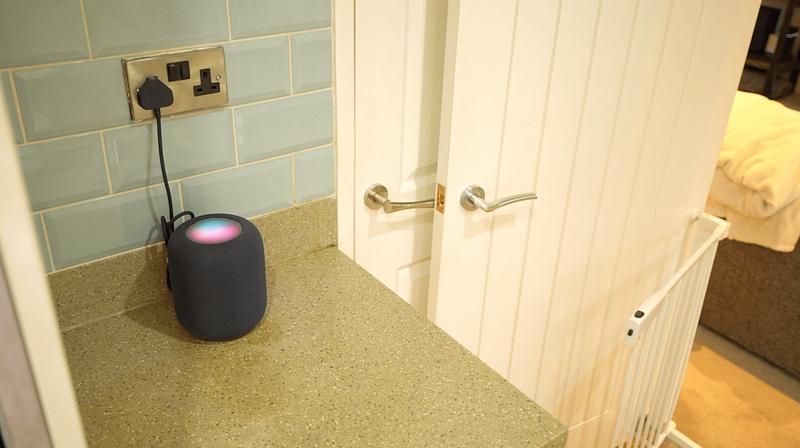
A few weeks ago, I removed all (there were only two) Amazon Echo devices from our home. In their place, I plonked a previously-abandoned HomePod mini and a brand-new 2023 HomePod (the big one).
The plan was simple: swap Alexa for Siri and see how good Apple’s digital assistant really is.
Siri has endured a rough ride since Apple acquired it in 2010 and began baking it directly into iPhones, iPads, Macs, the Apple TV, and the Apple Watch. It has been the butt of many internet memes, the subject of countless comparisons with Google’s and Amazon’s offerings, and, consequently, forever a thorn in Apple’s side.
I’m nothing but fair, though, and I wanted to give Siri a proper chance in our house.
Spoiler: it has been a rough ride.
How we use our home assistant
I should clarify at this juncture that we’re not heavy digital home assistant users. Far from it, in fact.
With the help of Alexa, we time our eggs, remind ourselves when to put the bins out, check tomorrow’s weather, and ask for the local radio station to be played.
We are not pushing this stuff to its limits.
However, I think our use is pretty typical of most people. Siri, Alexa, and Google Assistant are capable of some truly impressive stuff — particularly when you create automations and connect them to other smart home devices. But for most families, the ability to set timers, check the weather, and play
So, at least we’re demonstrating a typical use case, and, in theory, not giving Siri too much to worry about.
You’d think.
My Siri setup
As noted earlier, we now have two HomePods installed at home. The 2023 HomePod resides in the kitchen (where an Amazon Echo Studio used to reside) while a HomePod mini takes the place of an Echo Dot in the dining room.
We also have an Apple TV 4K in the living room. All are separated by only a few feet — we’re certainly not pushing the limits of our home WiFi with this setup, either.
Although, I should also note that we have two iPhones, three Macs, two Apple Watches and multiple iPads in the house at any one time.
Forgive me — I’m a tech YouTuber.
All of those devices, bar the Macs, are set to listen out for Siri.
It already sounds chaotic, doesn’t it? Certainly, I wouldn’t want to be in charge of this stuff at Apple; even before you start putting it to use, the task Siri has ahead of it just in terms of delivering requests on the right device feels monumental.
Siri at home: what works
There are some great things about Siri at home. The first is something my girlfriend picked up on immediately.
“Siri is a lot nicer than Alexa,” she said a few hours after I’d installed the HomePods. “She just seems more pleasant and not quite as abrasive.”
I agree. Anyone who has used Alexa for an extended period of time may have picked up on what feels like an increasing lack of patience on behalf of the digital assistant. This is a placebo effect; Alexa doesn’t actually get grumpy with time, but there’s definitely more warmth to Siri.
The presence of Apple Music without any long-winded setup or compatibility issues is also great. Apple Music remains my main streaming service and to have it comprehensively baked into my home speakers makes a genuine difference.
Although not related directly to Alexa, the HomePods sound pretty good, too. They’re not on par with Sonos, but the ability for both HomePods to fill the room with pleasing sound (if you don’t mind an occasionally flabby bass response from the big one) is admirable.
Then, it all gets a bit horrible.
Siri at home: what doesn’t work
My girlfriend summed up Siri perfectly yesterday. “For something that sounds so helpful, it isn’t very helpful at all.”
She’d endure a typically torrid day with our new assistant. Steadfastly refusing to connect to a fully-present internet connection and taking forever to deliver the simplest of requests, Siri on the HomePod had forced Jen to turn to her phone for timers, music, and answers.
If I had to pinpoint one specific issue with Siri which trumps all others, it’s the snails-paced replies. “Working on it”, “I seem to be having trouble connecting to the internet — check the Home app for more information”, “hmm… I’m not sure”, “still working on it”. It’s infuriating — particularly when all you’ve asked for is a ten-minute timer.
I should clarify that we haven’t changed anything else in our house. It’s the same broadband connection, the same router, and the same room in which the smart speakers are placed; the only difference is the fact we’re now using Siri instead of Alexa.
There are other frustrations. Getting Siri to play radio stations requires the most specific of requests — and sometimes, even those don’t work. Similarly, asking Siri to play music across multiple HomePods (and, if you’re feeling fruity, your Apple TV, too) throws you both helplessly into a world of confusion. There isn’t a device called that, apparently. “Sorry, Mark — that’s not possible”. “Working on it”. Etc.
Just like the perceived lack of patience Alexa seems to develop over time, Siri appears to be fully aware of how frustrating the experience is. The sense of disappointment and resignation in her voice when delivering the bad news of a failed request is palpable.
Oh, and the inability of Siri to respond on the most useful device is a big problem. It’s not an easy one to solve, I know, but if your iPhone is unlocked, or there’s a pair of AirPods in your ears, those devices always take precedence over HomePods. That doesn’t always deliver the most appropriate result, I’m afraid.
I’ve always sat on the fence when it comes to Siri. This is, mainly, because I’ve never really used it that much, but now it’s integrated into our home — for the simplest list of duties — I can see what all the fuss is about.
Siri is awful.
The competition
I recently reviewed the Sonos Era 100 and Era 300. They are superb-sounding speakers (as you’d expect) with the benefit of having Alexa built in.
Both of those speakers are currently installed at my studio, and they have been flawless from day one. Asking for music to be streamed on specific speakers — or both — works immediately, and Alexa requests are as reliable as they’ve always been.
The Era 100 and Era 300 even have their own Sonos Voice Control, voiced by Breaking Bad star Giancarlo Esposito. He’s friendly, responsive, and can deal with requests far better than Siri.
The Sonos products are more expensive than their Apple counterparts (and I maintain that there really isn’t a direct HomePod competitor for the Era 100) but you really do get what you pay for in this instance.
What’s next?
Jen has ultimate patience with my job, but I do wonder if Siri might be the thing to push her over the edge. I’ve promised a relatively short testing period, but, equally, I have requests to fulfil from you lovely lot. You want me to add to the HomePod setup and try out the stereo pairing.
I’m keen to do this, but, in reality, I think that means moving the HomePods to the studio and installing the Sonos Era speakers at home.
This wasn’t the plan. I fully intended to make our home Siri-only for the long term. It’s just too broken, still, to make that tenable.
Before you go
Join my Substack newsletter for tips on becoming a profitable, happy online creator!
If you enjoy my writing, it’s only a snippet of what’s on Medium. I’m a paying member myself and highly recommend joining. Click here to join (a portion of your membership fee will be sent my way and therefore directly support my work!).
Originally published at https://markellisreviews.com on April 6, 2023.


