
Has Sonos Beaten Apple?
It’s time for my Sonos Era 100 and Era 300 review!
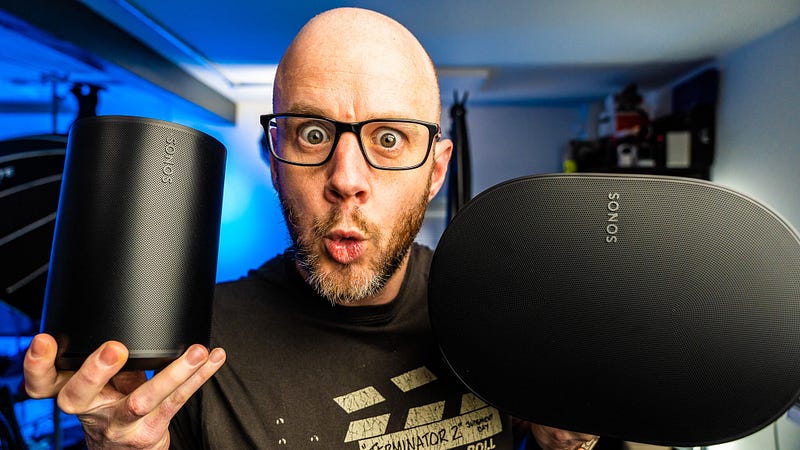
Woah, what’s this? New Sonos gear… right after Apple surprised us with a new HomePod?
This is going to get interesting.
I have quite a long history with Sonos. I’m one of those who had the original Bridge-based setup which required oodles of commitment and a fairly hefty chunk of disposable income if you wanted to fill your house with sound.
Since then, a couple of house moves have unfortunately resulted in me all but abandoning my home-filling audio setup. Instead, I’ve been running an embarrassingly simple Amazon Echo ‘network’ and, more recently, a full conversion to Siri and Apple’s HomePods.
So, when Sonos asked if I’d like to review their new Era 100 and Era 300 speakers, I jumped at the chance.
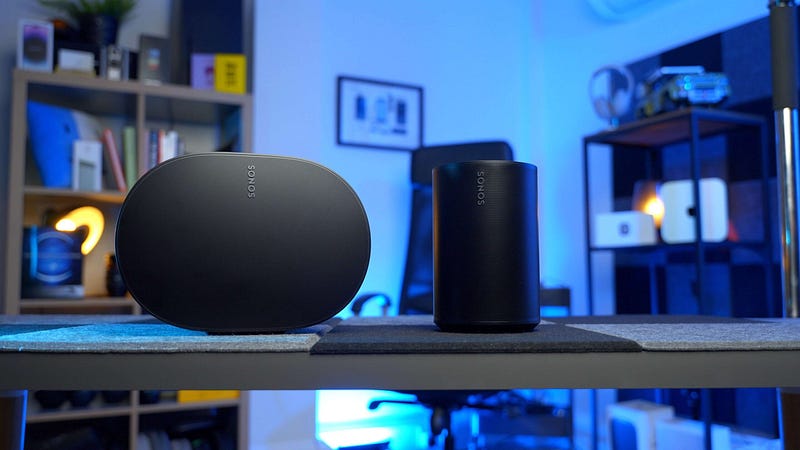
Is this a new ‘era’ (nice, Sonos, nice) for the original multi-room audio king? And, more importantly, are they still several steps ahead of Apple?
Specs and pricing
Both the Era 100 and Era 300 herald a new design direction for Sonos. They’re also the most sustainable speakers the Californian company has ever made and offer some compelling upgrades on the speakers they’re either directly replacing — or, objectively, seem to be replacing.
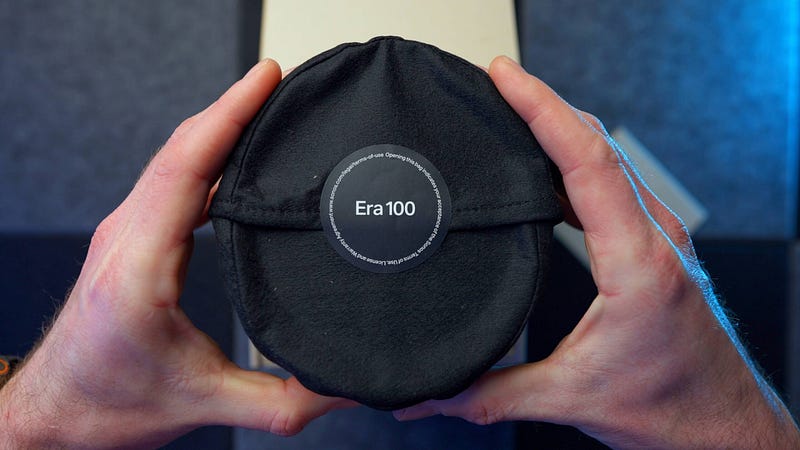
The Era 100 is a replacement for the venerable Sonos One (which remains on sale, but whose days are numbered). Sonos tells us that the new speaker is “reinventing a category-leading icon”, which is a fair shout; the Sonos One was a huge hit with critics and remains one of the most impressive small smart speakers on the market.
For the first time in this form factor, Sonos provides us with stereo sound on the Era 100, thanks to how its tweeters are angled. It also features a 25% larger mid-woofer, a new processing unit, and the aforementioned slim design. Clocking in at £249, it’s £70 more expensive than the speaker it replaces.
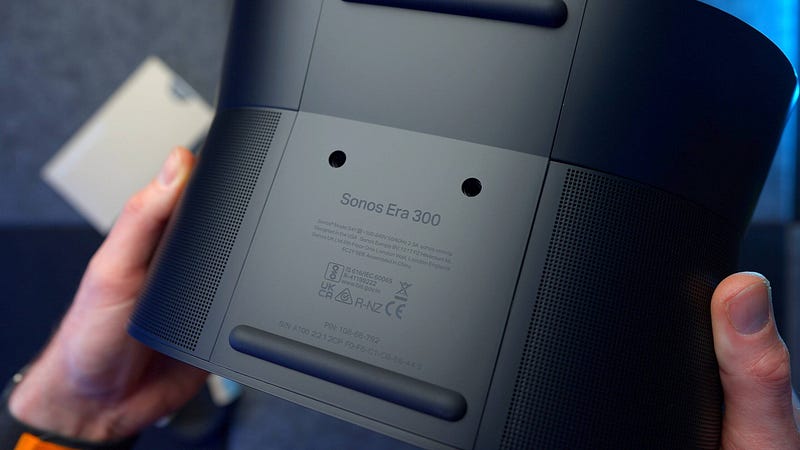
The Era 300 appears to be angling for sales that may otherwise be directed towards the acclaimed Sonos Five, but it’s an entirely different animal. Featuring spatial audio, Dolby Atmos support, and impressively packed internals that includes six class-D amps, four tweeters, and two woofers, the Era 300 immediately goes some way to justifying its £449 price tag.
That’s the problem, though. Sonos gear has always been expensive, and the Era 100 and Era 300 do nothing to remove that label. So, they had better live up to it, eh?
Setup and design
Design is an incredibly subjective topic, but I’m a big fan of the new design direction Sonos is taking with the Era series. It’s purposeful, and understated, and maintains the ability of all Sonos gear to reside practically anywhere and not look out of place.
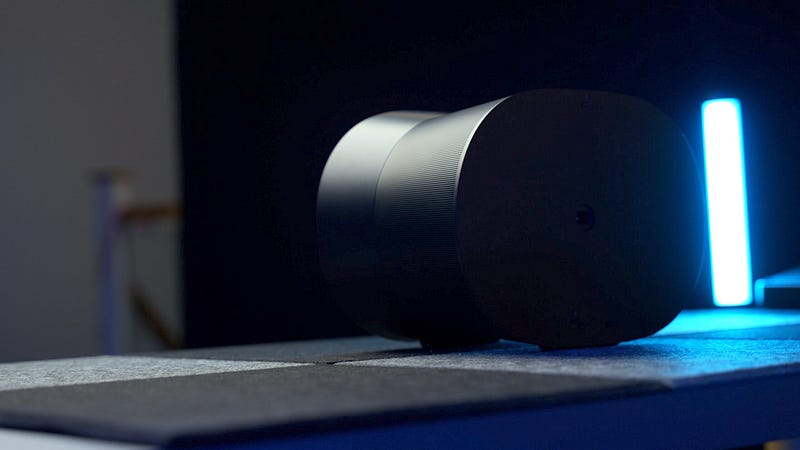
Both speakers are also built like tanks, as you’d expect from Sonos. They also feature new capacitive touch controls (including a responsive volume slider) and are available in either black or white. I’d opt for the latter if I were you; my review units are the black versions which are immediate fingerprint magnets.
Sonos has clearly worked hard on its setup procedure over the years, and it’s about as plug-and-play as it needs to be. Just plug the speaker in, download the Sonos app, and follow the instructions — simple. Or, at least it should be.
Whereas the Era 100 setup process passed smoothly, the Era 300 caused me some issues. It flat-out refused to connect to my Wi-Fi, which resulted in me having to undertake several resets of both my router, the Era 300 itself, and the app. I got there in the end, and I have no idea what the root cause was, but be prepared for a bit of back-and-forth if you’re similarly unlucky.
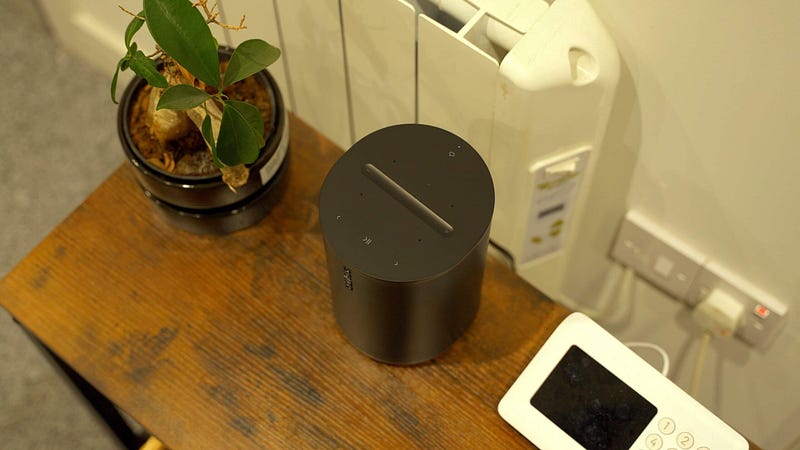
As for everything else, it was plain sailing. The sheer wealth of services you can add to Sonos these days is jaw-dropping, and connecting Alexa was as simple as it should be. Both speakers are also compatible with Apple’s AirPlay 2 protocol and appeared immediately for me on my iPhone’s audio device control.
Sound
If you’ve heard a Sonos speaker before (particularly the One) you’ll appreciate what I’m about to say. I’ve always marvelled at how much sound Sonos manages to extract from such a small package.

Their speakers sound powerful and clear, and can easily fill room sizes that should be beyond their capabilities. It’s a standard set by Sonos and one they need to maintain.
The good news? The Era 100 and Era 300 continue this trend — and step it up several notches, too.
The first thing that struck me with both speakers is how loud they are. Cranking up the volume resulted in output that veered into uncomfortable territory without anything even remotely resembling distortion. Like many powered speakers of this kind, they noticeably drop the lower frequencies as the volume increases, but maintain plenty of punch and detail while doing so.
The presence of stereo sound on the Sonos 100 is welcome, but ultimately rather inconsequential, given how these speakers are typically enjoyed. You place them in the room and forget about them, and if you want a true stereo experience, you buy a pair. Spatial audio on the Era 300 is another matter, though — this does have the effect of filling the room and ensuring no corner is left without great sound.
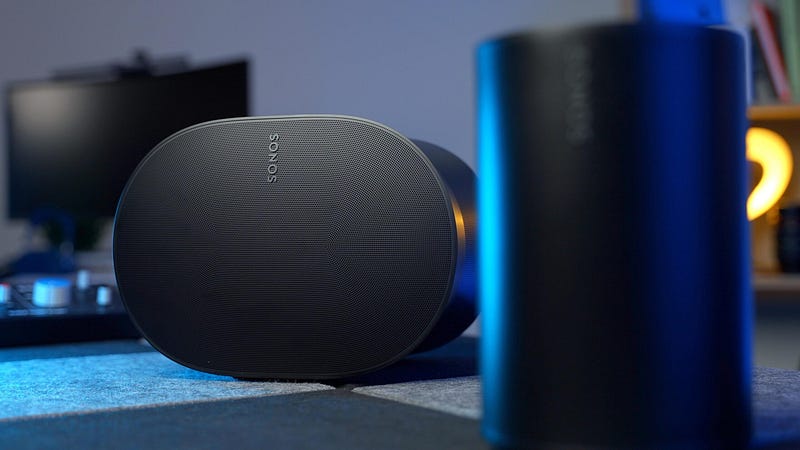
The only thing I couldn’t test was the Dolby Atmos capabilities, but I’ll investigate that soon.
Put simply, the Era 100 and Era 300 are wonderful home speakers. The bass is punchy and avoids muddiness, and they both handled every genre I threw at them brilliantly. They will rock any house party but are just as capable of providing a serene, relaxing backdrop to any day around the house.
Smarts
Amazon’s Alexa can be added to both the Era 100 and Era 300. As noted earlier, it’s a super simple setup and works immediately.
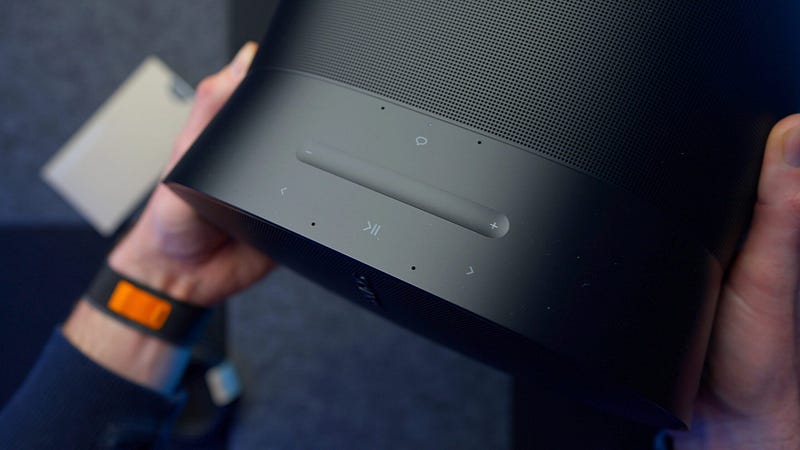
Although this opinion won’t chime with everyone, I still find Amazon’s home assistant to be the best on the market; it rarely misunderstands what I ask of it, and doesn’t reach for a Google search quite as readily as Apple’s Siri.
The Alexa experience on the Era 100 and Era 300 is fantastic. The mics seem to be just as responsive as those found on Echo devices, and you get the bonus of a barnstorming speaker system built into your Alexa, as a result.
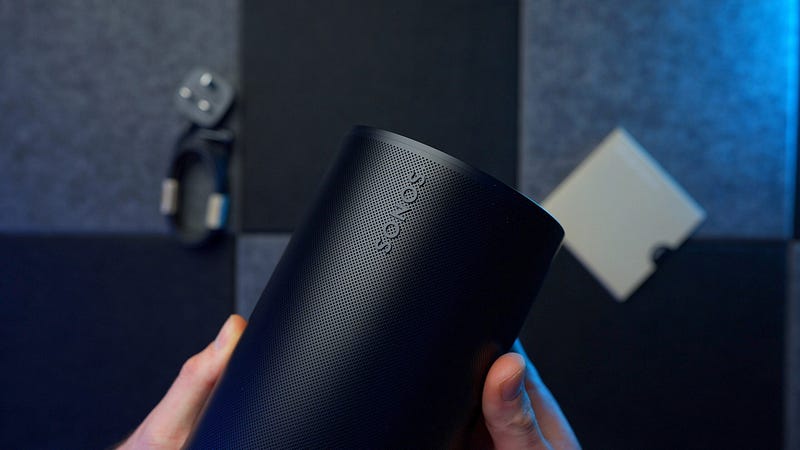
There’s also Sonos Voice Control, which is a little more easily confused than Alexa (during my tests, it regularly misunderstood my requests for certain music or radio stations) but which includes one of the nicest assistant voices I’ve ever heard. Narrated by Breaking Bad star Giancarlo Esposito, it adds genuine personality. Ask for a particular song and — providing he gets it right — you’re met with a confident “sure”, or “great choice”. I love it.
Is the Era 300 better than the HomePod?
I’m excluding the Era 100 from this comparison because while some might be drawn to it as an alternative to the big HomePod, it isn’t technically the direct competitor for Apple’s smart speaker.
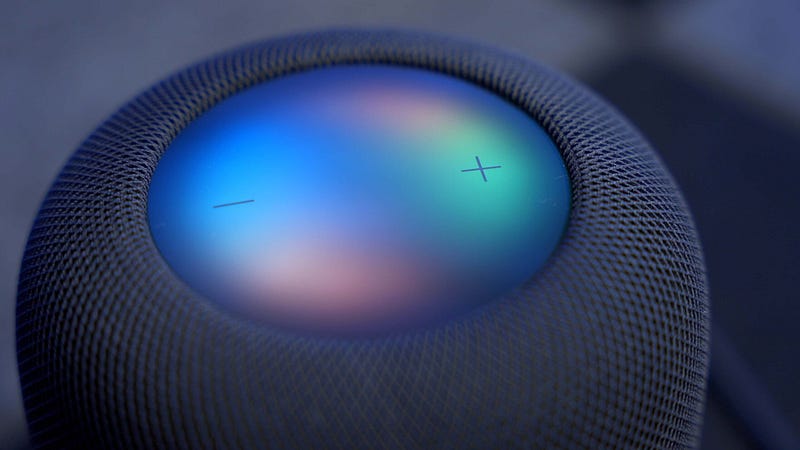
That mantle falls to the Era 300, which features a similar approach to spatial audio and Dolby Atmos support as the 2023 HomePod.
When it comes to sound, the Era 300 is a clear winner. The new HomePod sounds great, but it does suffer from a flabby bottom end on certain tracks. Apple’s speaker is also slightly muddier than the Era 300, which provides admirably clear audio straight out of the box.
There’s no competition in the area of smarts. As clever as the HomePod might be at room-filling audio thanks to Apple silicon, it is let down by Siri. We’ve been using Apple’s assistant at home for the last few weeks, and it is a frustrating experience; requests are often misunderstood, answers take forever to arrive, and confusion reigns whenever you ask for a piece of music to be played across multiple sources.
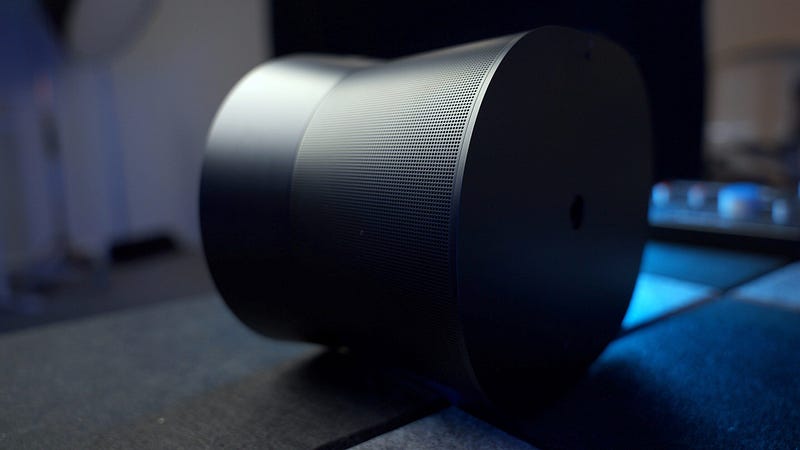
Room syncing is worthy of mention, too. This has always been Sonos’s raison d’être, and the Era series continues the trend of being rock solid when you expand beyond one speaker. The HomePod struggles with this. At first, multi-room audio appeared to be ok with Apple’s devices, but it has gradually become frustratingly unreliable. Although there are downsides to the reliance on the Sonos app, it does at least provide a dependable way of switching between speakers and syncing them all up; HomeKit seems to get itself in a right ol’ two and eight.
Conclusion
Sonos doesn’t make cheap speakers. If you want to get into this ecosystem, you’re going to need some serious disposable income and commitment to ongoing investment in your home audio.
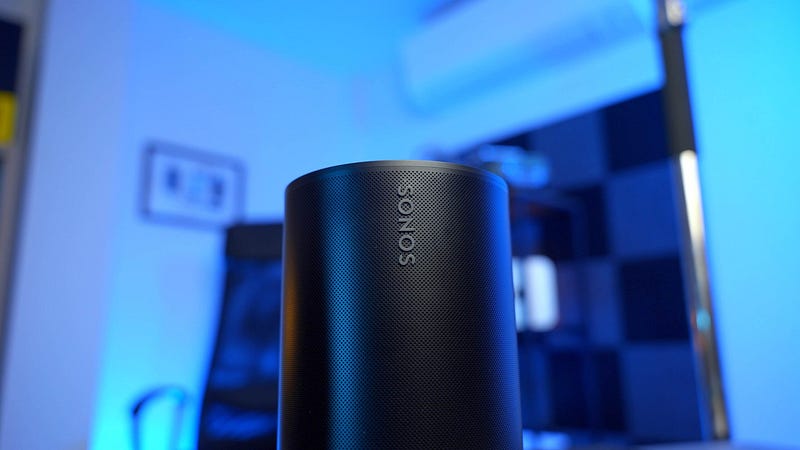
The Era 100 and Era 300 exemplify this. There are cheaper alternatives out there (including, unusually, Apple’s) but nothing comes close in terms of the combination of sound quality, ease of use, reliability, and service integration.
I’ve been out of the Sonos game for a while now, but the Era 100 and Era 300 have reignited my interest. They sound wonderful and have that unique Sonos ability to tempt you to dive in further when funds allow.
Siri’s days at home could already be numbered, I’m afraid.
Before you go
Join my Substack newsletter for tips on becoming a profitable, happy online creator!
If you enjoy my writing, it’s only a snippet of what’s on Medium. I’m a paying member myself and highly recommend joining. Click here to join (a portion of your membership fee will be sent my way and therefore directly support my work!).
This post includes affiliate links
Originally published at https://markellisreviews.com on April 3, 2023.