
The 10 YC Companies (S17) I’d Invest In
124 companies (YC’s largest-ever Summer class) presented at the mother-of-all demo days on 8/21 and 8/22.
Interested in Investing in Startups Like These?
Check out the Mitchell Ventures syndicate on AngelList here: https://angel.co/mitchell-ventures/syndicate
Here are the top 10 companies I’d invest in and why
**Credit to TechCrunch for their descriptions of the companies below**
- Zendar — High definition radar that allows self-driving vehicles to see in all weather conditions

TechCrunch Description: Zendar develops high-definition radar for autonomous vehicles. Today, autonomous vehicles rely on two main technologies: Lidar and traditional radar. Lidar can see in high definition, but does poorly in bad weather, while radar is great in bad weather conditions, but can’t see in high resolution. Zendar seeks to provide high-res imagining for self-driving cars in bad weather, allowing all-weather autonomy.
Why I Would Invest: Auto-makers and technology companies are buying up every autonomous supplier and company in sight (see Cruise, MobileEye, etc.) If Zendar’s technology proves to ultimately be 1/2 as effective and 1/2 as applicable as it seems, it still will be a HUGE win.
By 2035, 12 million fully autonomous units could be sold a year globally, and the market for partially and fully autonomous vehicles is expected to leap from about $42 billion in 2025 to nearly $77 billion in 2035 (BCG).
2. PullRequest — A marketplace for code review
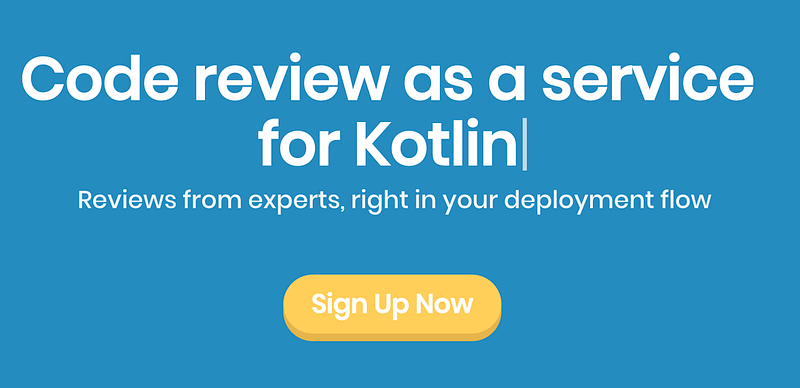
TechCrunch Description: Pull Request is a marketplace pairing corporate code with freelance code reviewers looking for a side hustle. The team is recruiting reviewers that have experience from top tech companies like Amazon, Facebook and Dropbox. With this pedigree, PullRequest has managed to draw interest from 450 teams. Though only a portion of these are actually using the service, PullRequest touts a $136,000 annualized revenue run rate. Together, startups and Fortune 500 companies spend an estimated $40 billion on code reviews. The secret sauce of PullRequest lies in automation techniques that allow the startup to do reviews faster and more accurately.
Why I Would Invest: Although I’m pretty sure developers won’t be thrilled by the idea of having an ‘outsider’ provide a code review, PullRequest offers a pretty compelling value for companies that can’t hire fast enough. If they can nail high quality reviews at compelling prices, they have a shot to break into other parts of the development cycle and fill some of the developer supply gap.
3. 70 Million Jobs — Job recruitment platform for America’s formerly incarcerated

TechCrunch Description: There are 70 million Americans with a criminal record in this country and when it comes to finding employment, things can get complicated. 70 Million Jobs is a for-profit recruitment platform that connects companies with applicants. Founder Richard Bronson knows some of the challenges facing the recently incarcerated, as he spent two years in a federal prison after being convicted of securities fraud in 2002. Since then he has joined with Defy Ventures to help formerly incarcerated people get a second chance through entrepreneurship. The startup is starting its efforts with job recruitment, working with companies like Uber, but Bronson hopes the startup becomes a hub for providing services to those with a criminal record.
Why I Would Invest: 70. million. people.
The addressable market here in the United States alone is HUGE and completely unserved.
Does Indeed offer a filter for jobs that hire the formerly incarcerated? No.
Today, by and large, these candidates never make it past the first automated resume filters. If 70 Million Jobs changes that for even a fraction of this population, they will make a huge impact on the US job market and will drive substantial revenue.
4. Ubiq — Screen-sharing solution for enterprise conference rooms
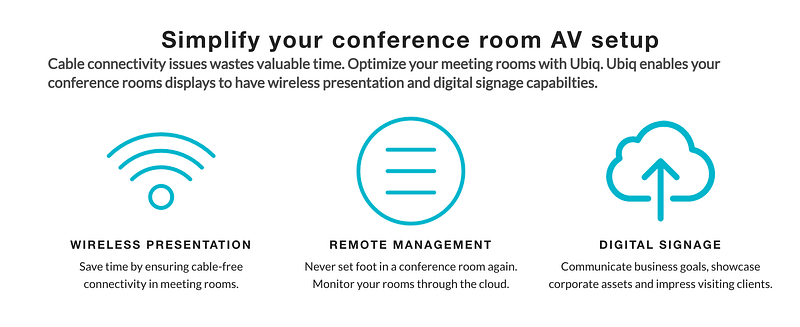
TechCrunch Description: No matter how amazing technological advances seem to get, telepresence business meetings are still awful. Ubiq is aiming to simplify conference room screen sharing with their cable-free setup that cuts down on confusion and lets businesses focus on the tasks at hand. It’s basically bringing enterprise-grade AirPlay-like streaming tech into the conference room with wireless HDMI output. The startup’s solution has already been deployed at more than 150 companies and has increased revenue 3.5X in the past four months.
Why I Would Invest: Please, please, please someone solve this problem. There is no reason why telepresence systems should cost >$10k and still be awful. Ubiq is on to something here with a super-low-friction, low cost, no-installation solution that can scale easily to any size company.
5. Net30 — Getting construction workers paid faster
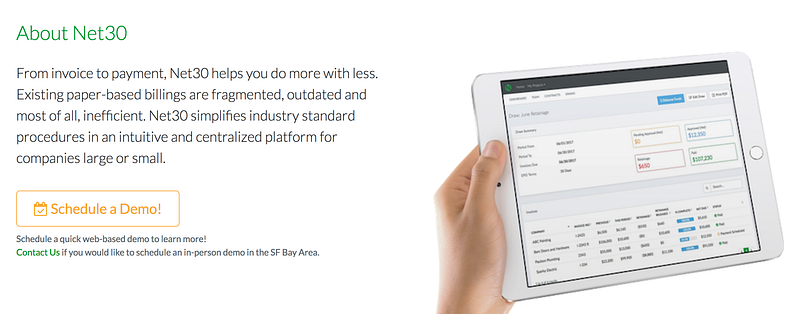
TechCrunch Description: The construction industry is one of those places where, despite increasing attention from startups, there always seems to be an infinite number of archaic processes that need solving. Net30 is pursuing online invoicing and payments for construction companies. Typically general contractors collect invoices from subcontractors, but this seemingly easy process often involved over 200 pages of complex accounting. The end result is a basically unacceptable 70 day pay delay. With a background in construction project management, Net30 is cutting pay periods down to just 30 days. This case has proven so attractive that the startup is expecting $400,000 in annual revenue.
Why I Would Invest: Construction is a $78B industry. While many of the larger companies in this space have access to enterprise level payment systems, a sizable portion of the industry still operates incredibly inefficiently.
Net30 is starting by attacking one of the most egregious problems: payments taking over 2 months, while also digitizing much of the work that still takes place on paper today.
📣 Thanks for reading! If you’re enjoying this post, I know you will find major value in Africa: The Big Deal Startup Deals Database! And, even better, you’ll get 10% OFF with my special link below:
In the Big Deal Database, you’ll find:
- A monthly updated Excel database listing ALL $100K+ funding deals secured by startups in Africa
- Included with your initial subscription: The entire dataset from Jan 2019 to present
- The database includes critical details like the number of employees, funding amounts, type of deal (Seed, Series A, B etc.), whether this transaction was an exit, startup valuation (when disclosed), investors, and much, much more!

If you’re investing or building in Africa or simply want to become as educated as possible on the fastest-growing startup ecosystem, you need the Big Deal Database!
6. PayFazz — Bankless payments for Indonesia

TechCrunch Description: China has WeChat Pay. India has PayTM. And this startup wants to give Indonesia its own app for bill payment and money transfers. PayFazz works by verifying people to become mobile bank agents. PayFazz users can hand the agents cash, who then route the money to the appropriate bank or pay a balance for the user. Agents earn a cut for their services and risk while PayFazz takes a 1 percent fee. It now has 70 percent month-over-month growth and is processing over $1 million per month. With more unbanked people around the world wanting a gateway to the worlds of ecommerce and on-demand employment, PayFazz could help modernize Indonesia.
Why I Would Invest: Indonesia has been relatively neglected by bill payment and money transfer technology companies. PayFazz has a long way to go to catch up to regional rivals, but if they can grow big enough, fast enough, and capitalize on their local knowledge, they will be a serious acquisition target for rivals looking to expand.
7. Standard Cognition — AI-powered checkout in store

TechCrunch Description: Standard Cognition is using machine vision to build the checkout of the future. Called autonomous checkout, the technology will allow shoppers to grab what they want and walk out of a store without having to go to a cashier. Standard Cognition believes it tech will enable those companies to save money and reduce theft.
Why I Would Invest: Autonomous checkout was recently popularized by Amazon with their Amazon Go store in Seattle. Standard Cognition has the potential to bring that technology to every other grocery store in the world. In addition, this same technology can be applied to automate security monitoring at retail stores (provided retail stores still exist).
8. Dahmakan — Full stack food delivery for Southeast Asia

TechCrunch Description: Dahmakan delivers ready-to-eat meals in SE Asia, controlling the entire process from food production to delivery. Because cities in Asia have 4x higher urban density than cities in the US and have 1/10 the labor costs, Dahmakan has been able to reach a 37 percent gross margin after food, labor, packaging and delivery costs. After launching in Kuala Lumpur, the company is on a $1.8 million revenue run rate and has plans to expand to eight more markets.
Why I Would Invest: Dahmakan is already off to an incredible start in SE Asia with unit economics that a US food delivery company would drool over. With their current financials, there is nothing stopping them from scaling their business in the region and becoming the Blue Apron of Asia, but profitable.
9. Plasticity — APIs for natural language processing.

TechCrunch Description: Between the major cloud providers, there are already a myriad of natural language processing tools available for machine learning developers. Unafraid, Plasticity is moving full steam ahead to become the Twilio of NLP. It has a signed letter of intent from Duck Duck Go worth $1.2 million and interest from others in using the Plasticity API for automating message replies.
Why I Would Invest: Plasticity is in a great position to be the Twilio of NLP. They’re already one of the most well known players in the space and they’re rapidly launching new endpoints that will be leveraged by developers around the world.
Plasticity is also a strong acquisition target for Amazon, Google, Facebook, and others in the space who may not be able to move as nimbly to attack this opportunity.
10. Piggy — Vanguard for India
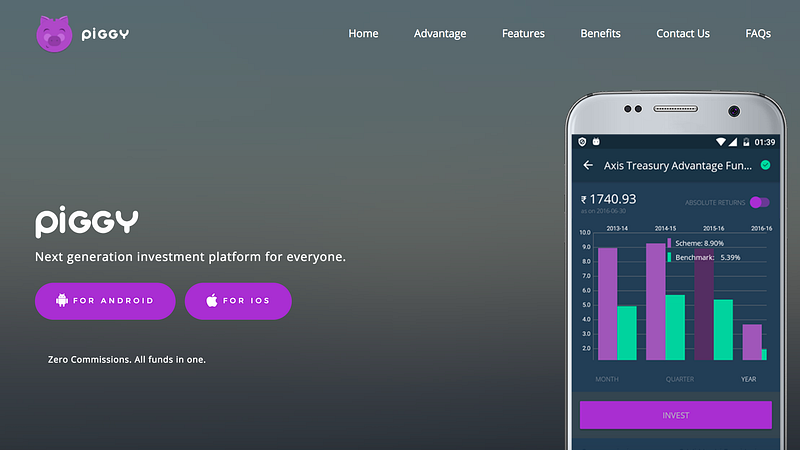
TechCrunch Description: Piggy is an app for Indians to invest in their retirement savings. Calling themselves the “Vanguard for India,” they allow users to invest in over 2000 mutual funds. Estimating that there will be over $600 billion invested in Indian retirement accounts by 2025, Piggy believes that that there is a large market opportunity. The team has already accrued $30 million in assets and claims to be growing 90% month-over-month. Piggy says it has been able to grow entirely through word-of-mouth because the commission-free service allows users to earn 1% more annually.
Why I Would Invest: The Indian middle class is growing incredibly rapidly, doubling in the last 10 years, and investing will quickly follow. Investing in India will be mobile-first and Piggy is already acquiring funds at a surprising rate with almost no cost of acquisition.
With the funding that they’re sure to receive following their YC demo, they can invest more into acquisition and drive substantial growth in both AUM and their suite of financial products.
11. (Bonus!) Advano — Higher energy density batteries
TechCrunch Description: Advano is building lithium ion batteries that can store more energy at higher density using silicon-based additives. The team of nine scientists says that it has long been known that adding silicon to batteries allows them to store more energy. But unfortunately this has always come with sacrifices in battery life. Advano’s technology does away with this compromise. The company’s letters of intent are valued at $4.2 million and include requests for both both IoT batteries and 9.6MWh battery packs.
Why I Would Invest: Although I’m still hoping for the rapid adoption of wireless charging technology, dramatically higher energy density batteries are still an attractive mid-term investment. Although I don’t have the specifics on Advano’s tech or it’s cost, the work they’ve done sounds promising.
What Companies Would You Invest In?
Which ones did I miss? Which ones don’t you agree with?
Tweet me: @amitch5903
Interested in Investing in Startups Like These?
Check out the Mitchell Ventures syndicate on AngelList here: https://angel.co/mitchell-ventures/syndicate
More from Alex Mitchell
Check out Alex’s Book: Building Digital Products
Amazon: https://www.amazon.com/Building-Digital-Products-Ultimate-Handbook/dp/1522824936
Digital Download: https://gum.co/CLccb
Disclosure: Some of the links in this post are affiliate links, meaning that at no additional cost to you, I earn a commission if you click them and purchase a product.


