
The 10 YC Companies (W18) I’d Invest In
YC keeps getting bigger and bigger. There were 128 companies (!) in the Winter class. These companies presented to YC partners and potential investors on 3/19 and 3/20/18.
Interested in Investing in Startups Like These?
Check out the Mitchell Ventures syndicate on AngelList here: https://angel.co/mitchell-ventures/syndicate
The Top 10 Companies I’d Invest In
**Credit to TechCrunch for their descriptions of the companies below**
- Juni Learning — Teach Children Computer Science

TechCrunch Description: Juni is an online education program for kids that is targeting the $9 billion after-school market. The idea is to start with teaching kids computer science in a virtual, one-on-one setting by pairing them with tutors.
It charges $250 per month for once-a-week classes. Juni says it’s grown 25 percent month over month in the last six months. The company also says it’s profitable, with a 95 percent monthly renewal rate. Without adequate computer science courses in schools, and the skills becoming clearly critical future employment, Juni could educate the next generation of programmers.
Why I Would Invest: There are currently over 260k open technology jobs worth $21B (in the US alone). These numbers are guaranteed to grow rapidly in the coming years.
Early education is one of the ways to help fill this gap and Juni has positioned themselves well here. Traditional schools haven’t moved fast enough to teach computer science and Juni could be the private solution that our country and our world needs to teach computer science at scale.
2. Veriff — Online Identity Verification
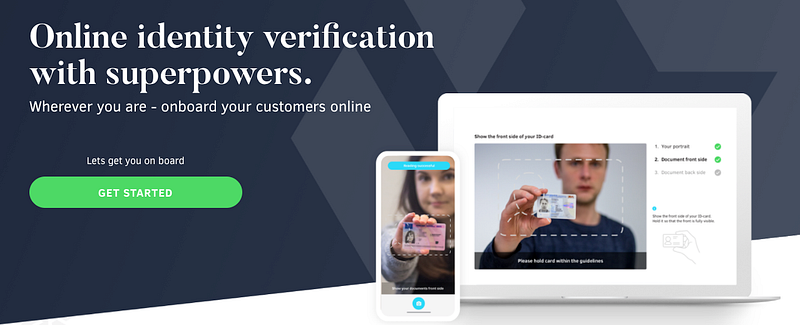
TechCrunch Description: Veriff wants to be Stripe for online identity verification, handling the processing of drivers licenses, passports, and IDs for websites. They did $60k in revenue in February, and are currently profitable. They charge ~$1 per verification.
Why I Would Invest: Checkr proved that a “simple” background checking API has a massive value to the gig-economy (the company is valued >$1B currently).
Veriff, while young, offers a similar “simple” value proposition: instant verification of identity online and a per verification charge. Their potential customer base is huge and their presumably very high margins are attractive too!
3. Onderful — Dental Insurance Verification API
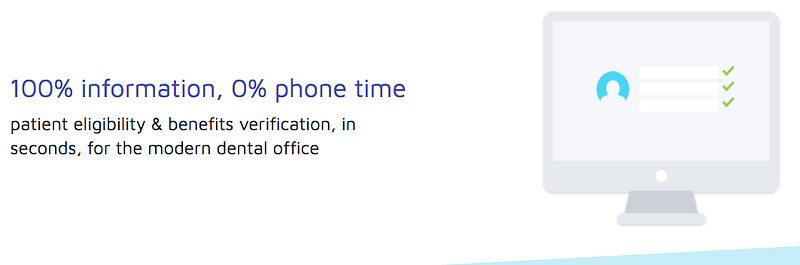
TechCrunch Description: Onederful is an API for dental insurance.
Onederful says dentists offices lose $6B in revenue per year due to insurance claim problems, and spend $3 billion a year on high friction claim verification. Onederful’s API integrates with 240 insurance providers to rapidly and reliably verify a patient’s insurance and make sure the dentist gets paid.
Onederful doesn’t have to sell dentist by dentist, and instead is developing partnerships with the top dentist software suites for distribution.
Why I Would Invest: How many times have you been at a dentist or a doctor office and the receptionist spends 15–30 minutes on the phone with your insurance company’s IVR only to ultimately fail to get the information they need?
This leads to the dentist/doctor taking a chance that your insurance is valid, and they ultimately lose $6B/year on invalid claims.
Onederful provides instant, frictionless, insurance verification for dentist offices to save time and avoid lost revenue. I’m a big fan of their distribution strategy: focusing on the top dental software suites instead of going door-to-door. While they will sacrifice some margin with this approach, they’ll be able to scale much faster.
4. HelloVerify — Background Checks in India
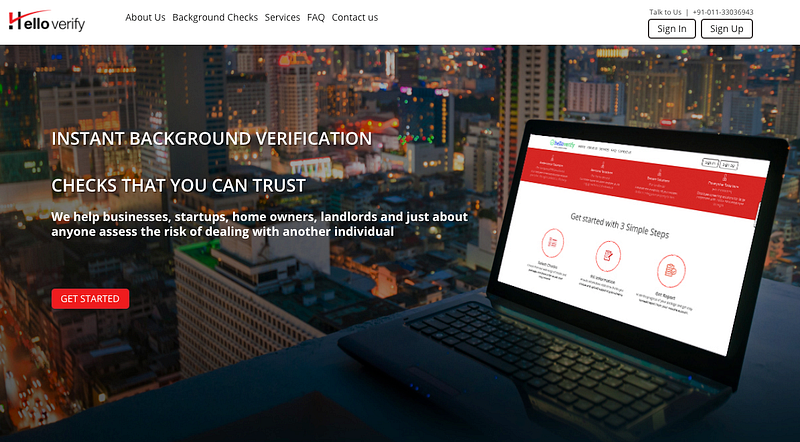
TechCrunch Description: HelloVerify is doing online instant background checks in India where the the government has recently announced it will begin digitizing all personal records.
The startup has lined itself up to be among the first to take advantage of this legislation. The company currently has $3 million in annual revenue and has closed $1 million in orders in the past 60 days. The company’s early customers include Accenture, Infosys and Cognizant.
Why I Would Invest: Are you starting to see a theme with a few of the companies I would invest in? HelloVerify takes the Checkr model to India.
With India’s rapid digitization, HelloVerify is well-positioned to be the interface between companies in India and government managed personal records. Given India’s massive population and rapidly growing skilled workforce, the opportunity here for HelloVerify is huge.
5. NextGenT — Certificate Programs for IT Positions
TechCrunch Description: Bootcamps became insanely popular in the mid 2010s, but there’s been a big shakeout since then — and NexGenT hopes to take the fundamentals of getting an engineer production ready, but with a different approach. Rather than try to have someone ready to be a full-scale developer in 3 months, NexGenT focuses on just certificate programs to get people ready to be network engineers. The process is longer, but hopefully more robust as well.
Why I Would Invest: NexGenT keeps the IT career training simpler. Instead of promising that you’ll be fullstack in 8 weeks (not possible), they focus on entry level technical careers that are still very in demand, but much more achievable. These careers also tend to have strong certificate programs that are well recognized and accepted by Fortune 500 companies.
I’m interested to learn more about the cost/payment structure for NexGenT courses and would want to learn more about their job placement success rate before investing.
📣 Thanks for reading! If you’re enjoying this post, I know you will find major value in Africa: The Big Deal Startup Deals Database! And, even better, you’ll get 10% OFF with my special link below:
In the Big Deal Database, you’ll find:
- A monthly updated Excel database listing ALL $100K+ funding deals secured by startups in Africa
- Included with your initial subscription: The entire dataset from Jan 2019 to present
- The database includes critical details like the number of employees, funding amounts, type of deal (Seed, Series A, B etc.), whether this transaction was an exit, startup valuation (when disclosed), investors, and much, much more!

If you’re investing or building in Africa or simply want to become as educated as possible on the fastest-growing startup ecosystem, you need the Big Deal Database!
6. Reverie Labs — ML for Molecule Research and Drug Creation
TechCrunch Description: Reverie Labs uses machine learning to scan public molecule research, modify and develop its own molecules, and license the drugs they create to big pharmaceutical companies. The startup claims it can sell molecule licenses for $100 million, and has already signed a milestone deal worth up to $87 million. It expects to have 3 drugs ready for clinical trials by the end of 2019, which is much faster than most pharma companies take. The Harvard and MIT team plan to use their engineering-focused startup identity to recruit ML talent the pharma giants can’t match. And eventually, it wants to go full-stack and sell its own medicines.
Why I Would Invest: I don’t pretend to have a deep understanding of molecule research. However, I can clearly recognize there is a big problem when pharmaceutical drugs take close to 10 years to bring to market.
Reverie Labs has a unique approach where they mine through publicly accessible research data (letting others do the hard work for them) for licensing opportunities. Proving this business model has legs, they’ve already signed a significant deal worth up to $87MM.
Biotech is a very difficult space, but Reverie Labs’ unique approach makes them attractive and worth betting on. However, I would still want to learn more about their recent deal terms before investing.
7. OpenLand — Find Details on Available Land
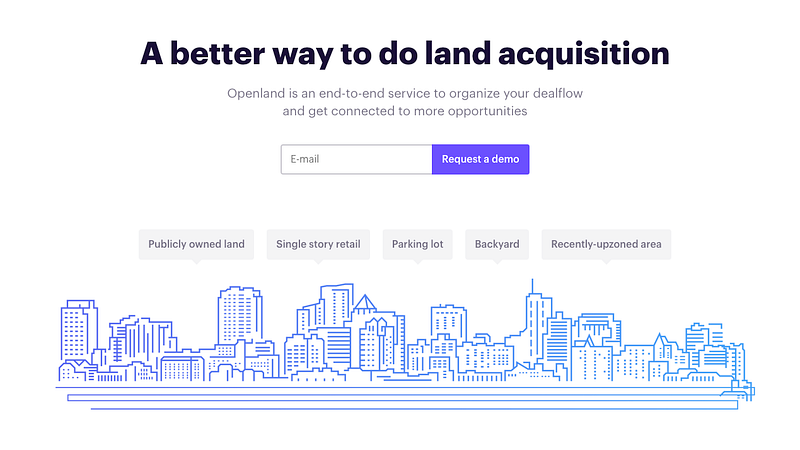
TechCrunch Description: Openland wants to create a better way for real estate developers to acquire properties. It does this through a slick interface that allows builders to sort through available lands and connect quickly with landowners, evaluate the properties and get through the paperwork.
Openland’s co-founder called the fact that 90% of buildable space isn’t for sale the “biggest roadblock for the real estate industry.”
Why I Would Invest: 90% of buildable space isn’t for sale. That is a problem and a major inefficiency in the real estate market. The days of posting a sign that says “2.5 Acres for Sale, Call Joe Smith at 202–234–2444” are over.
Openland digitizes all available properties and associated information, making the lives of builders and real estate developers dramatically easier. I would want to know more about how Openland sells their product before I invest.
8. Sheerly Genius — Rip-Proof Pantyhose
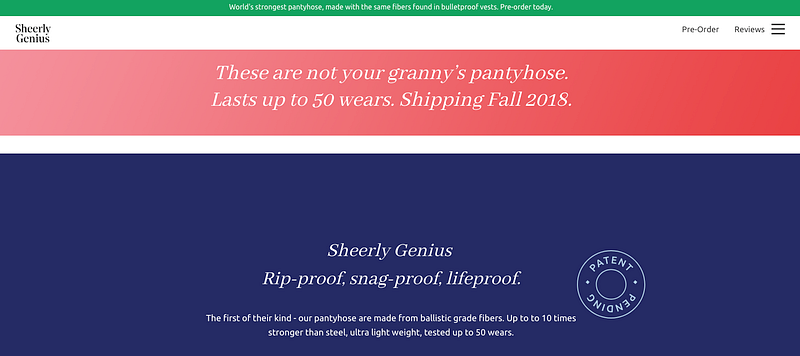

TechCrunch Description: Sheerly Genius manufactures and sells rip-proof, snag-proof and “lifeproof” pantyhose that last up to 50 wears. The pantyhose are made with the same type of fiber found in bulletproof vests and climbing equipment. Right now, Sheerly Genius sells basic black, sheer pantyhose. Down the road, Sheerly Genius plans to move into the “nude” option, which entails a number of different colors.
Why I Would Invest: Surprised to see this one on the list? You shouldn’t be. Innovation is innovation. This is a problem that close to 100% of people wearing pantyhose have encountered.
Companies in this space, like Spanx, have proven that the right product innovation, however simple, can scale massively. The opportunities for exit and licensing deals are huge here. Thankfully for Sheerly, they’ve already applied for a patent!
9. Memora Health — Virtual Nurse Patient Follow-Ups

TechCrunch Description: Memora Health is “building a virtual nurse for patient follow-up.”
It turns out that every time someone leaves a doctor’s office, nurses are getting paid to follow up with the patient about treatments. Memora aims to automate that interaction using artificial intelligence. So far they’ve achieved $70,000 in monthly recurring revenue and have $3.8 million secured in LOIs. They say they’ve “built the infrastructure to follow up with every single patient in the United States.”
Why I Would Invest: Follow-ups are an essential, but time-consuming, generally low-skilled, part of the medical field. Memora steps in with a chat bot that not only helps answer common questions, but also recognizes patterns that may indicate problems.
For the patient, they get the information they need for their recovery and faster access to answers. For the medical provider, they save time, money, and are able to better manage patient recoveries at scale. Win, win.
Memora has the opportunity to be the Intercom of the medical field.
10. Lawyaw — Intelligent Templates for Lawyers
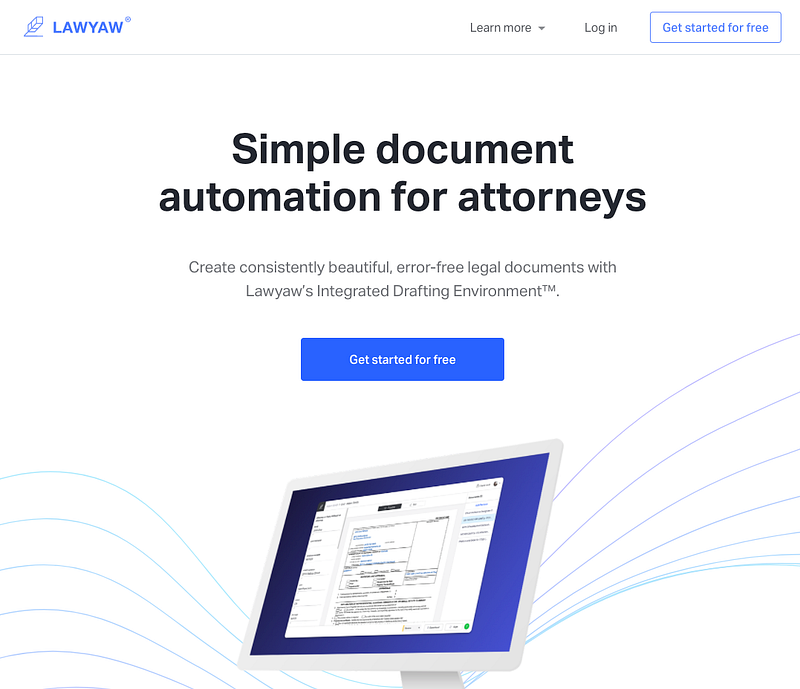
TechCrunch Description: Lawyaw builds “intelligent templates for law firms”. Built by an ex-law firm partner and an ex-Google engineer, it uses natural language processing to create new legal documents from a lawyer’s existing documents, allowing it to be re-used later as a template. 800+ lawyers are currently using the service, with 23,000 templates made so far.
Why I Would Invest: The W18 YC class had 4 companies targeting the law sector. There is plenty of disruption to be had here.
Lawyaw is attractive because it can take the specific, custom documents that a law office has already drafted and templatize them. They then are available for collaborative editing, automated prefills, and digital signatures.
Honorable Mentions
Modern Health: https://www.joinmodernhealth.com/
Orangewood Labs: http://www.orangewood.co/
Correlia Biosystems: http://www.correliabio.com/
Quantstamp: https://quantstamp.com/
How Have My Picks from YC S17 Done?
Last summer, I wrote a similar post on the YC S17 class: My Top Ten from YC S17. While 9 months is a short time to evaluate these picks, let’s take a look at how I’ve done since then.
The Good
- PullRequest: Raised a $2.3MM seed round from Google’s Gradient Ventures in December 2017.
- 70MillionJobs: Finalist in the Social and Culture Technologies Category at SXSW Accelerator Pitch Event
- PayFazz: 67 employees on LinkedIn and closed a convertible note after YC (September 2017). Has gotten some press in 2018.
- Standard Cognition: 15 employees on LinkedIn and still in Beta. Raised $5MM (October 2017) from Charles River, Initialized Capital, and YC.
- Dahmahkan: Raised $2.6MM in January 2018 in a Series A.
The Misses
- Only time will tell, but likely a few from the below.
The ?’s
- Zendar: Very difficult to find any information on how things are going since YC (check out their website). But they are hiring a grad intern: https://news.ycombinator.com/item?id=16425505 and show 7 employees on LinkedIn.
- Ubiq: Little to no press since YC. They show 5 employees on LinkedIn and still appear to be active, but haven’t raised any more money.
- Net30: Similar to Ubiq, little to no press since YC. 3 employees on LinkedIn. Haven’t raised money post-YC
- Plasticity: Only 2 employees on LinkedIn, no money raised since YC. No press since 2017.
- Piggy: 8 employees on LinkedIn, but no money raised since YC. No press since 2017.
Interested in Investing in Startups Like These?
Check out the Mitchell Ventures syndicate on AngelList here: https://angel.co/mitchell-ventures/syndicate
More from Alex Mitchell on Medium
Check out Alex’s Book: Building Digital Products
Amazon: https://www.amazon.com/Building-Digital-Products-Ultimate-Handbook/dp/1522824936
Digital Download: https://gum.co/CLccb
Disclosure: Some of the links in this post are affiliate links, meaning that at no additional cost to you, I earn a commission if you click them and purchase a product.


