Oh The Drama
My Theory About Actors No One Wants to Admit
A cheeky rejoinder to a post about small-headed athletes

George Sanders, Brit actor, and all-around cad, once commented on how to succeed in the profession of acting, and I paraphrase:
“The most important quality in a great actor is to have an interesting-looking face.”
I play a flying monkey in Wizard of Oz — come see us Nov. 17–20th in central Arkansas !— and I agree with Sanders, even though he was a deeply cynical man.
It’s not just the face, however, but also the voice and especially, head size.
I became aware of big-headed actors after my husband, an ex-drama major at university, pointed it out.
If you watch great, i.e. famous actors, on TV, on stage, and in film you will see they tend to be well-endowed in the face and head.
In contrast to great athletes, who Sean Kernan theorizes have smaller skulls, actors are easy to look at it because they take up more visual space.

They aren’t all handsome
Humphrey Bogart had a wonderful countenance but not many would call him drop-dead gorgeous.
His long face and squarish jaw, combined with huge eyes, made him compelling to watch. And he had a skull to rival any man!
Perhaps he had a touch of evil in his glance, too, because he was usually cast as a villain in his early days.
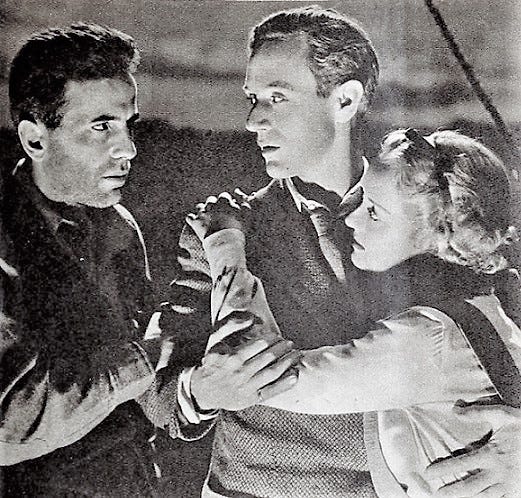

As in any other profession, being good-looking and tall helps but what sets actors apart is they command our attention.
We take this physical magnetism for granted because we rarely see professional actors with small heads and bland faces — unless they are so bland they are cast exclusively for their vanilla looks, as a bureaucrat or Star Trek security dude, or an extra.
The big head theory of great acting doesn’t invalidate all the talent and hard work, yet mad skills aren’t enough. You need a big head, too.
Should you encourage a child to be an actor?
As a flying monkey, I have a ringside seat of some child actors. They play munchkins, and we have one who is poised to steal the show.
Yes, our Scarecrow (14) is awesome, flopping his way down the yellow brick road, and Dorothy (22) has a stunning singing voice.
Yet it’s the six-year-old who pipes up with, “See ya!” as Dorothy and Toto take off from Munchkinland who is getting accolades.
We’ll see how the audience reacts, but I am wondering…does he have a big head?
If he’s got a noticeable noggin, why not steer him into acting?
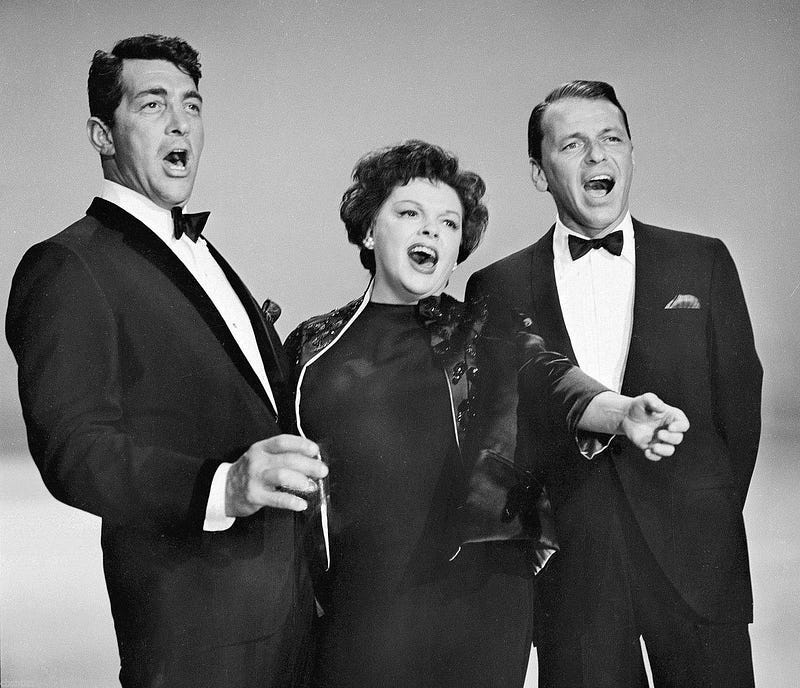
Judy Garland recounted her love of acting began when she was a young child, as she sat in the audience looking up to the stage. She knew immediately that was her destiny.

Tiny-faced, mumbling, tone-deaf extra
I have a regular-sized head and itsy bitsy face.
I used to get embarrassed about having to shop for my glasses in the kid or teen section, but now I accept my childlike dimensions.
I can’t carry a tune to save my life, so I never took a drama class in high school.
Many people love dancing — the Zumba craze is one example. I only dance when drunk as a skunk, and even then I feel like a robot wearing a human suit. When I hit the dance floor, I grok Data from Star Trek NG. It’s lonely AF when you don’t fit in, no matter how nice the other crewmembers are about your disability.
My point is: I’ll never be an actor.
Until I read the weird theory about athletic ability, I didn’t realize my athletic ability, such as it is, could be because I don’t have a head the size of a watermelon.
Kernan’s theory is the heavier head you have the lug around, the slower you go and the worse your center of gravity. He illustrates this with a photo of a cheetah and a bunch of science.

Final Scenes
I’m a big believer in fatalism, the theory that your life is mapped out from day one, including the day of your death.
It’s more relaxing to be a pre-programmed cog.
Our physical selves, parents, and early circumstances blend together to create our destiny. Self-acceptance and insight help the lucky among us to make decisions on what work to choose, where to live, and who to marry.
For example, even though I’ve hated dancing since Junior High, I kept trying to do it — leading directly to falling down a well of misery and disappointment.
Even though I don’t agree with Kernan that anyone can be an athlete, even if they happen to be burdened with a big head (he does make exceptions for combat sports) his piece gave me insight into my role as a flying monkey:
“A strong nuchal ligament means better support. The less weight [this ligament in the neck] has to support and control, the more stability it can provide.”
He goes on to note that both pigs and monkeys have a weak nuchal, and are bad runners.
I’ll have to pass this scientific fact on to the head monkey, Nikko, because we’ve been running across the stage like people and not monkeys.
Since Nikko is still in high school, he could use some free advice — the kind everyone, at every age, adores. I’ll observe if his skull is big enough to propel him from his monkey role to stardom.
Unlike Kernan, whose article is fascinating, I am a fatalist and a humorist.
If you don’t have IT, give up now kids.
Want an email heads-up for new articles? Click Me.
Want to join Medium? Click Me.
Jean Campbell recently started her first Substack newsletter to laser focus on getting her book, City of Lies: A Street Hustler’s Omaha Journey published.