avatarSean Kernan

Free AI web copilot to create summaries, insights and extended knowledge, download it at here

2927

Abstract

"3477">So for example, a toddler is dangerously clumsy for a bunch of reasons. They lack muscle mass, coordination and judgment to realize, “Hey, maybe I shouldn’t stand on a wobbly stool.”</p><p id="3c18">The other reason they are clumsy: Toddlers have a bizarrely high center of gravity — largely because of their enormous heads.</p><figure id="63d4"><img src="https://cdn-images-1.readmedium.com/v2/resize:fit:800/1*mY95SIhsy077AkjlJgJU0g.png"><figcaption>Center of Gravity (Via USF.edu Public domain)</figcaption></figure><p id="16ab">As age we age, our center of gravity goes lower as our body fills out (fun fact: our eyeballs are nearly adult size by <a href="https://www.sciencefocus.com/the-human-body/are-we-born-with-full-sized-eyeballs-or-brains/">the time</a> we hit 2 years old.)</p><p id="e768">Even further, compared to most species, we have an enormous noggin. Our brain is huge and burns roughly 20% of our daily calories. It carries a high evolutionary cost and is partly why we are relatively unathletic compared to other species.</p><p id="48b2">If you look out into the animal kingdom, many of the fastest, most agile creatures don’t invest a lot of mass in a proportionally large skull:</p><figure id="8b64"><img src="https://cdn-images-1.readmedium.com/v2/resize:fit:800/0*mXiKjw-wwzOSyY_7"><figcaption></figcaption></figure><p id="1bff">In running circles, it’s <a href="https://www.thegaitguys.com/thedailyblog/how-we-keep-our-head-steady-while-we-run">a known</a> lesson to keep your head steady as your jog. It creates less resistance. Want to see a shockingly steady head? Watch a cheetah sprinting.</p><p id="9a7e">Or watch a thoroughbred racehorse — which <i>just so happens</i> to have a proportionally smaller skull than other breeds of horses.</p><h1 id="fb39">Evolution might just agree with me</h1><p id="d269">All of the great mammalian runners have <a href="https://radiolab.org/episodes/man-against-horse">what is called</a> a “nuchal ligament”.</p><p id="0f78">It’s a tendon that runs behind your neck, attaching your head to your shoulders and torso. It is what prevents your head from flopping like a wet noodle as you go about your day.</p><figure id="587b"><img src="https://cdn-images-1.readmedium.com/v2/resize:fit:800/0*SuMZ4rjLULRuKDnw.jpeg"><figcaption>Via Radiopedia (public domain)</figcaption></figure><p id="e6d9">We developed this ligament around the time that Homo Erectus arrived, when we began hunting via running.</p><p id="3d96">Cheetahs, horses, and humans have a nuchal ligament. Chimps and pigs do not (both are <i>terrible </i>runners). A strong nuchal ligament means better support. The less weight it has to support and control, the more stability it can provide.</p><p id="79c5">Yeah but why? Why does it matter?</p><p id="3427">Running is considered a “controlled fall”, where your body is fighting to hold its center stable. This gets harder with increasing ef

Options

fort as you run faster and faster.</p><p id="3b52">Stabilization starts at your feet with the angle you roll your heel across the ground. And goes all the way up to your head — the smaller, the better.</p><figure id="83c8"><img src="https://cdn-images-1.readmedium.com/v2/resize:fit:800/0*p4FtVwlXx1Qkd64H.jpg"><figcaption>Author via IMG (Open Use)</figcaption></figure><h1 id="1870">Some necessary caveats</h1><p id="bdee">My weird theory is nearly complete. But I do have exceptions to note as I’m sure a few readers are raising their hands already.</p><p id="6bba">First, remember that athleticism is a form of system dynamics. It is the convergence of many variables and parts working together to produce an outcome, much like an engine.</p><p id="1084">Obviously, having a small head doesn’t automatically mean someone is athletic. It is just one factor among many. My suspicion is that it helps the overall equation.</p><p id="087a">Additionally, there are niche sports where having a larger head can help you to perform better. For example, in combat sports, like wrestling, boxing, and MMA, you will see several champions with big domes.</p><p id="ba03">Having a larger head will strengthen your neck. Between having that heavier head, and a stronger neck, your odds of being knocked out (whipping your head to the side) is dramatically reduced. You need only look at Mike Tyson, who had a much larger than normal head, but also a neck that was double the normal circumference.</p><p id="eb13">Additionally, in combat sports, the head is often used to manipulate the opponent, to move their body and your own.</p><h1 id="ec2e">The broader takeaway</h1><p id="ee2c">The lesson I’m trying to convey isn’t that, “You must have XYZ in order to be good at something.”</p><p id="916d">There are tons of exceptions to any rule. And any type of body and mindset should be deployed to try lots of different things to test out your abilities. Be forgiving of shortcomings, and be willing to persist and give yourself a true chance of getting good at something.</p><p id="9451">And for the record — I have a very big head. But it’s mostly air inside.</p><p id="cfd0"><i>Subscribe to <a href="http://seanjkernan.substack.com">Relax and Rea</a>d for more.</i></p><div id="d778" class="link-block"> <a href="https://seanjkernan.medium.com/membership"> <div> <div> <h2>Join Medium with my referral link - Sean Kernan</h2> <div><h3>Read every story from Sean Kernan (and thousands of other writers on Medium). Your membership fee directly supports…</h3></div> <div><p>seanjkernan.medium.com</p></div> </div> <div> <div style="background-image: url(https://miro.readmedium.com/v2/resize:fit:320/0*bmzccCTsUA14pOUs)"></div> </div> </div> </a> </div></article></body>

Self | Sports | Animals | Biology

My Weird Theory About Sports That I’ve Never Heard Anyone Talk About

Some food for thought.
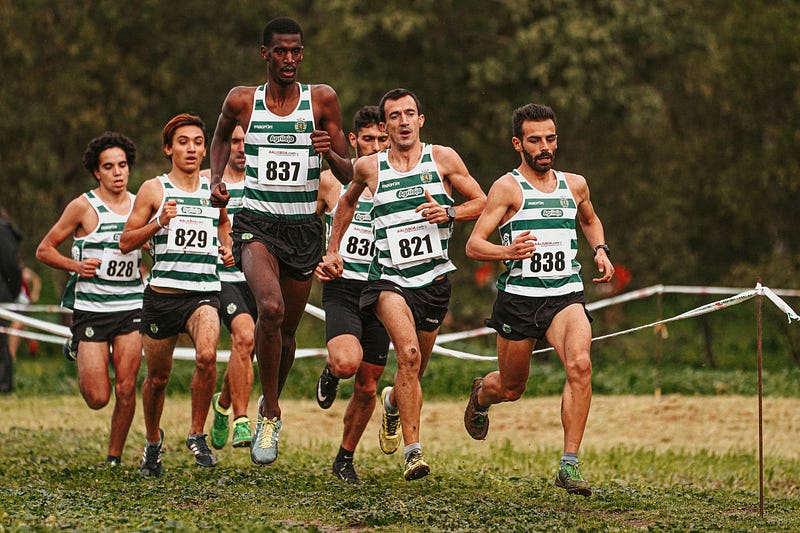
Image via Pexels (royalty free)

I have a weird theory.

It’s about sports and I’ve never heard it discussed before. But I suspect my theory harbors some truth and I have some contextual science.

It started 15 years ago when I was coaching swimming and water polo. I’d inherited an unbelievably talented group of men’s swimmers. I’d coached a few teams prior but this group was unlike any I’d ever dealt with.

Many of them were 6'2 or taller. They were lean, with strong backs and shoulders.

They were thoroughbreds and it made my job so much easier. Several became state champions in California (this was no small feat.) From then on, I became fascinated with the physical composition of athletes and biomechanics.

You already see the physique contrast at the Olympics. Compare the bodies of marathon runners with 100M dash sprinters — or short and stocky wrestlers to the skinny towering volleyball players.

Here is my weird theory

By and large — having a proportionally small skull confers an athletic advantage in sports.

It goes well beyond swimming but Michael Phelps is a good example:
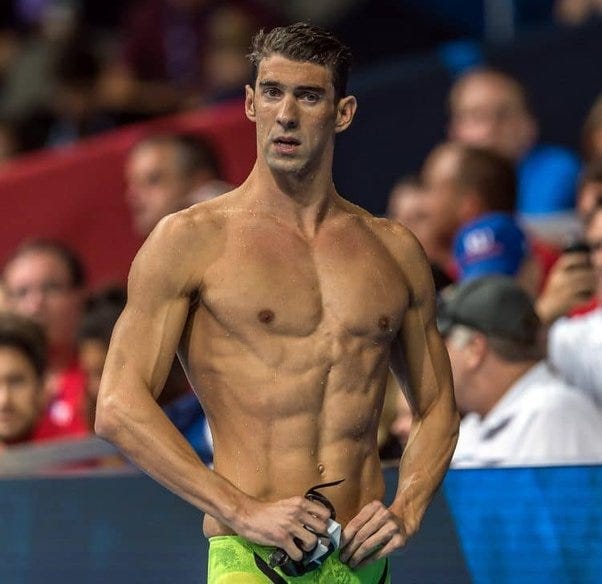
Via Wikimedia Commons

Because of his bizarre proportions, he was suspected of having Marfan syndrome, which causes elongated limbs, and a smaller, elongated head (Phelps doesn’t actually have the condition).

To my point: your head is a dead weight when it comes to athletics. This is especially true in land sports.

Think about it.

Gravity is the enemy.

All of your body is built to support your head, and if you have a long neck and a larger head — it’s even more demanding on your balance and energy (think of a circus performer balancing a plate on a long pole.)

The higher up your body’s weight distribution, the more it raises your center of gravity, placing more demand on your balance, and slowing your ability to accelerate and decelerate quickly.

So for example, a toddler is dangerously clumsy for a bunch of reasons. They lack muscle mass, coordination and judgment to realize, “Hey, maybe I shouldn’t stand on a wobbly stool.”

The other reason they are clumsy: Toddlers have a bizarrely high center of gravity — largely because of their enormous heads.
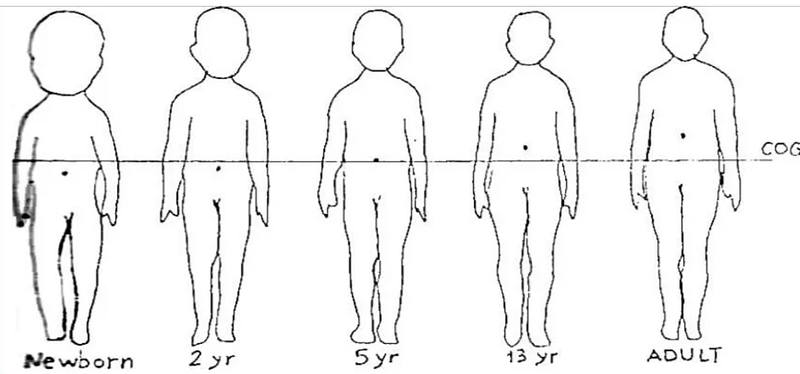
Center of Gravity (Via USF.edu Public domain)

As age we age, our center of gravity goes lower as our body fills out (fun fact: our eyeballs are nearly adult size by the time we hit 2 years old.)

Even further, compared to most species, we have an enormous noggin. Our brain is huge and burns roughly 20% of our daily calories. It carries a high evolutionary cost and is partly why we are relatively unathletic compared to other species.

If you look out into the animal kingdom, many of the fastest, most agile creatures don’t invest a lot of mass in a proportionally large skull:
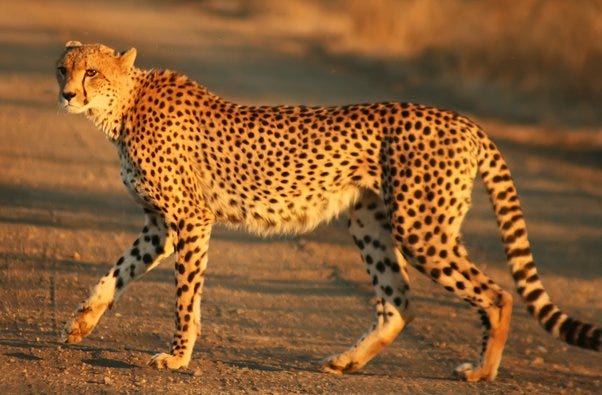
In running circles, it’s a known lesson to keep your head steady as your jog. It creates less resistance. Want to see a shockingly steady head? Watch a cheetah sprinting.

Or watch a thoroughbred racehorse — which just so happens to have a proportionally smaller skull than other breeds of horses.

Evolution might just agree with me

All of the great mammalian runners have what is called a “nuchal ligament”.

It’s a tendon that runs behind your neck, attaching your head to your shoulders and torso. It is what prevents your head from flopping like a wet noodle as you go about your day.
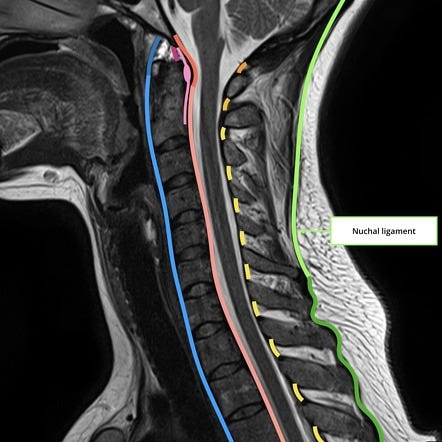
Via Radiopedia (public domain)

We developed this ligament around the time that Homo Erectus arrived, when we began hunting via running.

Cheetahs, horses, and humans have a nuchal ligament. Chimps and pigs do not (both are terrible runners). A strong nuchal ligament means better support. The less weight it has to support and control, the more stability it can provide.

Yeah but why? Why does it matter?

Running is considered a “controlled fall”, where your body is fighting to hold its center stable. This gets harder with increasing effort as you run faster and faster.

Stabilization starts at your feet with the angle you roll your heel across the ground. And goes all the way up to your head — the smaller, the better.
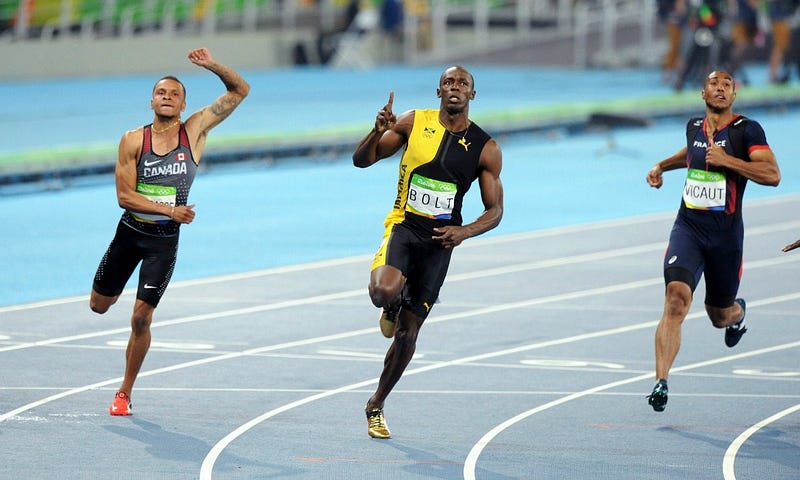
Author via IMG (Open Use)

Some necessary caveats

My weird theory is nearly complete. But I do have exceptions to note as I’m sure a few readers are raising their hands already.

First, remember that athleticism is a form of system dynamics. It is the convergence of many variables and parts working together to produce an outcome, much like an engine.

Obviously, having a small head doesn’t automatically mean someone is athletic. It is just one factor among many. My suspicion is that it helps the overall equation.

Additionally, there are niche sports where having a larger head can help you to perform better. For example, in combat sports, like wrestling, boxing, and MMA, you will see several champions with big domes.

Having a larger head will strengthen your neck. Between having that heavier head, and a stronger neck, your odds of being knocked out (whipping your head to the side) is dramatically reduced. You need only look at Mike Tyson, who had a much larger than normal head, but also a neck that was double the normal circumference.

Additionally, in combat sports, the head is often used to manipulate the opponent, to move their body and your own.

The broader takeaway

The lesson I’m trying to convey isn’t that, “You must have XYZ in order to be good at something.”

There are tons of exceptions to any rule. And any type of body and mindset should be deployed to try lots of different things to test out your abilities. Be forgiving of shortcomings, and be willing to persist and give yourself a true chance of getting good at something.

And for the record — I have a very big head. But it’s mostly air inside.

Subscribe to Relax and Read for more.

Self
Self Improvement
Sports
Life
Life Lessons
Recommended from ReadMedium