
My songs of Innocence and Experience

But most, through midnight streets I hear How the youthful harlot’s curse Blasts the new-born infant’s tear, And blights with plagues the marriage hearse.
William Blake, “London,” Songs of Experience
Ruby Noir 😈 asks: “When is innocence lost? Is there a specific age or event that causes the loss of the innocence we attribute to infants and young children? Or is it possible to be innocent for life? Is an “innocent adult” possible? If so — is that innocence complete innocence? How do you define the maintenance of innocence? Give details and examples.
Let’s begin by looking up good ol’ Merriam-Webster: 1 a) freedom from legal guilt of a particular crime or offense b) freedom from guilt of sin through being unacquainted with evil c) lack of knowledge d 1) freedom from guile or cunning 2) lack of worldly experience or Sophistication e 1) Chastity 2) one that is innocent 3) Bluet [flower].
It is most likely definitions 1b, c, d and 2 that Ruby is primarily concerned with in her prompt.
Perhaps the best way of approaching the question might begin with other questions: what types of knowledge might lead to the loss of innocence? And why?
The answer is any knowledge that proves that the world is not as seemingly perfect as is purported to be: that those who are supposed to know better are not always smarter or wiser. That those who we are supposed to trust are not trustworthy. And even worse, that those who are supposed to have our best interests in mind don’t always have them. (The latter certainly runs throughout William Blake’s Experience poems!)
All of this naturally depends on the people you are surrounded by. However, if you are among the marginalized–poor, POC, disabled, etc., you are more likely to discover at an earlier age that things are not what they are cracked up to be. The age of innocence becomes more than a tad too brief.
I certainly had my first taste of it when I was in kindergarten. As a teacher from another class approached me, I smiled. I thought she was going to compliment me on my good behavior.
Instead, she told me, “Joan [or whatever her name was] told me you are bothering her.” I was surprised. I barely knew the other girl who was tattling on me and didn’t even talk to her the past week! Why was she complaining about me? And why did the teacher automatically assume she was being truthful?
I felt hurt. At this point in my life, however, I still had little awareness of racism. This would be my very first brush with the yet unidentified “Karen” — the type of (generally white) girl/woman who is exceptionally wary of people of color. (Let me add that this is an ironic name since all the Karens I’ve known have been friendly!)
Fortunately, however, this was not an everyday occurrence during my Bronx days. I still had not experienced racism in spades. But it would change considerably when my parents moved to the outskirts of Princeton, New Jersey which had a much smaller minority population. I still remember that woman who would never respond to my hi’s. When I told my mother, she answered, “Maybe she didn’t hear you.”
And so I did the next day–loud enough for someone without hearing problems to hear! It was only until a year later that I learned from her daughter that her “mother really hates Orientals.”
Then there was the Italian family next door to that woman. Although the girls were friendly, their father–a man in his thirties or forties–was less so. Unless he thought “ching chong ding dong” was truly a means of reaching out.
In short, by the age of 10, I learned that being good, friendly, or nice was not necessarily going to win me any favors–unlike for other children. I learned that adults are not necessarily more mature than children. I learned that whatever people might say about America being a “melting pot,” it was anything but. And that some people are more equal than others–a lesson that would be reinforced once I was old enough to read Animal Farm. It certainly taught me to be less trusting of others well before my teens.
But even more painful was discovering that my parents were not perfect either. I suppose I had grown used to their having a seemingly happy and peaceful marriage throughout my childhood.
This started to change sometime after my ninth birthday. Since they spoke and argued mostly in a mixture of Taiwanese and Japanese, I had no idea what sparked their arguments. As I look back, I wonder if any of this was triggered by money problems given my father’s loss of his tenure-track position when the engineering department at NYU had fallen apart. (The inflation and high gas prices of the early 1970s probably didn’t help.)
I recall feeling embarrassed when my parents were screaming amidst the sound of shattering plates. From what I could hear, Dad had evidently thrown several plates at Mom. My friend’s eyes widened as she asked me, “What’s going on?”
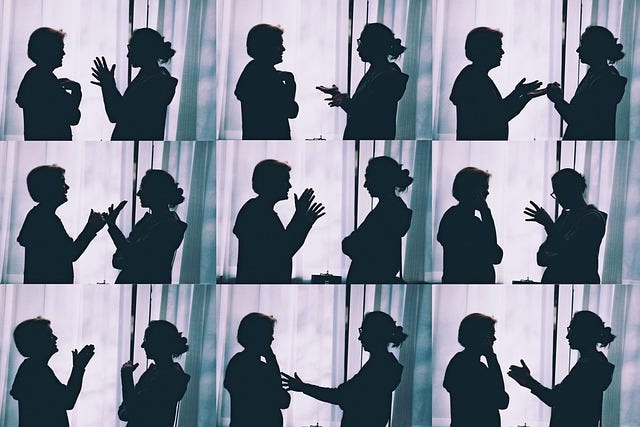
Interestingly, the fights died down a few years later after Dad secured a tenure-track position in Chicago.
However, nothing could prepare me for what came next.
As a teenager and only child who had encountered a fair amount of bullying, I had come to see my family as a haven–even though I was increasingly in conflict with my father over my academic interests as I’ve discussed here and here. TV discussions on divorce — one of the hot topics of the 1970s — always made me somewhat nervous: who would love me if my parents went their separate ways? Nonetheless, I brushed my anxieties aside. These things only happened to other people.
Or so I thought.
I recall that Christmas of my junior year when my father didn’t call us. He was in Taiwan, giving lectures and doing “consulting” — or so he told us. I could tell something was wrong when Mom was very nervous while trying hard not to show it. When he finally called, he told us that he was staying at a soldier’s house so everything had to remain hush hush. My mom swallowed it — and I was immediately relieved for her. (I personally didn’t mind his absence at all, given his extreme tiger parent habits.)
In the meantime, I heard the news that the mother of an acquaintance had committed suicide after discovering that her husband was cheating on her. Another mother refused to divorce her husband even after he ran off with his secretary over the Thanksgiving holidays. These were all “feminist” women.
It wasn’t until that summer that the shit hit the fan when one of Mom’s aunts told her Dad was cheating on her with a distant cousin. Suddenly, the reasons for my father’s odd behavior over the past year became apparent–along with the strange phone calls from a man who answered Mom with a curt “none of your business” when she asked who was calling. (Why didn’t you hang up, Mom??) Even worse was her discovery of a love letter that my father had written to his cousin. I recall her tears when she said it was the worst day in her life.
This is when I fully realized as a 16-year-old that well-educated men aren’t necessarily more moral or better behaved–as my stereotypically Chinese parents always pretended. That such men are not immune to good looks or lust. I didn’t have to wait till I heard of Prince Charles’ affair with Camilla or Bill Clinton’s affair with Monica Lewinsky to learn that. Or later on, the grad student gossip of faculty members who had abandoned their wives, taking off with students or other professors. Or those who simply complained that the latest crop of female students were not “hot enough.” Because I had already witnessed much of this all in my own home.
At the same time, I often wondered at my mother’s innocence, her belief that Dad would no longer cheat on her. After all, he promised he’d never see her again. (Oh well, at least she didn’t commit suicide over a worthless man!)
Finally, in my twenties, I also came to accept the truth that if the educated were not necessarily more “moral,” they were not necessarily less racist or sexist either: I have discussed this elsewhere so will not address it at great length here. Academics, I’ve slowly come to realize, may be less overt in expressing their prejudices like my neighbor who shouted “ching chong ding dong” at me, but are not much better. (In fact, some may even be just as flagrant about it as Trump.)
I suppose my difficult loss of innocence is partly why I’m so drawn to horror–and humor– with the realization that not everything is as it appears. Or as claimed to be. Discoveries of human flaws can be either scary or funny, I suppose, in a satirical sort of way. Yet I will also say that experience has helped me treasure all the more the occasional goodness that I do encounter.
© Frances A. Chiu, August 31, 2023. All Rights Reserved.


