
Life is a Battlefield: from fighting bullies to writing about rights
July Monthly Theme: Fighting for myself — and ultimately, others

“Chink! Go back to China!” “Hey, Jap, why don’t you go back to the concentration camps where you belong?” “Can you see through those slanty eyes of yours?”
When you hear enough of this, you have no choice but to become a fighter — so my life has been one big battle from beginning to end, even if my bullies have grown up. And even when racism is not expressed as overtly. Life is indeed a battlefield (a play on that Pat Benatar hit, “Love is a battlefield.”)
Granted, I was a reluctant fighter at first. When we moved to New Jersey from the Bronx, I was suddenly faced with discrimination. It’s not that I didn’t hear the occasional “chink” or “jap” from kids in my old neighborhood or school. But I didn’t get bullied more or less than any other kid.
It was different in New Jersey though when I entered fourth grade. At first, it was just name calling. Then came physical attacks. As an only child, I wasn’t sure what to do–probably because I had no siblings to bicker and fight with. My parents, being the traditional Taiwanese parents they were, advised me to just ignore the bullies. “They just want a reaction,” Mom explained.
Except that it got worse daily–to the point that I dreaded going to school and Mom asked Dad to see the teacher since she felt unsure of her own language skills.
Yet, there was a part of me that felt a little dissatisfied even if relieved that the bullying stopped. (I imagine teachers back in the 1970s enjoyed more respect and support than they do today.) What if it hadn’t stopped was a question I’d ask myself every once in a while. Didn’t the “victory” come a little too easily?
When we moved yet again–this time to Chicago since my father had received a tenure track offer in Chicago — the bullying that went with being both an Asian and new kid plagued me all over again.
But this time was different: I fought back. When a girl tried to shove me down the stairs, I hit her multiple times over the head with a clipboard. She avoided me until the end of term. And when one of her friends punched me during gym, I punched back.
As the end of school drew near, I began to fear that these girls would gang up on me: after all, students were not supposed to be punished for anything once that last bell rang on the last day of school.
Nothing happened. Did they fear I would strike back as I had done–even though they knew I didn’t have many friends who would side with me? Or were they excited about pursuing other activities? I suspect it was the latter even if I like to believe it was the former.
I also remember the girl in high school who tried to beat me up in my first year of high school as she pushed me against a locker, calling me “fucking Jap.” I was shocked since there was no provocation on my part. But when she threw her shoe at me, I didn’t throw it back to her, but down three flights of stairs. She would have to go and pick it up herself. I dreaded seeing her again that afternoon as her locker was across from mine, yet she didn’t do anything even though she was with her boyfriend. Only much later did I discover that she didn’t just pick on Asians, but whites as well, before dropping out entirely.
The bullying taught me one very important lesson. One needs to speak up and fight back. Taking “the high road” is wasted because bullies don’t understand it. Their ethos is quite different: pick on a victim so long as they can get away with it. And it is much the same with internet trolls as I would discover decades later on many platforms–including Medium itself. When you out-insult and outwit them, they shrivel up and block you. Waaah, I can’t take it anymore!
Perhaps that’s why as an adult, I became more much willing to confront others. I fought back and won when my college bursar at Oxford tried to force me to pay the difference I owed for the flat I was renting.
I fought back–or rather challenged–a director of an American satellite program at Oxford when I was denied a teaching position there. As a graduate of American universities who was just finishing her doctorate at Oxford, it should have been easier for me to get teaching opportunities at those satellite programs: at least, such was the case for many American and Canadian students pursuing their doctorates there. It was assumed you would be the best choice because you had an American undergraduate degree and thereby better equipped to help American students on their junior year abroad program. By contrast, it was more difficult for an American doctoral student to get teaching opportunities at the Oxford colleges since very few of them had experience with British undergraduate teaching.
For me, it was just the opposite (a fact that surprised many around me too)–which led me to take on that director: I minced no words when accusing her of being racist, which positively horrified her. “How dare you! When I’m married to a nonwhite man” is what she wrote back. (How am I supposed to know you are “married to a nonwhite man?”) Now, you may think, “that’s dumb. You’ll never get a position there.” But I knew with people like that, there was little hope–having experienced enough racism from American academics to know that. Might as well call it out when I can!
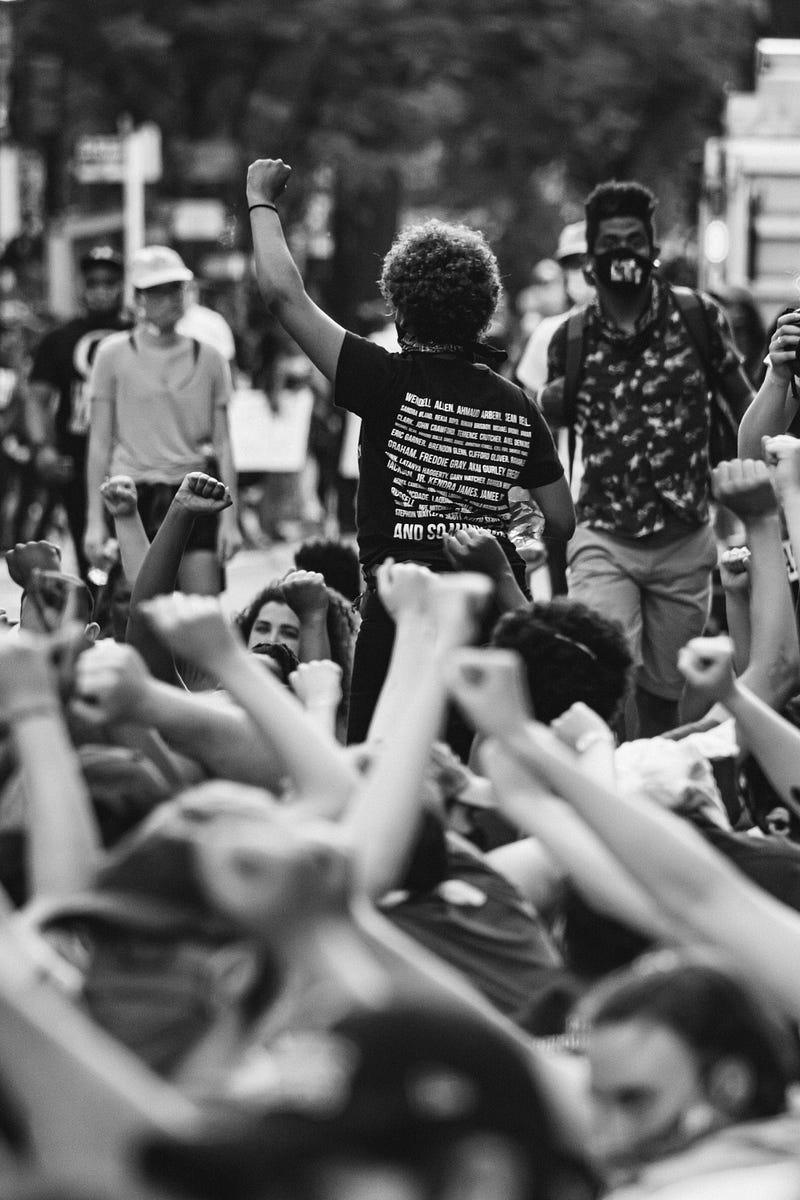
Then there was the time when a department chair handed my course–which already had ten students enrolled–to another more senior faculty member. I was livid. What if others thought that the course which I created was designed by her? What if she entered it in a teaching contest and won? So I confronted the dean of faculty and the chair herself. Told her she should be ashamed of herself: how did she manage to overlook that faculty of senior standing in the first place? Hadn’t she been chair for at least 7 years in that department to know better? Within three days, that course was restored to me and the other faculty member assigned another course.
I suppose my conflicts with racism culminated in the writing of my first book, The Routledge Guidebook to Paine’s Rights of Man — even if the book itself is not focused on race. It felt initially odd to me that I was submitting my first book proposal on a historical rather than literary subject–after all, my Ph.D. was in English literature, not history. Yet, I realized it made perfect sense because my entire life had been a struggle for rights: the right to be treated as an equal in spite of my race. The right to be treated with human respect and the right not to be encumbered with assumptions about my ability to teach Western literature and history. My book would also be informed by our growing social inequality–and one that touched me to the core as an adjunct.
In that sense, the book was my greatest fight. I devoted numerous hours to studying pre-18th-century history even as I was teaching a new class, still grieving for my mother, and taking care of a father whose dementia was becoming more apparent by the day. I pulled more all-nighters than I ever had as an undergraduate and graduate student combined. It would be a fight to prove myself not only as a historian–but as an Asian woman writing about the history of Western rights. After all, if Westerners can write about and teach Asian history and literature, why can’t an Asian write about Western history and literature?
Just like in the case of my letter to the director of the satellite program at Oxford, I know the writing of this book may not necessarily do anything for me. But I know I will have had my say and made my point. I will have defended my own rights — and those who have ever been bullied and discriminated against — to the bitter end. And really, that’s what the fight for rights has been throughout history. As Public Enemy sings, “we’ve got to fight the powers that be.”