
My Polish Hill
Say it in Polish: Polskie Wzgórze
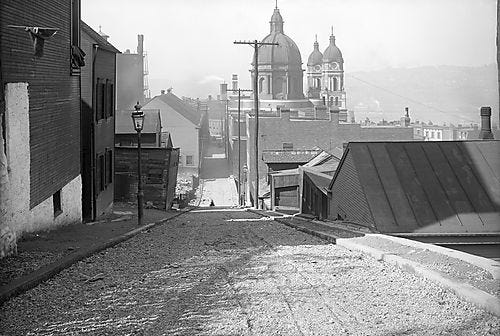
Polish Hill is a small neighborhood in Pittsburgh, Pennsylvania. It is a place near and dear to my heart. My family lived there for more than 50 years.
When I see pictures, it reminds me of when I was a kid. Not much has changed 100 years later. Polish Hill faces north and overlooks the Allegheny River and the Bloomfield bridge.
My Grandfather used to take me down to the train tracks that run along the river to throw stones in the Allegheny.
The family home on Melwood Street was 4 stories. A basement and 3 stories above the street. There were two balconies on each of the first two floors. I remember we used to prop the windows open with a wooden stick. Pretty amazing.
The third floor was an attic. When I was a kid, we would walk up the creaky old wooden steps and turn on the lights. We would sit and look at his collection of items.
It was like a time warp. There were old trunks full of old stuff. I remember we would dig through those trunks and find all sorts of old top hats, costumes, newspapers, jewelry, and other things. My Grandfather was a Vaudevillian actor. Some of the items in the trunks were costume items.
Thought I would share some of the street scenes and buildings that are so etched in my mind. Really quite a remarkable place.
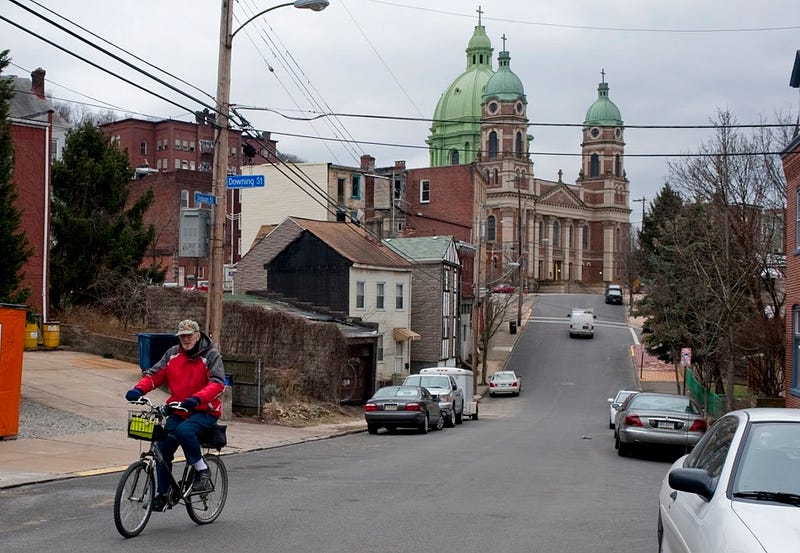
When I was a kid, my Grandfather would take me to ring the bells to announce Mass in the bell tower. I remember holding onto the rope, and the bell would pull me off the floor of the belltower.
This is a typical street scene in Polish Hill. The houses have not changed much. Metal awnings, asphalt shingles for siding, 2 step walk-ups off the street. No front yard. Parking was street only. Only a few homes had garages.
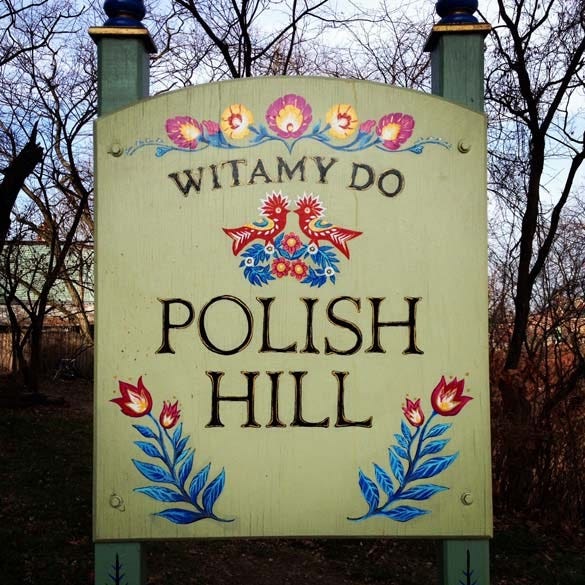
The Jones and Laughlin Steel began business in 1852. Large numbers of Polish immigrants settled the neighborhood after the mid-1800s.
Immigrants could perform these difficult and dangerous jobs without learning much English. The backbreaking work fed the family.
My Mothers side immigrated from Cracow in the 1920s. Ludwig, my Grandfather, worked for J&L for decades.
Titans of industry and finance teamed up to fuel industrial growth in the tri-state area. Legendary names like Carnegie, Jones, Laughlin, Scaife, Mellon, Hillman, Gary, Moore, Rockefeller, JP Morgan, Frick, and others played unique leadership roles critical to the early industrial growth of the nation.
J. P. Morgan formed U.S. Steel with a merger of Carnegie Steel, Federal Steel, and National Steel. U.S. Steel began business with no less than 300 steel mills on the first day of business in 1901. The company was valued at nearly $500 million. Today, a merger like this would top $15 billion. Andrew Carnegie was the first CEO at U.S. Steel. J&L had been in business for nearly fifty years and now had a fierce competitor.
After World War II, the construction of highways was supported by the federal government, and new residential areas were developed in the suburbs. Polish Hill and other neighborhoods began to lose population as some of its more established residents joined the suburban movement, a process seen in many established cities in the U.S. My Dad moved to the South Hills suburbs in the fifties.
Polish Hill has many residents who are descendants of immigrant ancestors and is attracting new residents who value its scale, walkability, and proximity to jobs and amenities.
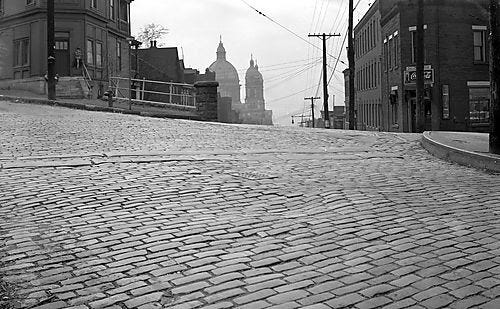
A closer look at the cobblestone streets with Immaculate Heart of Mary Church in the distance
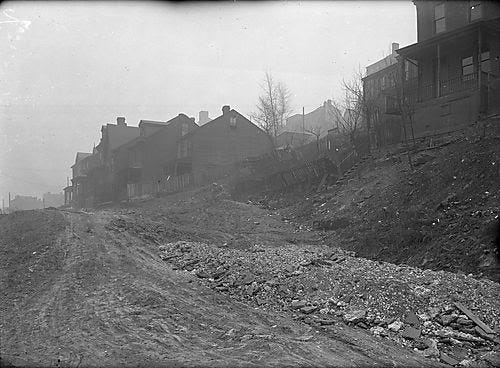
Melwood Avenue before the street was paved. This picture was taken around 1900.
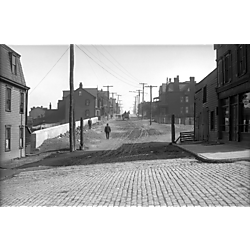
Melwood Avenue in October 1908, after it was paved with cobblestones that remain today. Pittsburgh City Photographer
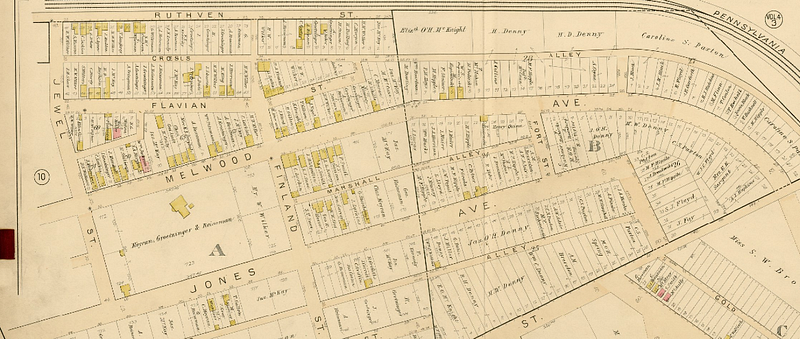
This plate shows the layout of Melwood in 1889. I figure polish hill became a neighborhood around 1840 or so. Many families in Poland were displaced around this time and moved to other nearby countries like Austria and Czechoslovakia. This accounts for a smear in culture, dress, food, music, and shared words in different languages.
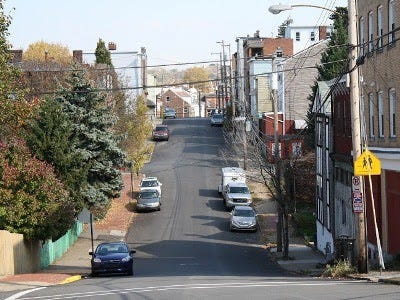
Typical street in Polish Hill
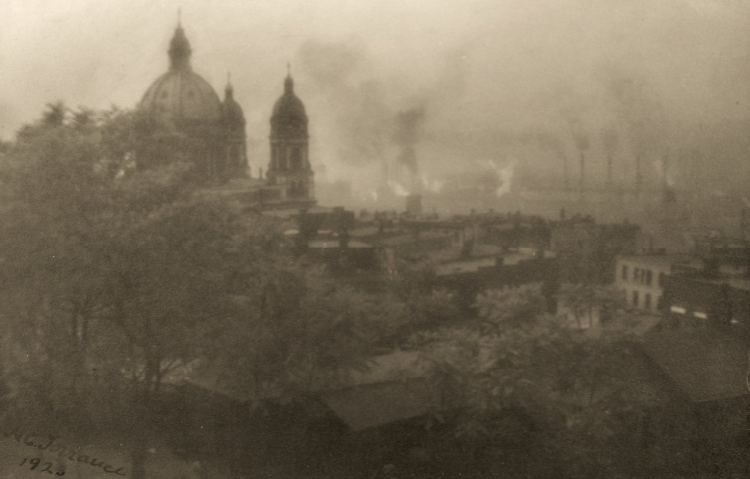
You can see the industry, namely steel going full song smokestacks from the mills pumped soot, steam, and smoke into the air day and night.
America needed its steel, and Pittsburgh was the central source. Not to mention Jones & Laughlin and U.S. Steel were the major employers of immigrants from Eastern Europe.
Hunky is an ethnic slur used in the United States to refer to a laborer from Central Europe. It originated in the coal regions of Pennsylvania and West Virginia. Mill Hunky was used to describe any mill worker in Pennsylvania.
These new steel mill workers were fresh off the boat. Once processed through Ellis Island in New York City, they traveled to Western Pennsylvania.
My Dad told me men were recruited by the steel mills to work in Pittsburgh. The mills paid for their passage and that of their family. Many found work performing hard manual labor in the mines.
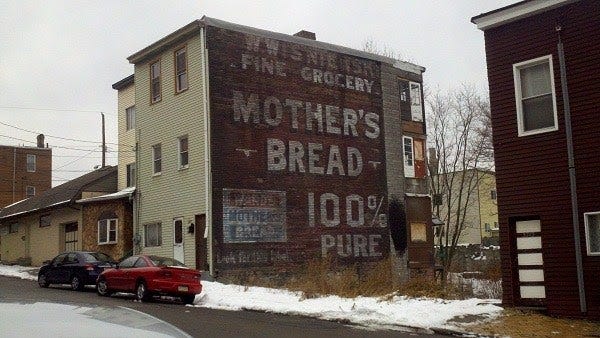
The Mother’s Bread sign painted on the side of the house is a landmark.
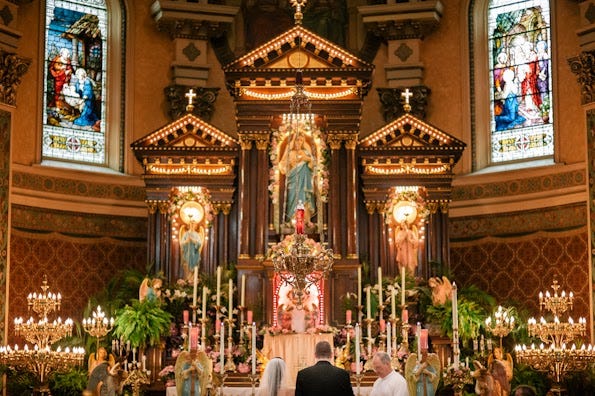
The Immaculate Heart of Mary Church in Pittsburgh is referred to in Polish as Kościół Matki Boskiej, one of the oldest and largest churches in the city.
Located on Polish Hill in Pittsburgh, Pennsylvania, it is a prime example of the so-called Polish Cathedral style of churches in both its opulence and grand scale.
In Polish Hill, the steps of Pittsburgh quickly connect pedestrians to public transportation and provide an easy way to travel through this densely populated area. Polish Hill is built on the side of the hill, so stairs and retaining walls are everywhere.
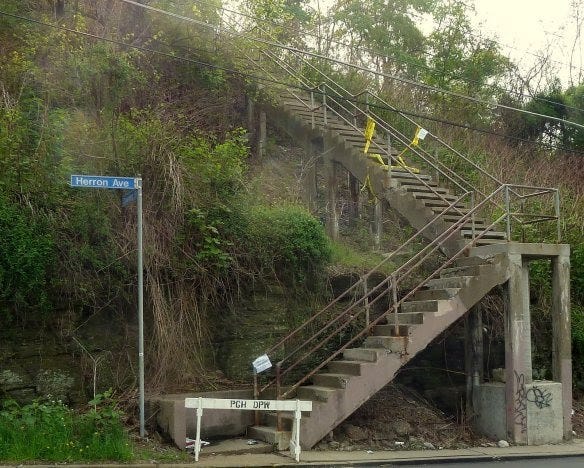
The Polish Hill neighborhood has 16 flights of city steps — many of which are open and in a safe condition.
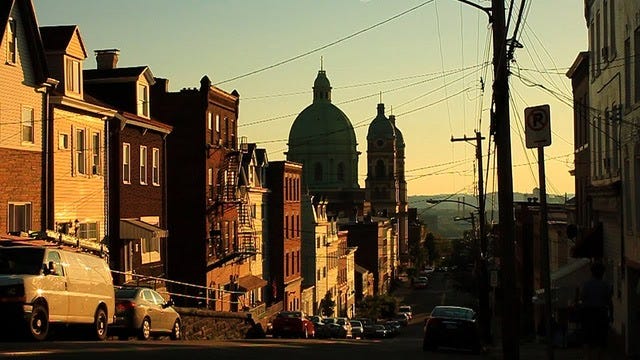
Street scene showing the Immaculate Heart of Mary Church.
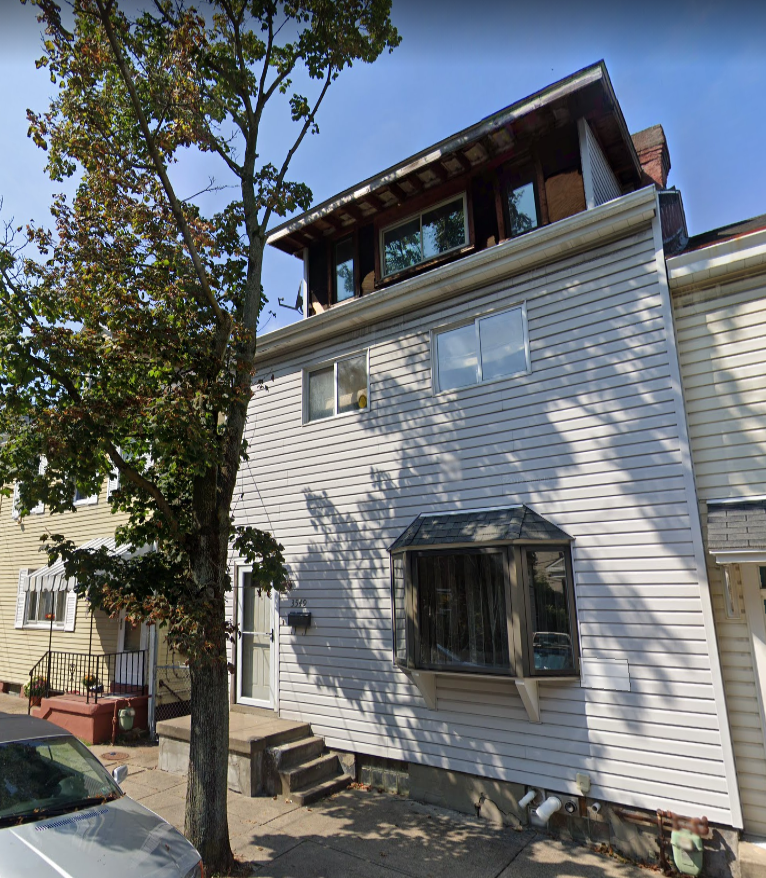
I never left gramps’s house without him pressing a quarter into my hand. We were pals.
*** *** ***
I invite you to read more.
*** *** ***
Douglas Pilarski is an award-winning writer & journalist based on the west coast. He writes about luxury goods, exotic cars, horology, tech, food, lifestyle, and workplace issues!
You’re welcome to share your thoughts or tell me your story. Email me here. [email protected]
Copyright © 2021 AstonBell Media
All rights reserved.
*** *** ***


