
My Love Affair with Jo March
Why this literary heroine has meant so much to me
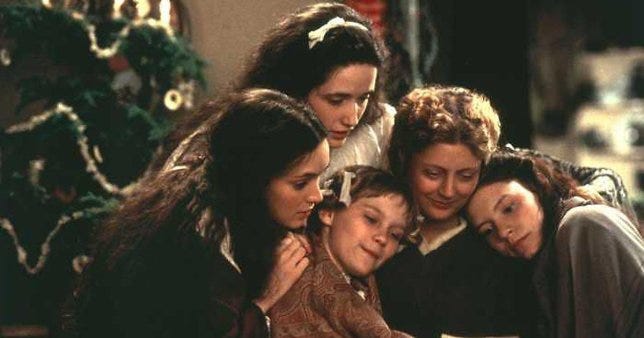
I first met Jo a lot later in life than most women. I was 14. I also met her a lot later in her life than when most others first encountered her. She was a mother, wife, and teacher by then. The first book I read by Louisa May Alcott was Little Men.
Why yes, if you did not know, I delight in telling you that Little Women was the first of three books about Josephine March’s life. It was followed by Little Men in 1871, two years after the final installment of Little Women, and then Jo’s Boys, and How They Turned Out, in 1886.
Incredibly, I knew almost nothing about the character of Jo March when I read Little Men during my freshman year in high school in 1990. It’s important to express that I didn’t know how beloved she was. If I had, I might always wonder if I loved her so much because I thought I was supposed to love her, just as every woman is supposed to find Mr. Darcy so incredibly delectable.
No, I fell in love with Jo all on my own.
Little Men brought me into the world of Plumfield, the house Jo inherited from Aunt March at the end of Little Women, which she later turned into a school for boys. You can’t help but fall in love with the mischievous chaps from that book, and I confess I had a special affection for Dan, who was the same age as I was when I read it for the first time. Dan is one of the original bad boys of classical literature, drinking and smoking and getting into fistfights. His expulsion and later return to Plumfield broke my heart, as did Jo’s particular fondness for him and the way her maternal generosity helped heal his wounded spirit.
I adored Jo’s fiery nature, her intellectual husband who valued integrity above everything else, and the life philosophy they built into their marriage and their school. In fact, I can say with absolute certainty that this book made me want to be a teacher someday. Not because it was my dream career — but because Jo made it seem so virtuous, so helpful to the world, and it seemed like something I could do while I wrote, just as she did.
Believe it or not, I didn’t read Little Women until I was almost 40. I saw the movie long before that. A wonderful adaptation starring Winona Ryder as Jo was released in 1994, the year I turned 18. By then, I had finally been exposed to people’s all-encompassing love for the character of Jo March and upon seeing the movie, I fell even harder for this irrepressible force of nature.
The timing couldn’t have been better. I felt such a deep sense of relief to see the way Jo’s journey so closely paralleled my own:
- I stayed up late every night to write, dreaming of becoming a novelist someday.
- I grew up with a younger sister like Amy who would’ve thrown my manuscript in the fire as an act of vengeance. (She never did, I assure you — I kept my notebooks hidden. But there were other conflicts we had in which she exercised her chilling talent for precise and effortless mortal blows.)
- I felt pressure to follow a traditional path even though I desperately didn’t want to.
- I had little vanity by then and often was the one who made huge sacrifices for the family. (I would’ve cut off my hair and sold it to help with family finances, if only it had been long enough.)
And that speech she gave to Marmee after discovering that Aunt March was going to take Amy to Paris (my dream destination, too) shook me to the bones. It was exactly the kind of thing I would say to my own mother on a regular basis by that pivotal point in my life when nothing seemed to make sense anymore and I didn’t know what to do with myself.
Well, of course Aunt March prefers Amy over me. Why shouldn’t she? I’m ugly and awkward and I always say the wrong things. I fly around throwing away perfectly good marriage proposals. I love our home, but I’m just so fitful and I can’t stand being here! I’m sorry, I’m sorry Marmee. There’s just something wrong with me. I want to change, but I — I can’t. And I just know I’ll never fit in anywhere.
I thought there was something wrong with me, too. I wanted to change, too, but I didn’t know how. And I knew I would never really fit in anywhere, either. (In fact, I still feel that way.)
Jo’s trip to New York to pursue her writing felt deeply significant to me. Somehow, something inside me told me I would someday have to do the same thing. I would have to leave my family, my home, and travel far away in order to give my writing — and myself — a fighting chance. I knew I had to get away from the co-dependence, the dysfunction. Most importantly, I had to learn to see myself outside of the family stories. I had to learn to see myself through my own eyes and not the eyes of my parents, my sister, my brothers.
And six years later, I finally got up the courage to pack my bags (and nothing else — I couldn’t fit any furniture into my Jeep) and drive toward the sunrise until I returned to my beautiful New Mexico, this time stopping in Santa Fe where I would be surrounded by artists, photographers, actors, musicians…and writers.
I’m sorry to admit that at the time, I was as determined to return home with a partner as I was with a publishing deal. It seemed like such a romantic idea: Travel far from home, find yourself, live your passion, and all the better if you also tie up your future in a nice bow by finding a good mate, right?
But can you blame me? I had dreams of Professor Bhaer, who is one of my fantasy dream men. Am I crazy, or is he ten times hotter than Mr. Darcy? He’s smart, he can recite poetry, he’s a philosopher, he’s open-minded, and he’s emotionally available. No, he doesn’t come with a fortune and an estate, but damn, I think Jo did way better than Elizabeth Bennet.
Of course, I did not find a partner in Santa Fe. In fact, I had nothing but a string of poorly chosen “intimate acquaintances” and a lot of heartache by the time I left there. I suppose it should come as some comfort to me that Alcott never intended for Jo to marry.
Wait, did you know that? Isn’t that the most delicious thing you’ve ever heard?
Alcott wrote in her journal:
Girls write to ask who the little women marry, as if that was the only aim and end of a woman’s life. I won’t marry Jo to Laurie to please anyone.
Alcott never married and would have preferred it if Jo did not marry, either.
There has been debate as to why Alcott chose Professor Bhaer as Jo’s love interest. Some say it was to appease readers after Jo’s rejection of Laurie. Others insist it was a defiant move, to make her fall for a boring, unromantic, older man.
I don’t believe either theory. If Alcott was strong enough to face the criticism she would surely have expected after writing Jo’s rejection of Laurie’s proposal, she was certainly strong enough not to feel the need to appease anyone by throwing Jo a “consolation prize relationship.”
I also don’t find Professor Bhaer to be boring or unromantic, as I mentioned.
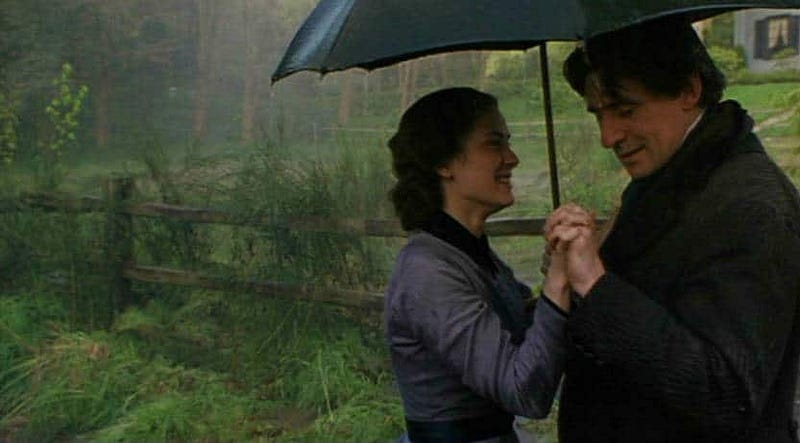
Mr. Bhaer saw the drops on her cheeks, though she turned her head away… “Heart’s dearest, why do you cry?”
… “Because you are going away.”
“Ach, mein Gott, that is so good!” cried Mr. Bhaer, managing to clasp his hands…, “Jo, I haf nothing but much love to gif you. I came to see if you could care for it, and I waited to be sure that I was something more than a friend. Am I? Can you make a little place in your heart for old Fritz?”…
“Oh, yes!” said Jo, and he was quite satisfied, for she folded both hands over his arm, and looked up at him with an expression that plainly showed how happy she would be to walk through life beside him, even though she had no better shelter than the old umbrella, if he carried it.
I’m not much of a romantic — not in the traditional sense, at least — but this scene always makes me feel as flustered and breathless as Jo.
But allow me to circle back to my point. (Sorry, I got a little distracted there.) Ah yes…that her publishers probably pressured her to give Jo a love interest despite the fact that Jo was meant to be an independent woman. As Alcott said, “I’d rather be a free spinster and paddle my own canoe.”
So yes, I paddled my own canoe back home after my year in Santa Fe. And when I met someone I thought I would marry, I paddled my own canoe through our seven years together, trying to maintain as parallel a course as possible. And after he left, I kept paddling.
I read Little Women and Jo’s Boys after my breakup, and my love affair with Ms. March continued to deepen. I lament the fate of my darling Dan — though I let him live on in my own series of novels (that I hope to see published someday) in which one of the characters is named after this scrappy fellow.
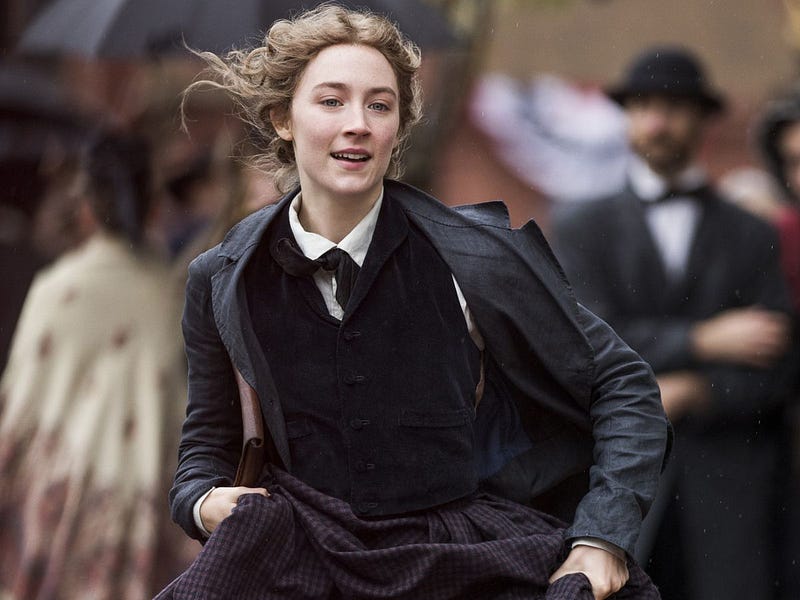
And Jo? By the third book, she has achieved her dream of becoming a successful writer. Like her, this is my greatest dream. I will happily paddle my own canoe for the rest of my life if I’m allowed the privilege of weaving my words onto the page and having people read them.
When I leave this earth, it’s one of my greatest hopes to leave behind a library of my work that will live on long after I am gone.
Like Alcott, I want to leave a mark on this world — an ever-engaging, electrically alive, literary phantom in the form of a wild, willful, insatiable, brave woman. Whether that is one of the characters whose stories I share, or the imprint I leave as the author of these tales…I want to honor what Alcott gave to us: our beautiful, spirited, irrepressible Jo March.
© Yael Wolfe 2019


