avatarAlexa V.S.

Free AI web copilot to create summaries, insights and extended knowledge, download it at here

10156

Abstract

b> on the days my husband exercised— a weekend trek, a bike ride, resistance training — he usually added sweet potato to his meals. According to Ferriss, they’re allowed 30 minutes after an intense workout.</p></blockquote><h2 id="550d">Week 2</h2><p id="8f68">My husband considered quitting on week 2.</p><p id="9b55">He felt too restricted because he hadn’t done a proper cheat day in week 1. He hadn’t wanted to ruin his progress by overeating one day.</p><p id="1125"><b>I’d tried pushing him. Ferriss says a cheat day is vital to adhere to this diet. It keeps your <a href="https://pubmed.ncbi.nlm.nih.gov/24571926/">metabolism running</a> and makes you feel less deprived.</b></p><p id="c04c">But my husband wouldn’t budge. Yes, he ate a bit more carbs on week 1 cheat day, but barely.</p><p id="0d3a">The result?</p><p id="8505">“I want to quit,” he said on day 9. “I need my cookies.” (He has a weird thing with those cookies.)</p><p id="51b4">“What you need,” I replied, “is for me to help you survive this week — and to do a cheat day.”</p><p id="b2d8">We had a similar conversation the next few days. Then my husband finally came to his senses and sent me this pic:</p><figure id="0e19"><img src="https://cdn-images-1.readmedium.com/v2/resize:fit:800/1*f-xxZf7cjolyX9z6IdB_gQ.jpeg"><figcaption>My husband went to buy his favorite cookies to prepare for his first formal cheat day. Please forgive his spelling mistake; he was desperate for some sugar and wasn’t thinking straight. [Image by author]</figcaption></figure><p id="92f2">The next day, my husband finally had a proper cheat day. After a protein-rich breakfast — a guideline Ferriss recommends — he had a chocolate croissant, sushi, a pizza, and all the chocolate cookies he’d bought with milk as we watched a movie before bed.</p><p id="41d1">Happy and satisfied, my husband went to bed that Sunday night and gladly continued the challenge for two more weeks.</p><blockquote id="bf9b"><p><b>Note: </b>When it comes to cheat days, Ferriss says you should go all out — no restrictions — but that you have to keep three guidelines in mind:</p></blockquote><blockquote id="3950"><p>1. Consume a high-protein, slow-carb breakfast as soon as you wake up.</p></blockquote><blockquote id="8828"><p>2. Keep to a single day. Some may think they can have a cheat meal on Saturday and Sunday, which counts as one day. But Ferriss says no. Just pick a single day.</p></blockquote><blockquote id="b4b5"><p>3. To <a href="https://www.4hourbodygirl.com/the-structure-of-the-cheat-day-interview-with-tim-ferriss/">mitigate the fat gain</a> during this day, Ferriss dedicates a whole chapter in his book. Still, the basic tips are: Have coffee and grapefruit juice during your first ‘cheat meal’ (the meal after the high-protein breakfast), do 50 squats or some other form of short, intense exercise just before every cheat meal, and 90 minutes after.</p></blockquote><h2 id="b65a">Week 3</h2><p id="e59b">Week 3 was challenging because my husband had a weeklong work activity that included lunch.</p><p id="2715">“What if there’s nothing slow-carb friendly?” my husband said on Monday morning.</p><p id="98f7">I understood his fear. His lunch would be at a buffet filled with forbidden fruit: pizza, pasta, hamburger — delicious white carbs that’d mark the end of the challenge.</p><p id="1250">And my husband couldn’t simply take a lunchbox and call it a day. He was expected to partake in team lunches.</p><p id="9fb1">No way out.</p><p id="857e">“There’ll be something,” I promised, knowing we live in an age where restaurants are more than happy to accommodate our needs.</p><p id="3bfa">Sure enough, my husband found the holy grail among the enticing carby foods: a stand with grilled protein — chicken, beef, fish — and veggies. (I still gave my husband a mixed nuts jar <i>just in case</i>, but he was fine.)</p><figure id="f1a7"><img src="https://cdn-images-1.readmedium.com/v2/resize:fit:800/1*Nj4TSfDI8w3D7Dqo6FTqGg.jpeg"><figcaption>The snack jar I prepared for my husband. It has Brazil nuts, pistachios, smoked almonds, and walnuts. [Image by author]</figcaption></figure><p id="f8a4"><b>Bottom line</b>: Lunch boxes are great to stick to a diet – and great for your purse – but you can still ‘slow-carb’ if you eat out.</p><p id="c68e">This is also something Ferriss promises in his book, where he states his favorite options are Mexican and Thai because it’s easy to ask the staff to swap or remove starchy carbs.</p><h2 id="c8c2">Week 4</h2><p id="fdda">The last week was the easiest.</p><p id="28f2">Knowing the challenge was ending helped my husband keep his cool and reflect on his journey.</p><p id="486c">On the last day, we had a lovely burrito bowl for dinner and talked about everything we’d learned. Here are the top insights:</p><ul><li><b>Tracking your progress – via a scale that calculates your fat percentage, pictures, or measuring tape – helps with adherence</b>. Knowing the diet is working will keep you motivated when you want to sell your soul for a pizza slice.</li><li><b>Batch cooking is vital for this diet. </b>I usually prepared four big meals during the week, so we’d have leftovers for the rest of the days. Another great tip is to buy frozen or canned veggies and legumes.</li><li><b>Spending a couple of hours on “pre-diet setup” makes everything easier. </b>Stock up the pantry. Go to the supermarket and check everything that might be helpful. Get everything unhelpful out of the house (unless you live with someone else, then simply hide triggering foods). Plan your meals.</li><li><b>Variety is a necessary exception.</b> Ferriss recommends we stick to a few dishes and repeat them over and over. But my husband – and I, for that matter – were tired of having the same thing by week 2. That’s why my husband tried a few different breakfast options, and I made it so that the menu of week 4 was the same as week 2 but different from week 3 (alternating weeks). However, keep it simple if you don’t have the time or mental space to plan different meals. It’s one of the rules for a reason.</li></ul><figure id="e4cf"><img src="https://cdn-images-1.readmedium.com/v2/resize:fit:800/1*qVvuY1bv16oqQyoVHf1CuQ.jpeg"><figcaption></figcaption></figure><figure id="532c"><img src="https://cdn-images-1.readmedium.com/v2/resize:fit:800/1*HUdQY-asB0T1xKxn63QSdg.jpeg"><figcaption>Left (breakfast salad with mixed greens, an egg, smoked tofu, cottage cheese, cucumber, tomato, avocado and guacamole). Right (protein bread with cottage cheese for the mornings my husband wasn’t that hungry but needed to get his protein fix). [Images by author]</figcaption></figure><ul><li><b>It’s okay to make tiny exceptions (if that’ll improve your adherence.)</b> My husband’s kryptonite is chocolate, so having to go 28 days without his favorite treat felt insurmountable. And I – because I always want to spoil him – got him an 85% no-added-sugar chocolate and told him to only have one square per day (he had two on many days, even if he believes I didn’t notice). This is a clear diet violation, and perhaps my husband would’ve lost more fat had he avoided chocolate altogether. But you know what? My husband still got amazing results, and having his daily chocolate allowance is what got him through it.</li><li><b>Working out isn’t necessary — but it never hurts (especially walking).</b> Throughout the challenge, my husband tried to walk 6k steps per day (his current walking goal) and went to the gym once per week. Sometimes he only worked his abs. Sometimes more. He still lost fat and maintained muscle, so clearly, much exercise isn’t needed — something Ferriss explains in his book — but I’d argue <a href="https://readmedium.com/10-non-obvious-ways-to-walk-more-and-lose-fat-every-day-996c4e249ced?source=stats_homepage-------------------------------------">walking is always an excellent fat-loss-boosting tool</a>.</li></ul><figure id="86f8"><img src="https://cdn-images-1.readmedium.com/v2/resize:fit:800/1*8p_WWLs-RQ2qsYJaSIyhlw.jpeg"><figcaption>Walking summary of the four weeks (goal: 6k steps per day on average). During week 2, my husband was a bit sick, so he walked less than usual. [Images by author with husband’s full consent]</figcaption></figure><ul><li><b>Cheat days are non-negotiable. </b>Moreover, they’ll help you see how crappy some foods make you feel. My husband, for instance, has long suspected dairy doesn’t sit well with him, but it wasn’t until he got to contrast what days without milk vs. a dairy fest felt like that he realized just how used he’d become to not feeling his best.</li><li><b>Find easy swaps for your go-to recipes.</b> As mentioned before, a way to make this diet easy is to continue eating your recipes with slow-carb-friendly swaps. In my husband’s case, this meant trading regular bread for a protein variety and rice with <a href="https://www.amazon.com/konjac-rice/s?k=konjac+rice">konjac</a>.</li><li><b>Don’t fear legumes (and farts). </b>I won’t lie and say there weren’t any… concert-like consequences of increasing our legume consumption. But it quickly went away. By week 4, my husband felt more digestive distress during his cheat days.</li><li><b>Don’t go nuts (if you want to maximize fat loss).</b> Though my husband still lost fat, his results could’ve been magnified if he’d limited his nut consumption. This is something Ferriss recommends — sticking to a handful per day at most — but my husband went a little overboard.</li></ul><blockquote id="be0a"><p><b>Note:</b> Ferriss also suggests using certain supplements to maximize fat loss, which should be taken six days per week, with a week off every two months:</p></blockquote><blockquote id="01cd"><p><b>- <a href="https://www.webmd.com/vitamins/ai/ingredientmono-137/policosanol"></a></b><a href="https://www.webmd.com/vitamins/ai/ingredientmono-137/policosanol">Policosanol:</a> 20–25 mg before bed.</p></blockquote><blockquote id="a86a"><p><b>- <a href="https://www.mountsinai.org/health-library/supplement/alpha-lipoic-acid#:~:text=Alpha%2Dlipoic%20acid%20is%20an,body%20turns%20food%20into%20energy."></a></b><a href="https://www.mountsina

Options

i.org/health-library/supplement/alpha-lipoic-acid#:~:text=Alpha%2Dlipoic%20acid%20is%20an,body%20turns%20food%20into%20energy.">Alpha-lipoic acid:</a> 100–300 mg before breakfast, lunch, dinner, and going to bed.</p></blockquote><blockquote id="f7e3"><p><b>- <a href="https://www.sciencedirect.com/science/article/pii/S0002916522037406"></a></b><a href="https://www.sciencedirect.com/science/article/pii/S0002916522037406">Green tea flavanols</a> (decaffeinated): It should contain at least 325 mg of <a href="https://en.wikipedia.org/wiki/Epigallocatechin_gallate">epigallocatechin gallate (EGCG)</a> and be taken before every meal.</p></blockquote><blockquote id="500d"><p><b>- <a href="https://www.ncbi.nlm.nih.gov/pmc/articles/PMC7402177/"></a></b><a href="https://www.ncbi.nlm.nih.gov/pmc/articles/PMC7402177/">Garlic extract:</a> At least 200 mg before every meal and before going to bed.</p></blockquote><blockquote id="b733"><p>My husband didn’t take any of these as we’re very careful about what supplements we introduce into our diets. <b>Likewise, please remember to speak with a health professional before adding any supplementation or trying any extreme diet.</b></p></blockquote><h1 id="a201">PART II: The Results — Does the Slow Carb Diet Work?</h1><p id="ffae">According to Tim Ferriss, the average person can hope to lose between 10–20 lbs of fat in one month with the slow-carb diet.</p><p id="13df">In my husband’s case, this is what he saw:</p><h2 id="4fd0">Fat, weight, and muscle loss:</h2><figure id="6d31"><img src="https://cdn-images-1.readmedium.com/v2/resize:fit:800/1*4DDicmHV6DFRLILBL5rKzg.jpeg"><figcaption></figcaption></figure><figure id="5aa2"><img src="https://cdn-images-1.readmedium.com/v2/resize:fit:800/1*E_iJrMJSdFS76Q2IA-b8BA.jpeg"><figcaption>Left (fat%). Right (fat in kg.) Measurements were taken using our gym’s InBody scale. [Images by author with husband’s full consent]</figcaption></figure><p id="3578">In 4 weeks, my husband reduced his body fat percentage by 2%, which amounted to around 3-4 pounds of fat total, or about 1 pound per week on average, the recommended number for <a href="https://www.cdc.gov/healthyweight/losing_weight/index.html#:~:text=People%20with%20gradual%2C%20steady%20weight,also%20contribute%20to%20weight%20management.">healthy, steady fat loss</a>.</p><figure id="4833"><img src="https://cdn-images-1.readmedium.com/v2/resize:fit:800/1*nlzabKmRPMcNi6zGAYtD6w.jpeg"><figcaption></figcaption></figure><figure id="f1a9"><img src="https://cdn-images-1.readmedium.com/v2/resize:fit:800/1*3ltVy6lzCvh6KtadcnMa5g.jpeg"><figcaption>Left (skeletal muscle in kg). Right (weight in kg). [Images by author with husband’s full consent]</figcaption></figure><p id="45e9">As you can see, my husband didn’t lose any muscle even if he lost weight. This is incredibly important as <a href="https://compurocare.com/muscle-matters-10-health-benefits-of-increased-muscle-mass/">keeping our muscles healthy is vital</a> for a fast metabolism, healthy aging, and a generally good quality of life.</p><p id="5486">I was especially surprised by these results as my husband barely did any resistance training — despite my encouragement. <b>So it turns out Ferriss’s claims are true: You can lose fat and maintain muscle with little exercise while on the slow-carb diet.</b></p><figure id="2333"><img src="https://cdn-images-1.readmedium.com/v2/resize:fit:800/1*mfcsLylGCcDqGEDaV5iGcw.jpeg"><figcaption></figcaption></figure><figure id="efa9"><img src="https://cdn-images-1.readmedium.com/v2/resize:fit:800/1*x1d6XzyVOOSce6gHPVDeCg.jpeg"><figcaption>Left (day 1). Right (day 28). [Images by author with husband’s full consent]</figcaption></figure><p id="e674">Lastly, though we can’t see any ab action, my husband did lose fat around his waist (his goal, yay!).</p><p id="617b">Before the diet, its circumference measured 84 cm (33.1 inches) and went down to 78 cm (30.7 inches).</p><p id="46fa">Reduced belly pooch?</p><p id="e10d"><i>Achieved.</i></p><figure id="87fa"><img src="https://cdn-images-1.readmedium.com/v2/resize:fit:800/1*YBFsyku0wPAPVJy7jQ4sdw.jpeg"><figcaption></figcaption></figure><figure id="d5b9"><img src="https://cdn-images-1.readmedium.com/v2/resize:fit:800/1*R8qmIyliZCHY4V-RhqdtGA.jpeg"><figcaption>Left (day 1). Right (day 28). [Images by author with husband’s full consent]</figcaption></figure><h2 id="19b8">Other benefits</h2><p id="7009">Besides fat loss, my husband also experienced:</p><ul><li><b>Reduced hunger.</b> He says he felt less hungry overall, even on cheat days. This is something I also experienced while doing a <a href="https://readmedium.com/i-quit-sugar-for-30-days-to-get-rid-of-my-cravings-heres-what-happened-4620d3847850">no-sugar challenge</a>, so it’s likely connected to a reduced consumption of sugary foods.</li><li><b>Steady energy.</b> My husband didn’t feel the typical afternoon crash and slept better. However, I don’t think it’s because of the diet per se. He used to eat a lot of dark chocolate cookies with milk before bed, so taking that treat away likely helped improve his ZZZs, making him feel more energized throughout the day.</li><li><b>More $$$. </b>We have a monthly budget, and for the first time in months, we were able to save money on groceries.</li></ul><h2 id="3d80">The main drawback</h2><p id="ce5b">I’ve always admired my husband’s relationship with food. It’s as healthy as it gets.</p><p id="5160">But this diet made him act strangely.</p><p id="9592">He dreamt about carby foods and said he’d kill to eat pasta. On cheat days, he ate way more cookies than usual because of the “last supper” mentality. And the morning after the challenge ended, he still reached for the protein bread because he “feared regaining all the fat.”</p><p id="58f3">These comments could be considered harmless. But they worried me because my husband has never fixated on food to this degree.</p><p id="eba8">I can’t help but wonder if my husband’s relationship with food could be ruined if he followed this diet for longer than 4 weeks.</p><p id="fc02">And that leads me to the big, final question: Do I recommend the slow-carb diet?</p><h1 id="4091">PART III: Is It Worth It? Would I Recommend It?</h1><p id="7530">The slow-carb diet works for fat loss. Not to mention it’s simple to follow, and the cheat day makes it more “survivable” than most other diets.</p><p id="1238">However, I wouldn’t recommend it.</p><p id="00c0">Like other diets that completely cut out food groups, it’s too restrictive — and we all know that <a href="https://equip.health/articles/food-and-fitness/the-role-of-restriction-in-eating-disorders">restriction can lead to eating disorders</a> like binge eating.</p><p id="39a7">Even my husband, who’s always had an enviable relationship with food, started exhibiting worrisome behaviors.</p><p id="59f5">Not even Tim Ferriss follows it religiously anymore, as he recently said in <a href="https://www.hubermanlab.com/episode/tim-ferriss-how-to-learn-better-and-create-your-best-future">the Huberman Lab podcast</a>. He usually returns to it occasionally when he wants to lose some fat quickly, but he’s become more “indulgent” (his words, not mine).</p><p id="62fe">So, if you need to lose fat quickly, perhaps try giving this diet a shot for one to four weeks tops.</p><p id="7112">But I wouldn’t recommend it if you’re seeking long-lasting, healthy fat loss. Heck, I never restricted any food group during <a href="https://readmedium.com/the-5-simple-habits-that-helped-me-reach-a-low-body-fat-percentage-6fdc347e6d15">my body recomposition journey</a>, and <a href="https://readmedium.com/the-10-lifestyle-habits-that-have-kept-my-body-fat-low-for-4-years-33581bbbd8ed">I’ve maintained a lean physique for more than 4 years</a> without restricting fruit or even sugar.</p><p id="3807">Instead, I’d recommend approaching fat loss more gently:</p><ul><li>Walk as much as you can daily (at least 30 minutes).</li><li>Do resistance training three times per week.</li><li>Prioritize protein in every meal (a great tip that the slow-carb diet also promotes).</li><li>Ensure every meal has protein, healthy fats, and fiber.</li><li>Have desserts that satisfy your sugar tooth but don’t lead to a binge.</li><li>Have 3 to 4-hour breaks between meals.</li><li>Prioritize greens when going out or traveling.</li><li>Read about the benefits of a healthy lifestyle to keep yourself motivated.</li></ul><p id="ea23"><b>Remember:</b> Sustainable fat loss is a marathon, not a sprint. It’s more about the small habits we incorporate into our lives rather than the drastic diets we try along the way.</p><p id="b241"><b>Continue reading:</b></p><div id="c807" class="link-block"> <a href="https://readmedium.com/the-3-health-fitness-things-you-should-focus-on-if-youre-extremely-short-on-time-e5a043991361"> <div> <div> <h2>3 Health & Fitness Things To Focus on if You’re Extremely Short on Time</h2> <div><h3>What I recommended to my sister-in-law, a busy mom of three who works full-time</h3></div> <div><p>medium.com</p></div> </div> <div> <div style="background-image: url(https://miro.readmedium.com/v2/resize:fit:320/1*Wlhpc7Wvg4f1wTQC1uYYlw.jpeg)"></div> </div> </div> </a> </div><div id="ed43" class="link-block"> <a href="https://readmedium.com/the-simple-dietary-plan-my-sister-used-to-balance-her-hormones-and-lose-stubborn-fat-5dca25817a57"> <div> <div> <h2>The Simple Dietary Plan My Sister Used To Balance Her Hormones and Lose Stubborn Fat</h2> <div><h3>After years of struggling with PCOS, here’s how she regained control of her weight and vitality</h3></div> <div><p>medium.com</p></div> </div> <div> <div style="background-image: url(https://miro.readmedium.com/v2/resize:fit:320/1*xld_b-NWn4p4f66QBTsi8w.jpeg)"></div> </div> </div> </a> </div></article></body>

My Husband Lost 4 Pounds of Pure Fat in 28 Days With Tim Ferriss’s S.C. Diet — Here’s What He Did

A comprehensive overview of his journey, lessons learned, results, and best practices
Photo by Michael Burrows on Pexels

“Can you help me lose this?” my husband asked as he grabbed his belly pooch.

We were writing our New Year’s resolutions, a yearly tradition, and since my husband knows I’ve been researching everything related to health and fitness for years — and have even achieved a lean, athletic physique — he reached out for help.

“I have an idea,” I replied.

After reading Tim Ferriss’s bestselling book, the 4-Hour Body, I’d been tempted to try his famous slow-carb diet, but I didn’t feel I was the right candidate.

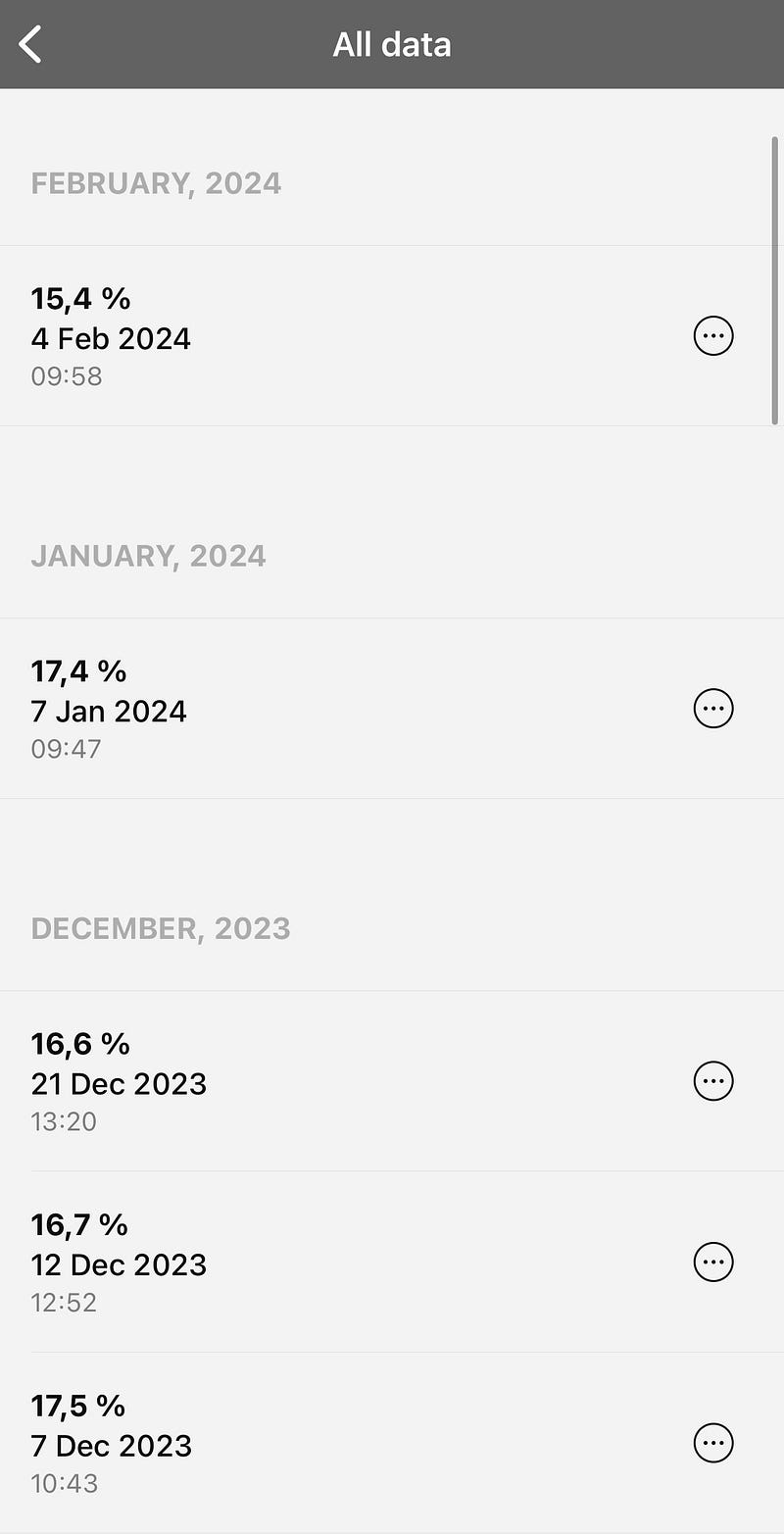
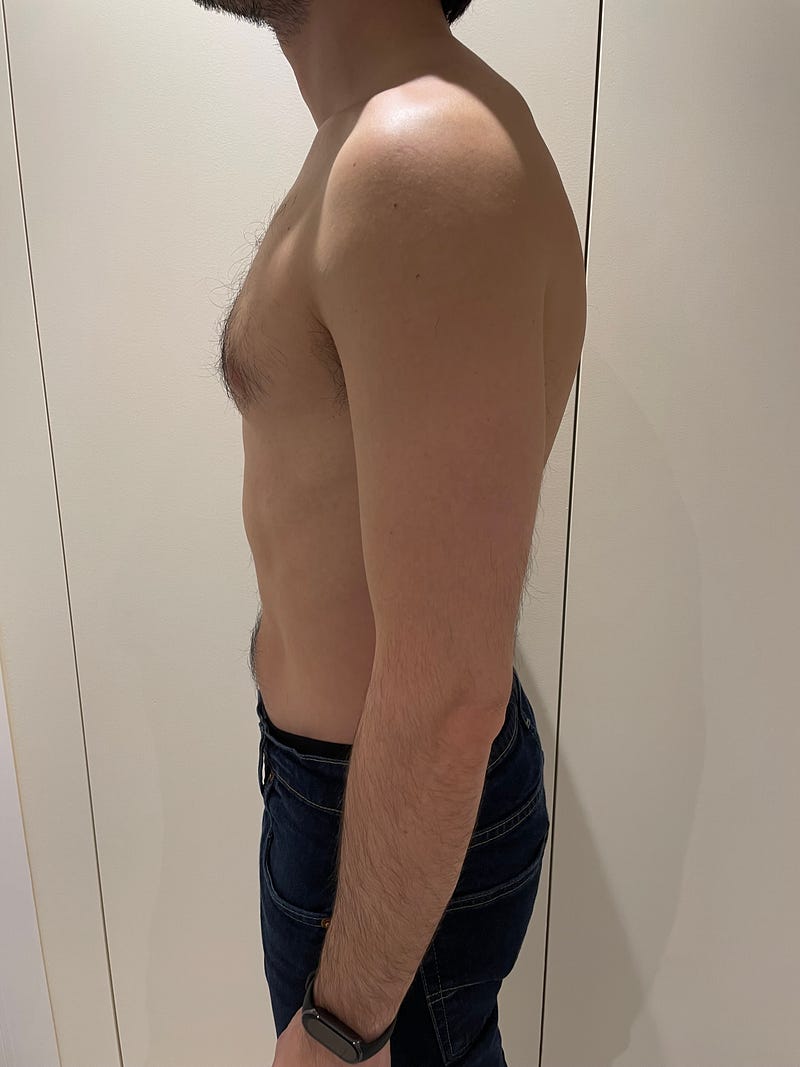
Left (physique in 2024). Right (Fat % measured with my gym’s InBody scale). [Images by author]

As you can see, I’m already lean, so I didn’t want to risk facing hormonal issues by following a rapid fat-loss program.

Enter my husband.

Though he’s also thin and, most importantly, healthy, he could still lose some fat, as evidenced by his “Michelin” (his words, not mine). This made him the perfect guinea pig.

And since he’s the one who asked, I offered him a deal: Follow the slow-carb diet for 4 weeks, allow me to write about it, and I’d handle all the details, from cooking to tracking.

After very little convincing, my husband agreed. So now I’m here sharing his journey, which began on Monday, January 7th.

I’ll be covering:

  • The 4-week challenge, including best practices, meals, and key insights.
  • The results, including before and after pictures, scale measurements, and any other benefits — and drawbacks — experienced.
  • Whether it was worth it, as well as some recommendations for how to tackle sustainable fat loss.

As you can tell by the title, the challenge worked — but that doesn’t mean it was easy or that I’d recommend it to everyone.

Here’s why:

Disclaimer: Neither I nor Tim Ferriss are certified fat-loss or medical experts, so please remember to seek professional advice before attempting any diet.

PART I: ‘Slow Carbing’ for 28 Days

Tim Ferriss’s slow-carb diet consists of five rules:

  1. No white foods (or anything that can be white). No grains (even if unrefined), rice (even if brown), potatoes, etc. This also means no dairy except cottage cheese. Note: Cauliflower is allowed.
  2. No liquid calories. No sweetened beverages, alcohol, or milk. The only exceptions are two glasses of red wine and 16 oz. of diet soda.
  3. No fruit. The only exceptions are tomatoes and avocadoes (a cup per day at most).
  4. Eat the same few meals on repeat. Ferriss states that simplicity makes this diet work, so he encourages ‘slow-carbers’ to stick to four meals daily and eat them six days a week.
  5. One cheat day per week. On day 7, eat whatever you want.

My husband’s goal was to reduce his body fat (especially around the waist) while minimizing muscle loss. So, after taking initial measurements and saying goodbye to his favorite cookies for a few days, he went all in.

Here’s what happened:

Week 1

The first few days were filled with trial and error.

The diet’s rules are simple, but my husband and I were still riddled with doubts:

  • Can you have unlimited nuts? No, only a handful.
  • Are plant-based milks allowed? No, no liquid calories.
  • Can you have carbs after an intense workout, even if it’s not your cheat day? YES!

During the first week, my husband and I spent hours puzzling over how to incorporate the slow-carb diet into our lives.

For this, Ferriss recommends a simple list of foods:
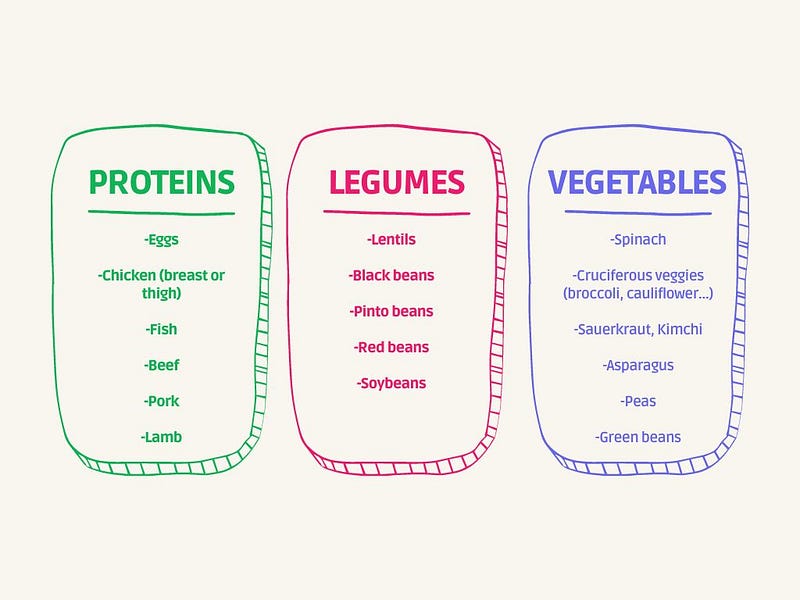
Summary of Ferriss’s unlimited foods on a slow-carb diet. You can also pair these with fats like olive oil, ghee, nuts, and seeds (in moderation), and you can use herbs and spices for flavor. [Image by author, made in Canva]

Ferriss recommends you mix and match the different proteins, legumes, and veggies for each meal, with four meals per day that should be eaten every four hours.

Another essential guideline is to have a protein-rich breakfast after waking up. According to Ferriss, this can make or break your fat loss journey.

However, completely upending your life to follow a diet’s guidelines is a surefire way to not stick to it — a key learning after my years-long health and fitness journey.

That’s why — though I encouraged my husband to try Ferriss’s recommended breakfast and other meals — I told my husband to make small changes to his current diet, which looked something like this:

  • Breakfast (between 7 and 8 AM): avocado toast with turkey slices and eggs with high-protein, low-carb bread.
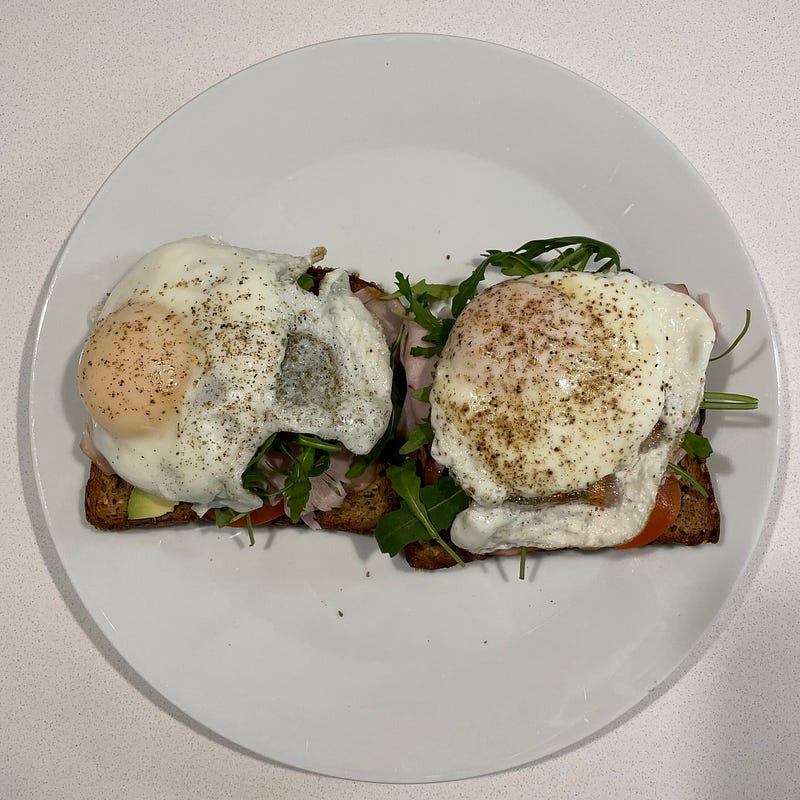
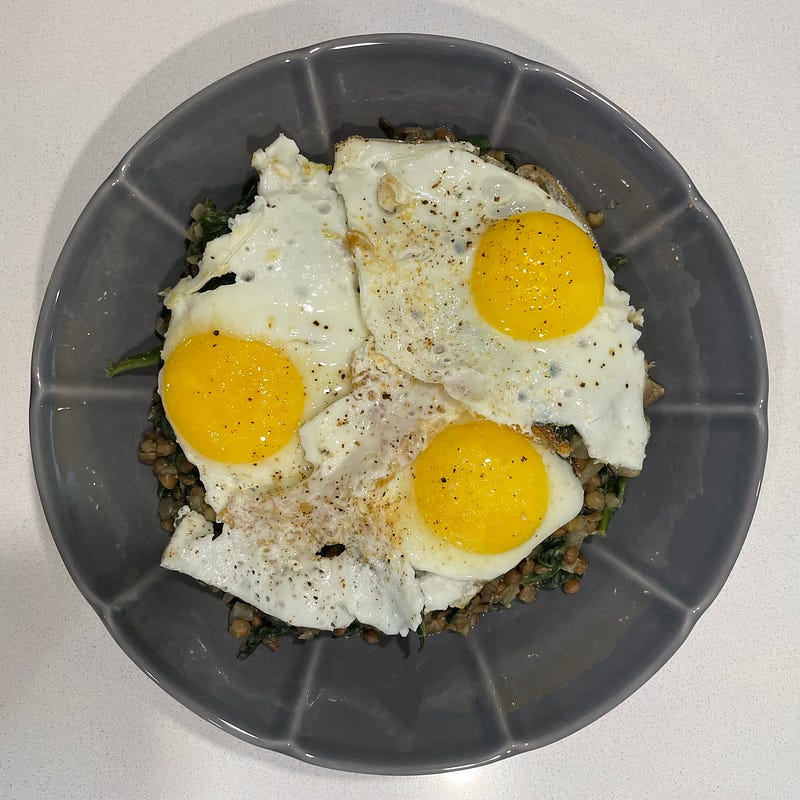
Left (avocado toast with eggs, arugula, avocado, tomato, turkey slices and protein bread). Right (a version of Tim Ferriss’s recommended breakfast with lentils, spinach, onion, mushrooms, and three eggs). [Images by author]
  • Lunch (between 1 and 2 PM): My husband works a traditional 9–5 job, so he’s forced to wait between 5 to 6 hours for his second meal. But this wasn’t an issue. As his breakfast was calorically and nutritionally dense, he felt fine until his lunchtime arrived. As for the meals, I prepared lunch boxes for him to make everything easier.
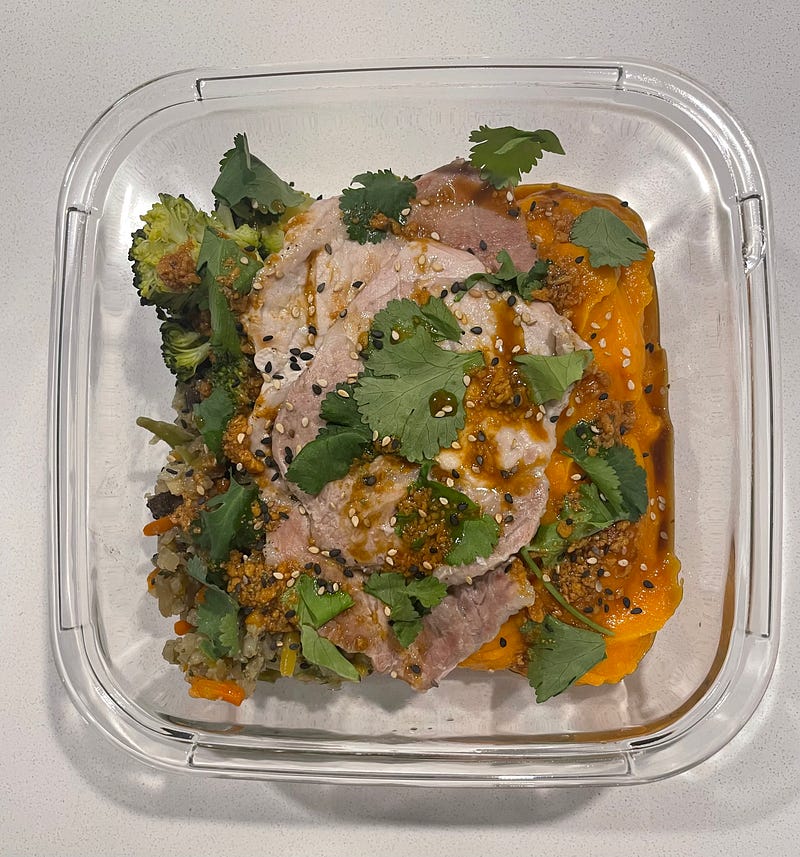
One example of the lunches I prepared for my husband. It’s a bowl with pureed sweet potato (he had exercised earlier, so this was allowed), pork loin (100 grams more or less), about 100 grams of cauliflower rice, about 100 grams of frozen mixed veggies, fresh coriander, and broccoli. The dressing was made with a teaspoon of peanut butter, soy sauce, and lemon juice. [Image by author]
  • Snack (between 5 and 6 PM): My husband usually had some hummus with carrot and celery sticks and/or a handful of nuts after work. I encouraged him to have a bigger meal, but he’s always followed a three-meal structure. However, I’d highly recommend having four meals if you’re used to eating more times per day. Otherwise, it’ll be too hard.
  • Dinner (between 8 and 9 PM): We live in Spain, where dinnertime is usually very late. For this meal (and most lunches), we usually had some kind of nourish bowl, which made it easy for us to have the same meal, albeit with minor modifications.
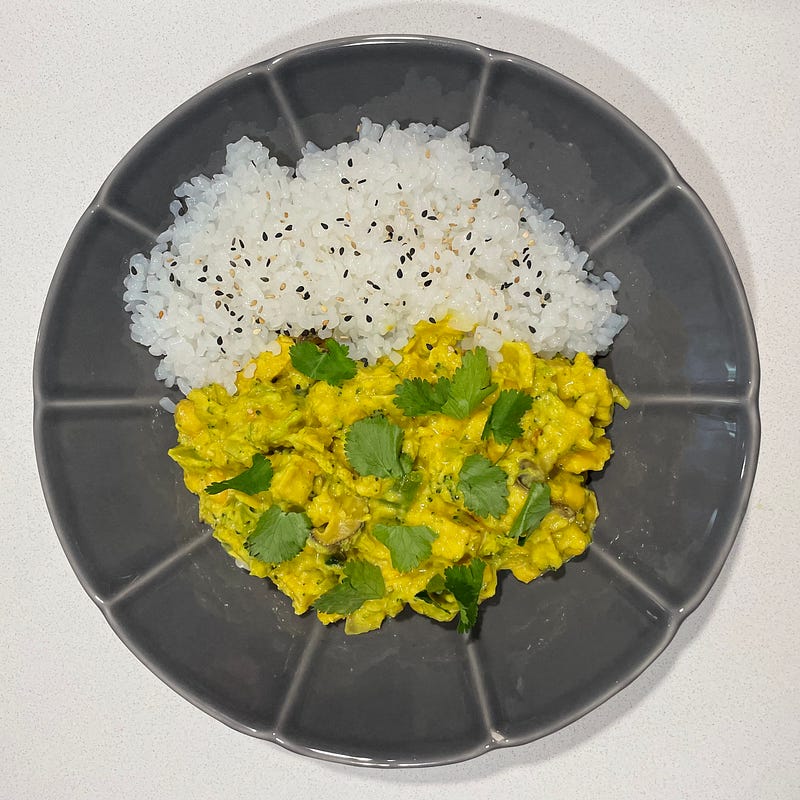
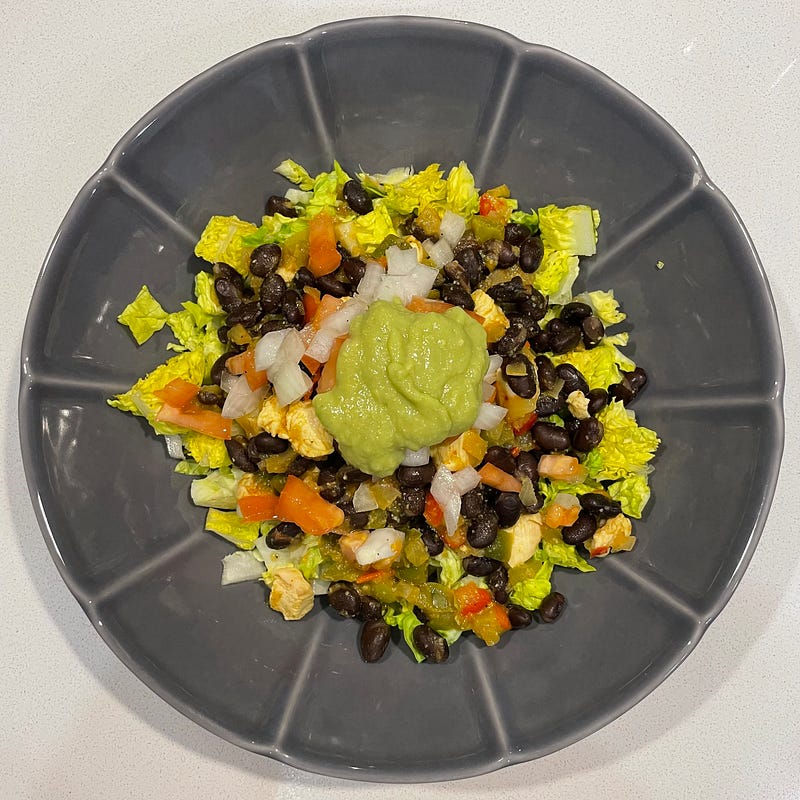
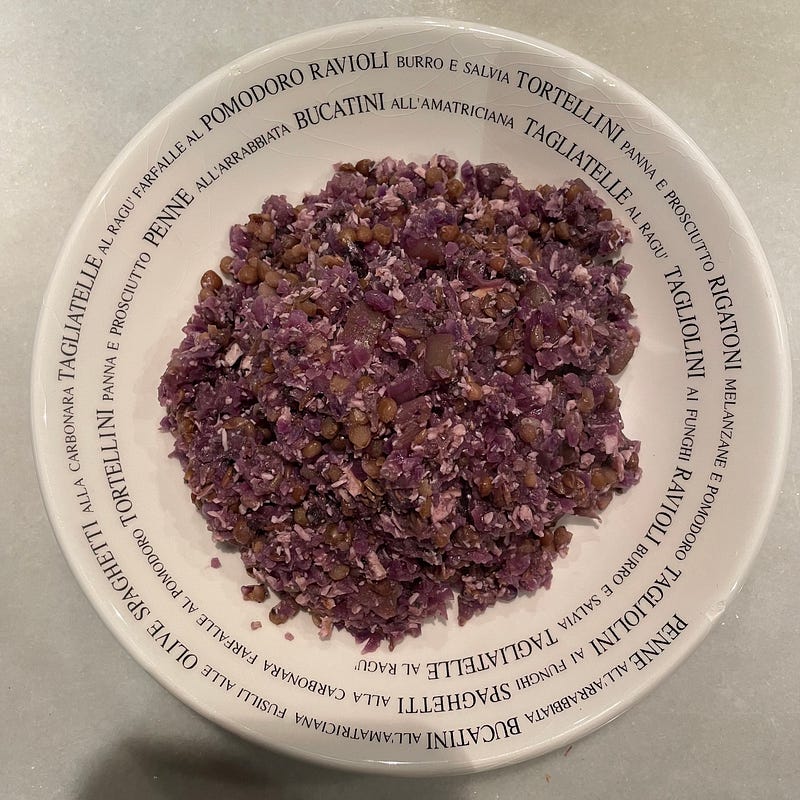
Left (curry made with mixed veggies, chicken, coriander, coconut milk —a small mistake — and konjac rice). Center (burrito bowl with onions, green and red peppers, chicken, black beans, lettuce for the base, and guacamole). Right (lentils with shredded chicken, onion cooked with the fat of a blood sausage, and shredded red cabbage as the base). [Images by author]

All of these meals were great because it was super easy for me to add carbs (regular rice for the curry, chips for the burrito salad, and quinoa for the lentils) without having to cook two different meals, which leads me to a key tip for making this diet work:

If you live with other people, ensure they respect your decision and, even better, help you with it.

This means making meals where carbs are easy to add or remove — like the examples above — and also helping you with motivation throughout the process.

In our case, I constantly encouraged my husband to continue and tried to make it as hassle-free as possible. Having gone through a recent no-sugar challenge, I really appreciated when my husband helped me stay on track or when he told others not to push me to break my diet when we went out.

Now it was my turn to return the favor.

Note: on the days my husband exercised— a weekend trek, a bike ride, resistance training — he usually added sweet potato to his meals. According to Ferriss, they’re allowed 30 minutes after an intense workout.

Week 2

My husband considered quitting on week 2.

He felt too restricted because he hadn’t done a proper cheat day in week 1. He hadn’t wanted to ruin his progress by overeating one day.

I’d tried pushing him. Ferriss says a cheat day is vital to adhere to this diet. It keeps your metabolism running and makes you feel less deprived.

But my husband wouldn’t budge. Yes, he ate a bit more carbs on week 1 cheat day, but barely.

The result?

“I want to quit,” he said on day 9. “I need my cookies.” (He has a weird thing with those cookies.)

“What you need,” I replied, “is for me to help you survive this week — and to do a cheat day.”

We had a similar conversation the next few days. Then my husband finally came to his senses and sent me this pic:
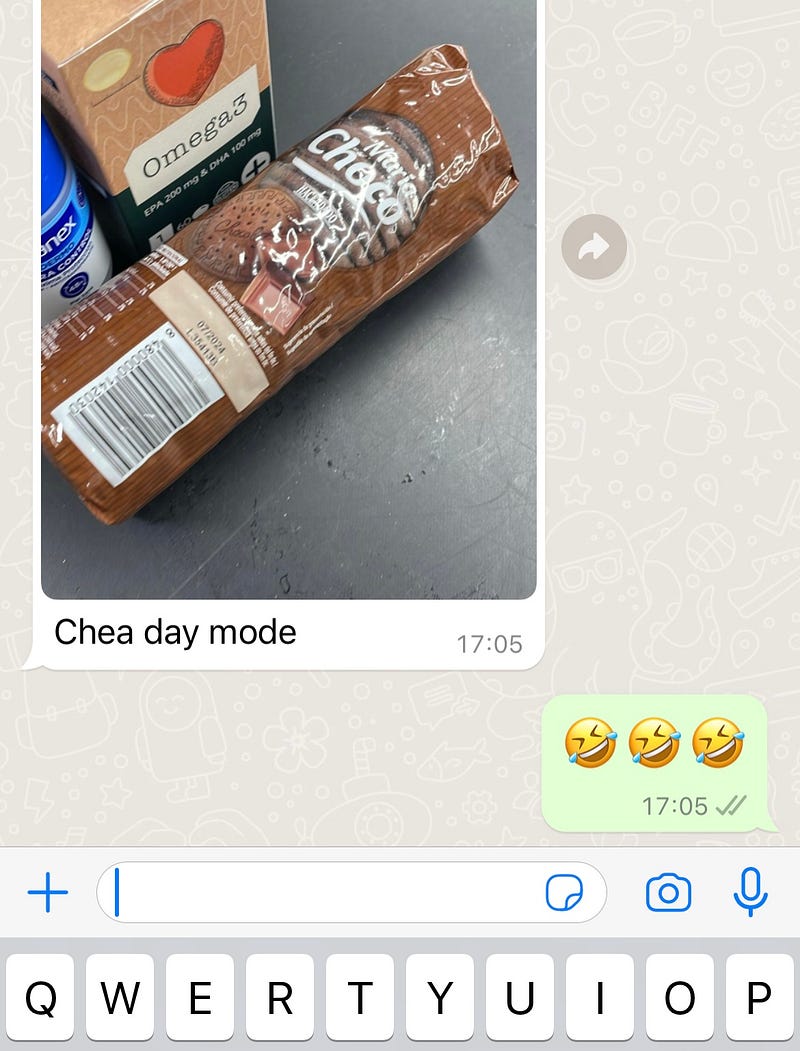
My husband went to buy his favorite cookies to prepare for his first formal cheat day. Please forgive his spelling mistake; he was desperate for some sugar and wasn’t thinking straight. [Image by author]

The next day, my husband finally had a proper cheat day. After a protein-rich breakfast — a guideline Ferriss recommends — he had a chocolate croissant, sushi, a pizza, and all the chocolate cookies he’d bought with milk as we watched a movie before bed.

Happy and satisfied, my husband went to bed that Sunday night and gladly continued the challenge for two more weeks.

Note: When it comes to cheat days, Ferriss says you should go all out — no restrictions — but that you have to keep three guidelines in mind:

1. Consume a high-protein, slow-carb breakfast as soon as you wake up.

2. Keep to a single day. Some may think they can have a cheat meal on Saturday and Sunday, which counts as one day. But Ferriss says no. Just pick a single day.

3. To mitigate the fat gain during this day, Ferriss dedicates a whole chapter in his book. Still, the basic tips are: Have coffee and grapefruit juice during your first ‘cheat meal’ (the meal after the high-protein breakfast), do 50 squats or some other form of short, intense exercise just before every cheat meal, and 90 minutes after.

Week 3

Week 3 was challenging because my husband had a weeklong work activity that included lunch.

“What if there’s nothing slow-carb friendly?” my husband said on Monday morning.

I understood his fear. His lunch would be at a buffet filled with forbidden fruit: pizza, pasta, hamburger — delicious white carbs that’d mark the end of the challenge.

And my husband couldn’t simply take a lunchbox and call it a day. He was expected to partake in team lunches.

No way out.

“There’ll be something,” I promised, knowing we live in an age where restaurants are more than happy to accommodate our needs.

Sure enough, my husband found the holy grail among the enticing carby foods: a stand with grilled protein — chicken, beef, fish — and veggies. (I still gave my husband a mixed nuts jar just in case, but he was fine.)
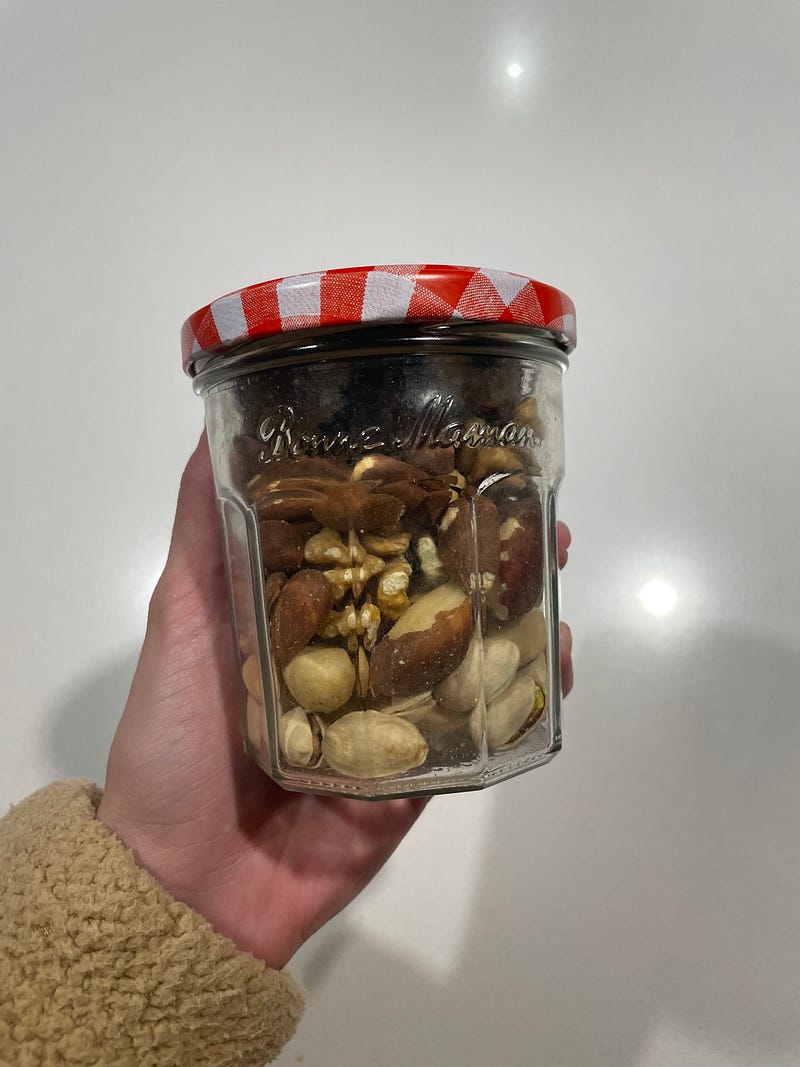
The snack jar I prepared for my husband. It has Brazil nuts, pistachios, smoked almonds, and walnuts. [Image by author]

Bottom line: Lunch boxes are great to stick to a diet – and great for your purse – but you can still ‘slow-carb’ if you eat out.

This is also something Ferriss promises in his book, where he states his favorite options are Mexican and Thai because it’s easy to ask the staff to swap or remove starchy carbs.

Week 4

The last week was the easiest.

Knowing the challenge was ending helped my husband keep his cool and reflect on his journey.

On the last day, we had a lovely burrito bowl for dinner and talked about everything we’d learned. Here are the top insights:

  • Tracking your progress – via a scale that calculates your fat percentage, pictures, or measuring tape – helps with adherence. Knowing the diet is working will keep you motivated when you want to sell your soul for a pizza slice.
  • Batch cooking is vital for this diet. I usually prepared four big meals during the week, so we’d have leftovers for the rest of the days. Another great tip is to buy frozen or canned veggies and legumes.
  • Spending a couple of hours on “pre-diet setup” makes everything easier. Stock up the pantry. Go to the supermarket and check everything that might be helpful. Get everything unhelpful out of the house (unless you live with someone else, then simply hide triggering foods). Plan your meals.
  • Variety is a necessary exception. Ferriss recommends we stick to a few dishes and repeat them over and over. But my husband – and I, for that matter – were tired of having the same thing by week 2. That’s why my husband tried a few different breakfast options, and I made it so that the menu of week 4 was the same as week 2 but different from week 3 (alternating weeks). However, keep it simple if you don’t have the time or mental space to plan different meals. It’s one of the rules for a reason.
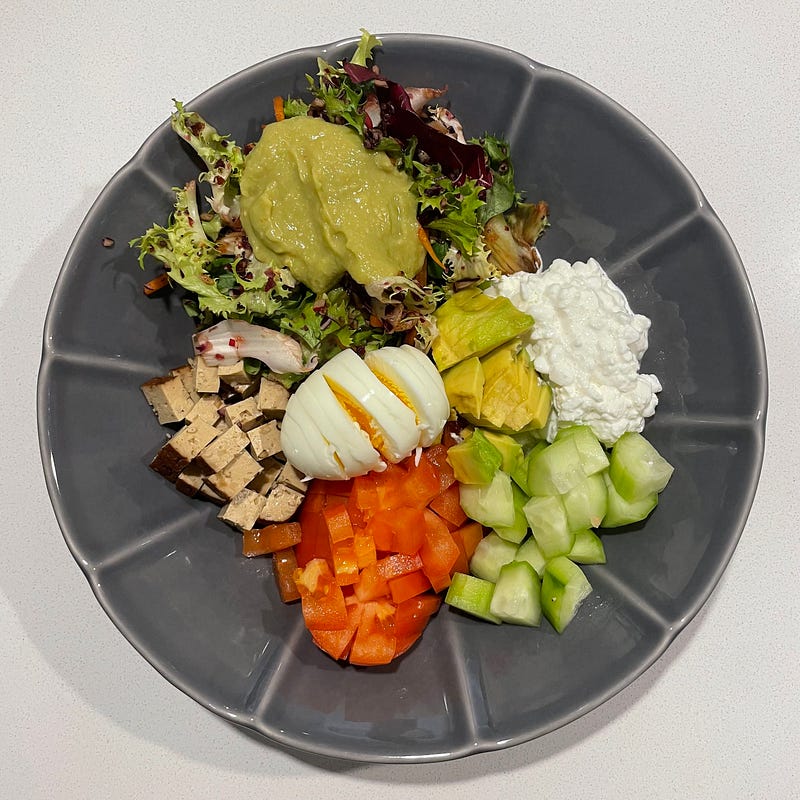
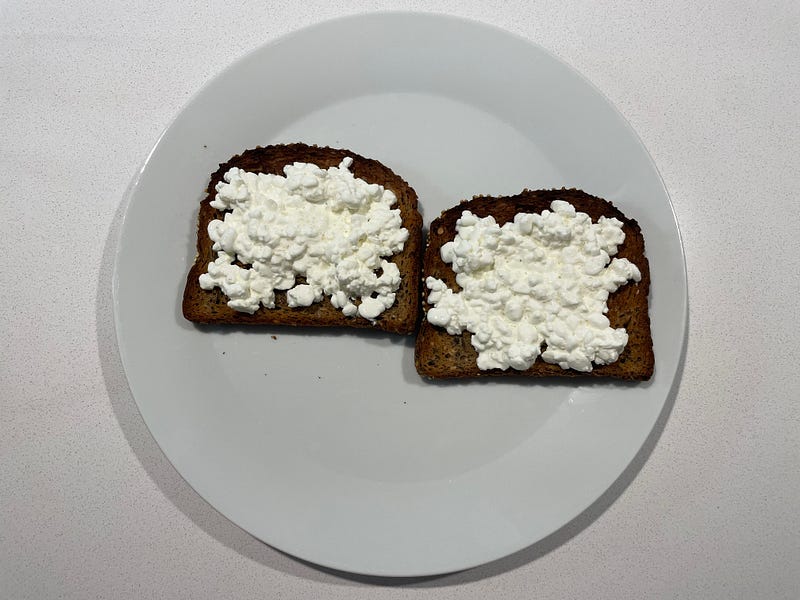
Left (breakfast salad with mixed greens, an egg, smoked tofu, cottage cheese, cucumber, tomato, avocado and guacamole). Right (protein bread with cottage cheese for the mornings my husband wasn’t that hungry but needed to get his protein fix). [Images by author]
  • It’s okay to make tiny exceptions (if that’ll improve your adherence.) My husband’s kryptonite is chocolate, so having to go 28 days without his favorite treat felt insurmountable. And I – because I always want to spoil him – got him an 85% no-added-sugar chocolate and told him to only have one square per day (he had two on many days, even if he believes I didn’t notice). This is a clear diet violation, and perhaps my husband would’ve lost more fat had he avoided chocolate altogether. But you know what? My husband still got amazing results, and having his daily chocolate allowance is what got him through it.
  • Working out isn’t necessary — but it never hurts (especially walking). Throughout the challenge, my husband tried to walk 6k steps per day (his current walking goal) and went to the gym once per week. Sometimes he only worked his abs. Sometimes more. He still lost fat and maintained muscle, so clearly, much exercise isn’t needed — something Ferriss explains in his book — but I’d argue walking is always an excellent fat-loss-boosting tool.
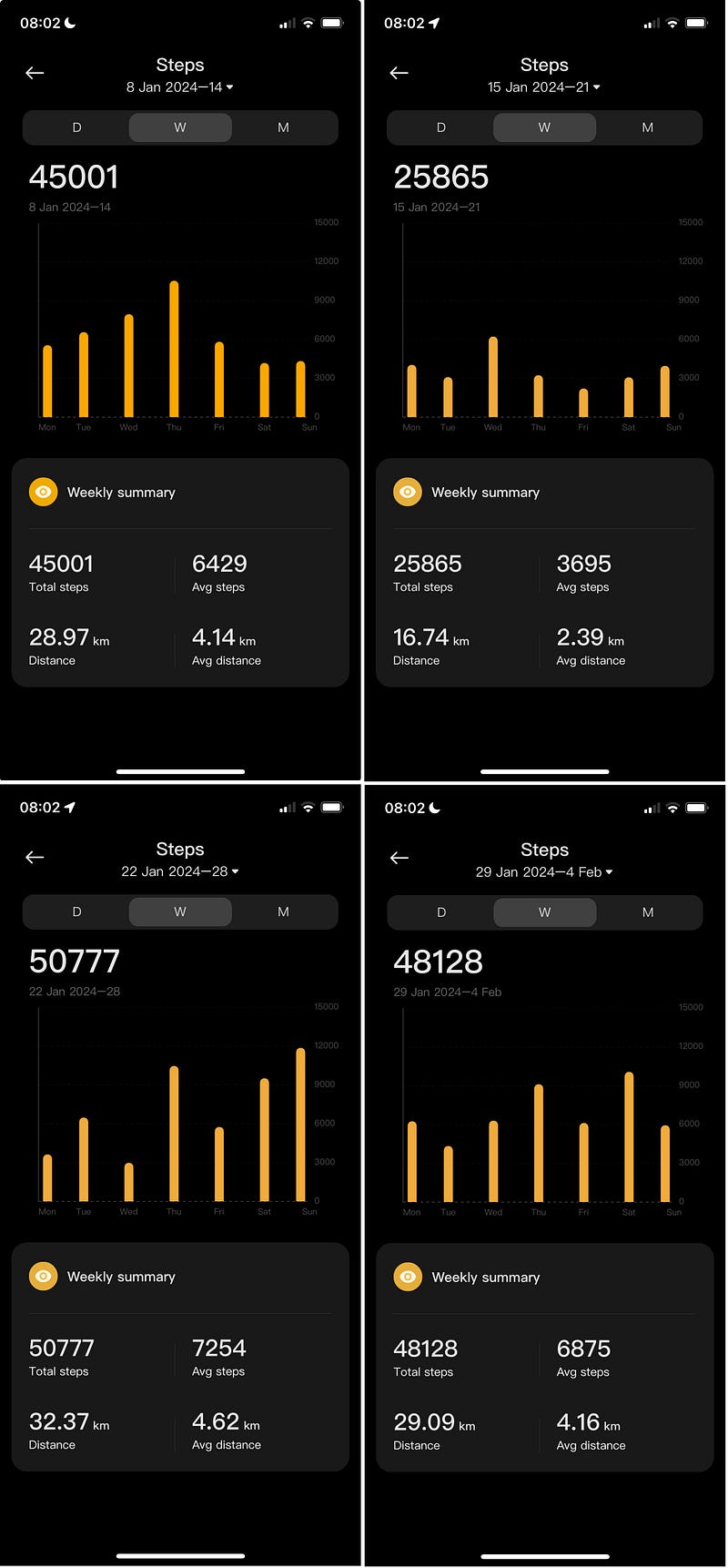
Walking summary of the four weeks (goal: 6k steps per day on average). During week 2, my husband was a bit sick, so he walked less than usual. [Images by author with husband’s full consent]
  • Cheat days are non-negotiable. Moreover, they’ll help you see how crappy some foods make you feel. My husband, for instance, has long suspected dairy doesn’t sit well with him, but it wasn’t until he got to contrast what days without milk vs. a dairy fest felt like that he realized just how used he’d become to not feeling his best.
  • Find easy swaps for your go-to recipes. As mentioned before, a way to make this diet easy is to continue eating your recipes with slow-carb-friendly swaps. In my husband’s case, this meant trading regular bread for a protein variety and rice with konjac.
  • Don’t fear legumes (and farts). I won’t lie and say there weren’t any… concert-like consequences of increasing our legume consumption. But it quickly went away. By week 4, my husband felt more digestive distress during his cheat days.
  • Don’t go nuts (if you want to maximize fat loss). Though my husband still lost fat, his results could’ve been magnified if he’d limited his nut consumption. This is something Ferriss recommends — sticking to a handful per day at most — but my husband went a little overboard.

Note: Ferriss also suggests using certain supplements to maximize fat loss, which should be taken six days per week, with a week off every two months:

- Policosanol: 20–25 mg before bed.

- Alpha-lipoic acid: 100–300 mg before breakfast, lunch, dinner, and going to bed.

- Green tea flavanols (decaffeinated): It should contain at least 325 mg of epigallocatechin gallate (EGCG) and be taken before every meal.

- Garlic extract: At least 200 mg before every meal and before going to bed.

My husband didn’t take any of these as we’re very careful about what supplements we introduce into our diets. Likewise, please remember to speak with a health professional before adding any supplementation or trying any extreme diet.

PART II: The Results — Does the Slow Carb Diet Work?

According to Tim Ferriss, the average person can hope to lose between 10–20 lbs of fat in one month with the slow-carb diet.

In my husband’s case, this is what he saw:

Fat, weight, and muscle loss:
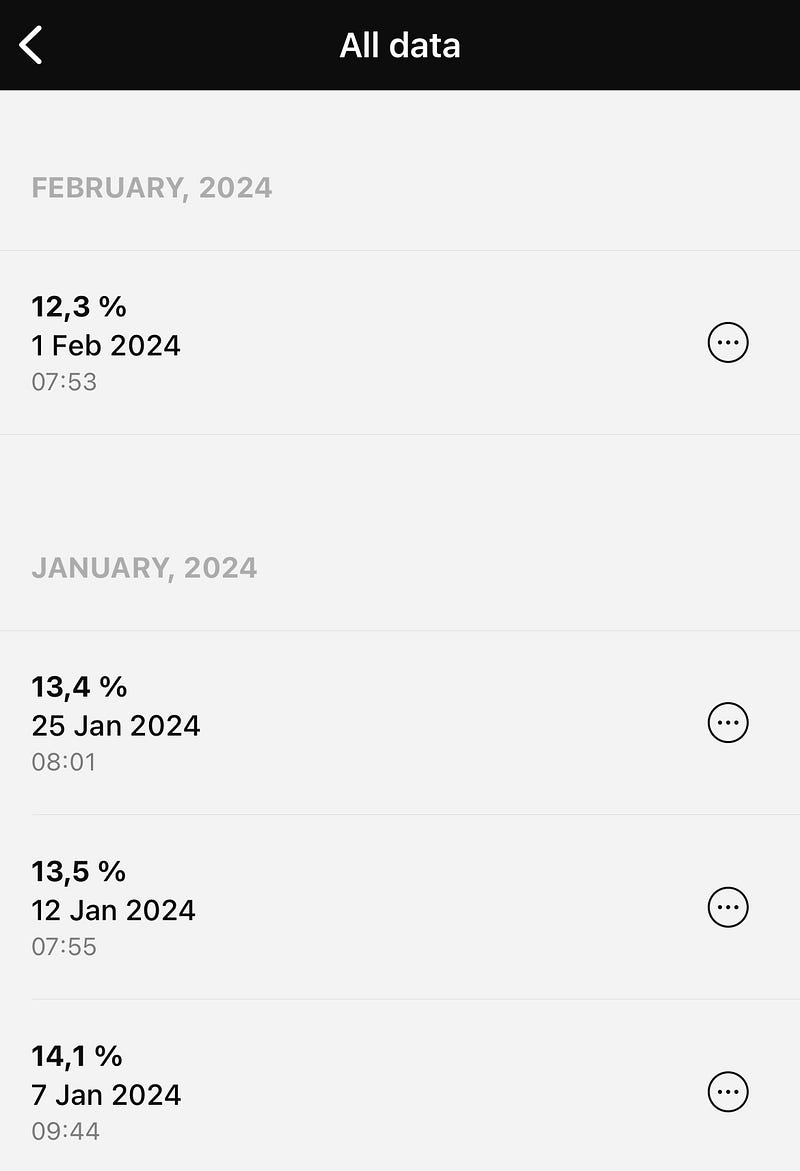
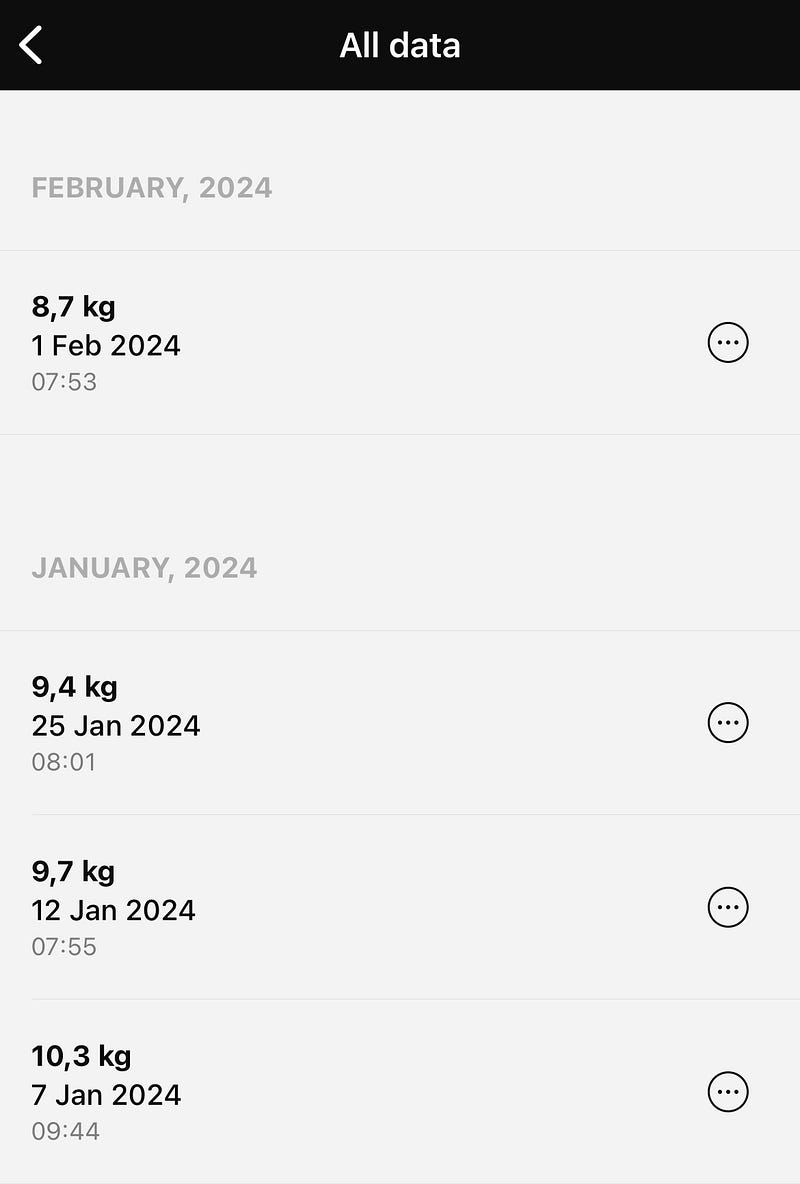
Left (fat%). Right (fat in kg.) Measurements were taken using our gym’s InBody scale. [Images by author with husband’s full consent]

In 4 weeks, my husband reduced his body fat percentage by 2%, which amounted to around 3-4 pounds of fat total, or about 1 pound per week on average, the recommended number for healthy, steady fat loss.
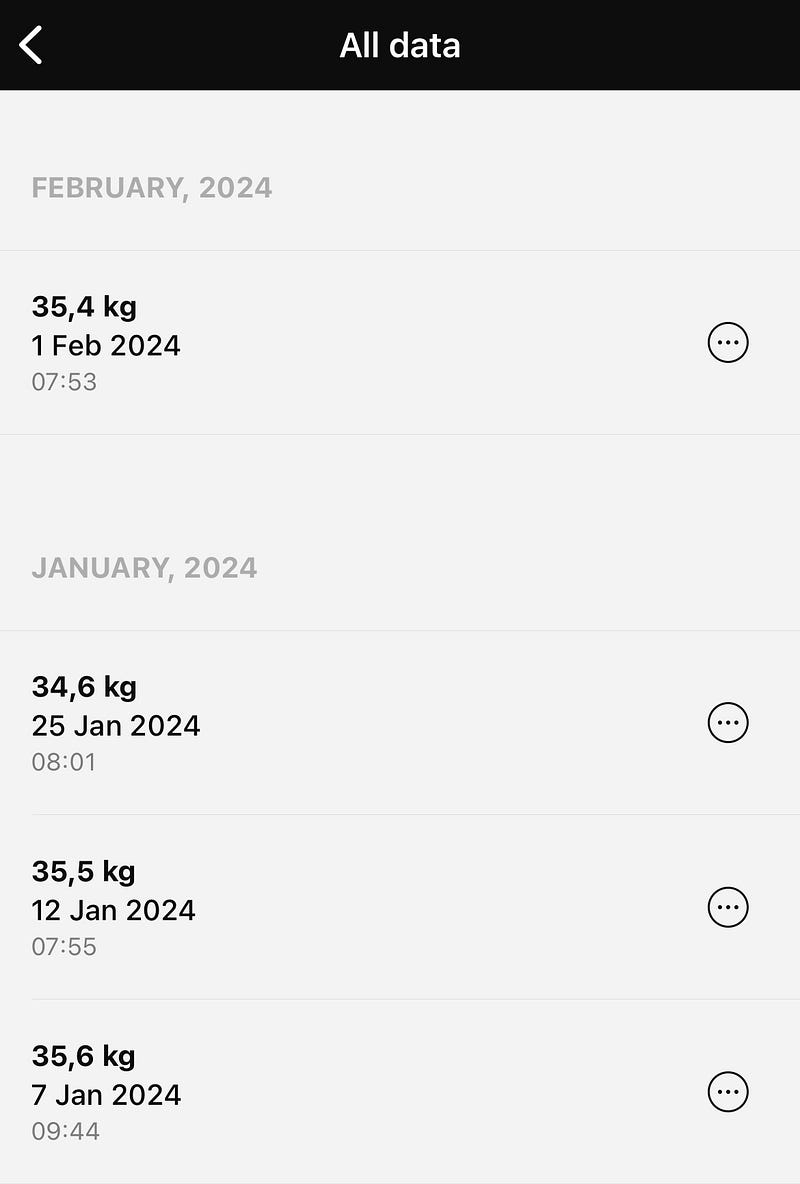
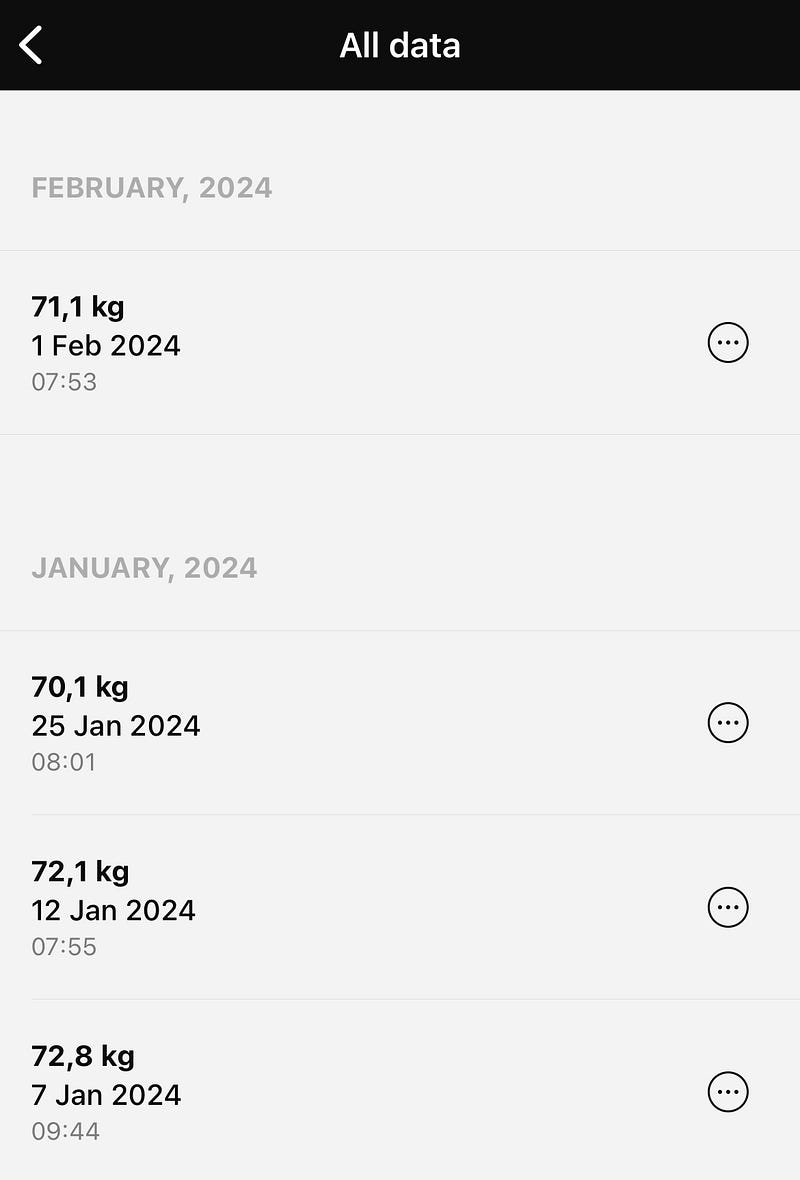
Left (skeletal muscle in kg). Right (weight in kg). [Images by author with husband’s full consent]

As you can see, my husband didn’t lose any muscle even if he lost weight. This is incredibly important as keeping our muscles healthy is vital for a fast metabolism, healthy aging, and a generally good quality of life.

I was especially surprised by these results as my husband barely did any resistance training — despite my encouragement. So it turns out Ferriss’s claims are true: You can lose fat and maintain muscle with little exercise while on the slow-carb diet.
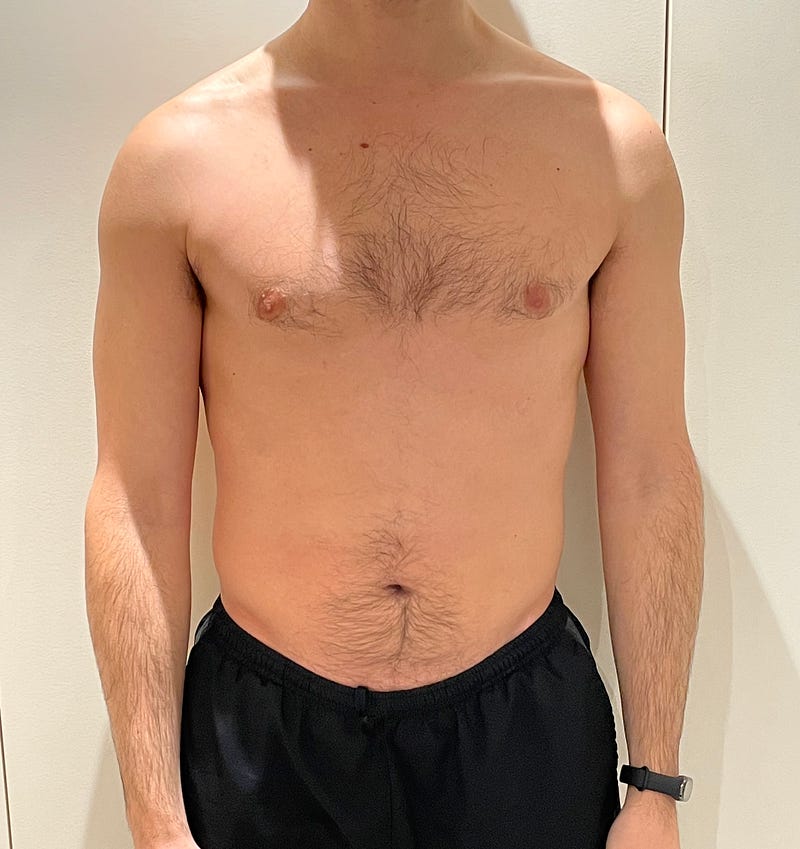
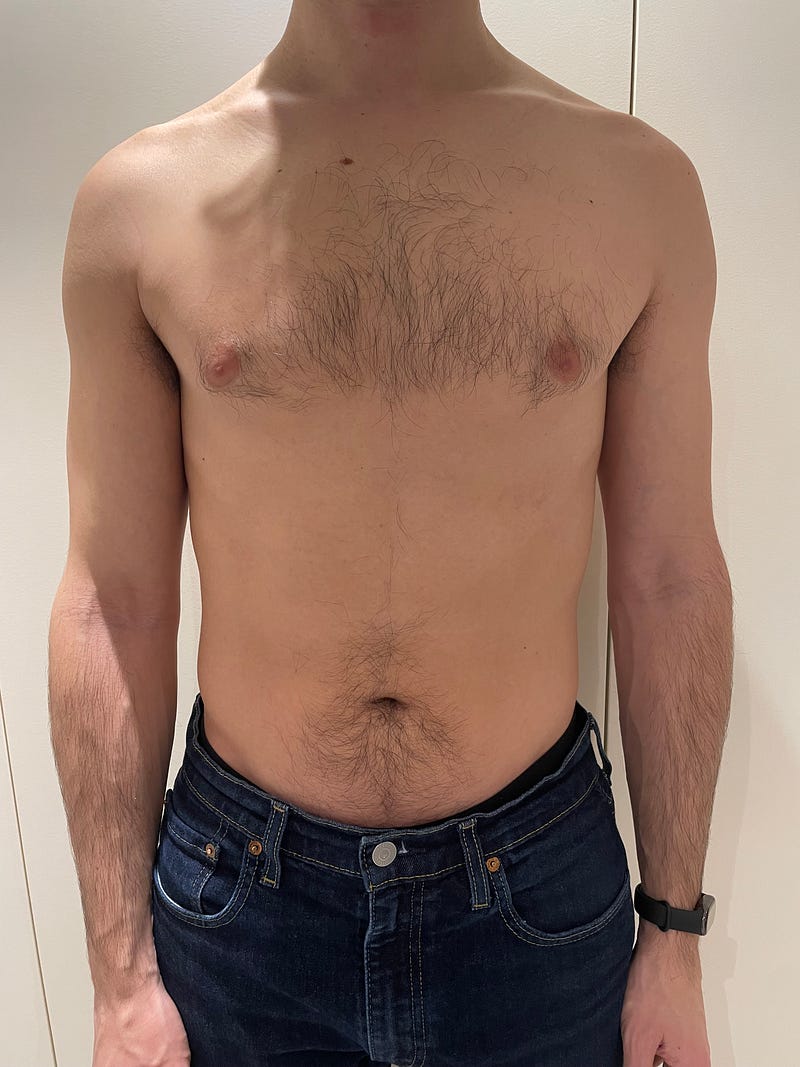
Left (day 1). Right (day 28). [Images by author with husband’s full consent]

Lastly, though we can’t see any ab action, my husband did lose fat around his waist (his goal, yay!).

Before the diet, its circumference measured 84 cm (33.1 inches) and went down to 78 cm (30.7 inches).

Reduced belly pooch?

Achieved.
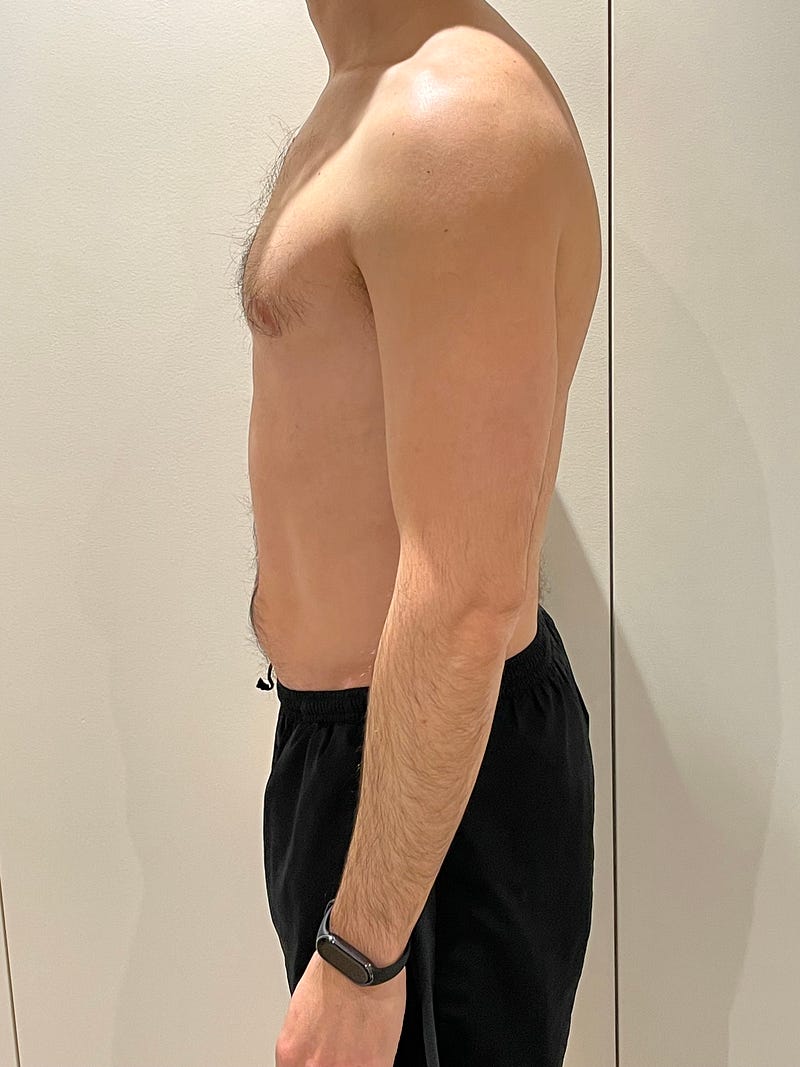
Left (day 1). Right (day 28). [Images by author with husband’s full consent]

Other benefits

Besides fat loss, my husband also experienced:

  • Reduced hunger. He says he felt less hungry overall, even on cheat days. This is something I also experienced while doing a no-sugar challenge, so it’s likely connected to a reduced consumption of sugary foods.
  • Steady energy. My husband didn’t feel the typical afternoon crash and slept better. However, I don’t think it’s because of the diet per se. He used to eat a lot of dark chocolate cookies with milk before bed, so taking that treat away likely helped improve his ZZZs, making him feel more energized throughout the day.
  • More $$$. We have a monthly budget, and for the first time in months, we were able to save money on groceries.

The main drawback

I’ve always admired my husband’s relationship with food. It’s as healthy as it gets.

But this diet made him act strangely.

He dreamt about carby foods and said he’d kill to eat pasta. On cheat days, he ate way more cookies than usual because of the “last supper” mentality. And the morning after the challenge ended, he still reached for the protein bread because he “feared regaining all the fat.”

These comments could be considered harmless. But they worried me because my husband has never fixated on food to this degree.

I can’t help but wonder if my husband’s relationship with food could be ruined if he followed this diet for longer than 4 weeks.

And that leads me to the big, final question: Do I recommend the slow-carb diet?

PART III: Is It Worth It? Would I Recommend It?

The slow-carb diet works for fat loss. Not to mention it’s simple to follow, and the cheat day makes it more “survivable” than most other diets.

However, I wouldn’t recommend it.

Like other diets that completely cut out food groups, it’s too restrictive — and we all know that restriction can lead to eating disorders like binge eating.

Even my husband, who’s always had an enviable relationship with food, started exhibiting worrisome behaviors.

Not even Tim Ferriss follows it religiously anymore, as he recently said in the Huberman Lab podcast. He usually returns to it occasionally when he wants to lose some fat quickly, but he’s become more “indulgent” (his words, not mine).

So, if you need to lose fat quickly, perhaps try giving this diet a shot for one to four weeks tops.

But I wouldn’t recommend it if you’re seeking long-lasting, healthy fat loss. Heck, I never restricted any food group during my body recomposition journey, and I’ve maintained a lean physique for more than 4 years without restricting fruit or even sugar.

Instead, I’d recommend approaching fat loss more gently:

  • Walk as much as you can daily (at least 30 minutes).
  • Do resistance training three times per week.
  • Prioritize protein in every meal (a great tip that the slow-carb diet also promotes).
  • Ensure every meal has protein, healthy fats, and fiber.
  • Have desserts that satisfy your sugar tooth but don’t lead to a binge.
  • Have 3 to 4-hour breaks between meals.
  • Prioritize greens when going out or traveling.
  • Read about the benefits of a healthy lifestyle to keep yourself motivated.

Remember: Sustainable fat loss is a marathon, not a sprint. It’s more about the small habits we incorporate into our lives rather than the drastic diets we try along the way.

Continue reading:

Diet
Fat Loss
Health
Fitness
Self Improvement
Recommended from ReadMedium