
My Experience of Authoritarianism as a Gay Man in Semi-rural Texas
And Other Thoughts
Not all authoritarians govern with tanks, and guns, and bombs, and threats. In fact, authoritarians don’t govern, they dictate, imposing their will over the will of the people. Governing requires legitimacy. Legitimacy requires the consent of the governed, the willingness of free people to choose to participate in a system that limits some of their freedoms in exchange for the free expression of others. What results is a social order where people can live in relative harmony and peace.
It’s a nice sentiment, but theories are full of nice sentiments, often containing wishful thinking when improperly applied. In the West, we live in democracies, vote for a selection of candidates, get information created by a free press, and anyone who pays attention over here knows that is pretty much bullshit. Our democracies have the trappings of freedom, but the chains and iron fist are quick to surface if we express our disagreement anywhere but the ballot box. We vote for the sanctioned candidates, the ones who are not so scary that they can’t get funding, but that is regional, there are a host of frightening members of congress, their constituents blindly following, who would tear down this noble experiment in democracy. The putative free press is free; free to make as much profit as possible using words like ‘truth’, ‘facts’, ‘fair’, ’unbiased’, and so on. The burden of finding truth and facts is on the people willing to take the blinders off, to risk the chains and the iron fist. Their fates are no different from the philosophers who return to Plato’s cave to free their comrades.
The scariest thing about authoritarianism is that it is a choice. Whether it is the chess moves that brings the authoritarian to power, the coup d’état, or the freely cast vote, in large terms, people are making choices. Then, there is the authoritarianism that is subtle, an insidious force that is unseen and unsuspected, that operates with friendly terms, but kills slowly, strangling its victim with their own choices.

Historical archeologies, or maybe autopsies, have unearthed or exposed the many sources of prejudice and discrimination against the LGBTQ community. That is good as knowledge is power and knowing how you got somewhere can help you move forward. However, time’s arrow goes in one direction only, so we have to focus on the here and now; the past will eventually lie forgotten and the future can take care of itself, but only if we get ‘here and now’ right.
We grow up in our respective communities, learning the values and norms and rules that define us as a part of that community. These norms develop over time as responses to an environment, to problems that need to be solved, in the best case to make life better for the collective. The problem lies in the lack of separation between group membership and individual identity. It is a matter of community overreach, with the collective imposing values over the individual’s sense of self.
People who are not a part of the LGBTQ community can’t know and many don’t try to understand our difference and our desire to be whom we are, but often loudly declare their rights to ‘be who they are.’ They see no contradiction. If brought to consciousness, they retreat to a naturalism argument (it’s contrary to nature), or crude jokes as evidence of LGBTQ illegitimacy, or just violence. They are closed off to the idea that they are also victims of this authoritarianism. Their difference, though, doesn’t involve the ‘naughty bits.’ We are, after all, Victorians as Foucault said, our sense of sexual self never has recovered from the violence of the Victorian period toward all things sexual. Thanks, Dr. Freud.
There is a tension between the individual and the social. The individual needs the protection of the social to become who the individual wants to be (or is), but the social exacts a price for protection through the limits on who an individual can become (or can be). Everyone is an individual until they come across difference, then they are enforcers of the normative order.
There are large numbers of young men where I live who declare, loudly, that they have the right to disrupt the peace, to violate noise ordinances as an expression of their political views when they roar their trucks around the courthouse square with Trump flags and ‘Come and Take It’ stickers, and ‘Don’t Tread on Me’ emblems. These would-be defenders of individual freedom, however, are the first in line with the billy clubs where the LGBTQ community is concerned. Their opposition to the rules of civil society are childish, but the ideas they champion are dangerous for those who don’t understand them. Rebellion sounds fun and exciting until the shooting starts, and eventually the autocrat will target them.
Authoritarianism isn’t always externally imposed with tanks and guns. Most often, we are victimized by authoritarianism through our conformity to a standard that violates our sense of self. We choose to stay in the closet for protection and for inclusion because life outside our collective is scary and uncertain. Many of us eventually shed that latter notion, if we are lucky and we live in a place with a strong, active LGBTQ community. Rural areas are not typically bastions of free thinking and acceptance in sexual matters, or in lifestyle matters. The closet is fairly crowded and most often opens to the barn. Public outings of gays and lesbians in rural areas is a spectator sport, the self-righteous hetero-normal folk feeling very superior in rooting out that ‘evil.’ ‘We’re defendin’ the children,’ says Uncle Fred the Pervert, known for watching as the pretty panties run at recess.
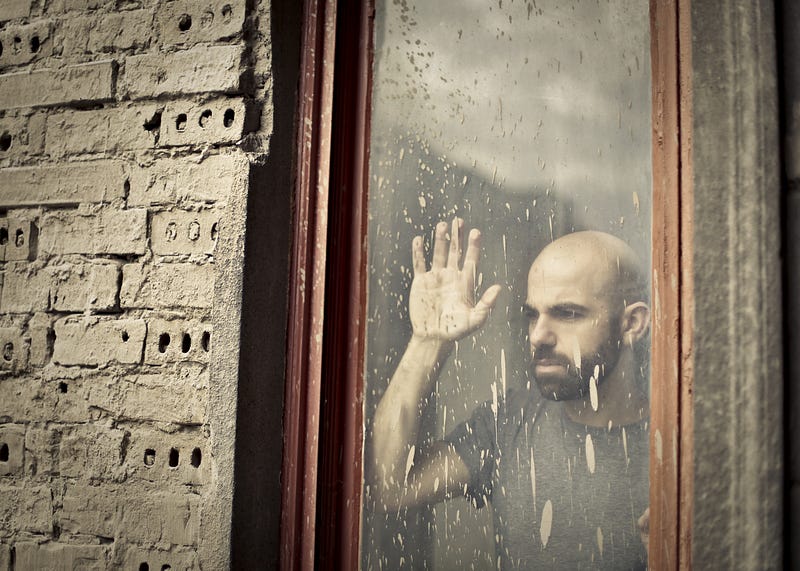
Sometimes I think the authoritarian world I experience is all in my head. Well, it is partly, but it has an external counterpart, one I am reminded of when I remember Matthew Shepard; there are miles and miles of empty roads in Texas. Gay-baiting is not unheard of and hook-up apps can be a risk.
Maybe it is my own fear that is isolating me, or maybe it is a healthy sense of self-preservation. Maybe a combination. Regardless, the effect is the same. I self isolate. I shut off the need for intimacy and community for survival and only occasionally allow myself to realize that the quality of life without these things is not much quality at all.
That is what makes this form of authoritarianism so insidious; we do it to ourselves. There is strength in numbers and even with our allies, our numbers are small. We are spread out, thinly distributed through the population. Even when concentrated in urban areas, we are still outnumbered.
But so was Marsha Johnson. So were the activists at Stonewall. So are the Ukrainians and the Snake Island 13. The power of authoritarianism doesn’t lie in the tanks and guns, or the implicit or explicit threats of the collective. The power of authoritarianism lies in our willingness to live passively in fear, often despite our outrage at the injustice of our situations. The path of least resistance is conformity and if we are outwardly straight, well, what we do behind closed doors is winked at. Sometimes.
Sometimes, though, we have to fight. Sometimes, we have to go outside the path of least resistance and resist the forces that would see us wiped from the face of the Earth. That can be in the streets, or it can be in the local coffee shop, talking about the events of the world with like-minded friends, and welcoming the opportunity to discuss LGBTQ rights as human rights with those who oppose our very existence. If nothing else, the capacity to communicate is the only common ground we can build on, but it is a good place to start.
That is the lesson of the latest push for authoritarianism, if we take our freedom for granted, we’ll eventually have to fight to get it back. Better to die free than live in bondage to any kind of authoritarian power. Maybe a bit extreme, but the sentiment is important. It is an all or nothing proposition, if we oppose any kind of authoritarian power, we have to oppose them all. It isn’t a pick and choose scenario. Authoritarianism is the enemy of the free in whatever form it takes. The trick is to chart the course that preserves the protections of society while allowing the individual full expression of their sense of self. It is a matter of working towards legitimacy in our social order; consciously deciding how we will live together instead of just accepting ‘the way things are’ as given in holy writ. You don’t get a better wheel unless you reinvent it occasionally.
In the end, we are our own authoritarian dictators if we don’t tell the normative order in our heads to go fuck itself when it matters. If we turn our backs on the conversations in the coffee shop or on the street or in church where people discuss the virtues of authoritarianism because they want someone who will run things right and give them their country back, we become a part of the problem. In semi-rural Texas, the idea that people are not created equal is alive and well. With the latest anti-trans laws in Texas, the feeling of security and safety typically provided by community is fading. The remnants of the Confederacy are expanding their circle of hate to be more inclusive, adding many of us they consider created as lesser beings.
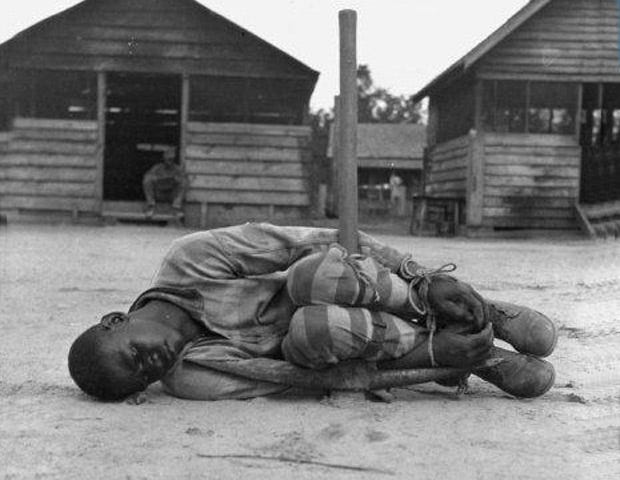
Those ideas that oppose freedom and self determination never completely faded away, and 157 years after the end of the American Civil War, they are back with vengeance at the forefront of the agenda. The entitlement of the true believers has no limits and they feel robbed of their rightful place in the hierarchy of creation. Authoritarianism, Nazism, and the Confederacy are the same, and as long as anyone gives credence to those ideas, we will fight the same war over again, either with tanks and guns or protest and words, it doesn’t matter. It is always the same war.
In a country predicated on freedom of expression, any restriction of speech is uncomfortable, and it doesn’t work. The point isn’t to deny the expression of the ideas behind authoritarianism, but to bring them out in the open and debate them, demonstrate publicly the moral turpitude of autocratic ideas. To do so, we have to become comfortable with uncomfortable situations. We have to accept that conflict is often necessary and not necessarily violent, though a strong self-defense strategy is a good idea.
Many decry the divisiveness of critical perspectives whose analyses are rooted in examining the values expressed by the culture analyzed, and whose conclusions point out the extent to which the practice of those values has failed. Initiatives like The 1619 Project that seek to educate and give voice to the injustices done are divisive only in as much as the dominant group recognizes the source of their privilege in the cruelty and abuse perpetrated by their forebears. There is no blame cast on the present for actions in the past, but there is accountability for actions in the present that derive from the privilege and inequity created in the past.
The conflict of visions is a stage we must pass through. The tension between the autocratic forces and those forces that seek to expand human freedom cannot resolve unless they meet on the battlefield of ideas. The only way out of this is to pass through the conflict, to fight the good fight, and rebuild an inclusive community afterwards.
There is no hierarchy to suffering.
Authoritarianism is an equal opportunity oppressor, the only equality it recognizes. The experience of being a gay man in semi-rural Texas involves far less struggle and has less existential threat than the Ukrainian people are enduring, but the authoritarian ideas behind each are the same. Our hope is that the forces of freedom will win the day, that the eternal war between freedom and oppression will end, and we can all live our truest selves. The outcome remains to be seen, in Ukraine and in Texas.

This story is a response to the Prism & Pen writing prompt, Let’s Write About How Queer People Live Under Authoritarianism.


