
Molding Your First Chapter into a Preview of the Whole Book
Using the principle of miniatures for tight, intriguing storytelling that holds up on a re-read
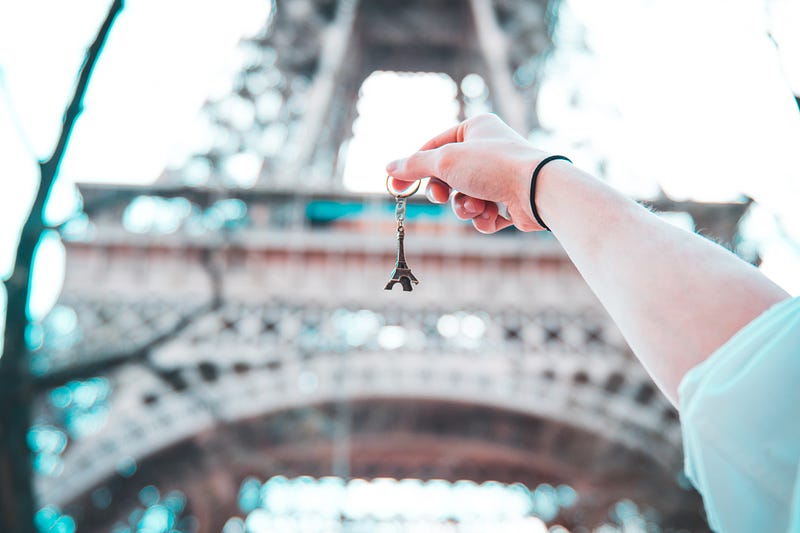
There is nothing I like more than sitting down to re-read a book I enjoyed, getting through the first chapter again, and having to set the book down and sit back, because how did I miss that the first time? I will always strive to write books that get better if you re-read them. My favorite authors will always be the ones who use this technique. But when you’re working toward this goal? It’s hard.
First chapters are hard. Second chapters are hard, too, and so are all the middle chapters, and getting the ending right, but first chapters are a special kind of challenging. You have to draw your reader in, introduce your character in an intriguing way, and lay the groundwork for the rest of the story to come, all in ways that might only be apparent on a re-read. You work hard to be entertaining the first time — so you earn the second readers who realize what you accomplished.
Finding the Right First Chapter
A tip I find imperative to writing good first chapters is accepting that there is almost certainly going to be a difference between the chapter that begs you to tell the story, that gives you your “in” to writing, and the chapter that should be first in the book.
I’ve talked elsewhere about what happens when a story starts too late, and there are a lot of ways to tell a story starts to early. But what’s relevant here is that the right first chapter will be the one in which you can prepare the reader for the story to come. That is, for the point of this post, the right first chapter is the one where you can foreshadow the whole book in miniature.
Creating a Miniature Story
Every scene in a book should tell a story in its own way — have rising and falling action, a beginning, middle, and end. This becomes even more satisfying when the beginning, middle, and end of the first chapter tell a story that points to the larger one. There are two ways to do this:
- Create a lower-stakes version of the whole struggle.
- Leave breadcrumbs for what’s to come.
Let’s look at each of these.
A lower-stakes version of the whole struggle
To make a miniature in this way, the goal should be similar to the main story goal, and the conflict should play out in a way that hints at the story to come. This doesn’t mean it’s a play-by-play of the whole book, but in 5% of the word count. Instead, it means that we show the kind of story it’s going to be.
If you’re writing a disaster book that ends up being mainly person vs nature conflict, where a character gets stranded on a desert island and has to learn to survive, opening the story with a character who is dealing with the effects of, say, a thunderstorm will foreshadow the type of conflict the book portrays before we get to the first plot point, where the main storyline usually takes hold.
Second, we need the conflict to show a deficit in the character’s current way of thinking. I’ve said before that one of my main checks for if a story is working is “Does this character make a choice at the end of the book they were incapable of making at the beginning?”
Here’s a shortcut toward choosing the right first chapter: have the conflict be a situation that mirrors the choice they make at the end, but they make a different choice here. Prove to your reader that the character has something to learn by showing they don’t already know the thing.
For instance, if our desert island character needs to learn — over the course of the story — to put to use the skills they already have, then in the thunderstorm, they need to be entirely reliant on other people/technology to solve their problem.
This brings us to the second way we can create a miniature in the first chapter.
Leave breadcrumbs for what’s to come
I have a whole series on writing for the re-reader that covers ways we can delight people who come back to your book. We are going to focus specifically how how these work in a first chapter, and what sort of checklist I look for if I’m analyzing if what I have works.
- Has the villain been introduced and/or hinted at? (How to Hang a Witch by Adriana Mather has one of my favorite examples of this.)
- What sort of nods to the theme have been included?
- Does the character’s want in this chapter illuminate something about their later journey (like we mentioned above) or their character flaw? (Day Zero by Kelly DeVos does this well, like I’ve talked about here.)
- Have we gotten hints of major characters to come, and plot points that will soon drive the book?
- Does the main character make a choice in the beginning that will change by the end?
Let’s review all of these with a concrete example.
The Miniature in Enchantress Chapter 1
The first time I wrote this book, the first chapter was Celeste enchanting a rose for her brother. With where I started the draft, I thought it would be a great bookend for the ending, where this rose would be used as a gift in exchange for shelter from a storm.
But when I reread it, I realized I had started too late. A scene alone in the garden enchanting a rose didn’t create a miniature of a book in which politics and relationships are key. So instead, I moved backward. We needed to start in the village — the place where Celeste ends up. (This going full circle is called chiasm, and we’ll be talking about it soon.)
I’ve done some analysis of the first chapter here, but now that we’ve looked at miniatures, let’s go through the various checklists I have above, to see how I decided this new scene was the correct one with which to open the story.
Creating a lower-stakes miniature of the whole plot
The plot of enchantress can be summarized as Celeste’s attempts to grow her magic pit against the ways her brother wants to use that magic for selfishness. She would say her book goal is to make her brother happy enough to give her what she wants in return.
Her Want, which we’ve talked about elsewhere, is to have a cottage in the forest where she can be self-sufficient.
A lot of the conflict comes from playing politics, an imbalance of power, and people’s insatiability. Therefore, Celeste’s Need is to learn to be satisfied with what she has, set aside the politics, and, frankly, choose love.
In the first chapter, the goal is to buy her brother a birthday present from the nearby village. We get a hint of her magic, but she isn’t using it yet. She’s trying to buy a good enough present to win his favor, first. Like the conflict to come, the conflict in the first chapter is between Celeste and her brother, even though he isn’t technically on the page. His insatiability, his own dissatisfaction with anything the village can offer him, is a mirror for what will become Celeste’s own insatiability and dissatisfaction with what the village (and the forest) can offer her.
We learn about her Want, to live on her own in the forest. And we meet the scientist who embodies her Need and the chance for growth. Together, they could choose love over politics.
By the end of the first chapter, Celeste is horrified at her brother’s actions, just as she later is horrified and decides he deserves to become a beast.
Leaving breadcrumbs
Now let’s answer the checklist we made earlier.
- Has the villain been introduced and/or hinted at?
Yes. Celeste’s brother Adam isn’t on the page, but he’s the focus of the scene nonetheless, both as Celeste searches for a birthday present for him, and as edicts are posted around the village noting an increase in taxes at his demand.
- What sort of nods to the theme have been included?
A villager tells Celeste, “The nobility are a hassle. No one and nothing is worth weaving myself into their games.” This is the theme she could do well to learn, but hasn’t.
- Does the character’s Want in this chapter illuminate something about their later journey (like we mentioned above) or their character flaw?
Celeste’s Want in this chapter is to buy her brother a birthday present, so she can get her story Want of a cottage in the forest. It also illuminates some of her flaws, including her penchant for blaming things on her brother.
- Have we gotten hints of major characters to come, and plot points that will soon drive the book?
By this point, we have only met two major characters, but we’ve hinted at two others, and provided much more subtle nods to the remaining three main characters. Most of the plot points have had their seeds planted by this point, although it takes another chapter for everything to be fully ready.
- Does the main character make a choice in the beginning that will change by the end?
Honestly, this is a place my story has room for improvement. Although she’s clearly different enough than she will be at the end, and she would make different choices, there isn’t one on the page. Perhaps as I go through revisions, I’ll find a way to have her choose contentment and love over power dynamics, because in the end, she makes the opposite choice.
If you like my work and would like to read more of it, consider joining Medium with my referral link to get full access to every article on Medium. Using my referral link doesn’t cost you anything extra, but half of the fee goes directly to supporting me each month.