
Edit With Me: Why I Removed the All Is Lost Moment
When everything is supposed to go terribly wrong, instead I gave my character everything she wanted

When I first plotted out my enchantress story, I knew what my third plot point was, and I knew how I wanted to make things even worse from there. For the first three quarters of the book, I intentionally foreshadowed Celeste ending up imprisoned, outcast, and treated horribly for the magic she had done — to already dire consequences — at the third plot point. I got there. I wrote it, but I knew it wasn’t hitting the way I wanted to.
I shelved the book and set it aside for this and many other problems I wasn’t sure how to fix. When I came back, I realized two things about this moment: first, the Want she’d had at the beginning of the book was wrong, and second, I had made the wrong decision in sending her to prison. I’d made the wrong decision in punishing her at all, actually.
Instead, her Want needed to be something smaller. Quite literally closer to home. And I needed to give her exactly what she wanted.
What Is the All Is Lost Moment?
First things first, what is the all is lost moment? Standout Books has a great definition:
This moment should be the final and most difficult hurdle they have to overcome in order to achieve their goal. Bonus points if your reader doesn’t see it coming. The harder that hurdle is to overcome, and the further it seems to separate your character from their goal, the more satisfying the feeling of relief and success will be at the end when they claw their way back to victory.
It’s the moment when everything fails. The goal the character has been working toward seems thwarted forever. They tried their best idea and — nope. Not good enough. They lose.
Record-scratch noises.
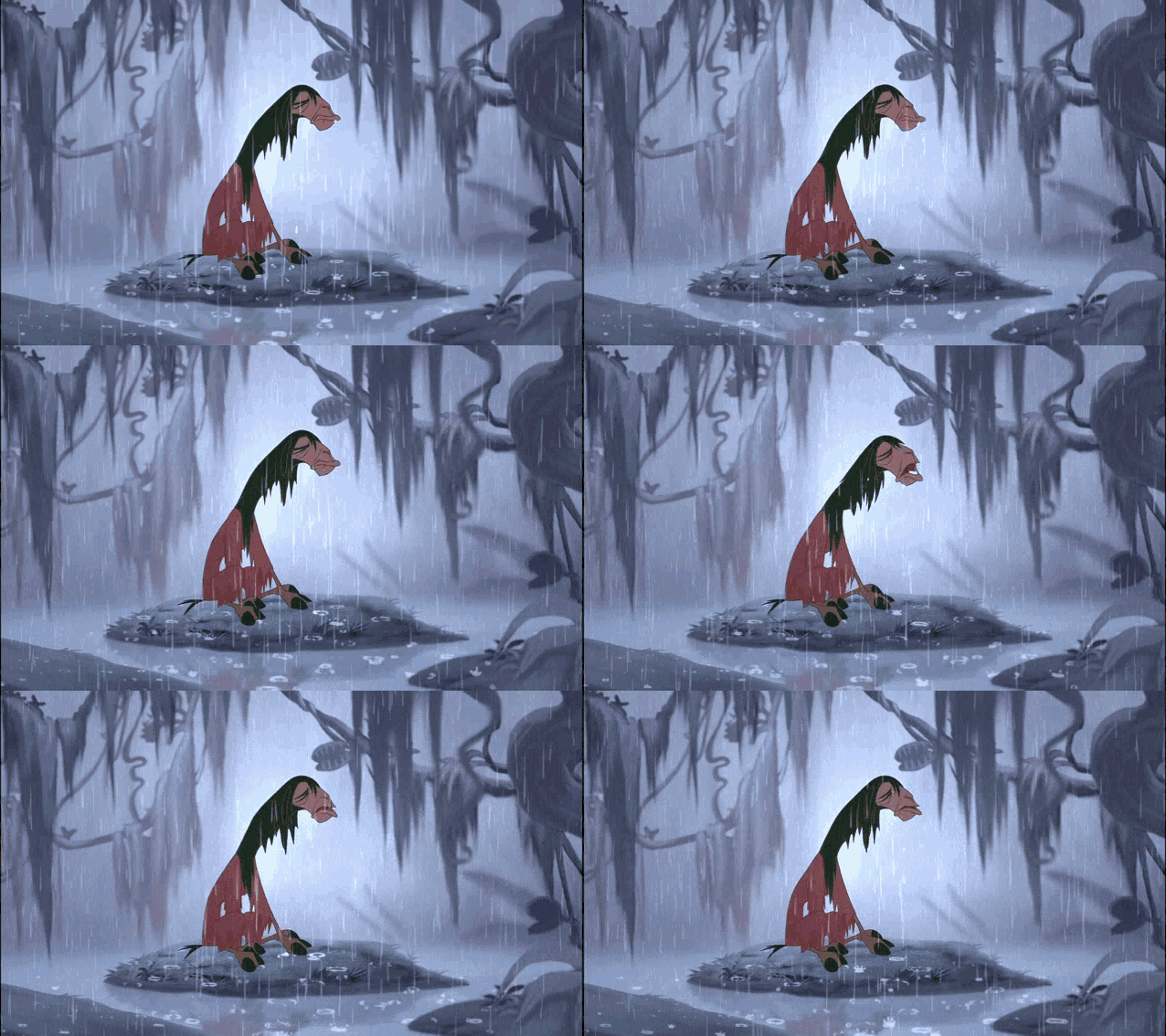
This, right here. Powerful, right? Most likely, the moment that makes you cry in a story is the All Is Lost moment. It’s the downbeat after a whiff of death, when the hero gives up. They think it’s impossible to go on. Think Moana throwing the heart of Te Fiti back into the ocean. Think Mirabel’s house crumbling around her. The emotions hit hard in most All Is Lost moments. So, why did I take mine out? For that, we need to look at what a fall arc does.
The Fall Arc
Most stories follow a positive change arc. That is, the character needs to learn something about themselves, and they do. A coward becomes brave. A selfish dirtbag learns to live for something beyond themself. Someone who’d sworn off ever loving again finds that true love is worth the pain and vulnerability.
Less frequently — and even less frequently intentionally — is a flat arc. For instance, in his first movie, Captain America knows the truth and teaches it to a broken world around him.
Finally, there is a fall arc. Someone starts good and ends up corrupted, or starts corrupted and becomes even worse. Think Anakin in the prequels, or Heathcliff, from Wuthering Heights. This is the kind of arc I’d always planned for my enchantress. After all, in a villain origin story, we should learn how someone becomes the villain. (Not me side-eyeing Maleficent for ignoring the assignment… but I digress.)
In a corruption arc like Anakin and Celeste, my enchantress, have, we start off with a character who has potential for good. They need to make a choice at the end of the story. Not only that, but they need to make the wrong choice. They need to decide that the Lie they’re pursuing is more important than whatever they would get from the Truth.
One of my shorthand questions I ask whenever I edit a book is if the character makes a choice at the end that they were incapable of making in the beginning. In a fall arc, this choice is to do something destructive, and this choice comes after the Third Plot Point.
No matter what type of arc you’re writing, the Third Plot Point is always a place that reeks of death. … But in a negative character arc, the protagonist will find himself impotent in the face of this horror. The Lie he has stubbornly embraced throughout the story now renders him powerless. In essence, he’s lacking the one weapon — the Truth — necessary to fight and defeat the Lie. His only option is to surrender himself still deeper into the grip of the Lie in an effort to convince himself he has chosen the right path.
In some ways, it’s the lack of the All Is Lost moment that keeps the character from discerning the Truth. If she truly understood the consequences of her actions, she’d realize her mistakes and learn from them.
Giving Celeste What She Wants
My enchantress book opens with Celeste wanting nothing more than out from under her brother’s rule. She wants a cottage in the forest and the autonomy to live there in peace.
Her brother, meanwhile, realizes his rule is under question and wants to ensure he remains in power. He solicits Celeste to use her magic to remove the threat — a duke sent by the king — in whatever way she can.
Given that I’ve made no secret of this being a story that prequels Beauty and the Beast, it is likely no surprise that “whatever way she can” ends up being to make him into a beast. At the third plot point, Celeste turns the duke — by this point her fiancé — into a beast, just as her brother requested. After all, the original agreement was to incapacitate him in exchange for the freedom she wanted.
In the original draft, Celeste turns the duke into a beast intentionally, to dire consequences. Her brother then lashes out and imprisons her in his chateau. Her friends then conspire to break her out. She’d lost everything, and felt it, but her friends remained loyal to her.
It wasn’t working.
With the help of a brilliant friend and critique partner of mine, I took the moments between the third plot point and the climax a completely different direction.
Now Celeste successfully turns the duke into a beast, but this time it was accidental. She meant to double-cross her brother and give him the punishment he’d wanted for the potential usurper. The duke becomes a beast, to dire consequences.
But instead of lashing out at his sister, the prince has an All Is Lost moment of his own. In my original draft, I’d made him get even more cruel. But his cruelty took away from her fall arc. Instead, he gets a positive change arc that clicks starting here:
“You got everything you wanted,” Celeste said. “Every last thing you wanted. The duke is a beast. I am not a duchess. The chateau is yours to run as you like. Are you happy now?”
“Don’t twist my words, Celeste. This was never what I wanted.” He exhaled. The evidence of his breath mixed with hers, then separated, swirling in an entirely different direction. He stood, snow covering his blond hair that he brushed off like his responsibilities. “Go. You want a plot of land in the forest? No taxes, no anything? Want to be left alone? Good. Go through the servants’ gardens and down the main path, quickly, before people come to their senses and start accusing you of witchcraft.”
Her brother was telling her to go, before that which he had threatened became reality? “I thought you wanted me — ”
“What I want now is to mourn in peace.” Adam moved to the nearest rose bush, ran a finger along it with no concern for the thorns. “You’re not welcome in my chateau anymore. You, Celeste Dupuis, are not my sister.”
So Celeste goes. She tries to build a cottage in the woods. She gets everything she wanted, and so does Adam. And the victory is not only hollow, but wrong. She’d wanted the wrong thing this whole time. Just before the Third Plot Point, Celeste was given a chance to choose love over power, to follow her lover to Paris and give up the scheme. Instead, she gets exactly what she wanted. Be careful what you wish for, after all.
Why It Works
The All Is Lost moment is so vital in traditional stories because it’s the moment when the character picks herself up off the floor, regroups, and finally learns to embrace the truth they’ve been denying.
This doesn’t work for a fall arc, which I realized the hard way. With the original draft, I got to the final moment of her fall, and she didn’t seem all that bad. She seemed justified. It seemed A Bit Much, maybe, but that was it. It didn’t land, not the way I wanted it to.
Giving her what she wants instead — what she’d used as her justification for her means the whole book — means she can’t use that as an excuse anymore. Giving her brother, the antagonist, a positive change arc meant I could show her refusal to accept that. Show how she had become the bad guy by the end.
Celeste got her little plot of land. She got self-sufficiency. But because she had originally wanted the wrong thing to begin with, it didn’t satisfy her. It wasn’t enough. Because she didn’t have an All Is Lost moment mourning the sacrifices that had already been made, her victory was hollow and her ability to learn from her mistakes lost.
She goes on to darker and darker choices, before finally getting to enact the revenge she wanted all along, on a prince who no longer deserves it.
If you’re writing a Fall Arc — or outside of a “traditional” character arc at all — make sure that the beats you choose still match the outcome you’re looking for. Eliciting emotion in your reader needs to be the priority, far over hitting the “right” plot points.
If you like my work and would like to read more of it, consider joining Medium with my referral link to get full access to every article on Medium. Using my referral link doesn’t cost you anything extra, but half of the fee goes directly to supporting me each month.