Mining News — Glencore & Barrick Gold Will Have A Big Impact On World Affairs
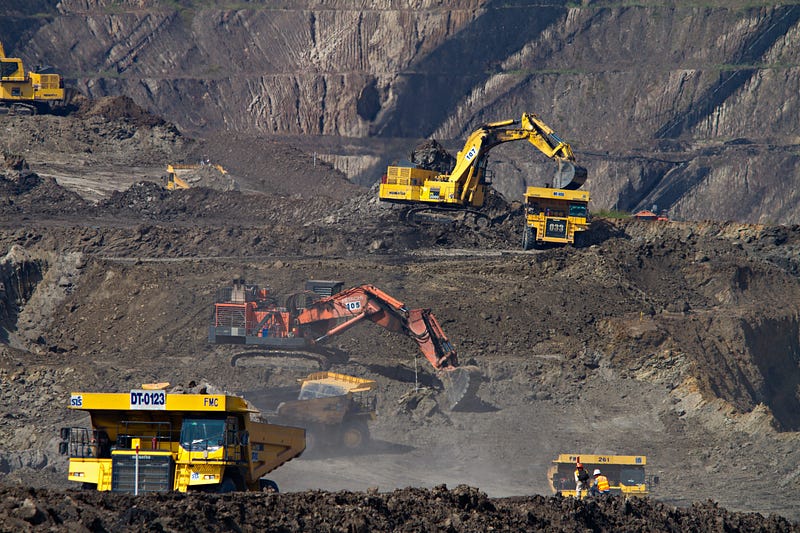
There are many news stories going around about global miners Glencore and Barrick Gold right now.
I have been covering both of those companies extensively in the publication Areas & Producers. As a legal analyst, I wrote about the Glencore corruption case and put together an in-depth report about the company’s bribery in the Democractic Republic of Congo (DRC) and Nigeria oil markets. You can find part of that story here.
I think Glencore and Barrick Gold will both have a big impact on the global economy and world affairs. Gold has been very volatile this year, hitting $2,000 per ounce in March. The precious metal has also been in the topic of conversation at the BRICS and Shanghai Cooperation Organization (SCO) Summits this year. Since de-dollarization continues to be a pressing concern in emerging markets and global commodities.
Glencore and Barrick both reported H1 earnings this week. Barrick surprised investors by beating estimates from gold mining operations, while Glencore’s earnings slide was the catalyst to bringing down the FTSE 100.
Indeed, Glencore’s H1 2023 profits took a big hit compared with year-over-year (yoy) results: net-income was $4.57 billion, compared to $12.09 billion in H1 2022.
Glencore has been on the prowl for new copper mining projects, which came at considerable success in H2.
The company’s efforts can be found in both developed economies and emering markets. For instance, the miner is finalizing deals to take full ownership of the Mara copper mine in Argentina and a copper-nickel mine located in Northern Minnesota of the United States.
Barrick is going headstrong into emerging markets for its gold mining expansion opportunities. The Porgera gold mine in Papua New Guinea (PNG) is supposed to restart operations by the end of 2023. This gold mine in PNG has a controversial backstory, involving a legal dispute between the company and one of its partners over a security incident at the mine.
What links the two global miners in the news is the potential opportunities presented to them in the form of global mergers and acquisitions (M&A). Bloomberg has reported on both of them, ever since Barrick announced its intensions to aqcuire First Quantum and Glencore has sought the takeover of Teck Resources’ coal mining operations.
Those two M&A deals would send the mining investment world into a frenzy, just read more about the Glencore bid to understand the impact: Uneasiness over Glencore’s takeover bid of Teck Resources (Industriall Global Union).
In the end, volatility in the global commodities markets is going to take a toll on mining profits and revenues. That volatility will be playing out as geopolitical trends, such as the effects from Russia’s invasion of Ukraine, affect how miners make their investment into riskier jurisdictions, particuarly in Sub-Saharan Africa and South America.
Read about the Mali case for gold mining operations in Africa.
Glencore appears to be going deeper into full-fledged markets, such as copper and nickel mining operations in North America, but also expanding on the operations in Peru and Argentina.
Let’s see how all of these dynamics play out in the global markets. I suspect that both Glencore and Barrick are re-shaping their strategy in light of momentous change for the future-facing commodities.
The future-facing commodities are copper, nickel and potash. What all three of these commodities have in common is their connection to the gorwing concerns of global energy transition and sustainability. With a growing demand for clean energy technologies and electric vehicles (EVs) to meet the future challenges in climate change and food security, the world is going to need more copper, nickel and potash. This reveals how changes to the global commodities markets are affecting global mining projects, as evidenced by the Environment, Social , Governance (ESG) strategies of Glencore, Barrick Gold, BHP Group and Rio Tinto.
Follow global mining updates and ESG trends in the publication Areas & Producers.


