avatarPromptDervish

Free AI web copilot to create summaries, insights and extended knowledge, download it at here

5806

Abstract

ion></figure><figure id="9f14"><img src="https://cdn-images-1.readmedium.com/v2/resize:fit:800/1*pytez7NLLypeSOCNNd0l0w.png"><figcaption><b>Pastel: </b>Pure pigment in stick form, used for coloring.</figcaption></figure><figure id="08a4"><img src="https://cdn-images-1.readmedium.com/v2/resize:fit:800/1*0tO8zu1u2YV9b6thJFe2qQ.png"><figcaption><b>Sanguine: </b>Reddish chalk used for figure drawing, particularly for highlights and skin tones.</figcaption></figure><figure id="9e07"><img src="https://cdn-images-1.readmedium.com/v2/resize:fit:800/1*mqQ19sqAnVBAC7b3h7WN8A.png"><figcaption><b>Sepia Ink: </b>Brown ink made from cuttlefish, used for its warm, rich tones.</figcaption></figure><figure id="61fa"><img src="https://cdn-images-1.readmedium.com/v2/resize:fit:800/1*EmgDOxQEtjiyXa5aTlvu-g.png"><figcaption><b>Water-Soluble Pencils:</b> Pencils whose marks can be dissolved with water, allowing for paint-like effects.</figcaption></figure><p id="d2f8">Note above how “Water-soluble-pens” adds water to the image. Sometimes the words get in the way and you may have to take additional measures to avoid any nonsense that gets tossed in. With these unwanted elements using — no water or whichever element has trickled in can often get rid of them.</p><figure id="fe16"><img src="https://cdn-images-1.readmedium.com/v2/resize:fit:800/1*yUlGn6aghLxuDCb4P0kDfA.png"><figcaption><b>Wax Crayon: </b>Pigmented wax used for drawing and coloring. This one also gave a woman standing in front so the final prompt for this ended with “drawn in hand-drawn-wax-crayon-drawing”</figcaption></figure><h1 id="3906">Advanced Drawing Techniques: Beyond the Basics</h1><p id="afa0">So here we have a wide variety of drawing media, and all of these are completely extensible by adding a technique to them for variations! It can be overwhelming, with so many choices. What to do, what to do. To help you find your way I took the top techniques I could think of and will show them off here. This is the base prompt “A beautiful young woman posing for a portrait, drawn in ink using _____-technique”</p><figure id="dfc5"><img src="https://cdn-images-1.readmedium.com/v2/resize:fit:800/1*J5d2i6oPd311U4sc821UJQ.png"><figcaption><b>Cross-hatching: </b>Building upon hatching by drawing additional lines in opposing directions to create a mesh-like pattern for deeper shading.</figcaption></figure><figure id="ae7b"><img src="https://cdn-images-1.readmedium.com/v2/resize:fit:800/1*g6sp8WhXYg20PefeRlWoWQ.png"><figcaption><b>Drip Technique: </b>Applying ink in a way that allows it to drip, often tilting the paper to guide the ink, used to create random patterns or textures.</figcaption></figure><figure id="a796"><img src="https://cdn-images-1.readmedium.com/v2/resize:fit:800/1*usN8hnL3TOC5fEPWmkYvFA.png"><figcaption><b>Dry Brush: </b>Using a dry brush with minimal ink to create a textured, often broken line that can add a sense of roughness.</figcaption></figure><figure id="1152"><img src="https://cdn-images-1.readmedium.com/v2/resize:fit:800/1*W76C2iC5_OU5AGtI67gynQ.png"><figcaption><b>Feathering: </b>Drawing tiny lines that radiate out from a central point, often used to create fine details or wispy textures like fur or hair.</figcaption></figure><figure id="5db3"><img src="https://cdn-images-1.readmedium.com/v2/resize:fit:800/1*mAVLwXqSUmqz_axOFmHqYA.png"><figcaption><b>Hatching: </b>Creating texture and shading by drawing closely spaced parallel lines.</figcaption></figure><figure id="9810"><img src="https://cdn-images-1.readmedium.com/v2/resize:fit:800/1*J87t02qzZB_OJS03xeFlBQ.png"><figcaption><b>Line and Wash: </b>Combining line work with washes of diluted ink for a varied textural effect.</figcaption></figure><figure id="8b2e"><img src="https://cdn-images-1.readmedium.com/v2/resize:fit:800/1*34K_zioBFtj2EDCjQd2J-g.png"><figcaption><b>Negative Drawing: </b>Focusing on drawing the space around an object rather than the object itself to create its outline.</figcaption></figure><p id="fecf">Negative drawing did not give me quite what I expected but it does add a bit of flavor so I left it in the list here.</p><figure id="08b2"><img src="https://cdn-images-1.readmedium.com/v2/resize:fit:800/1*aKCvDX7nW9UEQ-i5DM--ew.png"><figcaption><b>Stippling: </b>Creating texture and tone through small dots. The closer the dots, the darker the area appears.</figcaption></figure><p id="9301">As with the negative drawing it is not quite true to the real world technique, but to its credit there are dots in there.</p><figure id="57ff"><img src="https://cdn-images-1.readmedium.com/v2/resize:fit:800/1*7_eN42JZGzj6v3e0BFZ92w.png"><figcaption><b>Wash: </b>Using diluted ink to create a gradient or smooth transition of light to dark, similar to a watercolor wash.</figcaption></figure><p id="81ac">While this list is not exhaustive, it aims to serve as a creative starting point for enhancing your work in Midjourney. There are abundant online resources for discovering new art media and techniques, and I recommend revisiting previous Midjourney Exploration articles for further inspiration on descriptive words, color, and lighting.</p><h1 id="411b">Advanced Drawing Techniques: Beyond the Basics</h1><p id="3159">So, here we are nearing the end of the fourth installment, let’s take a few random ideas from each of the explorations and see what we get! I had not run any of these before, simply cherry-picked what looked interesting and combined it to make something new.</p><figure id="21a1"><img src="https://cdn-images-1.readmedium.com/v2/resize:fit:800/1*4eBxUODpV8fDUTw0V8XPCw.png"><figcaption>Prompt: “A beautiful young woman posing for a portrait, drawn in marker with Chiaroscuro-lighting and a midnight-color-palette”</figcaption></figure><figure id="6bf4"><img src="https://cdn-images-1.re

Options

admedium.com/v2/resize:fit:800/1*Vs6pgRV1nnHRSeLom96OXw.png"><figcaption>Prompt: “A beautiful young woman posing for a portrait, hand-drawn in colored-pencils, backlit by colored-lights, neon-color-palette”</figcaption></figure><figure id="329b"><img src="https://cdn-images-1.readmedium.com/v2/resize:fit:800/1*2CFe0lqjgSXMUGVdeMgoFg.png"><figcaption>Prompt: “A beautiful young woman posing for a portrait, drawn in Line-and-Wash, directional-light-through-window-shades, vibrant-earth-tone-palette”</figcaption></figure><figure id="22c0"><img src="https://cdn-images-1.readmedium.com/v2/resize:fit:800/1*I8S-izPFC9G_VhuS578zmA.png"><figcaption>Prompt: “A beautiful young woman posing for a portrait, drawn in felt-tip-pen,cross-hatching-technique, muted-earth-tone-colors”</figcaption></figure><h1 id="319e">Down the Rabbit Hole of Generative AI</h1><p id="1185">These next few illustrate the rule of unexpected consequences. The prompt asks for a 1950’s color palette and while it did give us that, it also strongly influenced the image created, giving us a very stylish woman from somewhere in the 1950s. And just because I couldn't help myself I took it up through the year 2000.</p><figure id="9cf0"><img src="https://cdn-images-1.readmedium.com/v2/resize:fit:800/1*Z503WSXUSX6m71rj-TQ6_A.png"><figcaption>Prompt: “A beautiful young woman posing for a portrait, drawn in Litho-Crayons, using stippling-technique, 1950's-color-palette”</figcaption></figure><figure id="cc96"><img src="https://cdn-images-1.readmedium.com/v2/resize:fit:800/1*GOcdFktOS7SMNGMirJqaSA.png"><figcaption>Prompt: “A beautiful young woman posing for a portrait, drawn in Litho-Crayons, using stippling-technique, 1960's-color-palette”</figcaption></figure><figure id="97f9"><img src="https://cdn-images-1.readmedium.com/v2/resize:fit:800/1*kJNNQm0YVPhPQI4vvvdKsQ.png"><figcaption>Prompt: “A beautiful young woman posing for a portrait, drawn in Litho-Crayons, using stippling-technique, 1970's-color-palette”</figcaption></figure><figure id="0552"><img src="https://cdn-images-1.readmedium.com/v2/resize:fit:800/1*C2TExBO8wKTQEFh-KECqNw.png"><figcaption>Prompt: “A beautiful young woman posing for a portrait, drawn in Litho-Crayons, using stippling-technique, 1980's-color-palette”</figcaption></figure><figure id="9ef3"><img src="https://cdn-images-1.readmedium.com/v2/resize:fit:800/1*8GY0ZBrrH-Tex7pZ7Cyhqg.png"><figcaption>Prompt: “A beautiful young woman posing for a portrait, drawn in Litho-Crayons, using stippling-technique, 1990's-color-palette”</figcaption></figure><figure id="fbc7"><img src="https://cdn-images-1.readmedium.com/v2/resize:fit:800/1*CsVxfGhoR0W7f6dHzRkVFg.png"><figcaption>Prompt: “A beautiful young woman posing for a portrait, drawn in Litho-Crayons, using stippling-technique, 2000's-color-palette”</figcaption></figure><p id="83e5">LOL, you can undoubtedly see how easy it is to fall down rabbit holes in Midjourney. What fascinates me is how the AI interpreted the suggestion of an era. It didn’t just influence the color palette as intended; it also gave us an intriguing perspective on how it ‘views’ a beautiful woman from each decade. Note how both hair and clothing styles were affected. As a final touch, I included one last prompt from the 1900s for comparison.</p><figure id="e5cb"><img src="https://cdn-images-1.readmedium.com/v2/resize:fit:800/1*Pv0ubN8JkUqgJXlikT6cAQ.png"><figcaption>Prompt: “A beautiful young woman posing for a portrait, drawn in Litho-Crayons, using stippling-technique, 1900's-color-palette”</figcaption></figure><p id="6f67">I was so caught up in the unintended effects of the eras that I completely missed that I did not end up with the stippling technique on any of these, but that may be that the Litho Crayons don’t lend themselves to that style or something, I am not familiar with them.</p><h1 id="1c7e">In Closing: Your Journey Through Midjourney</h1><p id="ea60">We’ve touched on an array of drawing art media and techniques, giving you the tools to bring your Midjourney visions to life. Remember, part of the joy in creating with Midjourney is the unexpected turns and the places your imagination takes you, even when they’re not what you initially aimed for. So, dive in, explore, and let your creativity roam free in this exciting digital landscape.</p><p id="bf88">If you found this exploration helpful or simply enjoyed the read, please give it a clap or share it with others who might benefit. Stay tuned for the next installment of Midjourney Explorations, where we’ll delve even deeper into the endless possibilities this platform offers.</p><figure id="e08e"><img src="https://cdn-images-1.readmedium.com/v2/resize:fit:800/1*8UUoYERB2Wao17B66XyJqQ.jpeg"><figcaption></figcaption></figure><p id="5545"><a href="https://readmedium.com/midjourney-explorations-3-lighting-afcf6322abfa"><< Previous Article: Midjourney Explorations: #3 — Lighting</a></p><p id="8422"><a href="https://readmedium.com/midjourney-explorations-5-art-media-lets-paint-b6d996464fa5">Next Article: Midjourney Explorations: #5 — Art Media, Let’s Paint >></a></p><h2 id="417c">A Message from AI Mind</h2><figure id="ecd4"><img src="https://cdn-images-1.readmedium.com/v2/resize:fit:800/0*5Wm7sOfTpe5DEbhg.gif"><figcaption></figcaption></figure><p id="0438">Thanks for being a part of our community! Before you go:</p><ul><li>👏 Clap for the story and follow the author 👉</li><li>📰 View more content in the <a href="https://pub.aimind.so/">AI Mind Publication</a></li><li>🧠 Improve your <a href="https://www.aimind.so/prompt-generator?utm_source=pub&amp;utm_medium=message">AI prompts effortlessly and FREE</a></li><li><b>🧰 Discover <a href="https://www.aimind.so/?utm_source=pub&amp;utm_medium=message">Intuitive AI Tools</a></b></li></ul></article></body>

Midjourney Explorations: #4: Art Media, Let’s Draw

There are countless mediums for human art and Midjourney can do interesting things with so many of them! There are so many that I will do several of these explorations into various art media types, today Drawing.

Welcome to the fourth installment of Midjourney Explorations, a series dedicated to unlocking the full potential of Midjourney’s capabilities in art creation. While previous articles delved into the intricacies of descriptive words, color, and lighting, today’s focus shifts to art media, specifically to the medium of drawing. Understanding how different drawing media impact the final piece is essential for precise creative expression. This article aims to offer a visual guide to various drawing media and techniques, aiding you in making informed choices for your next Midjourney creation.

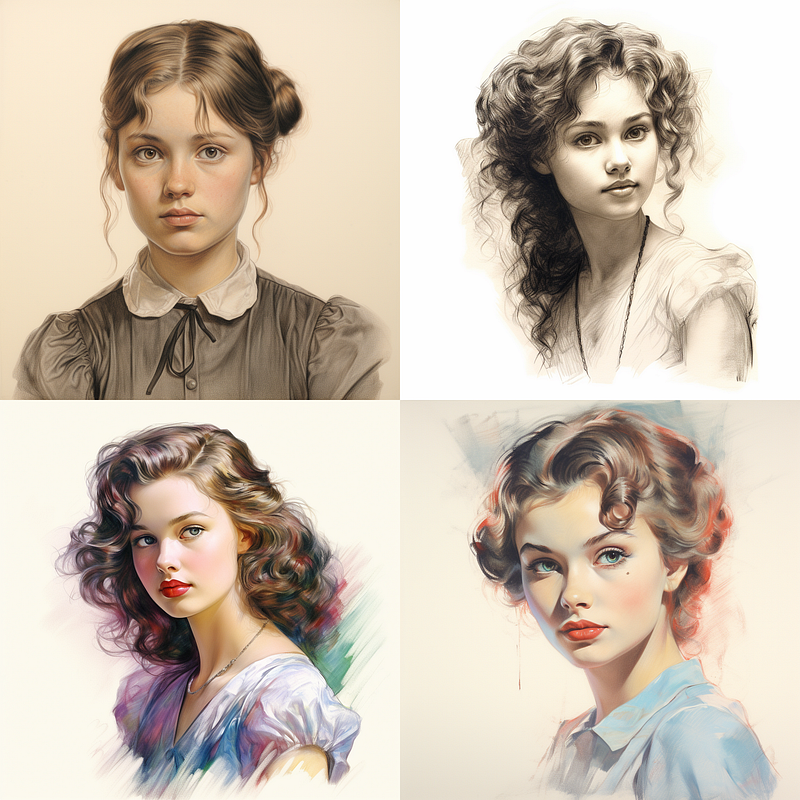
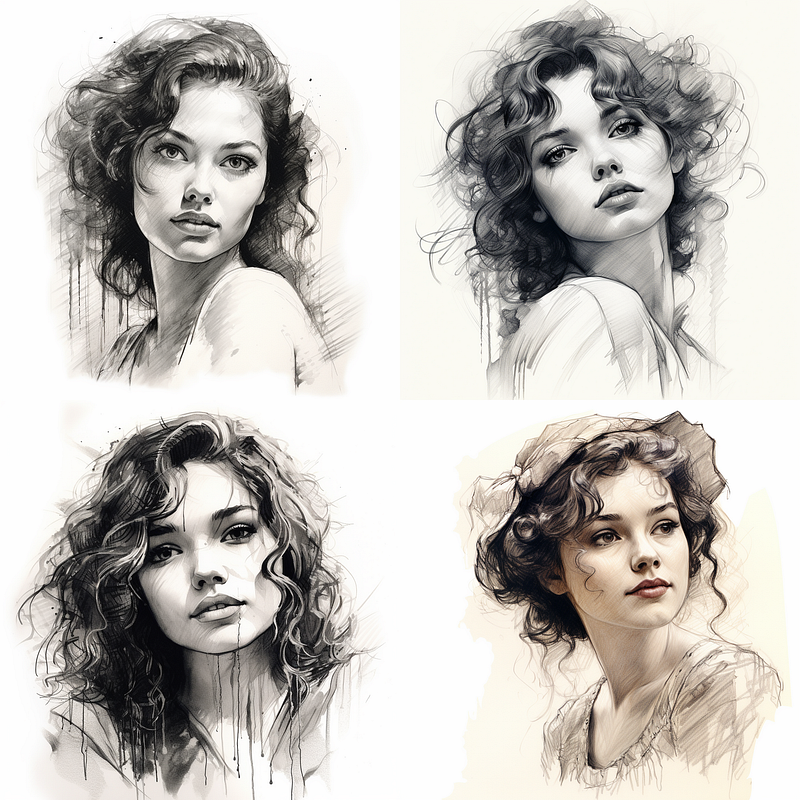
If you tell Midjourney to make “A beautiful young woman posing for a portrait, hand-drawn” you will likely get a very nice image. If you have a particular drawing media in mind then you will want to include that in your prompt.
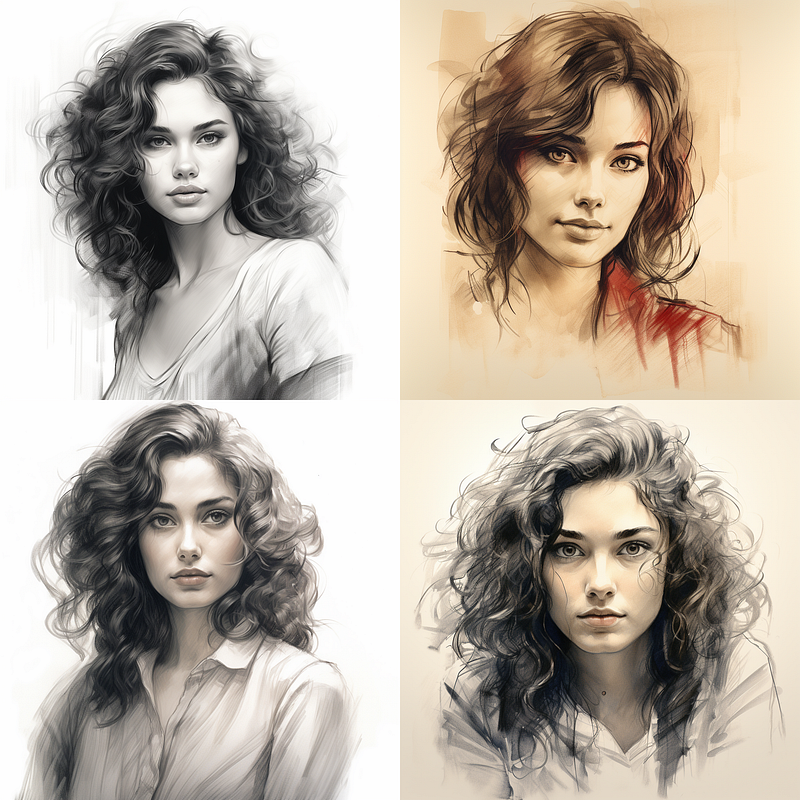
Prompt for the control image: “A beautiful young woman posing for a portrait, hand-drawn”

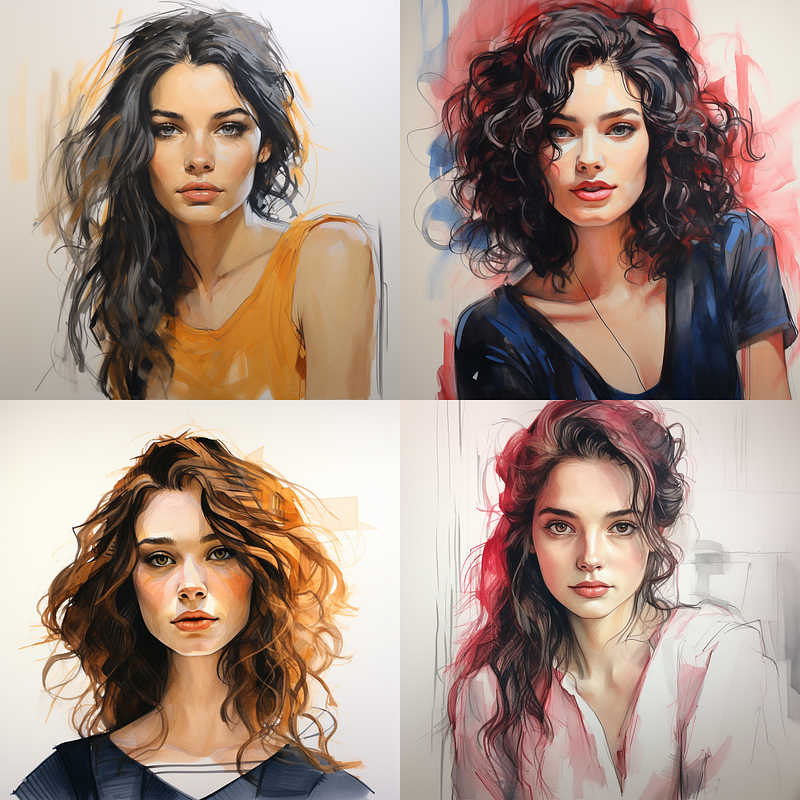
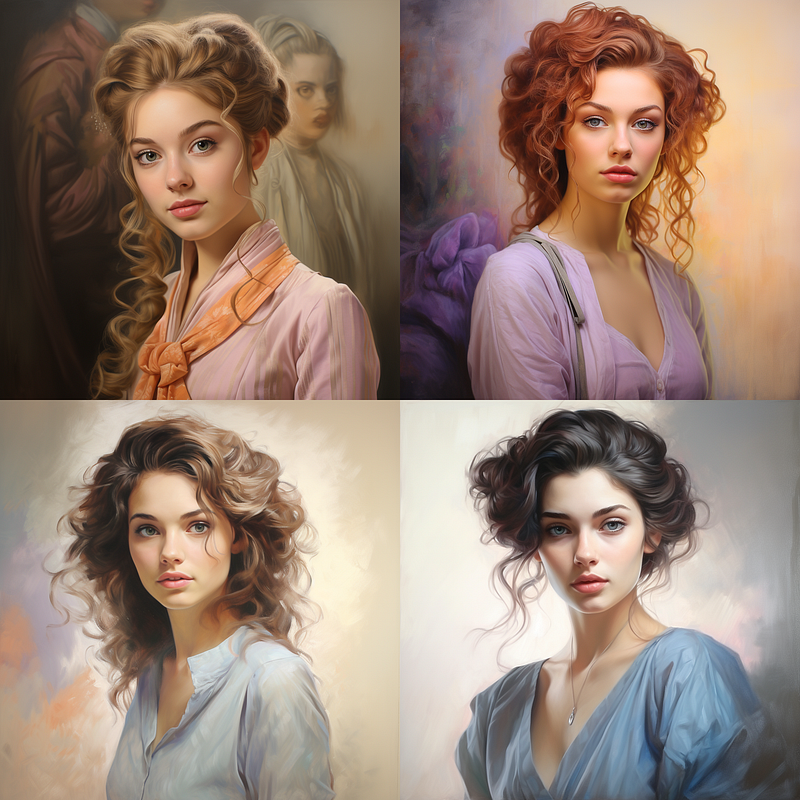
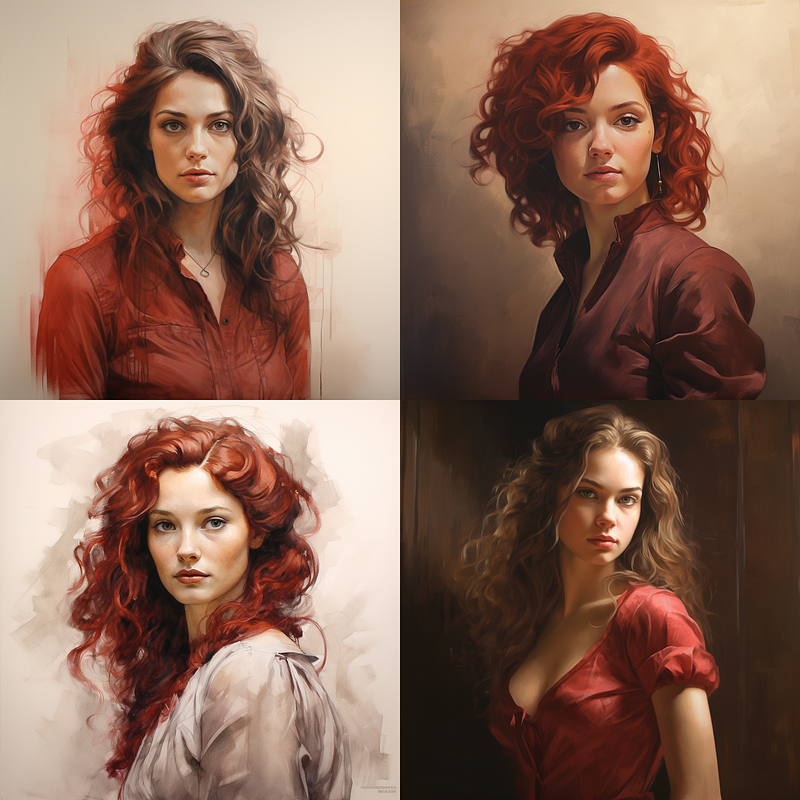
The prompts for all of the images below begin with “A beautiful young woman posing for a portrait, drawn in ___” and then include the bolded text below the image. Hyphens are used in place of spaces to ensure that the AI understands the medium as a single concept. This approach minimizes the chance of unintended elements like pencils or brushes appearing in your images.
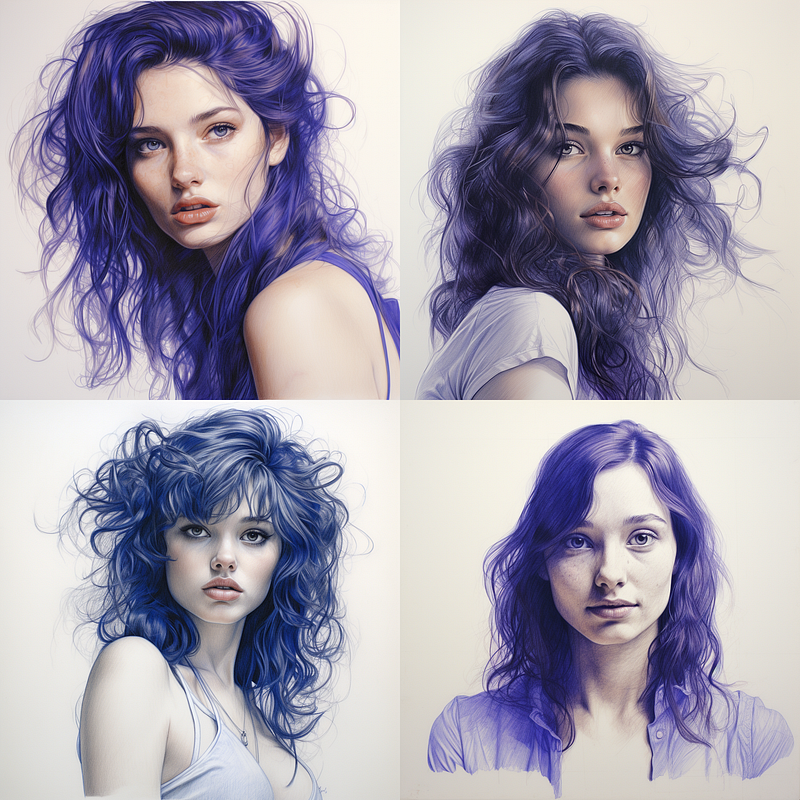
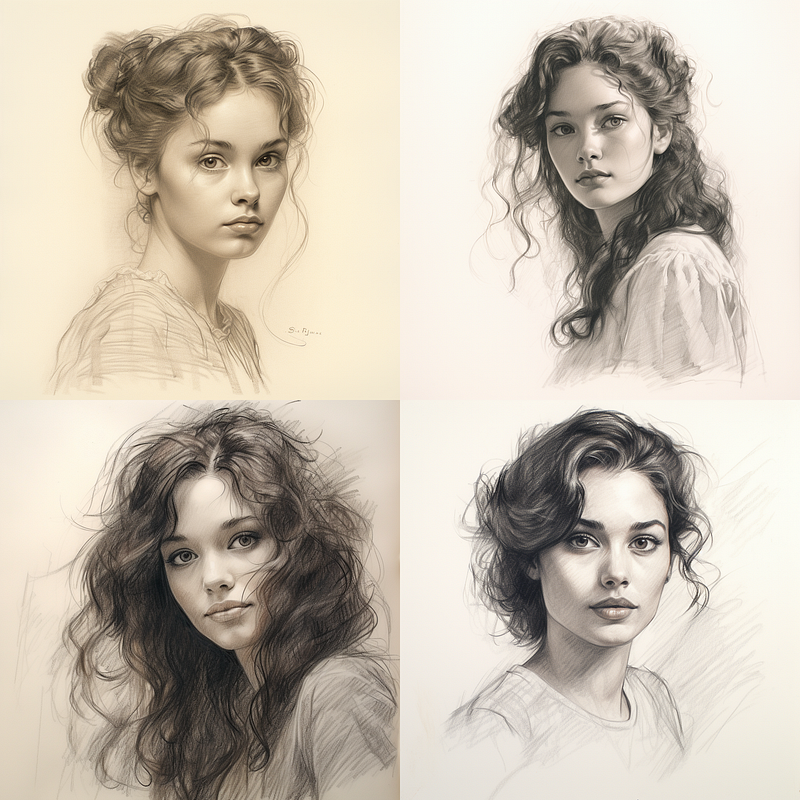
Ballpoint Pen: Common ink pen used for quick sketches and detailed drawings.

Note we do have some non-ballpoint pen color on a couple of the images, but this could be tweaked through prompting, such as adding monochrome to the prompt.
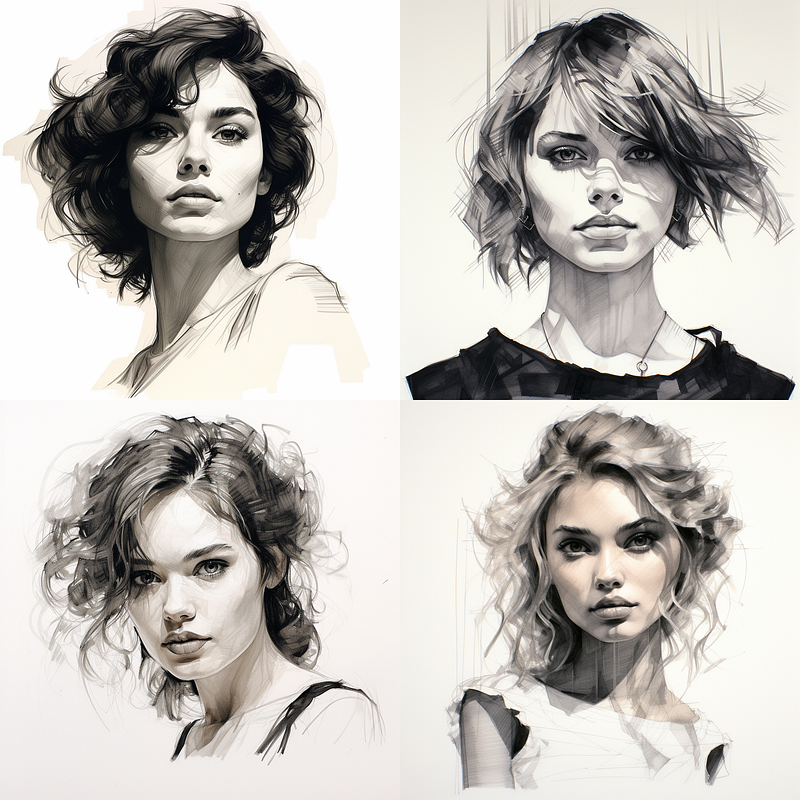
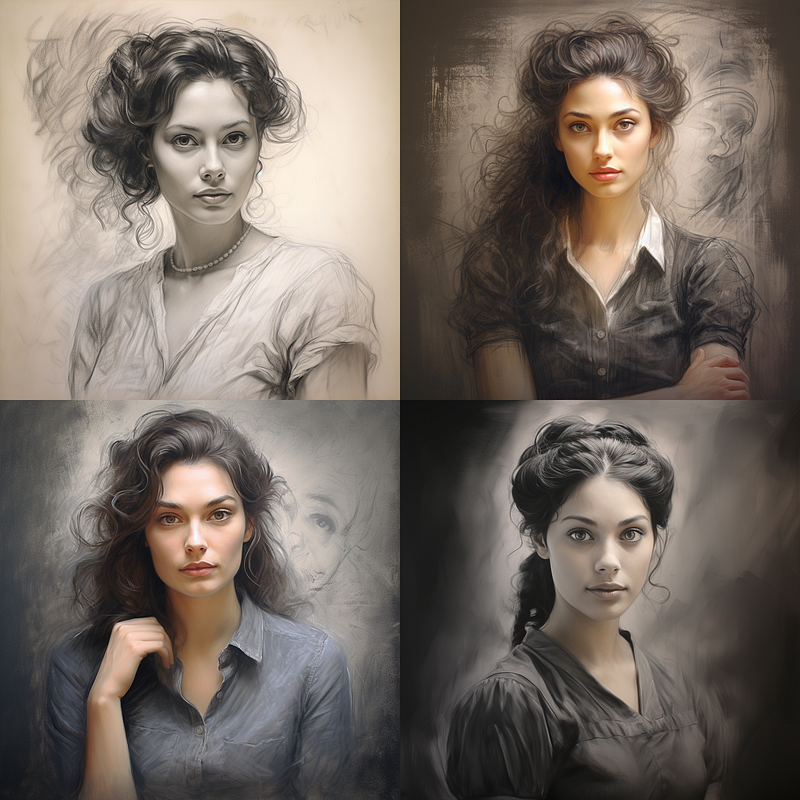
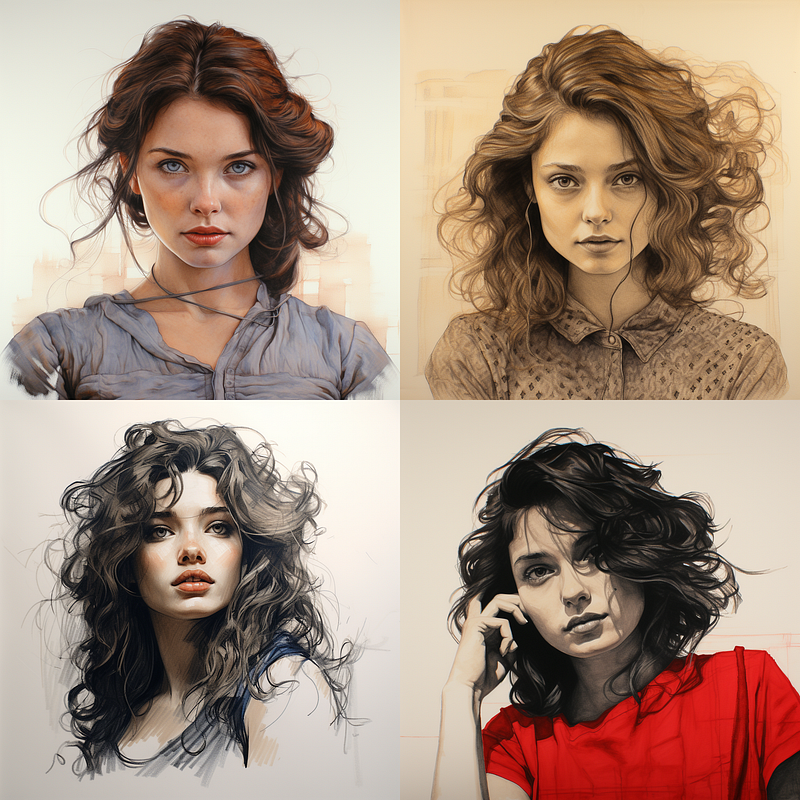
Brush Pen: Pen with a brush-like tip, often filled with ink, used for calligraphy and expressive line work.
Chalk: Soft, porous sedimentary rock, often used on rougher surfaces or for temporary marks.

Unlike other drawing media so far I was forced to use “hand-drawn-chalk-drawing” in order to not have a woman standing in the scene rather than a simple chalk picture. The hand-drawn part was unneeded nearly everywhere else.

The “hand-drawn” can go in any prompt, but leaving it out leaves you more room in your prompt for other details you might prefer to spell out explicitly. In prompting conciseness is key; try to limit your prompt to 50–70 words for more reliable outcomes. For consistency, I’ve used the same baseline prompt as in my previous article on lighting techniques
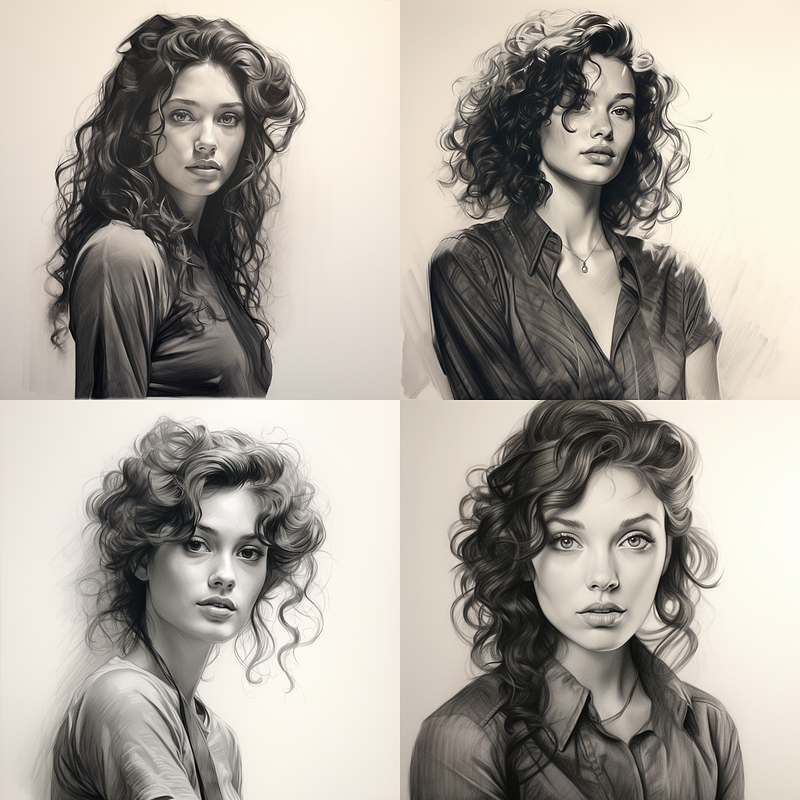
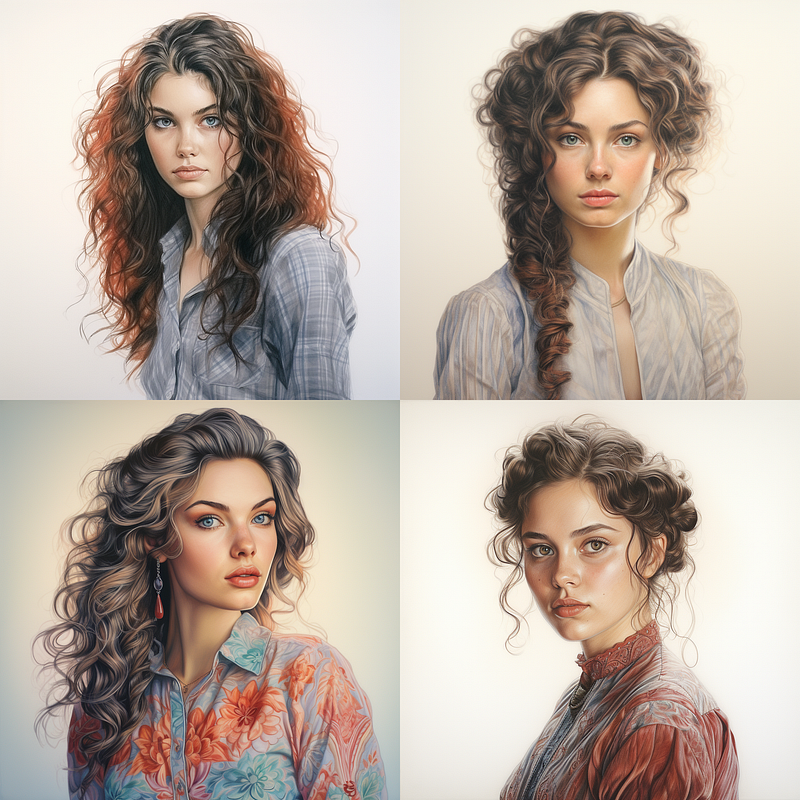
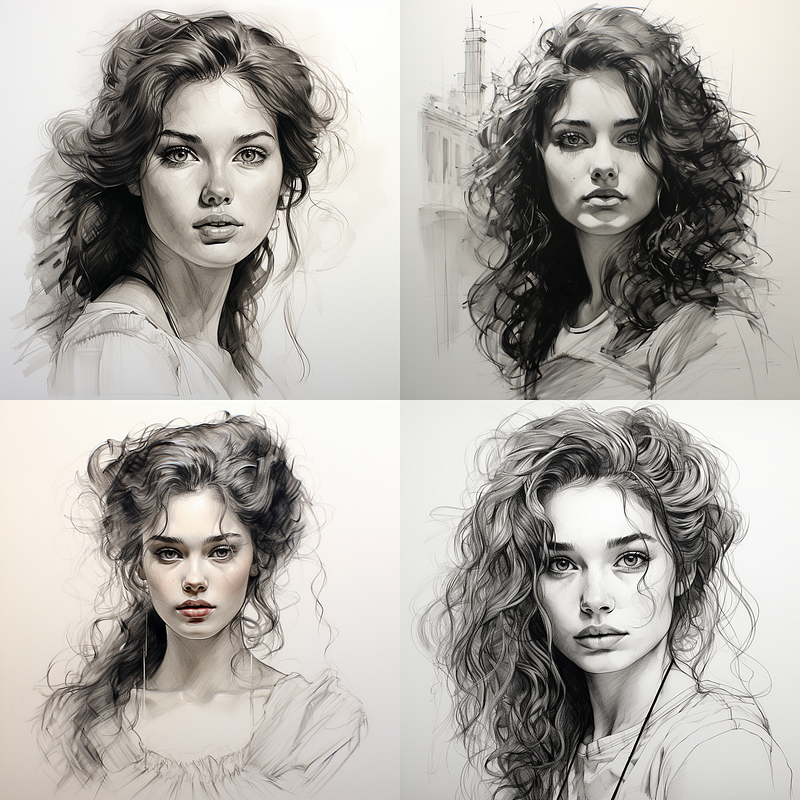
Charcoal: Compressed black carbon used for sketching and shading.
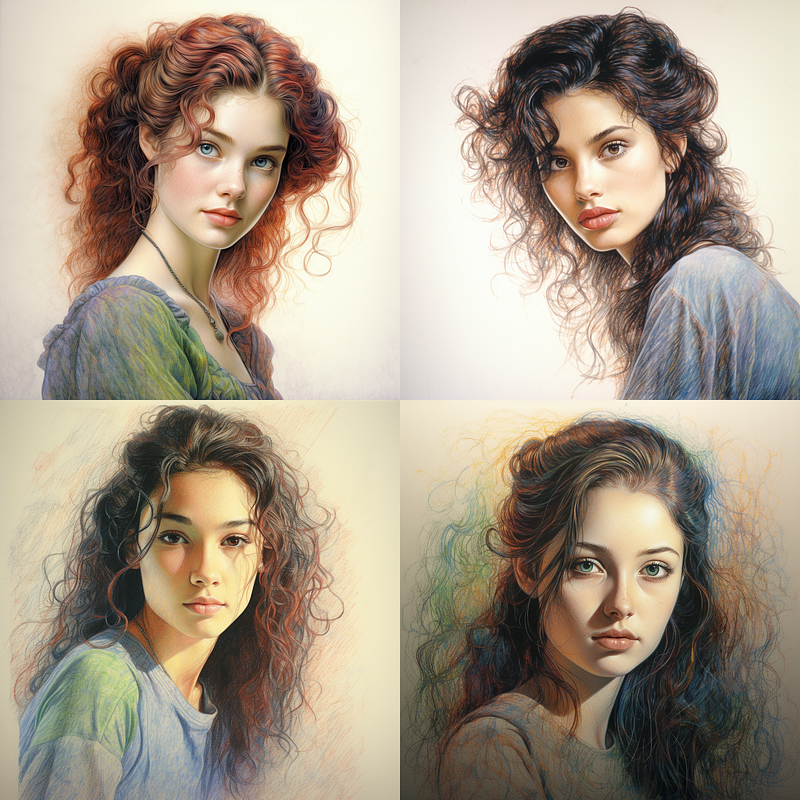
Colored Pencil: Pencils with a colored “lead” for adding hues.
Conte Crayon: A mix of clay and graphite, often used for figure drawing.
Felt-tip Pen: Pen with a porous tip, usually used for line art and coloring.
Fountain Pen: Pen with a nib and internal reservoir, offering varied line thickness.
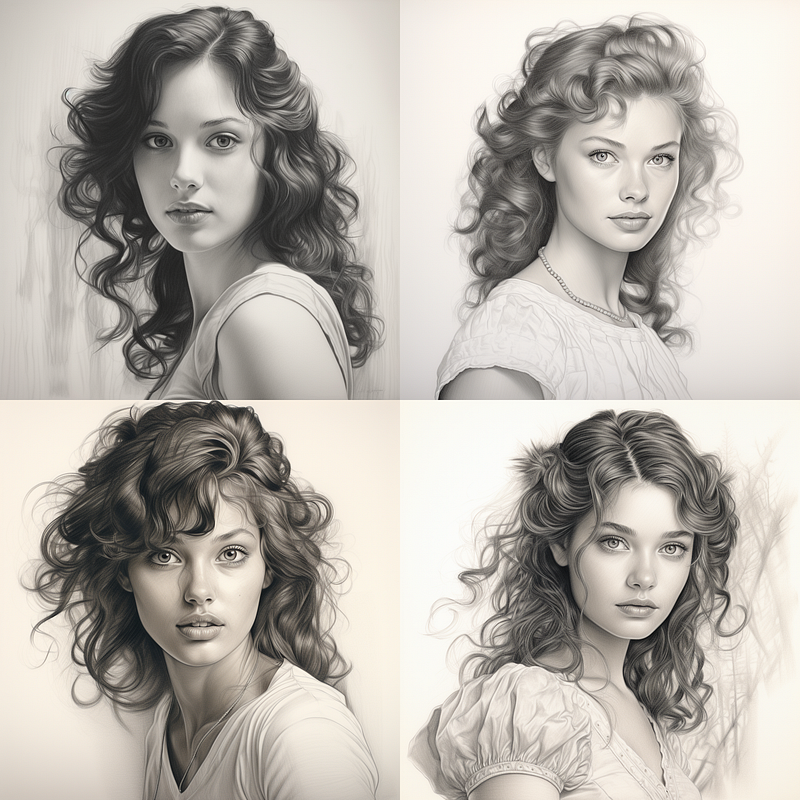
Graphite Pencil: Standard pencil made from graphite and clay.
Litho Crayons: Used in lithography, these crayons write on slabs for printmaking but can also be used for direct drawing.
Marker: Felt-tipped pen filled with ink, used for coloring and shading.

Note that I have both felt-top marker and marker in the list, marker appears to give harder larger lines, felt-tip has a softer look to it, at least for this prompt.
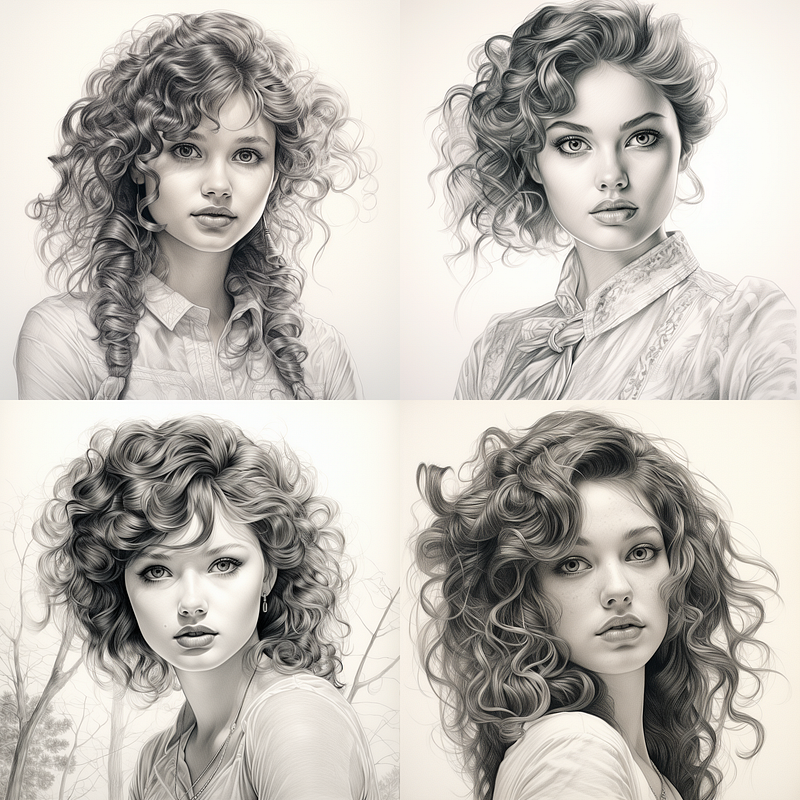
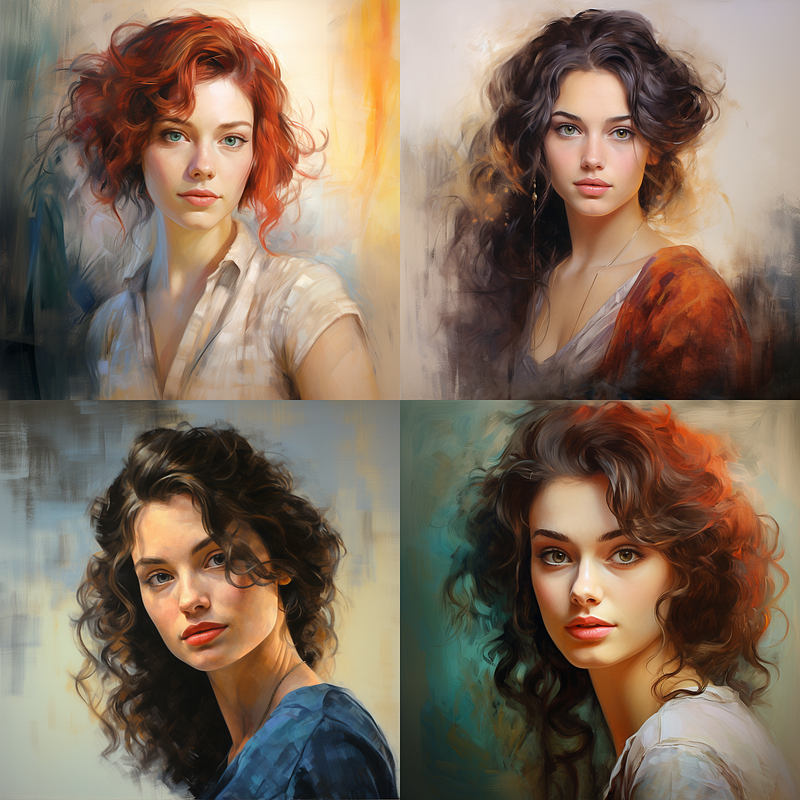
Mechanical Pencil: Pencil with replaceable and retractable leads. Finer lines than a typical graphite pencil.
Oil Pastel: Crayons made of pigments and a non-drying oil and wax binder.
Pastel: Pure pigment in stick form, used for coloring.
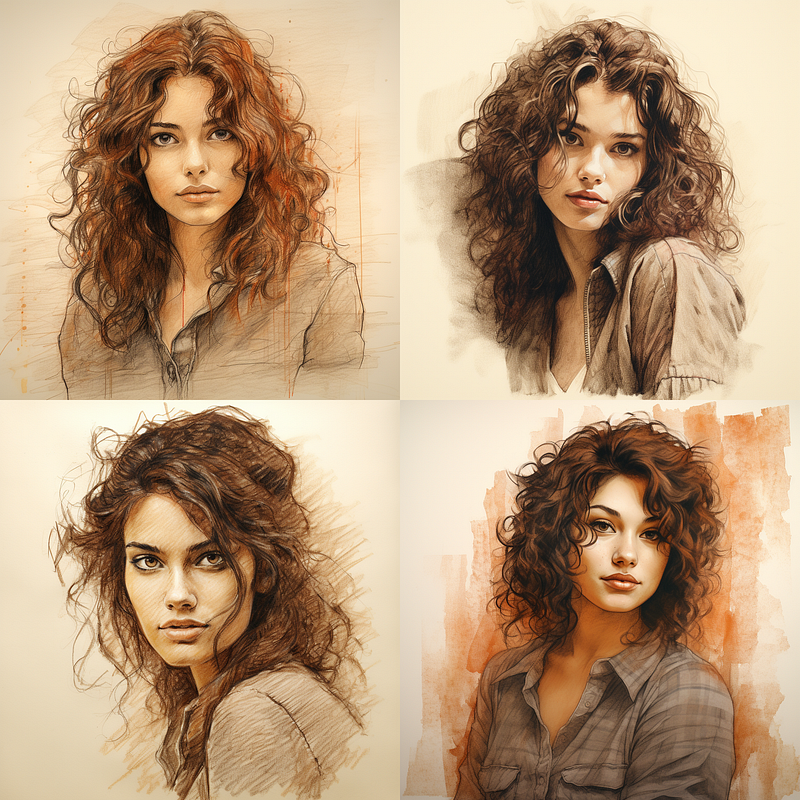
Sanguine: Reddish chalk used for figure drawing, particularly for highlights and skin tones.
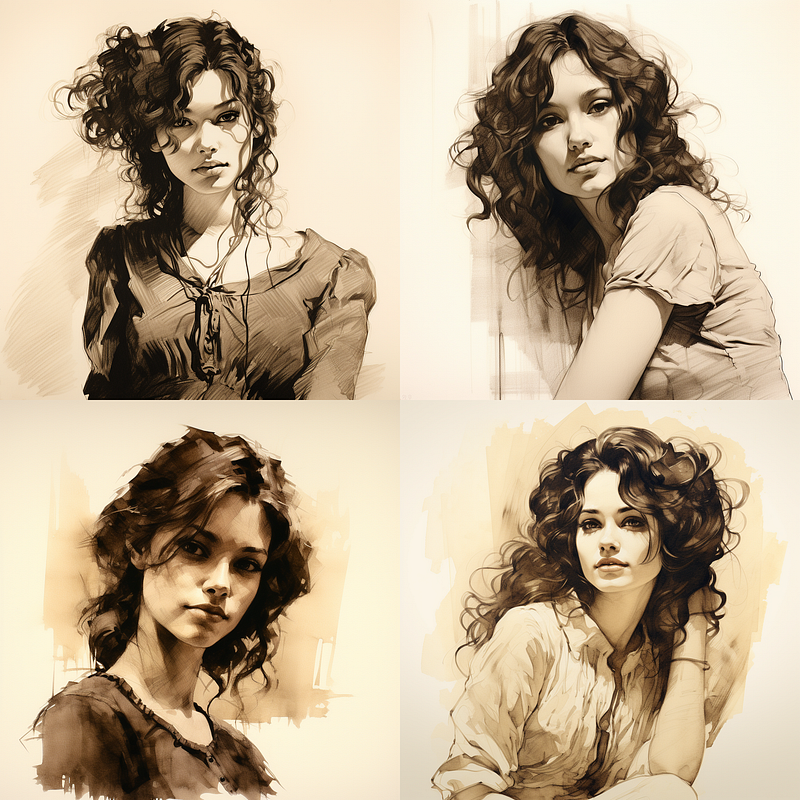
Sepia Ink: Brown ink made from cuttlefish, used for its warm, rich tones.
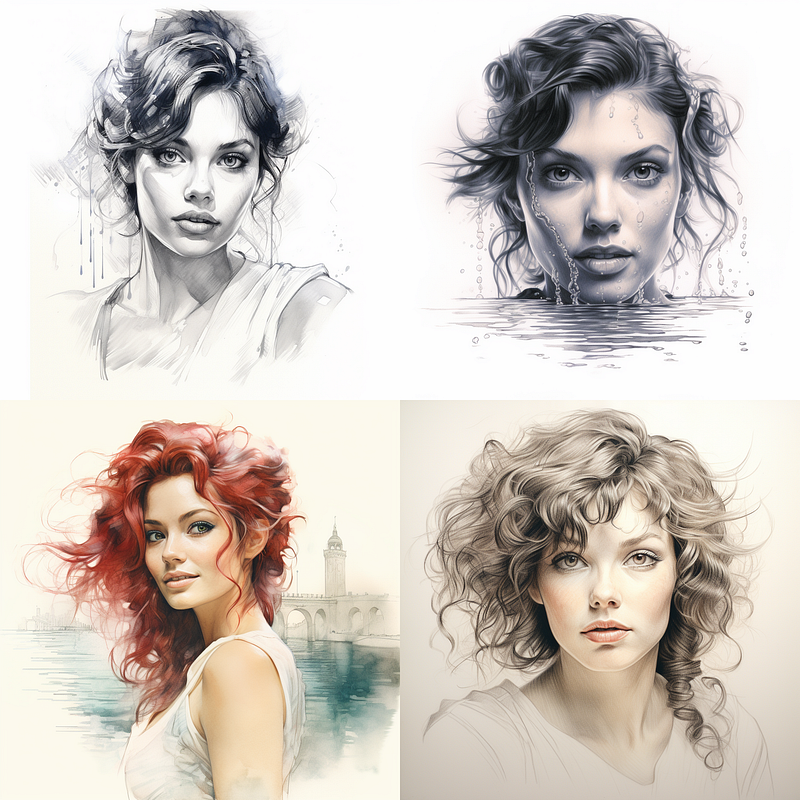
Water-Soluble Pencils: Pencils whose marks can be dissolved with water, allowing for paint-like effects.

Note above how “Water-soluble-pens” adds water to the image. Sometimes the words get in the way and you may have to take additional measures to avoid any nonsense that gets tossed in. With these unwanted elements using — no water or whichever element has trickled in can often get rid of them.
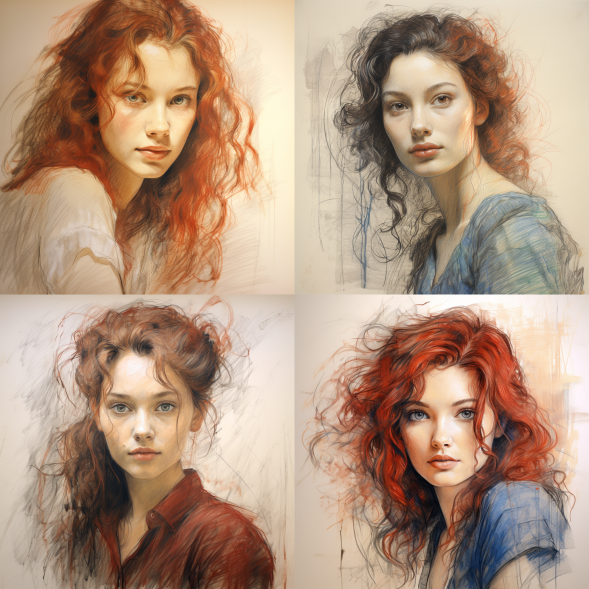
Wax Crayon: Pigmented wax used for drawing and coloring. This one also gave a woman standing in front so the final prompt for this ended with “drawn in hand-drawn-wax-crayon-drawing”

Advanced Drawing Techniques: Beyond the Basics

So here we have a wide variety of drawing media, and all of these are completely extensible by adding a technique to them for variations! It can be overwhelming, with so many choices. What to do, what to do. To help you find your way I took the top techniques I could think of and will show them off here. This is the base prompt “A beautiful young woman posing for a portrait, drawn in ink using _____-technique”
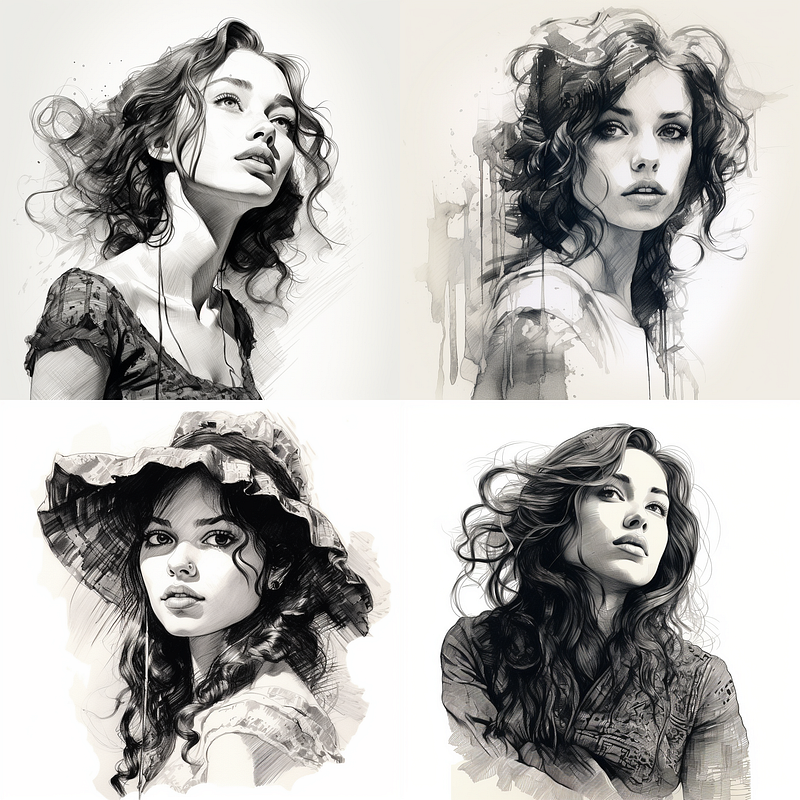
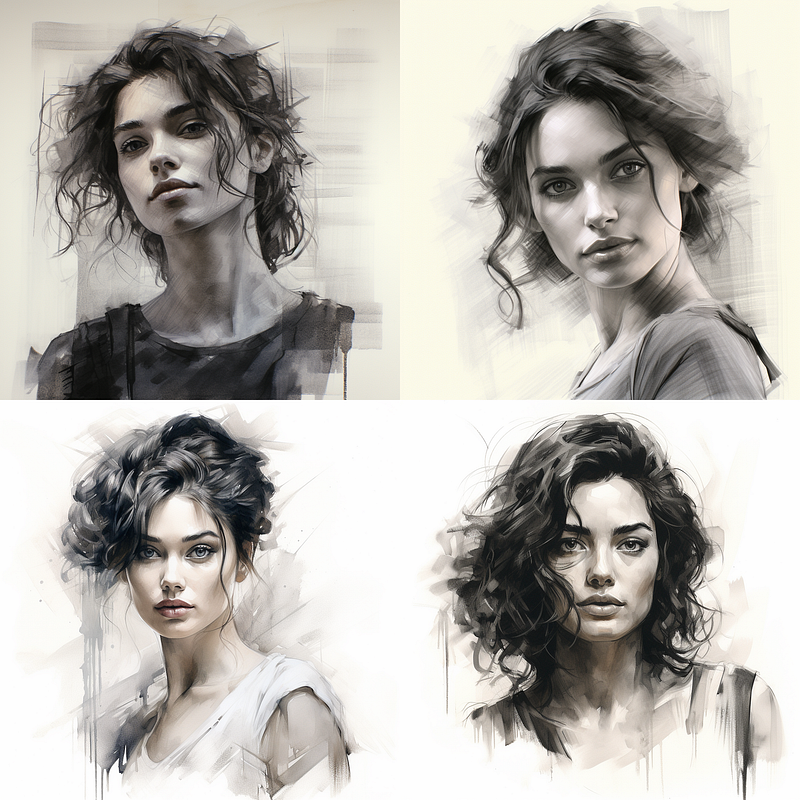
Cross-hatching: Building upon hatching by drawing additional lines in opposing directions to create a mesh-like pattern for deeper shading.
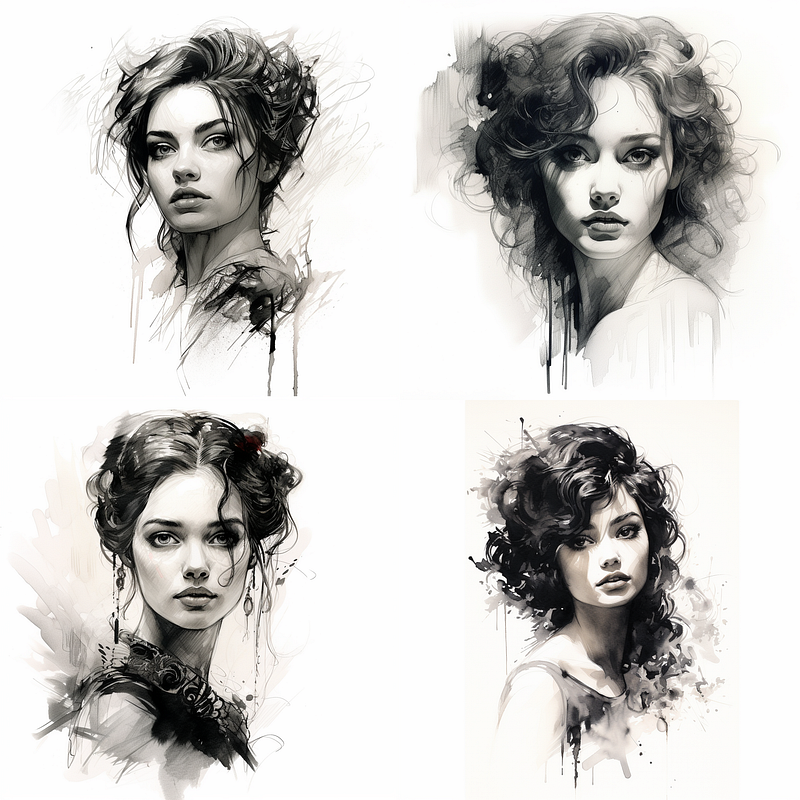
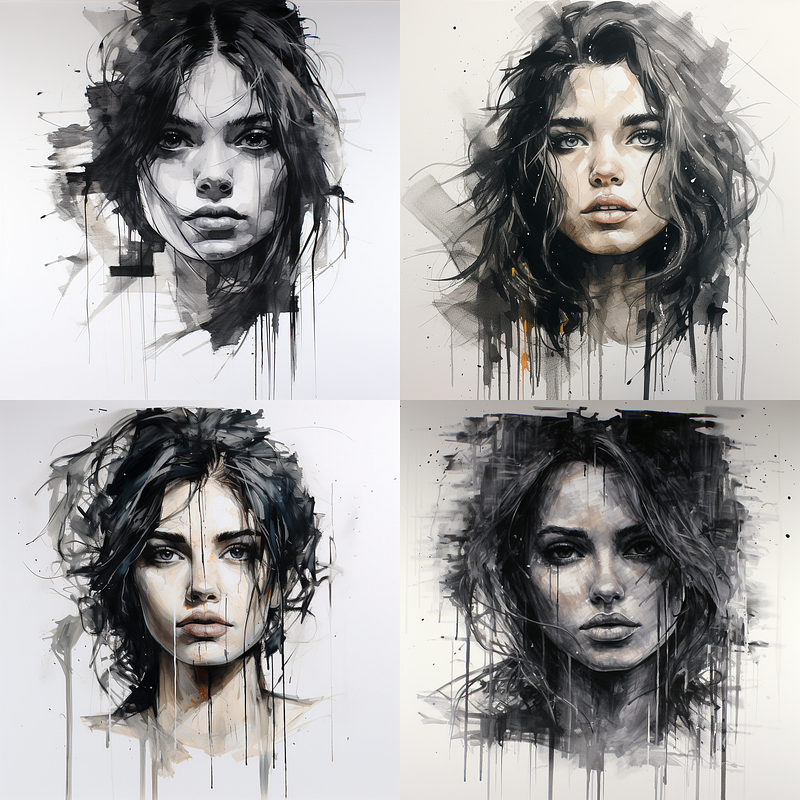
Drip Technique: Applying ink in a way that allows it to drip, often tilting the paper to guide the ink, used to create random patterns or textures.
Dry Brush: Using a dry brush with minimal ink to create a textured, often broken line that can add a sense of roughness.
Feathering: Drawing tiny lines that radiate out from a central point, often used to create fine details or wispy textures like fur or hair.
Hatching: Creating texture and shading by drawing closely spaced parallel lines.
Line and Wash: Combining line work with washes of diluted ink for a varied textural effect.
Negative Drawing: Focusing on drawing the space around an object rather than the object itself to create its outline.

Negative drawing did not give me quite what I expected but it does add a bit of flavor so I left it in the list here.
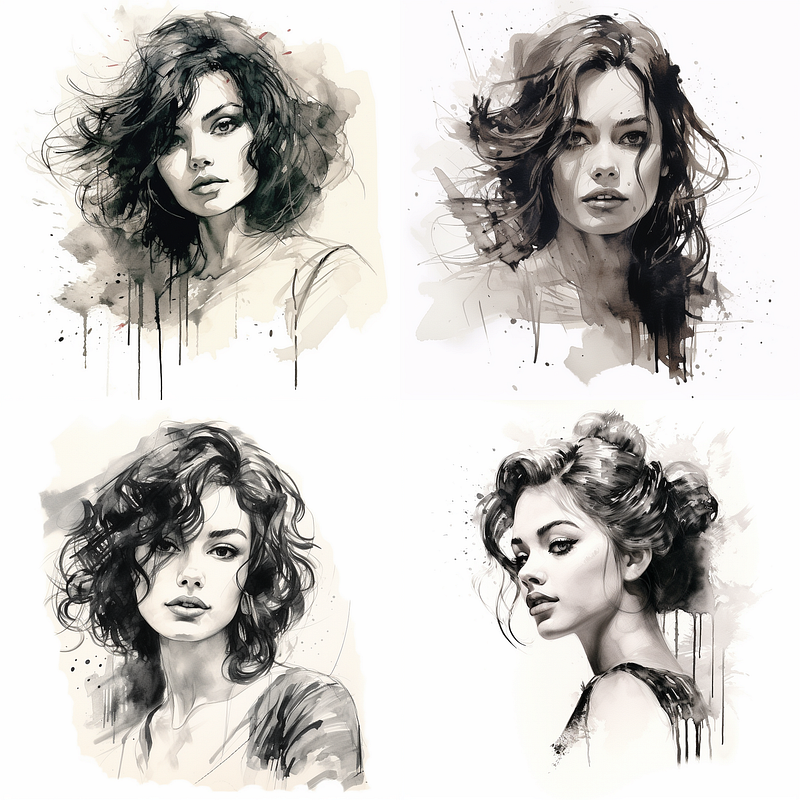
Stippling: Creating texture and tone through small dots. The closer the dots, the darker the area appears.

As with the negative drawing it is not quite true to the real world technique, but to its credit there are dots in there.
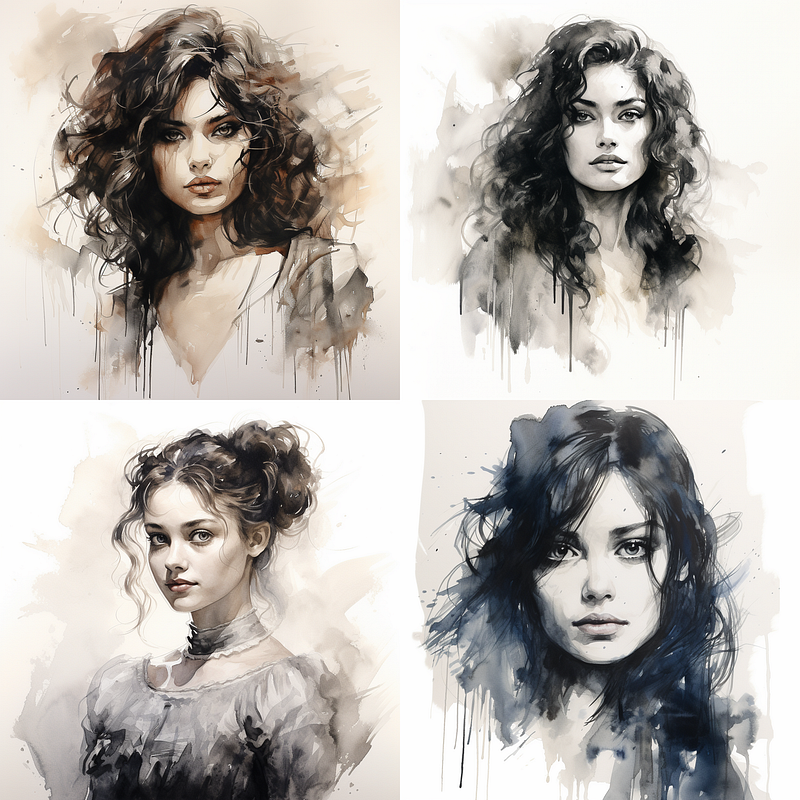
Wash: Using diluted ink to create a gradient or smooth transition of light to dark, similar to a watercolor wash.

While this list is not exhaustive, it aims to serve as a creative starting point for enhancing your work in Midjourney. There are abundant online resources for discovering new art media and techniques, and I recommend revisiting previous Midjourney Exploration articles for further inspiration on descriptive words, color, and lighting.

Advanced Drawing Techniques: Beyond the Basics

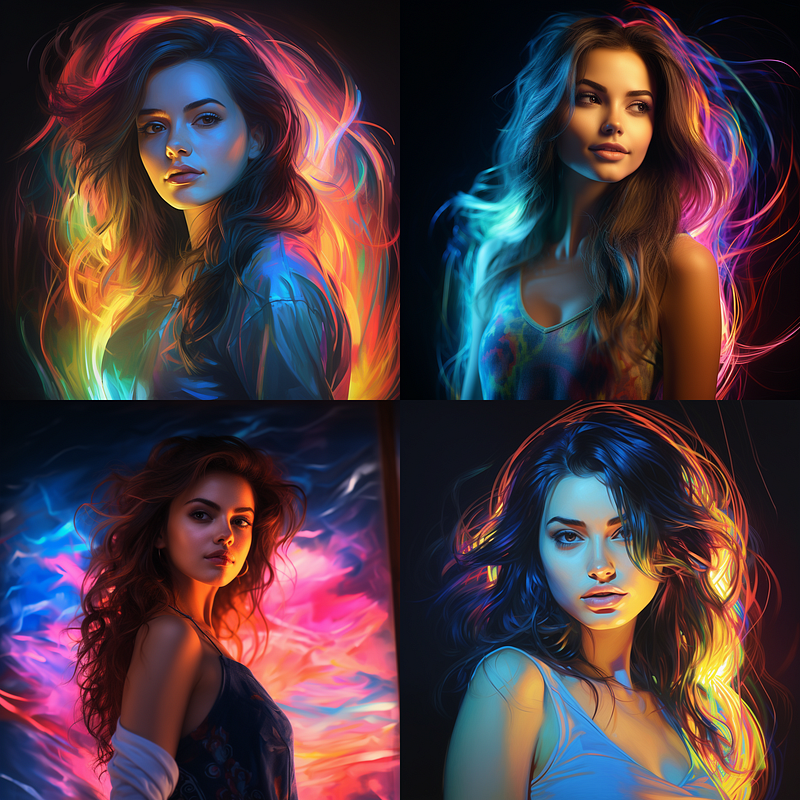
So, here we are nearing the end of the fourth installment, let’s take a few random ideas from each of the explorations and see what we get! I had not run any of these before, simply cherry-picked what looked interesting and combined it to make something new.
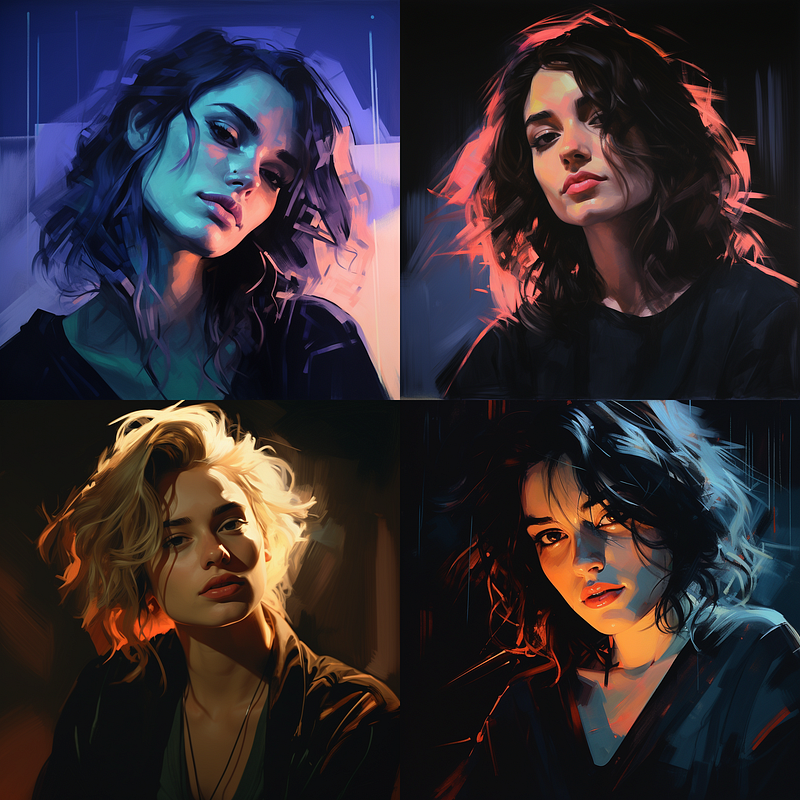
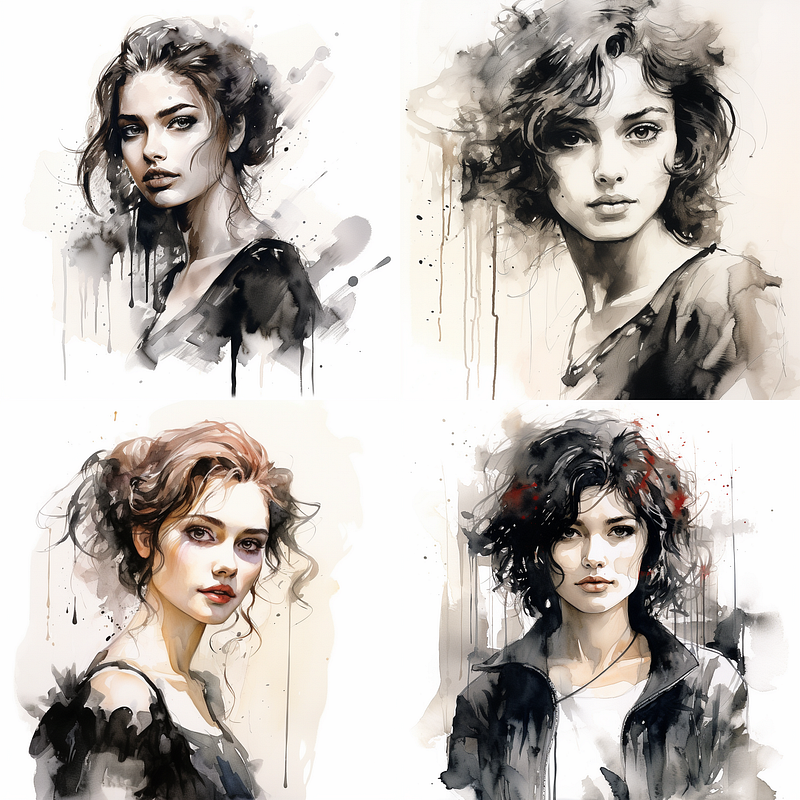
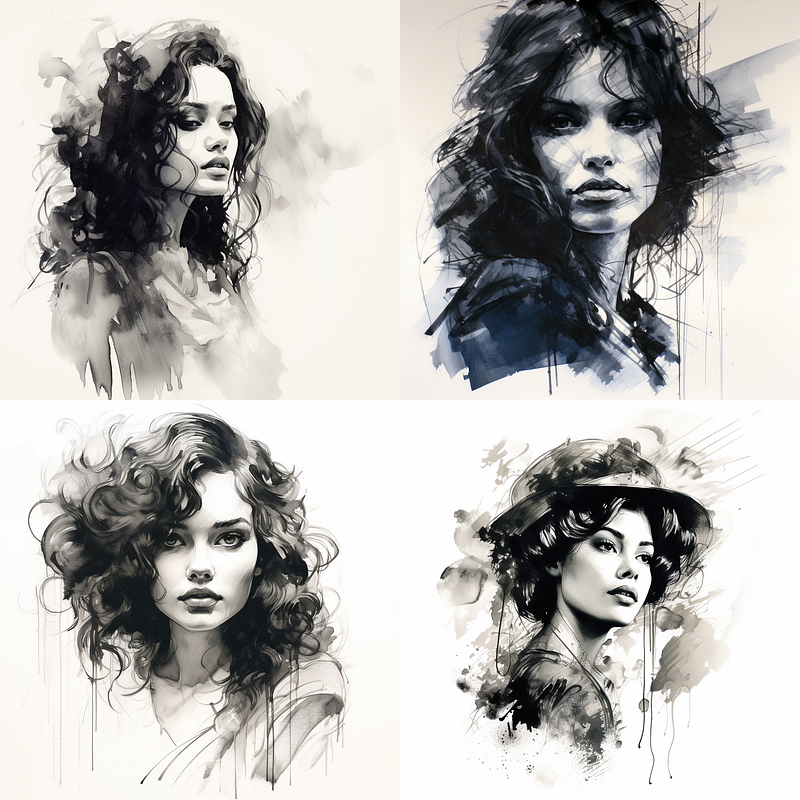
Prompt: “A beautiful young woman posing for a portrait, drawn in marker with Chiaroscuro-lighting and a midnight-color-palette”
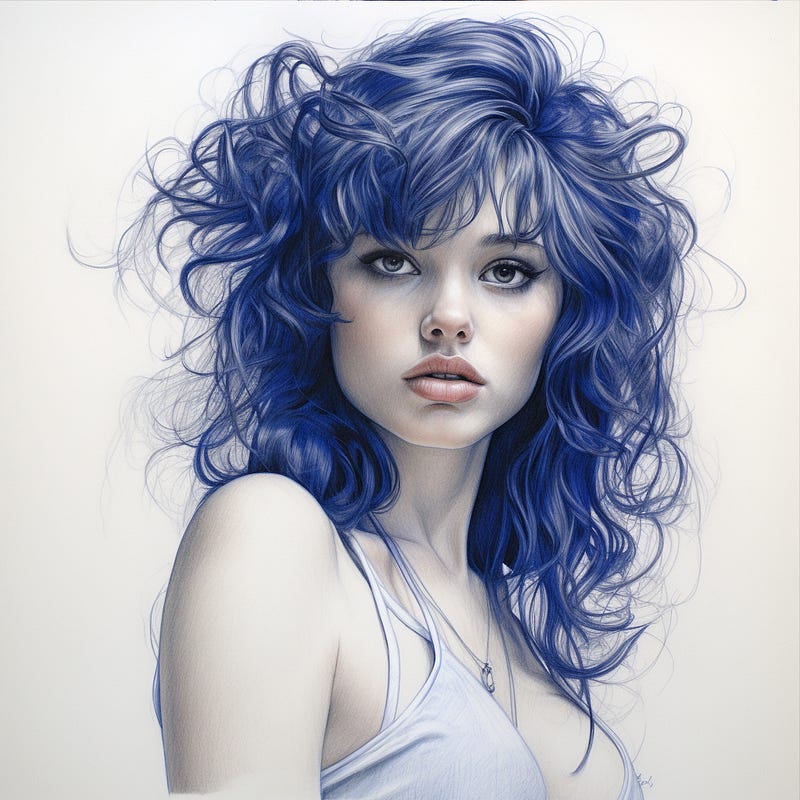
Prompt: “A beautiful young woman posing for a portrait, hand-drawn in colored-pencils, backlit by colored-lights, neon-color-palette”
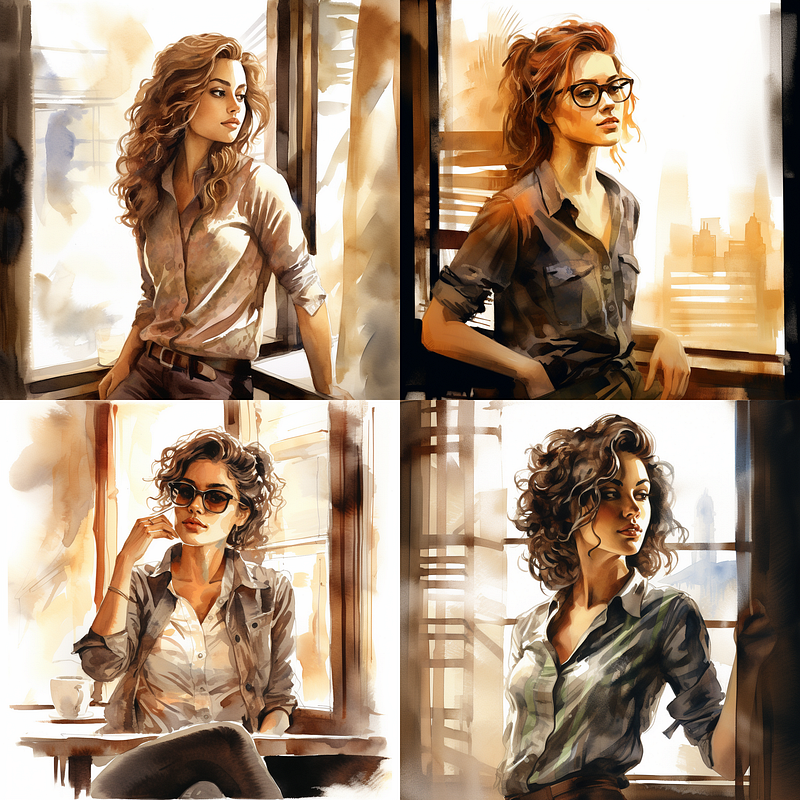
Prompt: “A beautiful young woman posing for a portrait, drawn in Line-and-Wash, directional-light-through-window-shades, vibrant-earth-tone-palette”
Prompt: “A beautiful young woman posing for a portrait, drawn in felt-tip-pen,cross-hatching-technique, muted-earth-tone-colors”

Down the Rabbit Hole of Generative AI

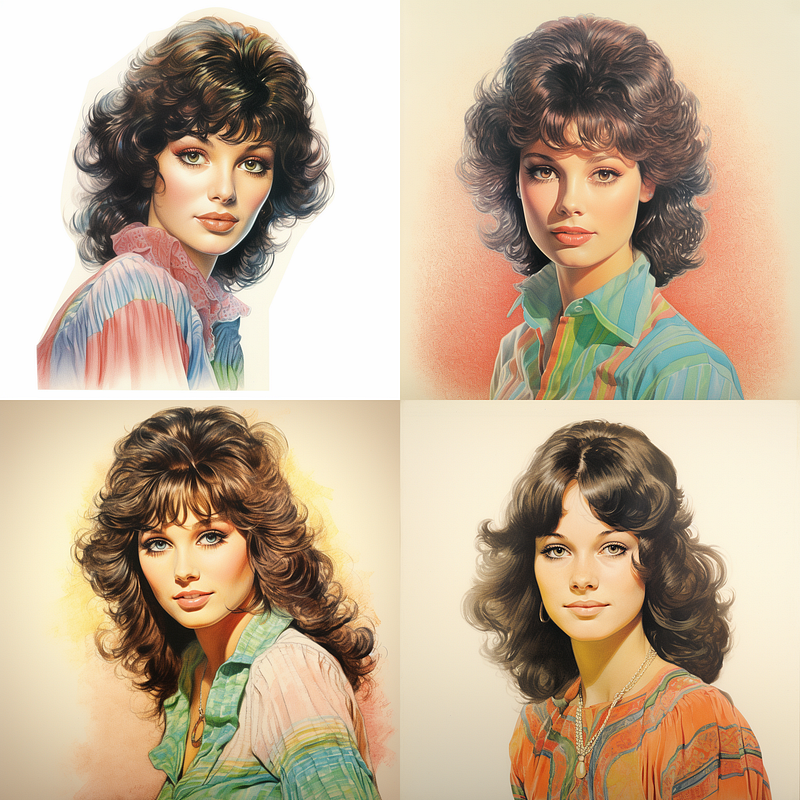
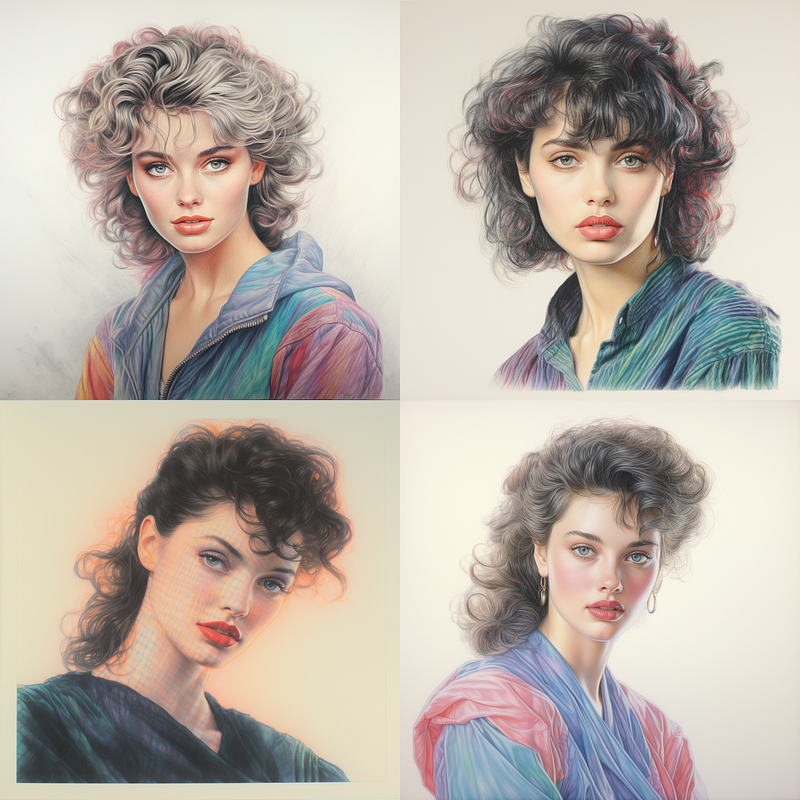
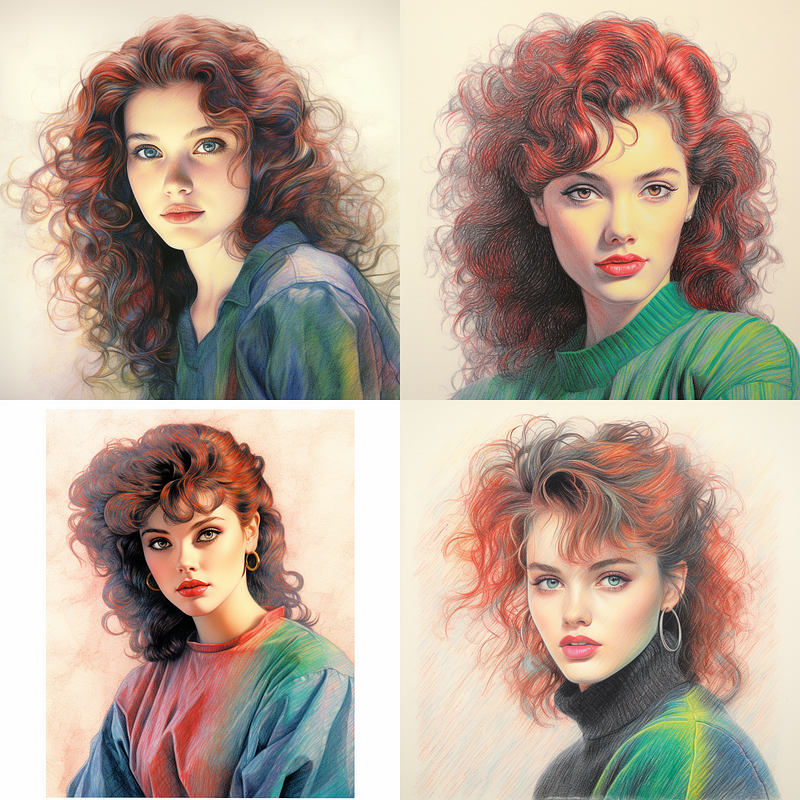
These next few illustrate the rule of unexpected consequences. The prompt asks for a 1950’s color palette and while it did give us that, it also strongly influenced the image created, giving us a very stylish woman from somewhere in the 1950s. And just because I couldn't help myself I took it up through the year 2000.
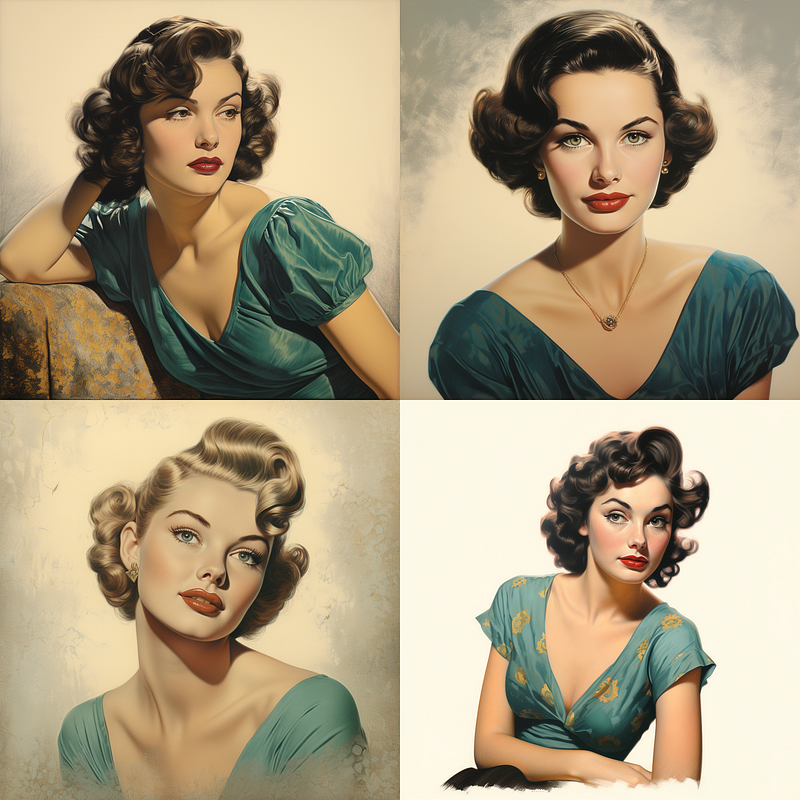
Prompt: “A beautiful young woman posing for a portrait, drawn in Litho-Crayons, using stippling-technique, 1950's-color-palette”
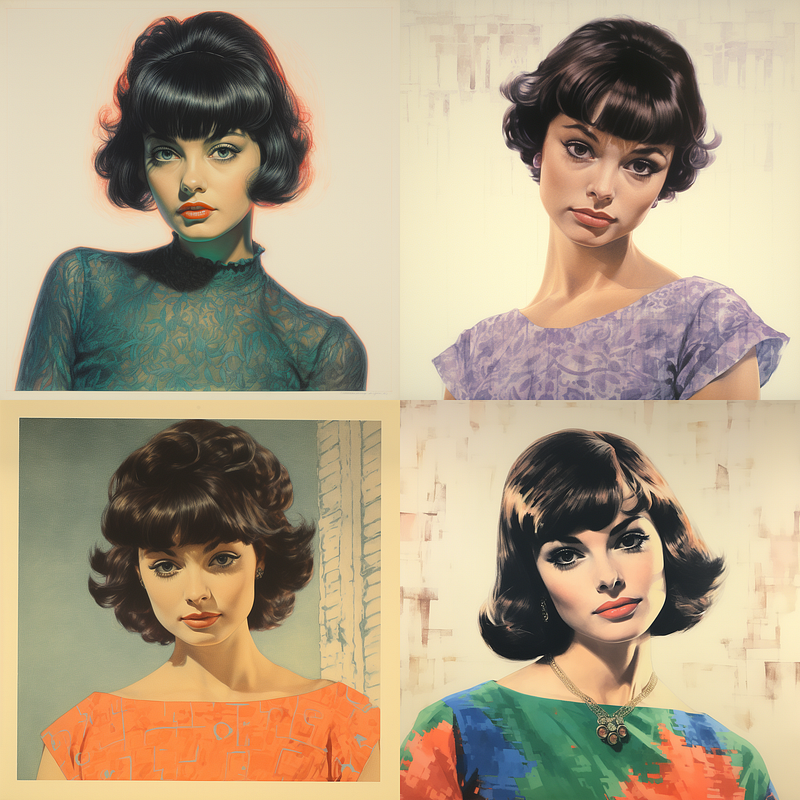
Prompt: “A beautiful young woman posing for a portrait, drawn in Litho-Crayons, using stippling-technique, 1960's-color-palette”
Prompt: “A beautiful young woman posing for a portrait, drawn in Litho-Crayons, using stippling-technique, 1970's-color-palette”
Prompt: “A beautiful young woman posing for a portrait, drawn in Litho-Crayons, using stippling-technique, 1980's-color-palette”
Prompt: “A beautiful young woman posing for a portrait, drawn in Litho-Crayons, using stippling-technique, 1990's-color-palette”
Prompt: “A beautiful young woman posing for a portrait, drawn in Litho-Crayons, using stippling-technique, 2000's-color-palette”

LOL, you can undoubtedly see how easy it is to fall down rabbit holes in Midjourney. What fascinates me is how the AI interpreted the suggestion of an era. It didn’t just influence the color palette as intended; it also gave us an intriguing perspective on how it ‘views’ a beautiful woman from each decade. Note how both hair and clothing styles were affected. As a final touch, I included one last prompt from the 1900s for comparison.
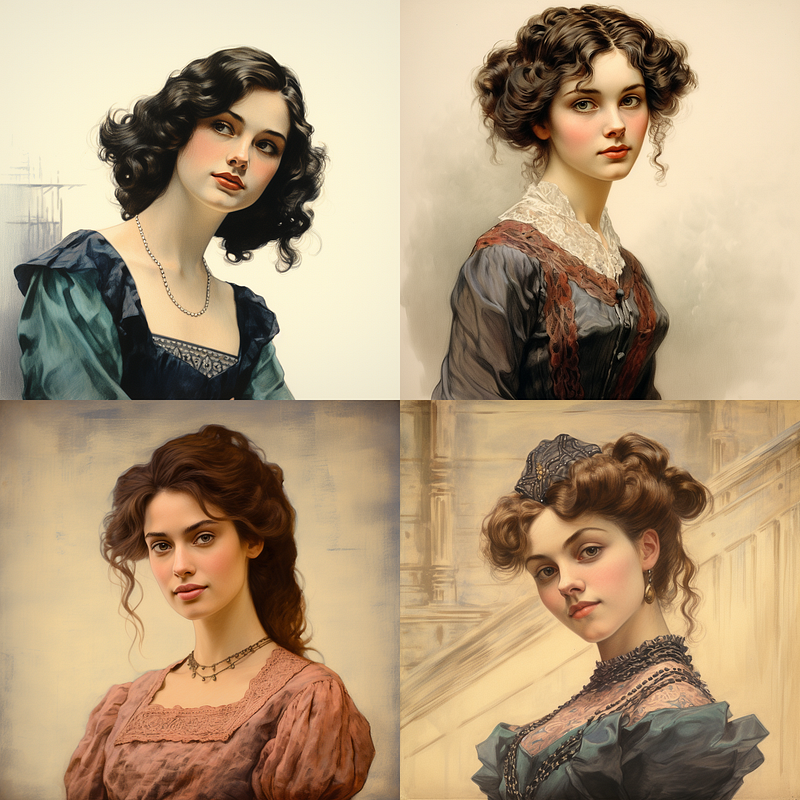
Prompt: “A beautiful young woman posing for a portrait, drawn in Litho-Crayons, using stippling-technique, 1900's-color-palette”

I was so caught up in the unintended effects of the eras that I completely missed that I did not end up with the stippling technique on any of these, but that may be that the Litho Crayons don’t lend themselves to that style or something, I am not familiar with them.

In Closing: Your Journey Through Midjourney

We’ve touched on an array of drawing art media and techniques, giving you the tools to bring your Midjourney visions to life. Remember, part of the joy in creating with Midjourney is the unexpected turns and the places your imagination takes you, even when they’re not what you initially aimed for. So, dive in, explore, and let your creativity roam free in this exciting digital landscape.

If you found this exploration helpful or simply enjoyed the read, please give it a clap or share it with others who might benefit. Stay tuned for the next installment of Midjourney Explorations, where we’ll delve even deeper into the endless possibilities this platform offers.
<< Previous Article: Midjourney Explorations: #3 — Lighting

Next Article: Midjourney Explorations: #5 — Art Media, Let’s Paint >>

A Message from AI Mind

Thanks for being a part of our community! Before you go:

Midjourney
Midjourney Prompts
Midjourney Ai
Generative Ai Tools
Drawing
Recommended from ReadMedium