avatarArthur Keith

Free AI web copilot to create summaries, insights and extended knowledge, download it at here

5024

Abstract

ust one sliver of Lake Mead. The Virgin River, one of the lake's major tributaries, is all but dry. Upriver, the growing metropolitan area of St. George, Utah, depends almost entirely on water from the Virgin, leaving just a trickle for the lake. Photo by NASA.</figcaption></figure><p id="77a7">Based on the level of Lake Mead, the lower Colorado River Basin (Nevada, Arizona, and California), a Tier 2 water shortage has been declared by the Bureau of Reclamation beginning January 1, 2023. Nevada will get 8% less water, Arizona 21%, and California will remain static, as they have “banked” water in Lake Mead from the past and have senior water rights. Mexico will also suffer.</p><p id="2ec0">California’s fortune, however, won’t last for long. The Bureau is demanding the states develop a plan to reduce usage by 2–4 million acre-feet of water in 2023. Arizona lost more water than any other state under the Tier 1 shortage, and Senator Mark Kelly (D-AZ) has said it is time for California to “step up to the plate.”</p><p id="34ee">In the meantime, more and more fields in the Yuma and Imperial valleys will be allowed to fallow. Government subsidies will cover some, but not all, of their losses.</p><p id="eb23">Further north in California, the Central Valley has overdrawn groundwater supplies to the extent that the land has fallen as much as 28 feet. Nuts are one of the mainstays of the area’s crops. Almonds, walnuts, and pistachios take an inordinate amount of water to grow.</p><p id="e91c">It takes about a gallon of water to grow one almond and a whopping 4.6 gallons to grow one walnut. Americans consume twice as many almonds as they did 15 years ago. The amount of water it takes to raise all of California’s almonds could provide water for all of Los Angeles’ homes and businesses for almost three years. 70% of the crop is exported, primarily to China and Japan.</p><p id="b6bb">Though not dependent on Colorado River water, thousands and thousands of the valley’s water wells have dried up, primarily in Fresno, Merced, and Tuolumne Counties.</p><figure id="c3a5"><img src="https://cdn-images-1.readmedium.com/v2/resize:fit:800/1*xw2LRv58RxXws24bSFfudQ.jpeg"><figcaption>North fork of the American River at Folsom Reservoir. This water source is part of what feeds the rice fields in the Northern part of California’s Central Valley. Dwindling resources led farmers to plant 50% less rice this year. Photo contributed by <a href="https://www.shutterstock.com/g/Parsons+Photography">Lisa Parsons</a> on Shutterstock.com.</figcaption></figure><h2 id="0ecc">What About Some Of Your Other Favorite Foods And Staples?</h2><p id="5516"><b>Oranges</b>: Hurricane Ian devastated Florida’s orange crop, causing fruit to fall and uprooting trees. Total production will be down 32% from the previous season, so expect an increase in orange juice prices.</p><p id="19ed"><b>Rice</b>: Grown in California’s upper Central Valley, the crop will be about half what it usually harvests. There wasn’t enough available water to plant, and rice growers generally have senior water rights. Knowing there wouldn’t be enough water to last the season, farmers opted not to plant. Ironically, California typically exports about half of its rice crop to China and Japan. (I am still scratching my head on that one.) Since rice products are an ingredient in many foods, watch for increases at the supermarket.</p><p id="612c"><b>Tomatoes</b>: California’s crop is forecast to be down about 10%. They produce about 30% of the world’s processed tomatoes, used in sauces, pastes, and ketchup. Their value has reached the highest prices on record this year. So think about your pizza, pasta sauces, and other products that require tomatoes. All are going up.</p><p id="193b"><b>Wheat</b>: In the U.S., hard red winter wheat is planted in the fall. This is used in bread, a staple. Spring wheat is used to make items like bagels and pizza dough. Unfortunately, the winter wheat harvest was down 25% due to drought, and then high rainfall and a late winter storm dashed hopes for a good spring wheat crop. So there’s your pizza again.</p><p id="9628"><b>Green Chile</b>: As a New Mexican, I couldn’t resist seeing how our biggest crop fared. An unusually heavy monsoon rainfall in the growing area and a labour shortage about halved this year’s harvest. Too much rain gave it root rot. Parts of the state recorded the wettest monsoon season since 1893. Chile favours drier weather and weekly rainfall. So expect to pay higher prices for all those green chile cheeseburgers we consume.</p><figure id="679e"><img src="https://cdn-images-1.readmedium.com/v2/resize:fit:800/1*qYO7GGeHwKQWr5XiJ7di4g.jpeg"><figcaption>With very little grass to eat, ranchers must rely on hay and alfalfa to feed their cattle herds. Then, with growers planting less feed because of fallowing, prices increase. It’s all a vicious circle. Photo contributed by <a href="https://www.shutterstock.com/g/NadyaKubik">Nadya Kubik</a> on Shutterstock.com.</figcaptio

Options

n></figure><p id="313b"><b>Beef</b>: You may remember the die-off of more than 2,000 head of cattle in western Kansas due to an early-season heat wave that lasted for days and did not subside at night. The rest of the nation’s herd is susceptible to the lack of decent rangeland, water, and much higher feed prices.</p><p id="cda3">You may want to move away from beef products as your primary source of protein and get used to it. More than 2.66 million cattle have been sold this year, a 480,000 increase from last year. Inflation is also prompting ranchers to sell. On top of the water, feed, fuel, and fertilizer prices increased. A Texas A&M marketing specialist said to expect tighter supplies and higher prices in the coming years. <i>Years</i>.</p><h2 id="ba9f">So Who’s Fault Is Inflation Anyway?</h2><p id="b2d1">Stop blaming Joe Biden and the Dems for inflation.</p><p id="4193">It’s climate change, stupid! Not all, but a good part.</p><p id="1e31">Remember that idea of running a pipeline from the Mississippi River to the West to solve their water woes? Yeah.</p><p id="49d4">The more I delve into this topic, the more I believe that food shortages could be our demise if we don’t do something — 40 years ago.</p><p id="d7a7">Widespread famine is already occurring in Somalia, where the rainy season has failed to develop for five consecutive years. In August alone, 44,000 children were admitted to healthcare facilities with severe acute malnutrition, or a child a minute. Due to conflict and a lack of food, the same thing is occurring in Yemen. Farmers are growing <i>Qat</i> (also known as Khat), a narcotic, instead of food, as it fetches more money.</p><p id="e4bf">Food. It’s what’s for dinner. Use it wisely.</p><p id="2584">Sources include:</p><ul><li>“As Colorado River Dries, the U.S. Teeters on the Brink of Larger Water Crisis” by Abraham Lustgarten in <i>ProPublica</i>, 8/25/2022</li><li>“Farmers Struggle as Texas Cotton Fields Decimated by Extreme Heat, Drought” by Chris Oberholtz on FoxNews Lubbock, 9/13/2022</li><li>“Drought Forces Record Number of Cattle Sold in Texas” by Julie Tomascik in <i>Texas Agriculture Daily</i>, 9/14/2022</li><li>“California’s Almonds Suck as Much Water Annually as Los Angeles Does in Three Years” by Julia Lurie in <i>Mother Jones</i>, 1/12/2015</li><li>“Somalia Faces Worst Famine in Half a Century, UN Warns” in Aljazeera, 10/18/2022</li><li>KTLA-5 News Los Angeles, 8/22/2022</li><li>“Waterlogged Wheat, Rotting Oranges: Five Crops Devastated By a Year of Extreme Weather” by Cecilia Nowell in <i>The Guardian</i>, 10/1/2022</li></ul><p id="ab3a"><i>This is Part 9 of The Megadrought Series. For the backstory, below are links to Parts 4 and 5. For all the stories, check out my library by entering “@artsma57” in the search bar on the home page, click on “People,” and then click on my picture, which takes you to my library.</i></p><div id="2350" class="link-block"> <a href="https://readmedium.com/the-american-west-long-on-people-short-on-water-a56ecb0a38c2"> <div> <div> <h2>The American West: Long on People, Short on Water</h2> <div><h3>Part 4A: As the Colorado River Goes, So Goes The West</h3></div> <div><p>medium.com</p></div> </div> <div> <div style="background-image: url(https://miro.readmedium.com/v2/resize:fit:320/1*BNmrjeL3JTDw7eQ_7Zqu6g.jpeg)"></div> </div> </div> </a> </div><div id="e00c" class="link-block"> <a href="https://readmedium.com/how-the-west-went-dry-b7eeaed0a653"> <div> <div> <h2>How The West Went Dry</h2> <div><h3>The history behind the West’s megadrought, simplified</h3></div> <div><p>medium.com</p></div> </div> <div> <div style="background-image: url(https://miro.readmedium.com/v2/resize:fit:320/1*W8BsU_Q7TsAF-KBV3bvJOw.jpeg)"></div> </div> </div> </a> </div><p id="0657">If you like to read, consider subscribing to Medium. For the price of a monthly magazine ($5/month), you’ll have access to all of my stories and thousands of other writers. And I’ll get a wee bit! Just click the link below.</p><div id="ccad" class="link-block"> <a href="https://artsma57.medium.com/membership"> <div> <div> <h2>Join Medium with my referral link - Arthur Keith</h2> <div><h3>Read every story from Arthur Keith (and thousands of other writers on Medium). Your membership fee directly supports…</h3></div> <div><p>artsma57.medium.com</p></div> </div> <div> <div style="background-image: url(https://miro.readmedium.com/v2/resize:fit:320/0*XDfMDOzxQPSFgWvh)"></div> </div> </div> </a> </div></article></body>

THE MEGADROUGHT SERIES, PART 9

Megadrought Threatens Our Food Supply

Climate change will cause inflation and shortages.
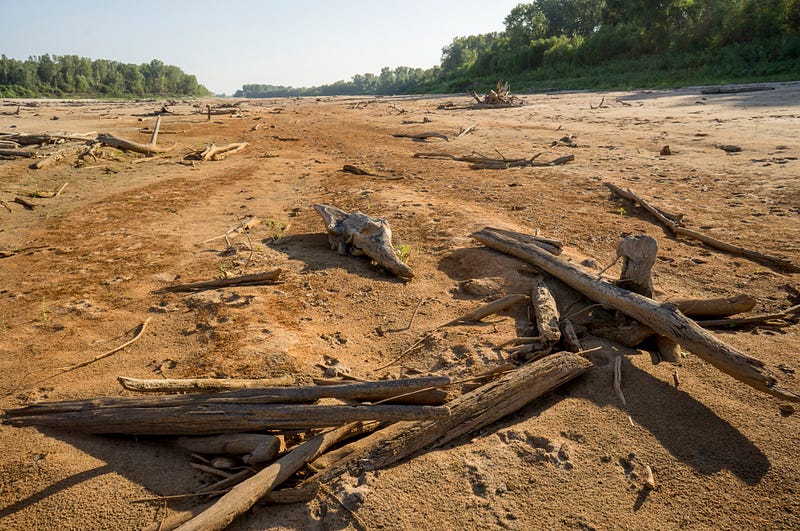
The not-so-mighty Mississippi River in October. This is near where one of its main tributaries, the Missouri River, meets it for its trip to the sea. Great for driftwood collectors, but not so much for the economy. The river is at its lowest in recorded history. Photo by Danita Delimont on Shutterstock.com.

Perspective

Climate change is a global phenomenon. I see it from my own backyard here in Albuquerque, New Mexico, as our region is a poster child for its consequences.

As I’ve travelled the Southwest, I’ve seen the results of the megadrought up close. But, of course, climate change indicates much more than drought. A warmer atmosphere retains more water, which produced “1,000-year” rain events in southeastern Kansas and Illinois, Indiana, and Kentucky last summer— twice! Moist soil produces more rain. It also intensifies hurricanes, like Hurricane Ian.

Many of the above areas then went through “flash droughts.” As summer wore on and temperatures increased. But without significant storm systems in ensuing months, those areas quickly dried out. This affected the tributaries of the Ohio River and, thus, the flow of Ohio itself. This was mirrored in areas west of the Mississippi. Flash droughts hit the tributaries of the “old man river.” As a result, the Mississippi plunged to its all-time lowest level in late October.

Like the West, drought in the Midwest is an area of grave concern. This is where most of our corn and wheat are grown. Extreme drought has increased in size over Kansas, Nebraska, and the panhandles of Texas of Oklahoma.
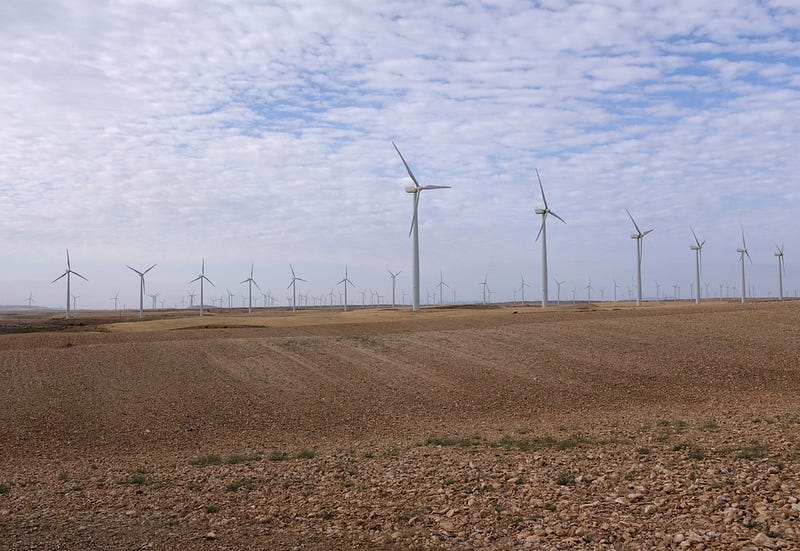
Wind energy is about the only thing that’s being harvested in southwestern Kansas. As more and more farmland goes fallow, the possibility of dust storms and wildfires increases. Photo contributed by Juan Gordillo on Shutterstock.com.

Then the corn and wheat couldn’t be transported to the market for export because the obstruction of the lack of water in the Mississippi prohibited barge traffic.

It’s all interrelated.

Most of the cotton crop was lost to drought this year. Texas has bounced from no drought in 2021 to a short-term and long-term drought in 2022, which makes choosing which crops to plant and when extremely hard to predict. As well, cotton farmers in Pinal County, Arizona (between Phoenix and Tucson), another major cotton growing area, have seen their crops go dry, as all irrigation from Colorado has been cut off, and wells have run dry.

Expect to pay more for your clothing items in the coming years.

The Ogallala Aquifer, covering a vast area of the country, is rapidly drying up in its southern component, and to the degree that it’s been pumped, it could take 6,000 years to replenish. These areas are suffering from desertification, and they may not be able to grow our staples at all in the future.
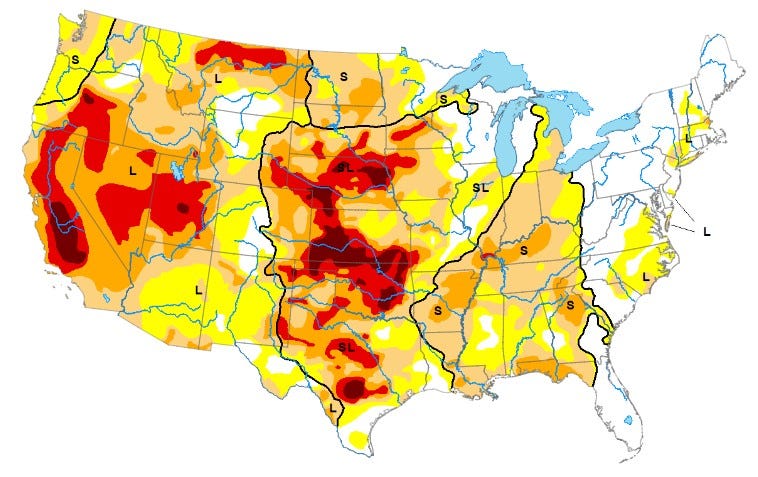
The U.S. Drought Monitor Map as of 11–22–2022. As you can see, from North Dakota south to Oklahoma and most of Texas, the land is almost in 100% drought. The darker the red, the more extreme the drought in that area. In all, 13 states are entirely covered by drought.

A Salad With Your Meal Could Become A Thing Of The Past

California’s Imperial Valley, in the extreme southern part of the state and bordering Mexico, is known as the nation’s salad bowl. It is the single-heaviest user of water from the Colorado River. There’s not much water left for Mexico beyond where the All-American Canal siphons off that water.

Many crops grown there have high water needs: onions, cabbage, cauliflower, broccoli, and eggplant, for instance. On the other hand, lettuces, cantaloupe, carrots, sweet corn, spinach, and watermelons require less water. Most of these crops are grown in the cooler winter months. But alfalfa grown for livestock feed is the #1 crop, along with hay. This requires the most water because it’s the most heavily planted crop and grows year-round.

They’re all at risk.
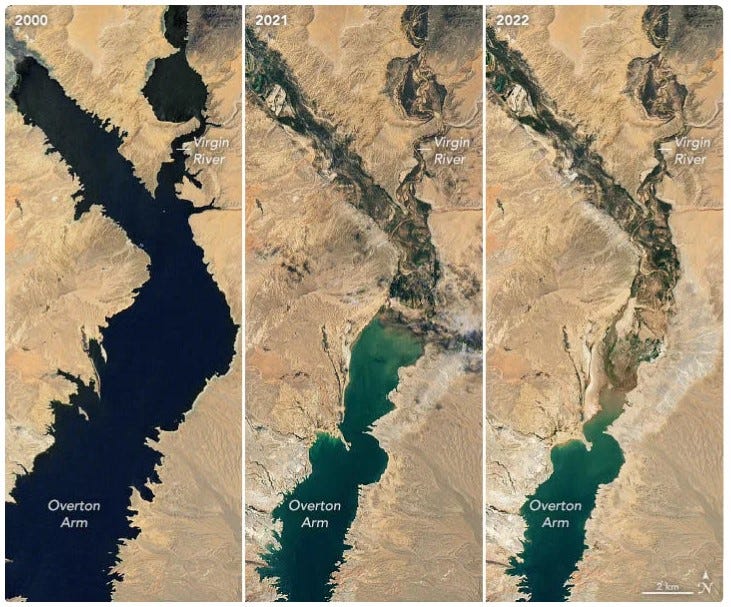
Photos indicate the regression of just one sliver of Lake Mead. The Virgin River, one of the lake's major tributaries, is all but dry. Upriver, the growing metropolitan area of St. George, Utah, depends almost entirely on water from the Virgin, leaving just a trickle for the lake. Photo by NASA.

Based on the level of Lake Mead, the lower Colorado River Basin (Nevada, Arizona, and California), a Tier 2 water shortage has been declared by the Bureau of Reclamation beginning January 1, 2023. Nevada will get 8% less water, Arizona 21%, and California will remain static, as they have “banked” water in Lake Mead from the past and have senior water rights. Mexico will also suffer.

California’s fortune, however, won’t last for long. The Bureau is demanding the states develop a plan to reduce usage by 2–4 million acre-feet of water in 2023. Arizona lost more water than any other state under the Tier 1 shortage, and Senator Mark Kelly (D-AZ) has said it is time for California to “step up to the plate.”

In the meantime, more and more fields in the Yuma and Imperial valleys will be allowed to fallow. Government subsidies will cover some, but not all, of their losses.

Further north in California, the Central Valley has overdrawn groundwater supplies to the extent that the land has fallen as much as 28 feet. Nuts are one of the mainstays of the area’s crops. Almonds, walnuts, and pistachios take an inordinate amount of water to grow.

It takes about a gallon of water to grow one almond and a whopping 4.6 gallons to grow one walnut. Americans consume twice as many almonds as they did 15 years ago. The amount of water it takes to raise all of California’s almonds could provide water for all of Los Angeles’ homes and businesses for almost three years. 70% of the crop is exported, primarily to China and Japan.

Though not dependent on Colorado River water, thousands and thousands of the valley’s water wells have dried up, primarily in Fresno, Merced, and Tuolumne Counties.
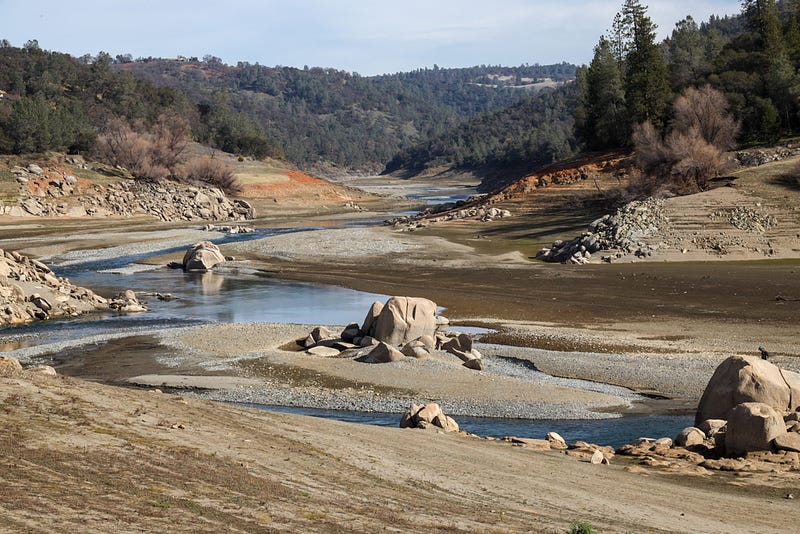
North fork of the American River at Folsom Reservoir. This water source is part of what feeds the rice fields in the Northern part of California’s Central Valley. Dwindling resources led farmers to plant 50% less rice this year. Photo contributed by Lisa Parsons on Shutterstock.com.

What About Some Of Your Other Favorite Foods And Staples?

Oranges: Hurricane Ian devastated Florida’s orange crop, causing fruit to fall and uprooting trees. Total production will be down 32% from the previous season, so expect an increase in orange juice prices.

Rice: Grown in California’s upper Central Valley, the crop will be about half what it usually harvests. There wasn’t enough available water to plant, and rice growers generally have senior water rights. Knowing there wouldn’t be enough water to last the season, farmers opted not to plant. Ironically, California typically exports about half of its rice crop to China and Japan. (I am still scratching my head on that one.) Since rice products are an ingredient in many foods, watch for increases at the supermarket.

Tomatoes: California’s crop is forecast to be down about 10%. They produce about 30% of the world’s processed tomatoes, used in sauces, pastes, and ketchup. Their value has reached the highest prices on record this year. So think about your pizza, pasta sauces, and other products that require tomatoes. All are going up.

Wheat: In the U.S., hard red winter wheat is planted in the fall. This is used in bread, a staple. Spring wheat is used to make items like bagels and pizza dough. Unfortunately, the winter wheat harvest was down 25% due to drought, and then high rainfall and a late winter storm dashed hopes for a good spring wheat crop. So there’s your pizza again.

Green Chile: As a New Mexican, I couldn’t resist seeing how our biggest crop fared. An unusually heavy monsoon rainfall in the growing area and a labour shortage about halved this year’s harvest. Too much rain gave it root rot. Parts of the state recorded the wettest monsoon season since 1893. Chile favours drier weather and weekly rainfall. So expect to pay higher prices for all those green chile cheeseburgers we consume.
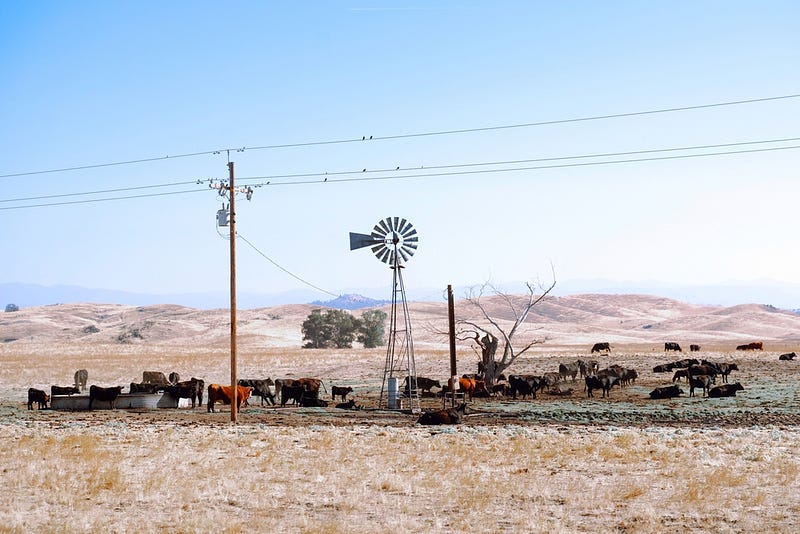
With very little grass to eat, ranchers must rely on hay and alfalfa to feed their cattle herds. Then, with growers planting less feed because of fallowing, prices increase. It’s all a vicious circle. Photo contributed by Nadya Kubik on Shutterstock.com.

Beef: You may remember the die-off of more than 2,000 head of cattle in western Kansas due to an early-season heat wave that lasted for days and did not subside at night. The rest of the nation’s herd is susceptible to the lack of decent rangeland, water, and much higher feed prices.

You may want to move away from beef products as your primary source of protein and get used to it. More than 2.66 million cattle have been sold this year, a 480,000 increase from last year. Inflation is also prompting ranchers to sell. On top of the water, feed, fuel, and fertilizer prices increased. A Texas A&M marketing specialist said to expect tighter supplies and higher prices in the coming years. Years.

So Who’s Fault Is Inflation Anyway?

Stop blaming Joe Biden and the Dems for inflation.

It’s climate change, stupid! Not all, but a good part.

Remember that idea of running a pipeline from the Mississippi River to the West to solve their water woes? Yeah.

The more I delve into this topic, the more I believe that food shortages could be our demise if we don’t do something — 40 years ago.

Widespread famine is already occurring in Somalia, where the rainy season has failed to develop for five consecutive years. In August alone, 44,000 children were admitted to healthcare facilities with severe acute malnutrition, or a child a minute. Due to conflict and a lack of food, the same thing is occurring in Yemen. Farmers are growing Qat (also known as Khat), a narcotic, instead of food, as it fetches more money.

Food. It’s what’s for dinner. Use it wisely.

Sources include:

  • “As Colorado River Dries, the U.S. Teeters on the Brink of Larger Water Crisis” by Abraham Lustgarten in ProPublica, 8/25/2022
  • “Farmers Struggle as Texas Cotton Fields Decimated by Extreme Heat, Drought” by Chris Oberholtz on FoxNews Lubbock, 9/13/2022
  • “Drought Forces Record Number of Cattle Sold in Texas” by Julie Tomascik in Texas Agriculture Daily, 9/14/2022
  • “California’s Almonds Suck as Much Water Annually as Los Angeles Does in Three Years” by Julia Lurie in Mother Jones, 1/12/2015
  • “Somalia Faces Worst Famine in Half a Century, UN Warns” in Aljazeera, 10/18/2022
  • KTLA-5 News Los Angeles, 8/22/2022
  • “Waterlogged Wheat, Rotting Oranges: Five Crops Devastated By a Year of Extreme Weather” by Cecilia Nowell in The Guardian, 10/1/2022

This is Part 9 of The Megadrought Series. For the backstory, below are links to Parts 4 and 5. For all the stories, check out my library by entering “@artsma57” in the search bar on the home page, click on “People,” and then click on my picture, which takes you to my library.

If you like to read, consider subscribing to Medium. For the price of a monthly magazine ($5/month), you’ll have access to all of my stories and thousands of other writers. And I’ll get a wee bit! Just click the link below.

Climate Change
Food
Drought
Science
Mississippi River
Recommended from ReadMedium