
“Maude” at 50: Celebrating a TV Classic’s Golden Anniversary
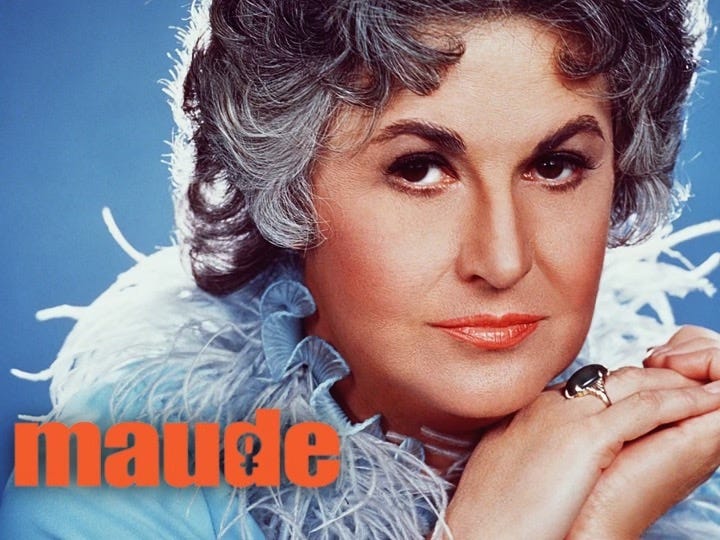
September 12 marked 50 years since Maude premiered on CBS. The Emmy-winning spinoff of All in the Family instantly became one of TV’s most-watched shows, made Bea Arthur an icon, and tackled hot-button contemporary issues with a boldness that has never been matched. Here, I pay tribute to the show’s legacy and countdown its 25 best episodes.
When I was a young teenager I fell in love with The Golden Girls through the reruns that looped endlessly on cable. It coincided with my burgeoning obsession with film and television history, which I devoured through a number of books. I became fascinated by the existence of the series Maude, a critically acclaimed mega-hit that wrapped its run 6 years before I was even born. I read about how it was one of the boldest comedies in television history and how it rocketed Bea Arthur (always my favorite of the Golden Girls) to superstardom.
Unfortunately, it was impossible for me to watch it. It didn’t air in syndication and it was not available on home media.
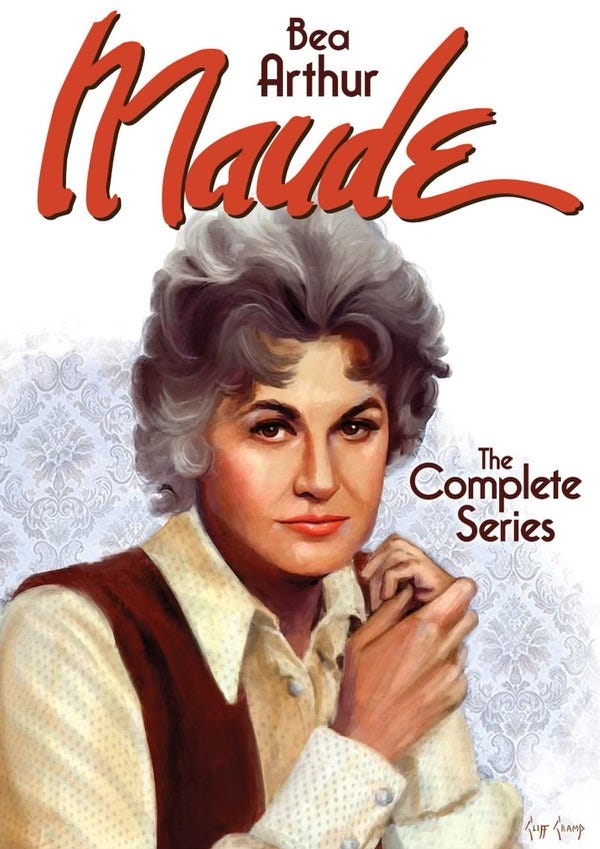
In 2015, Shout! Factory released the entire series on DVD. It was lovingly restored in a box set that was brimming with special features. I purchased it instantly, but I never quite got around to watching it. It always seemed like such an investment to watch a 141-episode series from start to finish. Plus, who used DVD players anymore?
Nevertheless, I decided that I would finally watch the whole series this year in honor of its 50th anniversary. Over the course of 97 days, I watched all 141 episodes of the series, as well as all of the special features. In this article, I take a deep dive into the series and rank the 25 best episodes.
The Origin of Maude
Norman Lear’s All in the Family may just be the most critically and commercially successful sitcom in American history. Most series have to settle for being #1 on the Nielsen ratings or Emmy-dominating juggernauts, but All in the Family is one of the few that did both. By the time its 2nd season began in the fall of 1971, it was the most popular show on television, a distinction it held onto for 5 consecutive years. The series won a whopping 22 Emmys during its run including 4 trophies for Outstanding Comedy Series and 10 trophies for its leading actors Carroll O’Connor, Jean Stapleton, Sally Struthers, and Rob Reiner. (It was the first series in history to have its entire regular cast win acting Emmys and was later joined by The Golden Girls and Will & Grace.)
All in the Family ushered in an era of topical sitcoms that used the traditionally wholesome format to tackle taboo social issues. Given the huge percentage of American eyeballs tuned in to the 3 television networks in the 1970s, a popular sitcom was just about the most effective way to communicate to the masses. Lear knew that and used it to his full advantage. All in the Family was about a bigoted, simple-minded, working class conservative named Archie Bunker (Carroll O’Connor), his “dingbat” wife Edith (Jean Stapleton), his daughter Gloria (Sally Struthers), and his hippie son-in-law Mike aka Meathead (Rob Reiner). The show delved into countless controversial issues like racism, rape, homosexuality, antisemitism, feminism, and the Vietnam War.
During the show’s blockbuster 2nd season, the creative team thought it would be funny to have Archie go toe-to-toe with an equally domineering (and hilarious) liberal. Lear called up his friend Beatrice Arthur (who was already well-known for her work on Broadway, having originated the role of Yente in Fiddler on the Roof and Vera Charles in Mame). She was cast in a one-off guest appearance in the episode “Cousin Maude” as Maude Findlay, Edith’s thrice-divorced liberal cousin. She arrives to take care of the Bunkers when all 4 come down with a debilitating flu. The episode is a comedy classic in no small part to Arthur’s ferocious and razor-sharp performance as she eviscerates Archie and everything he stands for.
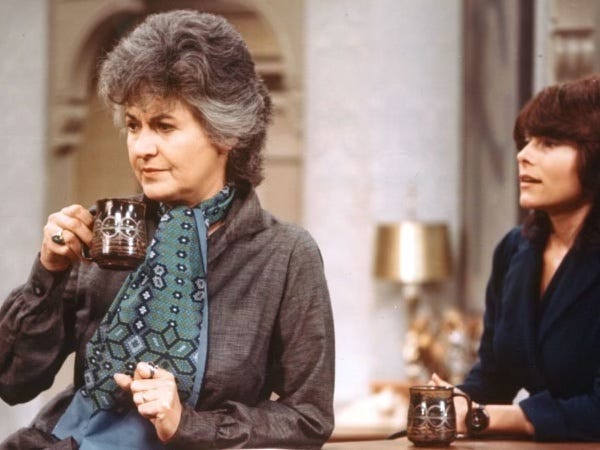
In one of the documentaries that accompanies Maude’s DVD release, Lear reveals that before the episode even finished airing he was getting calls from the network brass about spinning Maude off into her own series. And that’s exactly what happened. The 2nd season finale of All in the Family served as a “backdoor pilot” for Maude as it featured the Bunkers but ostensibly was about introducing Maude’s universe and setting up the new show. That episode was a comedy gem as well and left little doubt that when Maude debuted on CBS in the fall, it would be something very special.
Maude’s 1972–1978 Run
Maude premiered on September 12, 1972. It anchored CBS’s Tuesday night lineup airing at 8pm and became an instant smash. It finished the season as the 4th most watched show in America, behind only All in the Family, Sanford and Son, and Hawaii Five-O. To say that it was an out-of-the-box smash hit would have been an understatement.
Season 1 (1972–1973). The 1st season primarily focuses on Maude Findlay, her 4th husband Walter (Bill Macy), and her divorced daughter Carol (Adrienne Barbeau). Macy’s twitchy exasperation and Barbeau’s nonchalant eye-rolling both provide an excellent balance to Maude’s theatrics. Recurring characters include the Findlay’s conservative next-door neighbor Arthur (Conrad Bain), black housekeeper Florida Evans (Esther Rolle), Carol’s young son Phillip (Brian Morrison), and Maude’s long-time best friend Vivian (Rue McClanahan). The talent of the ensemble is evident right away, but the 1st season really showcases the character of Maude Findlay at the expense of all else. She is a remarkably complex and difficult character, being prone to hysterics, mood swings, narcissism, hypocrisy, bossiness, and crippling insecurity. Bea Arthur has complete command of the character and fully devotes herself to it, but her character is often maddening and occasionally hard to root for.
Not only was Maude an instant hit, but it was also an instant lightning rod for controversy. After airing only 8 episodes, Maude aired a 2-part episode entitled “Maude’s Dilemma” where the subject of abortion was addressed head-on in a way that still seems bold by today’s standards (particularly with the Supreme Court’s recent dangerous and disgraceful ruling on Roe v. Wade.) I mean, the lead character of one of television’s most popular sitcoms had an abortion before it was even legal at the federal level! Even if the episode wasn’t a television masterpiece (it is), Maude would have made its way into the history books just for tackling that plot line. Other episodes in the 1st season take on issues such as marijuana, racial equality, infidelity, death, divorce, and medical malpractice. The 1st season worked best when it focused on its bold, razor-sharp satire and excellent ensemble, but struggled a bit when it got mired too deeply in existentialism, marital discord, or drama.
Season 2 (1973–1974). The 2nd season of Maude is a notable improvement over the 1st, with many of the initial kinks worked out. The ensemble is much better developed at this point and operates superbly. The relative weak links that are Carol and Phillip are given decidedly short shrift, while Arthur, Florida, and Vivian find their roles markedly expanded. The latter is the most notable change from Season 1, with Vivian going from a guest star in 2 episodes to a bona fide regular. It is great to have Maude face off with someone of her own age and class, as it provides a completely different dynamic than she has with Carol or Florida. It certainly doesn’t hurt that Vivian is played by a pitch-perfect Rue McClanahan, who would reunite with Bea Arthur on The Golden Girls a dozen years later.
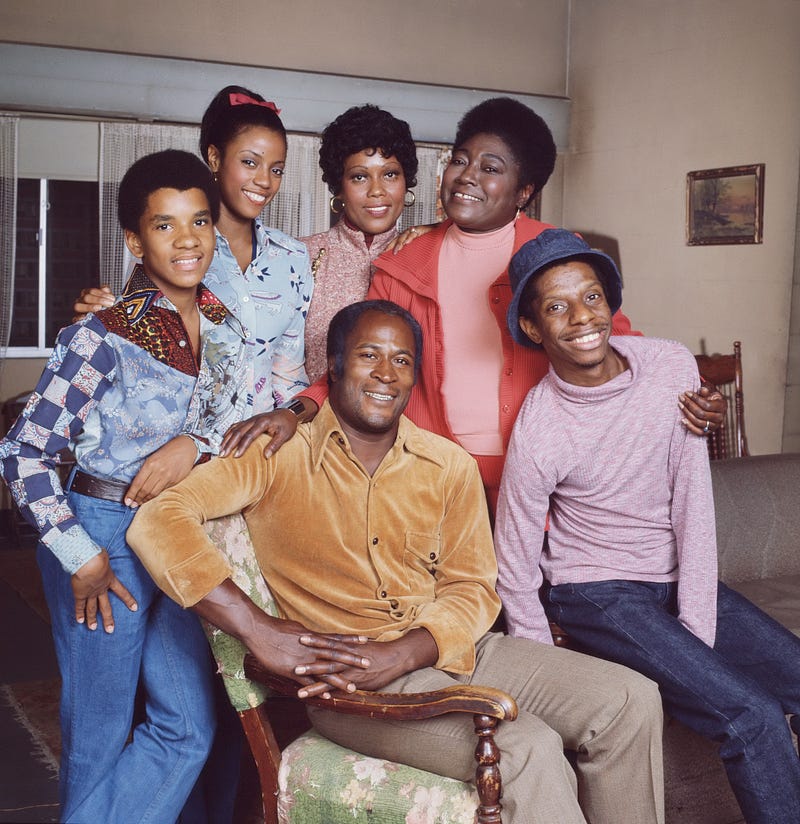
The plot lines also work better in Season 2. There are some notable weak links like Walter getting an electric organ and the 2 episodes focused on Francie (a tough-talking black girl “from the ghetto.”) But for the most part, the plots are audacious and inspired — Walter is forced to confront his alcoholism, Maude decides to get plastic surgery, Maude confronts her rapist, Maude discovers that Walter has set up Arthur as her conservator if he dies, Florida deals with sexual harassment, and Walter’s employees form a union. In addition to perfectly executing these “issue” episodes, the show also seems more comfortable with and better at executing filler episodes this year, with several of the lighter episodes being better this time around. It also helps that the writers and Arthur perfected the character of Maude by the start of the 2nd season. She remains deeply complicated and certainly behaves despicably at times, but you’re always in her court as the writers imbue her with just the right amount of charm and heart to offset her decidedly more prickly elements. Unfortunately, the show did lose one of its greatest characters at the end of its 2nd season as the no-nonsense Florida Evans bid farewell (Esther Rolle left to headline her own spinoff Good Times, which was the 1st spinoff of a spinoff).
Season 3 (1974–1975). Against the odds, Maude’s steady improvement in quality continued into its 3rd season. Florida was replaced by another housekeeper who is in many ways her polar opposite. Mrs. Nell Naugatuck is a brash Brit with a cockney accent, a staunch belief in traditional gender roles, and a habit of stretching the truth. In the hands of Oscar nominee Hermione Baddeley, a role that could have been irritatingly over-the-top becomes a classic comic creation. Her wild stories and sassy retorts result in her stealing scenes left and right and Baddely’s commitment to the bawdy role is mightily impressive.
Mrs. Naugatuck isn’t the only female foil for Maude in Season 3. This season, Rue McClanahan’s Vivian fully comes into her own as a character. She is more naturally integrated into the plot lines now that she is married to Arthur and the rocky start to their marriage and Vivian’s emerging feminist streak provide rich comic fodder. In these episodes, McClanahan finally shows glimpse of the absolute comic powerhouse she would prove to be on The Golden Girls. With their roles so prominent, others were bound to recede and this is precisely what happens to Walter and Carol. Even Maude has less grand, dramatic showcases this season. Sure, we see Maude meet John Wayne, get promoted at work, have a hysterectomy, and get a visit from her mother, but she feels a bit more like part of an ensemble this year. Overall, the 3rd season actually has a couple fewer classic episodes than the prior one, but the quality is much more consistent with the vast majority of episodes being very strong.
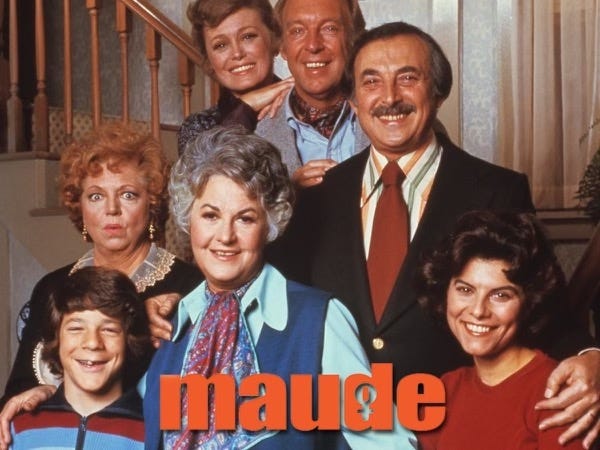
Season 4 (1975–1976). Maude continued to defy the odds by getting even better in its 4th season, which begins with a remarkably ambitious 5-episode arc that finds Maude running for New York State Senator. She is absolutely thrilled with the prospect, but Walter tells her she must choose between political office and her marriage as he refuses to have a part-time wife. The arc is rich with character drama, political satire, and big laughs. Maude loses the election, but her political fervor remains a strong element of the remainder of the season. It is particularly evident in the 2-part masterpiece “Maude’s Mood,” where her relentless work on a high-profile political campaign forces Maude to confront her bipolar disorder. Another episode that delves into Maude’s mental health is “The Analyst,” an experimental episode that unfolds in real time and features an all-timer of a performance from Arthur. (More on both of those episodes below).
The season is not all as weighty as the aforementioned 8 episodes, though. The rest are decidedly lighter. In particularly uproarious episodes, Vivian’s dog dies while in Maude’s custody, Maude tries to get to the root of who broke her priceless punch bowl, Maude hires an ex-convict to temporarily replace Mrs. Naugatuck, and the ensemble puts on a musical spectacular to celebrate the U.S. bicentennial. Although Bea Arthur dominates this season, the supporting cast is in fine form with Baddely, Macy, and Bain making the most of their showcase episodes and McClanahan standing out spectacularly. By the 4th season, the character of Vivian has evolved into an absolute powerhouse. McClanahan’s brilliant line delivery, perfectly pitched naivete, emerging feminism, and general horniness make for a fully rounded character that is highly underrated in television history.
Season 5 (1976–1977). After a mightily impressive 4-season stretch where each season improved in overall quality, Maude finally took a downturn in quality its 5th season. It also started to struggle in the ratings, where it left the top 10 for the first time, tumbling from #4 to #31. The 5th season is not lacking in classic episodes or ambition, but it does disappointingly revert to the unevenness in quality that marked the 1st season.
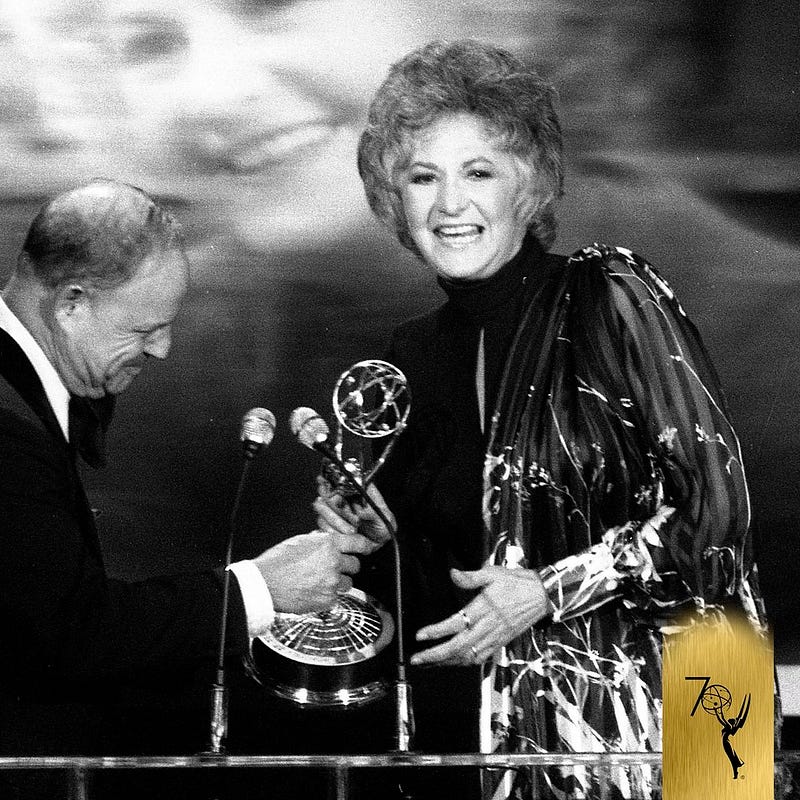
Early in the season, we get a 3-episode arc that may be Maude’s weightiest yet. Walter experiences a major financial downturn and is forced to declare bankruptcy. Without work or financial stability, he becomes deeply ashamed and attempts suicide. He eventually returns home after a stay in a mental health facility. Most of the rest of the season is significantly lighter, but numerous taboos are tackled like swingers, gun control, infidelity, toxic masculinity, sexism, and racism. There are also several episodes that are quite frothy, with some being inspired farces while others are beset by the increasingly loose and bizarre plotting that many sitcoms devolve into later in their run (see the series low point “Captain Hero”). The remaining episodes focus on Mrs. Naugatuck and her Irish paramour Bert (J. Pat O’Malley), who make their final appearances in the penultimate episode of the season. Although Baddeley continues to be an absolute gem in the role, it is clear that the writers have run out of material for her and it’s probably a good thing that they wrote her out. Despite the increasingly uneven writing, the acting remains top-notch. Arthur continues to nail every minute, with a particularly brilliant performances in “Maude’s Desperate Hours” (the episode that won Arthur her only Emmy for the series). McClanahan and Bain also turn in award-worthy performances.
Season 6 (1977–1978). After the downturn in quality in Season 5, it was clear that Season 6 was going to be critical — could Maude rebound in quality and ratings or was the show dwindling toward the end? Well, the answer ended up being the latter, but it certainly wasn’t for a lack of trying! The 6th season of Maude is just ambitious as the first 5; in some ways, even more so. Realizing that there was potentially comic material to be gleaned from Maude having a teenager around, the writers replaced the actors playing Phillip — from the cute but stiff Brian Morrison to the more natural actor Kraig Metzinger. The episodes centering on him are among the season’s weakest, but he does an excellent job and they simply wouldn’t have worked with the prior actor. The show also continues to dabble in some wonderfully taboo subjects, including the opening of a gay bar in Tuckahoe (in the season’s best episode and one of the series’ best), draft dodging, infidelity, and women’s liberation.
The series also sets the stage for a major shakeup at the season’s end as the script moves Vivian, Arthur, Carol, and Phillip out West and moves Maude and Walter to Washington, DC following a terrific plot twist in which Maude becomes a U.S. Congresswoman. Unfortunately, the ratings had declined so much by that point that Beatrice Arthur, Norman Lear, and CBS made the decision to just let the show go. It is odd to see a long-running series bow out with what essentially is an episode rebooting the series with a new setting, new plot, and new cast — but at least it’s a terrific episode.
Although the quality is more uneven and the plotting is looser than ever here, there are some bona fide classic episodes — the aforementioned episode about the gay bar, the season premiere where Maude feels intense guilt after her cloying aunt dies en route to visit her, and the Emmy nominated episode in which Vivian decides to leave Arthur while seeing young liberated women at her 30th college reunion. Unfortunately, there’s also a lot of filler and even a couple of duds (e.g., the excruciatingly bad “Maude’s Foster Child”). The season also suffers from the departure of Mrs. Naugatuck. Even though her and Burt’s characters were largely played out, the replacement of them with Caribbean maid Victoria Butterfield and her domineering father simply doesn’t work despite Marlene Warfield and Roscoe Lee Browne’s considerable efforts. The characters just aren’t interesting, developed, or charming enough and it’s too transparent of an attempt to recapture the magic of the early seasons with Florida. The acting by the main quartet continues to be great, though, with Arthur continuing to turn in stunning performances and Bain and McClanahan getting some of their best material of the show’s run. Ultimately, the final season of Maude isn’t bad. It just shows a great series on the decline. Thankfully, though, it was a show that knew when it was time to call it quits.
Maude’s Legacy
Maude aired alongside classics like All in the Family, The Mary Tyler Moore Show, and M*A*S*H in what is now considered the golden age of the television comedy series. Despite the competition, it was one of the most popular shows on television dominating the Nielsen charts for its first 4 seasons. It was also clearly well-loved by many American icons. It was no small feat to lure mega-stars like John Wayne and Henry Fonda to a sitcom guest appearance and, as Norman Lear has discussed in several interviews, First Lady Betty Ford publicly promoted the show as her favorite. (However, this success did not translate to the Emmys, where it won only one major award — Outstanding Lead Actress in a Comedy Series for Bea Arthur in 1977.)
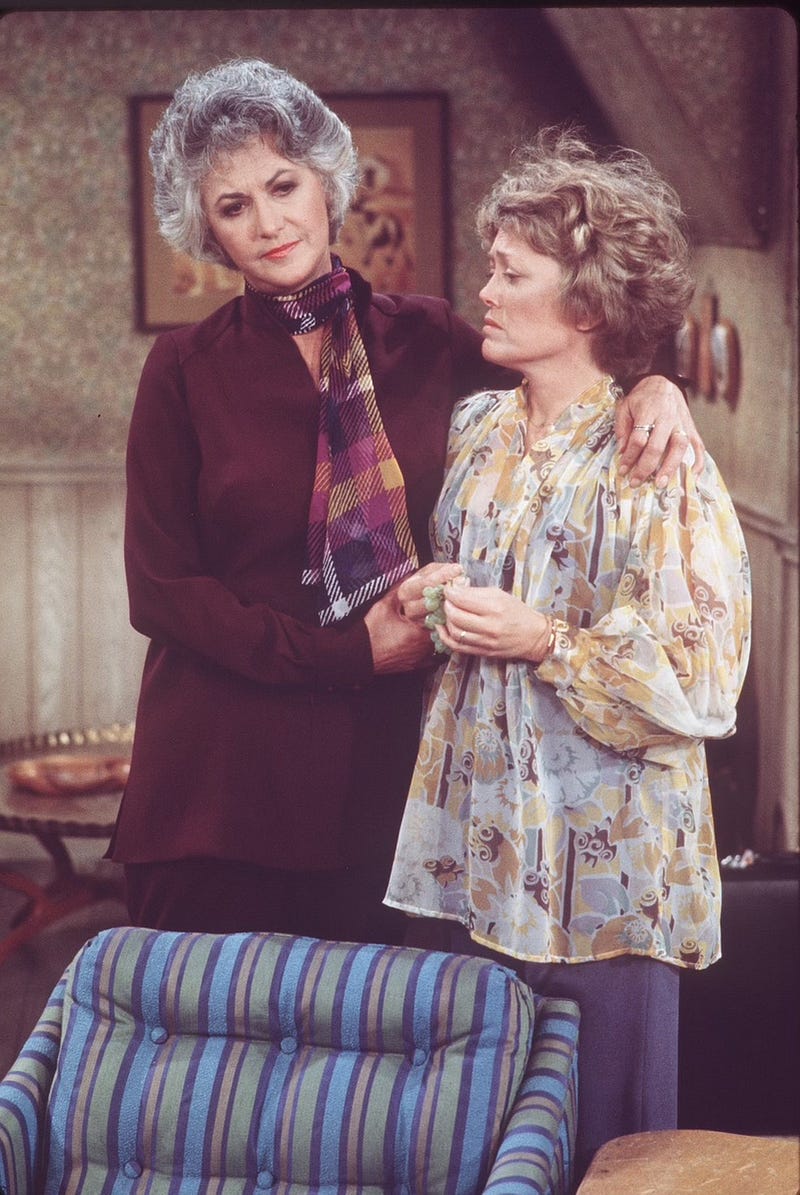
Maude launched Bea Arthur’s career into the stratosphere, quickly turning her from a Broadway veteran to one of America’s most well-known and beloved personalities. She went on to enormous success with The Golden Girls, which premiered 7 years after Maude wrapped its run. On Girls she reunited with Maude co-star McClanahan, who finally got the acclaim she deserved. (She actually won an Emmy for that show before Arthur did.) Meanwhile, Esther Rolle headlined Maude spin-off Good Times, Conrad Bain went on to star on the long-running hit sitcom Diff’rent Strokes, Adrienne Barbeau went on to an unlikely career as a horror and sci-fi movie star in films like The Fog and Swamp Thing, and Bill Macy steadily worked for the rest of his career, appearing in classic films like The Jerk and series like L.A. Law.
Although All in the Family gets most of the credit for its confrontation of taboo social issues on the small screen, Maude was equally — if not more — important because it did so through the lens of a strong woman. Maude was the first divorced female character on a long-running series and was certainly the first outspoken feminist. She is a singular creation in sitcom history and her importance cannot be overstated. The number of issues that Maude addressed head-on is mind-boggling (especially given that many of them remain taboo 50 years later) and even though many of the gender dynamics on the show have progressed markedly in the intervening half century, many of the issues they touch on sadly have not. It is sometimes shocking how relevant the “issue” episodes of the show still are.
Beyond all that, Maude was simply an iconic and unforgettable series. It’s brilliant theme song “And Then There’s Maude” (written by Alan and Marilyn Bergman and performed by Donny Hathaway) is frequently cited as one of the best in television history, and Maude’s catchphrase “God’ll get you for that, Walter” is featured on virtually every list of television’s most memorable lines. But many shows are iconic and beloved without being truly great. Maude was beloved, iconic, and one of the best sitcoms in television history.
The legacy of Maude is severely undercut by how difficult it is to access. Some episodes are streaming on Amazon’s new free streaming app FreeVee and the DVD box set is still for sale, but it is not nearly as easy to watch as the other classic sitcoms of its era. Hopefully one day soon it will be. Although the word “genius” is thrown around way too often, Bea Arthur and Norman Lear are among the few who truly deserve that honor. And watching them make magic together is something everyone should be able to experience.
Maude’s 25 Best Episodes
25. “Maude’s New Friend” (Season Three). The first time Maude addressed homosexuality head-on is in this episode when Maude assumes that the reason Walter hates her new friend Barry is because Barry is gay, but it turns out to be more complicated than that. It is a remarkably bold, witty, and intelligent screenplay with great performances from the ensemble.
24. “Arthur’s Worry” (Season Five). Historically, episodes that focus on Walter and Arthur and minimize their wives tend to be on the disappointing side. Not so with this episode, which unexpectedly turns into a simultaneously hilarious and profound exploration of how men are conditioned not to show affection for one another. It all builds to a hilarious climax and it features one of Conrad Bain’s best performances.
23. “Maude’s Ex-Convict” (Season Four). This riotous and wickedly clever episode overcomes a middling start to become a classic. Mrs. Naugatuck is in England for 3 weeks so Maude hires a rehabilitating ex-convict to fill in for her. He arrives in the form of Bob Balaban, who gives a hilarious early performance showing the droll persona he would become known for. The episode really kicks into high gear when Vivian slowly reveals what she learned about his crimes in a perfectly written and directed dining room scene that is one of the show’s most inspired farcical sequences.
22. “Walter Gets Religion” (Season Three). Here, Maude tackled yet another contentious social issues that rarely if ever was mentioned on television — the hypocrisy of organized religion. This classic episode starts hilariously with Maude comically unable to stay awake during mass. When they get home, Walter berates her for being disrespectful and not giving church a fair shot, but Maude quickly discovers the real reason behind his newfound devoutness.
21. “The Election” (Season Five). The episode takes place on the eve of the 1976 presidential election (the date the episode also aired on). At first, Maude is preoccupied with getting Walter and Mrs. Naugatuck to vote (ideally for Jimmy Carter). But her attention quickly pivots when she realizes that Carol is dating a much younger man — and a Republican to boot.
20. “The Love Birds” (Season Two). Maude and Arthur are bracing themselves for a night with Arthur and Vivian, whose puppy love has become insufferable. When Arthur and Vivian arrive, however, they are bitterly fighting. Maude and Walter take sides and the night explodes. The one-liners are brilliant, the plot is clever, and the ensemble is in fine form. Add to that the clever final twist where Arthur and Vivian get engaged without Arthur realizing it and you have yourself a classic.
19. “Vivian’s Decision” (Season Six). The show’s last truly great episode, this Emmy-nominated outing focuses solely on Maude and Vivian as they attend their 30-year college reunion. Vivian becomes deeply saddened seeing the independent and fulfilled young woman and drunkenly calls Arthur and tells him she is leaving him. The episode isn’t particularly big on laughs, but it is beautifully written and features a brilliant performance from Rue McClanahan.
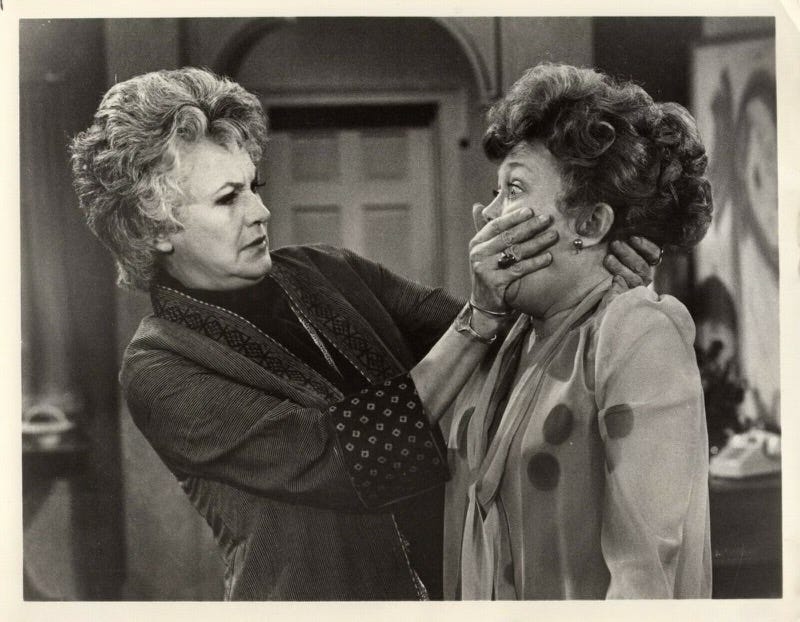
18. “Maude’s Facelift (Part One)” (Season Two). This hilarious outing begins with the gang getting ready to have Vivian over for lunch after she has supposedly spent 5 weeks in the Caribbean getting over her divorce. It turns out that she was actually getting a facelift. She looks stunning and everyone is happy for her — except for Maude, whose harsh judgments belie intense jealousy and insecurity.
17. “The New Housekeeper” (Season Three). It seemed highly unlikely that Maude could ever give the Findlays a maid that would have anything near the unique, sharp-tongued comic persona of Esther Rolle’s Florida Evans. However, eight episodes after Florida’s departure, the show debuted Oscar- and Tony-nominated actress Hermione Baddeley as Mrs. Naugatuck. She is an out-of-the-gate comic firecracker with her hilarious cockney accent and antiquated views on the role of women that provides a fresh foil for Maude. Her introduction here is pure perfection.
16. “Maude’s Desperate Hours” (Season Five). This classic outing has a bit of awkward pacing in the opening and closing scenes, but is nevertheless a real winner. Maude gets a threatening phone call while Walter is out of town and spirals into a state of panic. Vivian comes over to keep her company and fuels her paranoia. This is a rare episode that delves into the dynamic between Maude and Vivian without the interference of their on-screen husbands. Beatrice Arthur nails every joke, facial expression, and every body movement in her Emmy-winning performance.
15. “Viv’s Dog” (Season Four). After a five-part story arc that was edgy and dramatic, Maude returns to a lighter and more farcical tone with this episode focused on the death of Vivian’s dog. Everything about the plot line works fabulously, with countless memorable lines, perfect pacing, and terrific performances from Rue McClanahan, Beatrice Arthur, and guest star Teri Garr (who is brilliant as the representative from the pet cemetery).
14. “The Grass Story” (Season One). Maude rallies a group of housewives together to get voluntarily arrested for pot possession to protest a teenager facing a long sentence for possession. The plot was certainly provocative then and perhaps still a bit provocative now, but it is the comedy that makes the episode excel. The script features some wickedly sharp writing that cleverly plays up the ubiquity of prescription drugs and alcohol that occurs unchallenged while marijuana is criminalized.
13. “Vivian’s Party” (Season Three). This light-hearted, farcical affair finds a frantic Vivian enlisting the help of Maude and Mrs. Naugatuck when Arthur announces he’s hosting a last-minute dinner party. Maude, however, becomes absolutely enraged when she finds out that she isn’t even invited to the party. The result is a knock-down fight between the two couples that Mrs. Naugatuck hilariously becomes a pawn in. It is comic gold.
12. “The Emergence of Vivian” (Season Three). It is always a risk when sitcoms put the supporting cast front-and-center for the first time. Thankfully, this episode about Vivian and Arthur’s marriage is a home run. Rue McClanahan has never been better on the show and knocks everything out of the park, from her righteous indignation to her horniness during the shaking scene to the final kiss-off to Arthur’s late wife’s grave.
11. “Florida’s Problem” (Season One). The first episode to delve into the character of Florida Evans has only one downside — it worked so well that it ostensibly led to the spin-off Good Times, which took Florida away from Maude. The show explores racial and sexual liberation issues with intelligence and wit and features an award-worthy performance from Esther Rolle.
10. “The Household Feud” (Season Five). The final appearance of Mrs. Naugatuck and her husband Bert is an emotional and hilarious send-off that involves a throw-down fight between Maude and Mrs. Naugatuck that involves a mysterious party and the ashes of Mrs. Naugatuck’s first husband.
9. “Maude’s Guilt Trip” (Season Six). The hilarious final season premiere finds Maude dreading a visit from her obnoxious Aunt Tinkie, only to be riddled with guilt when she dies in a plane crash en route to visit her. The episode is perfectly plotted, wickedly dark, and brimming with hilarious one-liners and rich character comedy
8. “The Will” (Season Two). The first half of this episode is classic comedy as Maude and Walter encounter numerous farcical obstacles as they attempt to get ready for a ceremony honoring them. Halfway through, however, it becomes something much more as the revelation that Walter has appointed a trustee to make decisions for Maude should she outlive him leads to a ferocious fight about women’s equality and autonomy.
7. “Florida’s Goodbye” (Season Two). Although Esther Rolle’s loss was a blow to the series, her sendoff episode couldn’t have been better. It provides closure to her iconic character and has a hilarious setup in and of itself as everyone fears Maude’s reaction to Florida quitting and mocks her white guilt as she searches for a new housekeeper from a marginalized background.
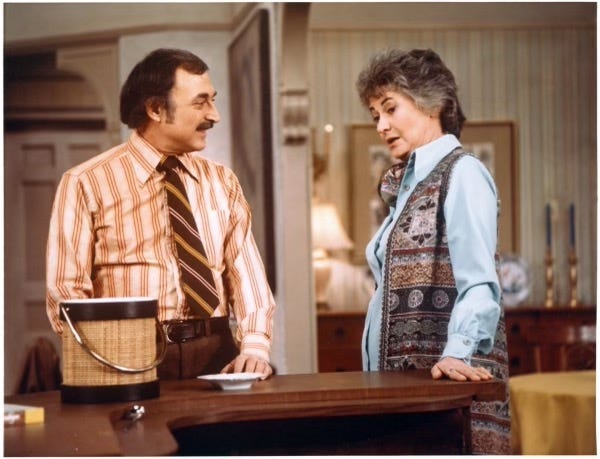
6. “Walter’s Problem (Part One)” (Season Two). The second season of Maude began with a devastating episode where Walter is forced to face up to his alcoholism after striking Maude in a drunken rage. It is yet another taboo subject that the show takes on unflinchingly without sacrificing its characters or its humor.
5. “Feminine Fulfillment” (Season Five). The opening scene in which Vivian answers the front door wearing only Saran Wrap thinking it’s Arthur only to discover a shocked Maude and Walter is one of the series’ (and television comedy’s) all-time best. The episode that follows, which does a deep dive into Vivian’s emerging feminism and her complicated marriage to Arthur, is a real winner as well.
4. “Maude’s Mood (Part One)” (Season Four). Maude is obsessed with her campaign to get Hollywood legend Henry Fonda elected president. There’s only two problems — she’s never met him and he has no interest in running. When her concerned family discovers this, they discover she has bipolar disorder and is in the midst of a manic episode. It mixes tragedy and comedy flawlessly and is one of the most interesting uses of stunt casting in TV history.
3. “The Gay Bar” (Season Six). The sixth season may have been somewhat of a disappointment, but it featured a few classics. Its best episode was this outing that finds Maude trying to convince Arthur that homosexuals are not to be feared or loathed when a new gay bar opens in Tuckahoe. It’s uproariously funny, wickedly clever, and decades ahead of its time.
2. “Maude’s Dilemma (Part One)” (Season One). Easily the show’s most famous and important episodes, here Maude discovers that she has unexpectedly become pregnant at age 47. What follows is a bold, head-on depiction of abortion on network television before it even became legal at the federal level. It’s an all-time classic of the medium.
1. “The Analyst” (Season Four). This brilliant , experimental episode finds Maude bearing her soul to an off-screen psychiatrist. It has a number of major laughs, but it is more notable for featuring innovative narrative structure, immense psychological complexity, and one of the best performances in the history of television from Beatrice Arthur.
Follow the author on Medium and Twitter.
Click below for articles about classic television:


