
5 Years Later: Remembering Mary Tyler Moore
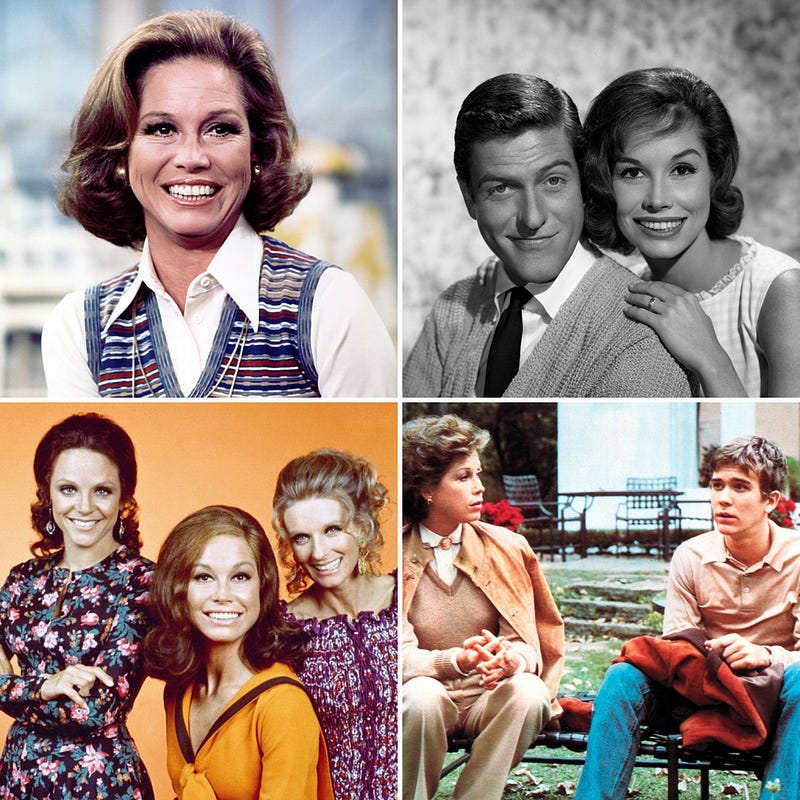
Yesterday marked five years since the death of one of the most beloved and acclaimed performers in Hollywood history — Mary Tyler Moore. In this article, I reflect on her life and career and list ten outstanding shows that you can stream right now to celebrate her.
I still remember exactly where I was when I learned that Mary Tyler Moore had died. It was Wednesday, January 17, 2017, and I saw the news on Twitter just as I was about to start a day of back-to-back therapy patients. I suppressed my sadness because I had to steel myself to deal with nearly 8 hours of other people’s sadness. That night, I went home and shed a tear or two while watching some classic episodes of The Mary Tyler Moore Show.
Moore’s classic, eponymous sitcom ended 7 years before I was born. When I was a young teenager, however, I discovered its reruns on Nick at Nite and I became enamored with her and the series. I may be the only 11-year-old who excitedly devoured her 1995 memoir After All, and I have no embarrassment about that. (Although I will say it was shocking to me, as it delved more into death, divorce, and alcoholism than the behind-the-scenes drama of the classic sitcom I was expecting.)
My appreciation for Moore has only grown in the quarter century since I discovered The Mary Tyler Moore Show. In this article, I briefly recap the highs and lows of her extraordinary life and career and then list 10 shows that you can stream right now to honor in her memory.
Mary Tyler Moore’s Life and Career
Mary Tyler Moore was born on December 29, 1936 in Brooklyn. She was the oldest of three children in an Irish Catholic family and her family relocated to Los Angeles when she was 8. Her television career began inauspiciously with her role as “Happy Hotpoint,” a tiny elf who would dance on appliances in advertisements that aired during the iconic sitcom Ozzie and Harriet. After some modeling work and unsuccessful acting auditions, she turned heads as the receptionist on Richard Diamond, Private Detective, a detective drama which aired from 1957 to 1960. She had a banner year in 1961, during which she appeared on a number of high-profile television shows such as 77 Sunset Strip and Wanted: Dead or Alive and was cast in the female lead on a new comedy series called The Dick Van Dyke Show.
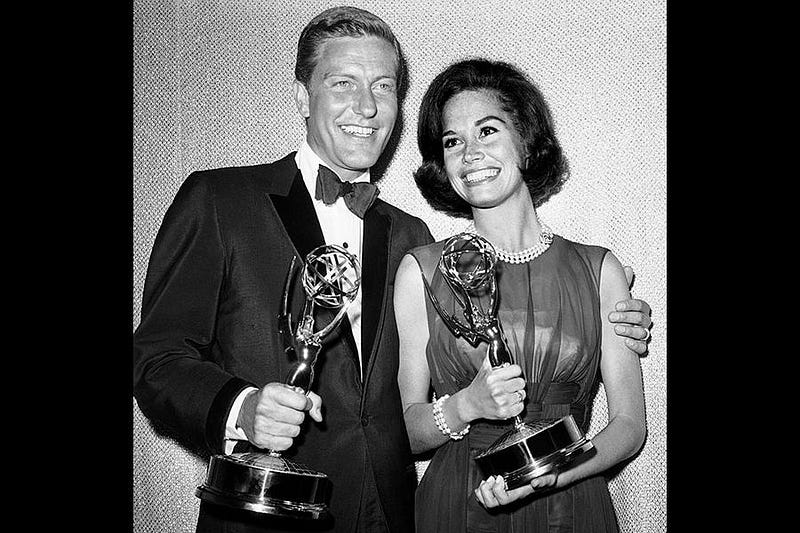
The Dick Van Dyke Show was created by Carl Reiner and based on his own experiences working on The Sid Caesar Show. It starred Dick Van Dyke and Moore as Rob and Laura Petrie, a married couple with a young son. Rob was a writer for insufferable television personality Alan Brady (played by Reiner) and had to balance his stressful work life with chaos at home. Although she often had to play the straight (wo)man to Van Dyke and his work antics, the show frequently freed Laura from the trappings of the stock “doting wife” sitcom character and gave her emotional depth and a distinct comic persona. Moore’s performance made her an international star, as well as a fashion icon. (Her “scandalous” capri pants are the stuff of television legend.) The show premiered in October 1961 and aired for five critically acclaimed seasons. After struggling in the ratings during its first season, the show catapulted into the Top 10 and remained a hit until it wrapped its run. The show was nominated for 25 Primetime Emmys and won 15 (including twofor Moore).
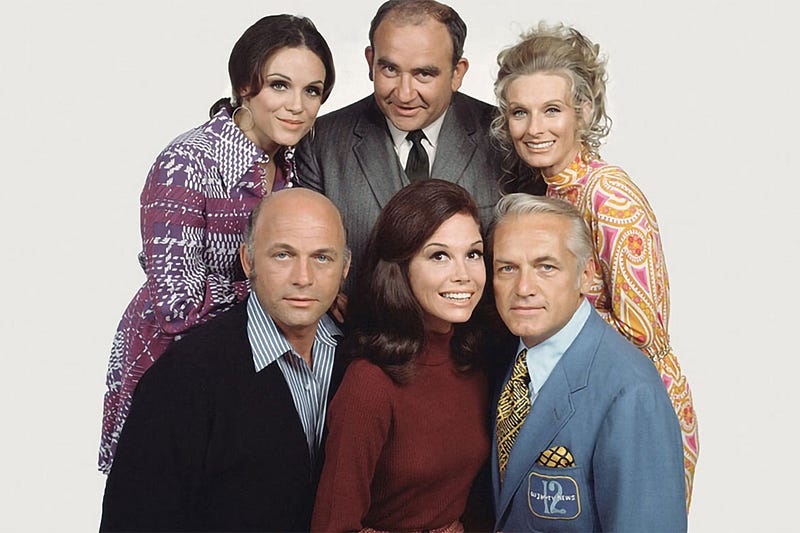
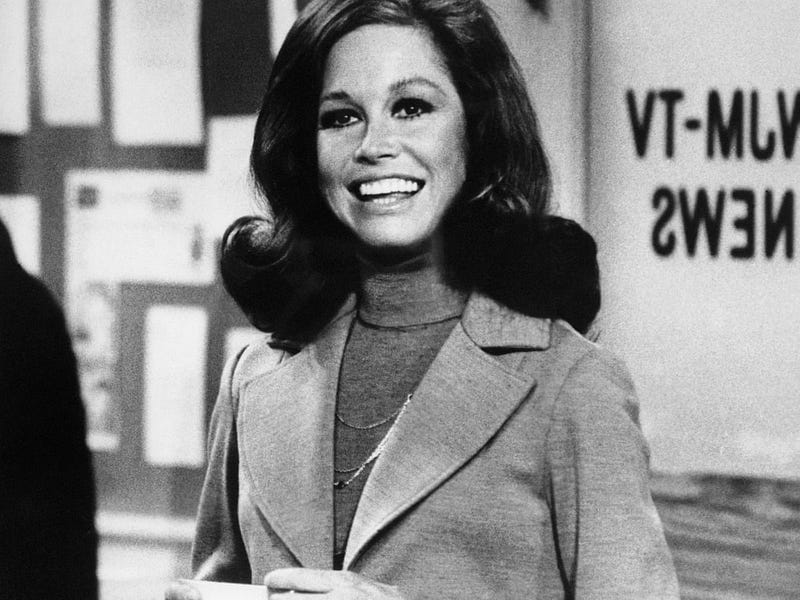
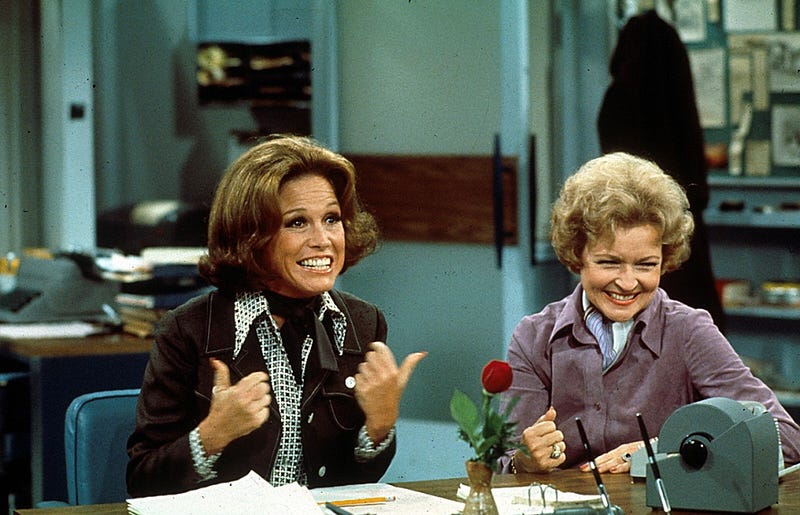
Four years after The Dick Van Dyke Show went off the air, Moore went on to have even greater success with her self-titled sitcom. The series, which aired on CBS from 1970–1977 and was produced by her own MTM Enterprises (more on that later), is widely heralded as one of the greatest television comedies of all time. Moore starred as Mary Richards, a woman who moves to Minneapolis following a broken-off engagement and gets a job at WJM, the local news station. (Interesting tidbit: the network demanded that the character not be divorced because they were afraid audiences would think she had divorced Dick Van Dyke.) At the news room, she contended with her gruff boss Lou Grant (Ed Asner), sarcastic newswriter Murray Slaughter (Gavin MacLeod), and narcissistic, dim-witted news anchor Ted Baxter (Ted Knight). In her personal life, she had two best friends — her insufferable landlady Phyllis Lindstrom (Cloris Leachamn) and her upstairs neighbor Rhoda Morgenstern (Valerie Harper). Over the years, there were some notable cast changes as Phyllis and Rhoda went off to get their own spinoffs and two new female characters were added — Ted’s ditzy but big-hearted girlfriend Georgette Franklin (Georgia Engel) and the man-hungry “Happy Homemaker” Sue Ann Nivens (Betty White).
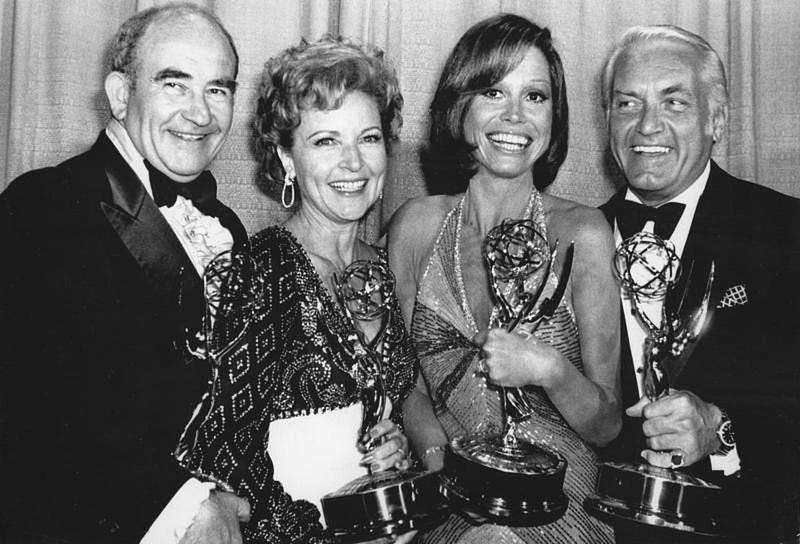
Even someone who doubts its status as the best American sitcom of all time would be hard-pressed to name a better ensemble cast. But despite the supporting cast of scene-stealers, the show belonged very much to Moore both in front of and behind the camera. Mary Richards was a fully developed character that had a backstory that was bold for the time, stubborn but admirable convictions, an overwhelming desire to be liked, and a unique sense of humor that could be subtly vicious through an incandescent smile. She won three Emmys for her performance, which was but a fraction of the 29 Emmys the show received (a record among television comedies not surpassed until Frasier wrapped its run decades later). The show was among the top 20 most watched shows in the U.S. for nearly its entire run and became a bona fide cultural phenomenon.
Moore decided to end The Mary Tyler Moore Show despite its ongoing success to focus on other projects. Primarily, she wanted to dance. Moore, a professionally trained dancer, sought to enter the variety show craze that was at its peak in the 1970s with shows starring Carol Burnett, Cher, and The Muppets being enormous hits. Unfortunately, despite two specials and two different attempts at a variety series, she was unable to gain success as a variety star. (It certainly didn’t help that variety series were on a major decline and would have largely disappeared within a few years.)
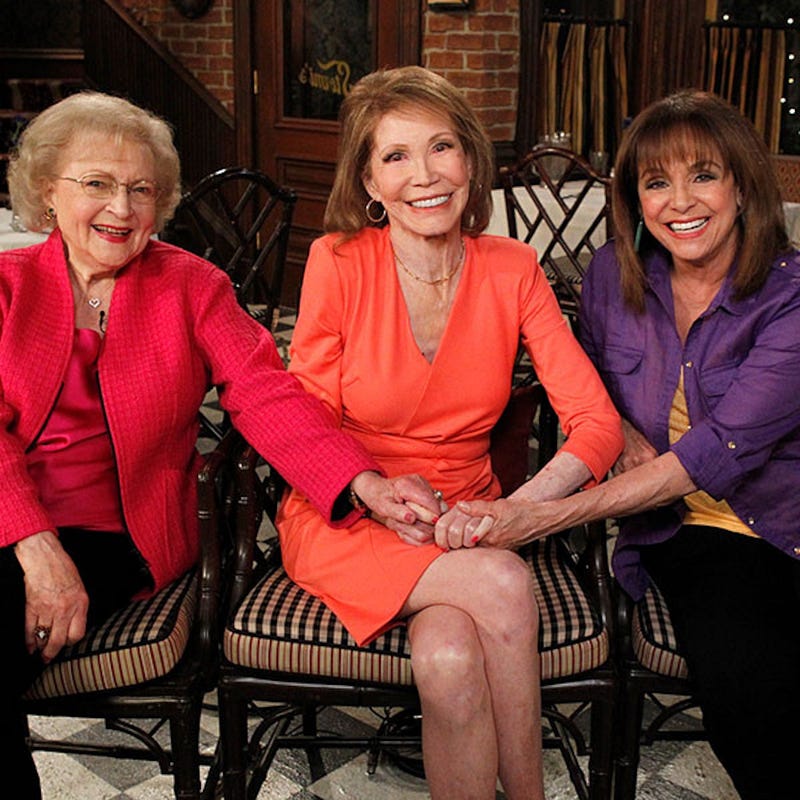
Her subsequent television work was highly varied. She starred in three more television series: the sitcoms Mary (1985–1986) and Annie McGuire (1988) and the journalism drama New York News (1995). All were high-profile failures. She starred in numerous television movies and miniseries, with highlights being her Emmy-winning against-type turn in Stolen Babies, her turn as Mary Todd Lincoln in Lincoln, and her reunion with Dick Van Dyke in The Gin Game. She appeared on retrospectives celebrating her earlier televisions hits and made guest appearances on shows like Ellen, That 70s Show, Lipstick Jungle, and Hot in Cleveland. Fittingly, her final television appearance was on an episode of Hot in Cleveland that brought together the entire female cast of The Mary Tyler Moore Show. Since that episode aired in 2013, all five of them have died.
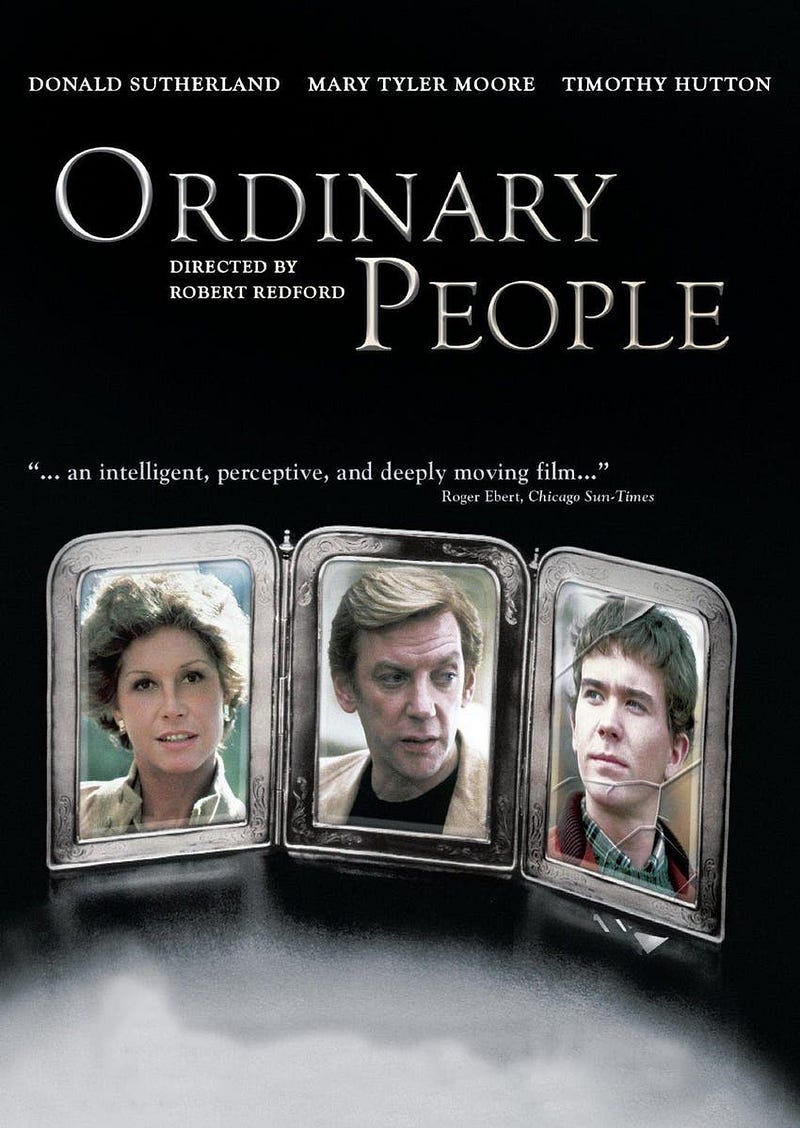
Moore had notable success outside of television as well. Moore starred in five feature films during the 1960s, with highlights being the Oscar-nominated musical Thoroughly Modern Millie opposite Julie Andrews and Elvis Presley’s 31st and final film Change of Habit. She then took an 11-year hiatus from the big screen, only to come roaring back with a lead role in Robert Redford’s directorial debut, 1980’s Ordinary People. Her performance as emotionally withholding mother Beth Jarrett, who quietly wreaks havoc on her family with the rage and resentment she harbors surrounding her son’s death, was a stunning 180-degree turn from her sitcom persona and remains one of the greatest dramatic acting performances of the decade. The film won Best Picture at the Oscars and Moore was nominated for Best Actress. (She also won the Golden Globe for Best Actress in a Motion Picture — Drama.) Her film work was spotty after that, with only David O. Russell’s Flirting with Disaster standing out. In the film, she played Ben Stiller’s neurotic Jewish mother and was absolutely savage (in a good way).
Moore also had success on Broadway. Her theater career started disappointingly when her 1966 musical Holly Golightly (an adaptation of Breakfast at Tiffany’s) was so disastrous that it shut down before it even premiered on Broadway. She was redeemed, however, when she starred as Claire Harrison in Whose Life Is It Anyway? in 1980. She played a quadriplegic debating euthanasia and won a special Tony Award for her performance. Her production company also produced five musicals in the 1980s, which netted her a competitive Tony.
Speaking of her production company, the success of MTM Enterprises cannot be overstated when taking stock of Moore’s legacy. Between the time she started MTM with her (later ex-) husband Grant Tinker in 1969 and the time they sold it in 1988, the show produced a mind-boggling number of hit shows. In addition to The Mary Tyler Moore Show and its spinoffs (Lou Grant, Rhoda, and Phyllis), they produced Bob Newhart’s two most successful series (The Bob Newhart Show and Newhart), WKRP in Cincinnati, and the award-winning dramas Hill Street Blues, St. Elsewhere, Remington Steele, and The White Shadow.
Moore also wrote two successful memoirs — 1995’s After All and 2009’s Growing Up Again: Life, Loves, and Oh Yeah, Diabetes. In these books, she detailed the ups and downs of her personal life. She discussed her three marriages (two of which ended in painful divorces), the death of her son due to an accidental firearm discharge (which occurred just as she was gaining acclaim for her turn as a mother grappling with the death of her son in a violent accident in Ordinary People), her struggle with Type I Diabetes that caused her numerous health problems during her life (including rendering her nearly blind toward the end of her life), the death of both of her siblings at a young age, her strong advocacy for animal rights and vegetarianism, and the enormous successes and joys of her life, of which there were many.
Moore faded from the spotlight in the decade before her death, largely due to health problems. For some, her legacy was stained by the revelations of a pervasive conservative streak that led her to publicly disagree with Gloria Steinem about feminism and embrace the likes of Richard Nixon and Bill O’Reilly. All I will say about that is that in the pre-social media era it was quite a bit easier to separate the artist from their art. By and large, her legacy as one of the greatest actresses and power players in Hollywood history remains firmly intact. In a resounding testament to this, she received the prestigious Lifetime Achievement Award from the Screen Actors Guild in 2012.
Moore died following a battle with pneumonia on January 25, 2017 and is buried in Fairfield, Connecticut.
Why Mary Tyler Moore Endures as One of America’s Greatest Icons
Countless actresses are beautiful, talented, business savvy, and have experienced success on TV, film, and stage. So why does Mary Tyler Moore rise to the top of the list as one of America’s most respected and beloved entertainers? Well, I have a few theories.
- She had not one, but two legendary television roles. Exceedingly few actors get the chance to play a truly iconic role on a wildly popular television series. The number who managed to do it in two separate roles on two separate shows is infinitely rarer. But that’s exactly what she did by starring in what are often considered the best television comedies of the 1960s and 1970s.
- She was an icon of womanhood. Strong female characters with complex personalities were far from the norm when television exploded as a medium in the 1950s. Laura Petrie and Mary Richards were two of the first and most notable examples and they debuted and evolved during a period of time when the role of women in society was a red-hot social issue. These factors led Moore and the characters she portrayed to become even more iconic.
- She was the embodiment of charm, but with an edge. Female roles in early television comedies tended to be elegant and virtuous or hammy and slapstick. Moore’s characters were something different. They were stylish, successful, and very kind women indeed, but they had clear insecurities, strong convictions, and a sharp wit that sometimes had a sharp edge to it. She was something singular in the television landscape for many years.
- She was a pioneering, behind-the-scenes powerhouse. She wasn’t the first woman to lead her own production company, but she was certainly one of the most successful. The astonishing success of MTM enterprises on television and her successful production work on Broadway made her a Hollywood power player off-screen as well.
- She took bold creative risks. After having a chokehold on the hearts of America for nearly two decades, Moore pivoted into some truly unexpected endeavors. Her work in films like Ordinary People and Flirting with Disaster and Broadway shows like Whose Life It Is Anyway? made it clear that she was willing to take bold creative risks. Even when they weren’t successful, they were attention-grabbing and fascinating.
Ultimately, Moore had it all — talent, beauty, charisma, intellect, bravery, and perseverance. And she was in the right place at the right time to convert it all into superstardom.
Ten Things to Stream in Honor of Mary Tyler Moore
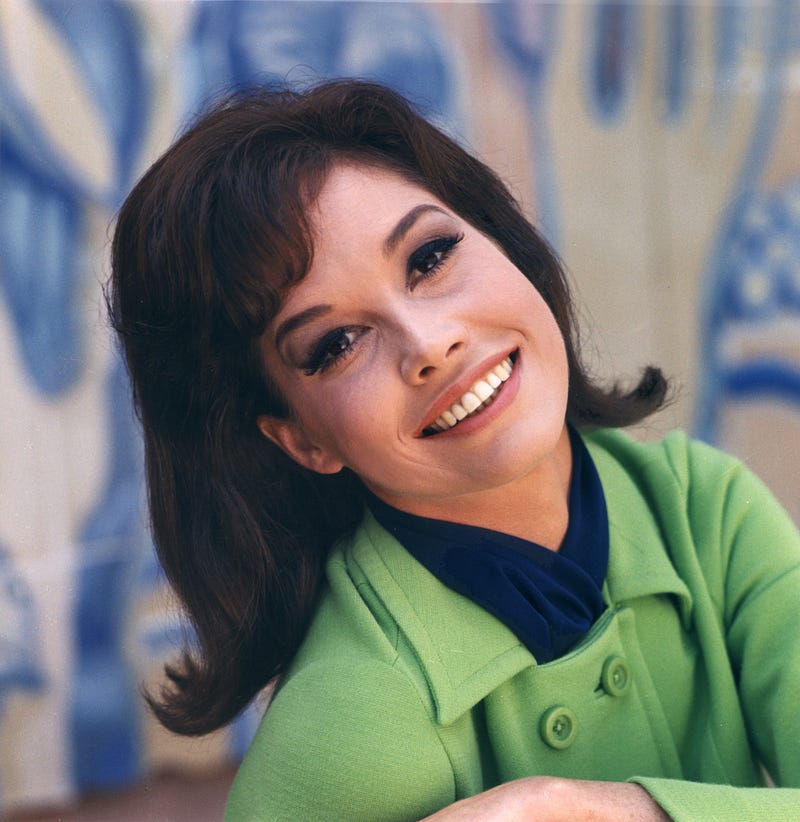
- The Dick Van Dyke Show, “Pink Pills and Purple Parents” (Hulu). Dick Van Dyke got the majority of the big comic moments on the series, but occasionally Moore was given a spectacular comic showcase. One of the best was in this episode where Laura takes some “pep pills” to get through a dinner with her in-laws and ends up getting hilariously loopy.
- The Dick Van Dyke Show, “Coast to Coast Big Mouth” (Hulu). Another great performance of Moore’s comes in this episode (widely considered to be one of the best sitcom episodes in TV history), in which a flustered Laura reveals a secret about television personality Alan Brady on national television. Her subsequent unraveling is comic gold and she holds her own spectacularly against the legendary Carl Reiner.
- The Mary Tyler Moore Show, “Put on a Happy Face” (Hulu). Perhaps Moore’s most skilled comedic performance to date occurs in this episode where she throws away the wrong file at work, sprains her ankle, gets a cold, has a bad hair day, ruins her dress, and ends up on a date with Ted. And that’s just some of her terrible, no-good, very bad day. This episode is a rare one of the series that went for pure farce and Moore proves more than up to the task.
- The Mary Tyler Moore Show, “Better Late … That’s a Pun … Than Never” (Hulu). When Mary writes a humorous obituary as a joke and ends up getting suspended from the news room. The result is a showcase for Moore in which she goes from silly and delirious to terrified and groveling to stoic and assertive to heartbreaking all in the matter of 25 minutes.
- The Mary Tyler Moore Show, “Chuckles Bites the Dust” (Hulu). Arguably the best sitcom episode in TV history, the bizarre circumstances regarding the death of the network’s daytime television personality Chuckles the Clown sends the WJM team into callous hysterics. A high-and-mighty Mary is disgusted by their reaction, but then stars uncontrollably giggling during his funeral. It is pure comic perfection and it would not work at all without Moore’s brilliant performance.
- The Mary Tyler Moore Show, “Mary’s Insomnia” (Hulu). We didn’t see Mary Richards out of control or in need of rescuing often, but when we did it usually made for a great episode. Here, Mary is plagued by insomnia and then gets hooked on sleeping pills and needs Lou to come to the rescue. It’s one of her finest performances on the whole series.
- Ordinary People (Hulu, Paramount+). Moore’s iconic, ice-cold turn as Beth Jarrett is extraordinary and Timothy Hutton, Donald Sutherland, and Judd Hirsch nearly match her in Robert Redford’s heartbreaking Oscar winner for Best Picture.
- Flirting with Disaster (Paramount+). One of Moore’s last major movie roles, this all-star comedy directed by David O. Russell (Silver Linings Playbook, American Hustle) finds Moore playing against type as a bawdy and neurotic Jewish mother. It makes you wish she had been cast in more off-beat films in her later career.
- Hot in Cleveland, “Free Elka” (Paramount +). Moore made two appearances on the TVLand sitcom that her dear friend Betty White headlined well into her 90s. The last, which was also Moore’s final television appearance, is the most famous as it reunited her with the entire surviving female cast of The Mary Tyler Moore Show. But this one is the better showcase for Moore’s talents as she gets big laughs as a cellmate of White’s character during her temporary stint in jail.
- Mary Tyler Moore: A Celebration (PBS; also available for rental on iTunes and Amazon). This touching and well-curated hourlong retrospective is a great review of Moore’s life and career that is filled with interviews and clips. It’s so wonderful that it aired before her death so that she could see how much her life and career meant to so many.
Follow the author on Medium and Twitter.
Check out other articles by this author about television comedy legends and classic sitcoms:


