
Master Bao and the Third Princess
“Who is this monk who does not bow to the Dragon Throne?”
A tale of China during the Tang Dynasty (618–907 CE)
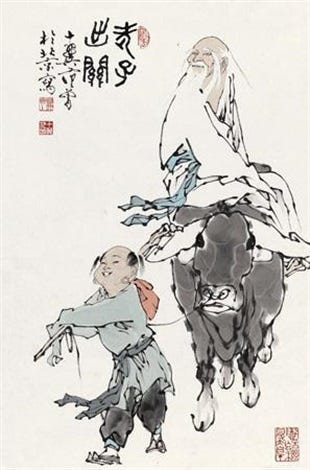
Master Bao rode his great ox, Xi, along a road paved with flat stones. His pupil, Ping, strode alongside.
“The ‘Summer Palace’ is in this province, Ping. If the Emperor and his family are in residence, we will be stopped by Imperial Guards before we reach the village of Hwe-Shin.”
“Perhaps we’ll get a glimpse of some of the people from the royal court,” Ping said.
“Perhaps,” the monk responded.
After about an hour, the travelers stopped at a well near the side of the rode. The well-tender bowed to Master Bao and handed him a cup of water. The monk waited until Xi and Ping had drunk before accepting the offered container.
“You come at an auspicious time, Master,” the well-tender said, as the three men sat on a bench under a ginkgo tree. “The Third Princess is in residence at the Summer Palace. As you probably know, the Third Princess is the kindest member of the Dragon Throne, and a great scholar.”
Master Bao sipped his water. “Yes, I have heard she speaks many dialects, and meets daily with learned men.”
“True, Master. My sister knows one of the cooks in the palace and I hear much about the Third Princess. She surrounds herself with men who know the ways of Nature, and the wisest counselors in the Empire. Also, her calligraphy is renowned and her poetry is said to be the finest in the land.”
“She sounds like a young woman of many accomplishments. Thank you for the water, but now we must travel to Hwe-Shin by nightfall. Come, Ping.”
About an hour later, they heard a loud furor coming from the direction of Hwe-Shin. Cymbals clashing and drums pounding heralded the approach of a group of music makers. As they passed by, they were followed by fifty mounted lancers, the sun reflecting off their shiny bronze armor and the points of their spears. Coming behind the horsemen was an ornate closed palanquin, trimmed in gold and silver, carried by eight men. A second palanquin, not nearly as ornate, was close behind. Three luggage carts pulled by oxen, followed the second conveyance, and a large group of colorfully garbed men and women walked behind the carts. They, in turn, were followed by fifty swordsmen, their iron boots clanking on the flat paving stones.
“It’s the Third Princess,” Ping shouted. He jumped to the side of the rode, dropped to his knees, and placed his forehead on the ground.
Master Bao dismounted and stood beside his ox. “I believe you are right, Ping. It surely must be royalty, for no one else would make such a commotion.”
As the ornate palanquin began to pass Master Bao, a young woman’s voice cried out, “Stop!” The entire parade came to a halt.
Immediately, the foot soldiers ran to surround the palanquin, swords drawn. A veiled face appeared at the window.
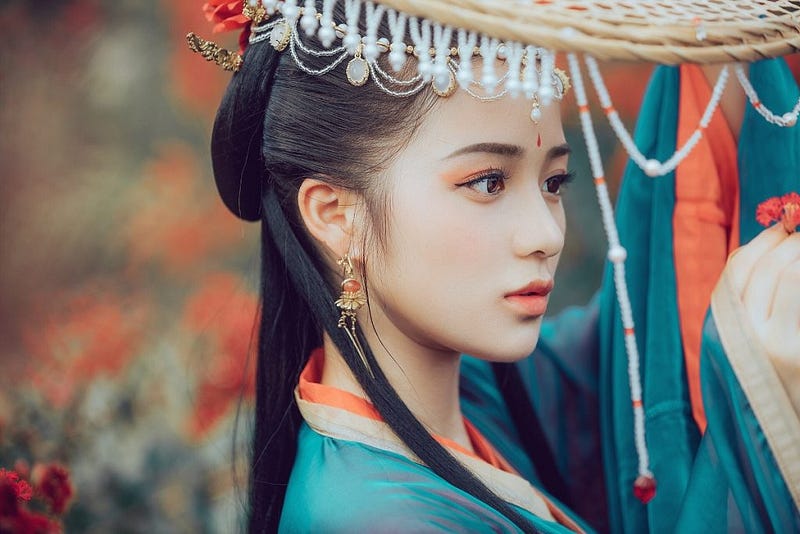
“Who is this monk who does not bow to the Dragon Throne?” questioned the Third Princess.
From the second litter, a heavy-jowled man, dressed in elaborate robes, jumped out and ran to stand outside the lady’s window, his hands clasped inside his sleeves.
“It is a monk of the Daoist philosophy, Your Highness,” the man explained. “They are rascals who bow to no one. I believe this one is called Master Bao.”
For several seconds, silence reigned. “Come here, Monk. Let me look at you,” the young lady said.
The soldiers parted, leaving a path to the window of the palanquin. Master Bao stepped up to the window, past the ranks of swordsmen. A large man wearing the armor and insignia of an Army Captain stood next to the palanquin, his face twisted into a scowl. His hand was on the pommel of his broadsword.
“Why do you not bow, Monk?” the Third Princess asked. “I could have you beheaded right here in the road.”
“And I could lose my head right here in the road. What would that avail of either of us?”
There was a pause of several seconds. “You are arrogant, Monk.”
“No, my Princess. I am honest. Honesty is often mistaken for arrogance.”
Another pause. “Do you not fear death, Monk?”
Master Bao smiled. “Life and death are the same in The Dao. Like the grass, death comes in winter, and, in spring, life follows death. Merely a change in form according to the season.”
After another long pause, the Third Princess raised her voice. “Minister Choi,” she said, “have the Royal Tent prepared. I will have lunch with this monk and the child with his face in the dirt.” She looked at Master Bao again. “I’m sure sharing my rice will not offend your philosophical sensibilities. Bring the boy.”
The Minister threw his hands into the air, gave a deep sigh, and began to bellow orders. There was a mad scramble while servants unloaded one of the luggage carts. Master Bao took Ping’s arm and drew him to his feet. The two watched perhaps fifty men and women quickly erect a large, colorful round tent in a nearby field, fill it with carpets and cushions, then load a table under the canopy with wooden bowls of colorful fruit and vegetables. Two servers brought ornate rice jars and vases filled with a variety of flowers.
“Bring the second chair for the Monk,” the Third Princess told a soldier, as she eased herself into an ornate cathedra.
“Princess,” Minister Choi said with a deep bow to the lady, “the second chair is for distinguished guests of noble birth. It is not for peasants.”
“This man has a noble look about him, Choi. Do as you’re told or you’ll walk back to the palace carrying your head in a bag.”
When the young woman removed her veils, Ping stood wide-eyed, gazing at her beauty. Master Bao reached a finger under Ping’s chin and closed the boy’s mouth.
The rice from the clay pots was warm, and had a mild, spice flavor. The Third Princess, after her taster sampled the dishes, barely touched her food. Master Bao and Ping each consumed a bowl of rice, and a helping of fruit and vegetables.
The meal was eaten in silence, but the table was hardly cleared when the Third Princess addressed Master Bao.
“I am not as ignorant of your Daoism as you may think, Master Bao. We have many learned scholars in the royal court who are familiar with all forms of religion and philosophy. For example, I know of your ideas of Yin and Yang.”
Master Bao nodded politely. “Your knowledge and wisdom are well known, Your Highness.”
“Yes. People do talk. If my scholars are not mistaken, Yin is part of Yang, and Yang is contained in Yin, the two always becoming the other. How is this, Monk? Can love, for example, ever be part of hate?”
“Yin and Yang are complementary forces, my Princess. They only appear to be opposites, but are always in balance with one another. Reality is a harmony of things that, to our human nature, only seem opposite.
“Love,” Master Bao continued, “has indifference as its complementary opposite, not hate. And, as we well know, love is always in danger of becoming indifference.”
The Third Princess smiled. “Well said, Master Bao. But what then of hate? My Captain, here,” she motioned to the man standing behind her chair, “despises any man who comes close to me. What is hate’s ‘complementary opposite?’”
“Hate is a strong Yang emotion leading to disharmony. It’s Yin complement would be harmony of spirit and mind.”
“Do you hear that, Captain? Your hate leads to disharmony, but I like you this way, You protect me from evil.” The Third Princess paused while a handmaiden poured tea into delicate bone china cups. “What does your philosophy say of good and evil, Master Bao? In the royal court, there is much evil. Constant plotting and fighting.”
“Good and evil are not part of the flow of Nature, and therefore not part of the flow of the Dao. For the follower of the Daoist Way, there is no absolute moral right and wrong.
“However, there are consequences for one’s actions. The fox is not evil for eating the farmers’ chickens. It’s his nature to hunt and kill. But to the farmer, the loss of his chickens to the fox is evil, and he will hunt and kill the fox. So, although not evil, the fox will suffer for his actions, which the farmer will view as evil.”
Minister Choi entered the tent and whispered into the Third Princess’ ear. As she stood and re-attached her veils, Master Bao and Ping came to their feet.
“A most enlightening talk, Master Bao. I would like you to come to the palace and become part of my retinue. We could converse far into the night, and your wisdom would be of great value to the Dragon Throne. Would you agree to do that?”
“Ah, Princess,” Master Bao said. “I’m honored by your request, but I can help both the Dragon Throne and the people of this Empire if I remain a humble, itinerant monk, with my student Ping.”
The Third Princess nodded and bowed deeply to Master Bao.
Both he and Ping returned the bow.
Later, after the Third Princess and her entourage had moved on, Ping approached Master Bao and gave a deep bow. “Master. The Third Princess offered you a comfortable and prosperous position in the Palace. In time, because of your wisdom and knowledge, you would have great influence in the handling of important affairs of state. Yet you turned her down. Please enlighten this ignorant pupil and explain why you did not accept her kind offer?”
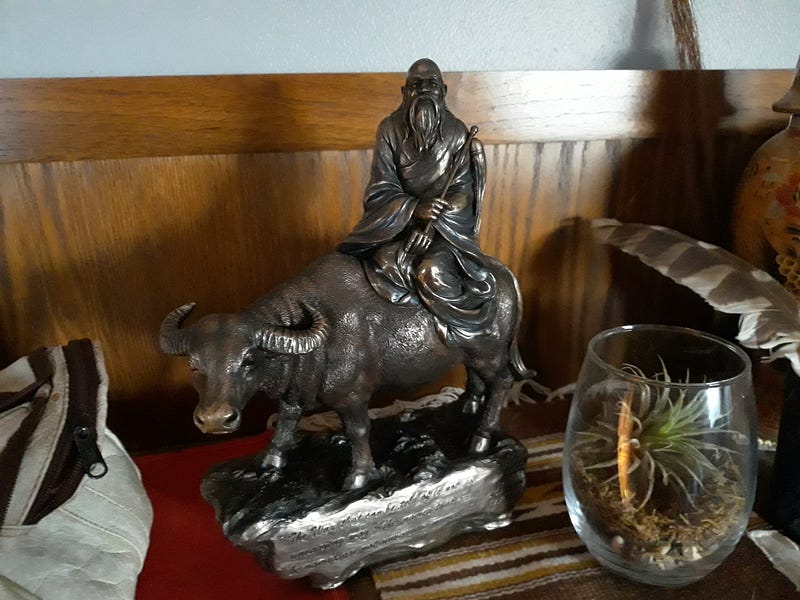
Master Bao smiled. “What are some of the principles of followers of The Way, Student Ping?”
“Acceptance of life as we find it,” Ping replied. “Reverence for Nature, and seek Harmony in Nature.”
“And what of our personal characteristics, Ping?”
“No status, no competition, no self-righteousness. And we value harmony and equanimity above all else.” Ping bowed while reciting the tenets of The Way.
“A court a not a place of no status, no competition, no self-righteousness. As a humble, itinerant monk, I can follow The Way unencumbered by the mere trappings of power and wealth.
“Real power and wealth resides, not in the halls of the Dragon Throne, Student Ping, but in the harmony of the Silence Within.”
This is an original story, never published before.
If you’re interested in other Master Bao stories, here’s a couple. And about a million more on my website www.thomashanratty.com