
Master Bao and the Lessons of Power
Spiritual power cannot be taken. It can only be given away
A tale of the Tang Dynasty (618–907 CE)
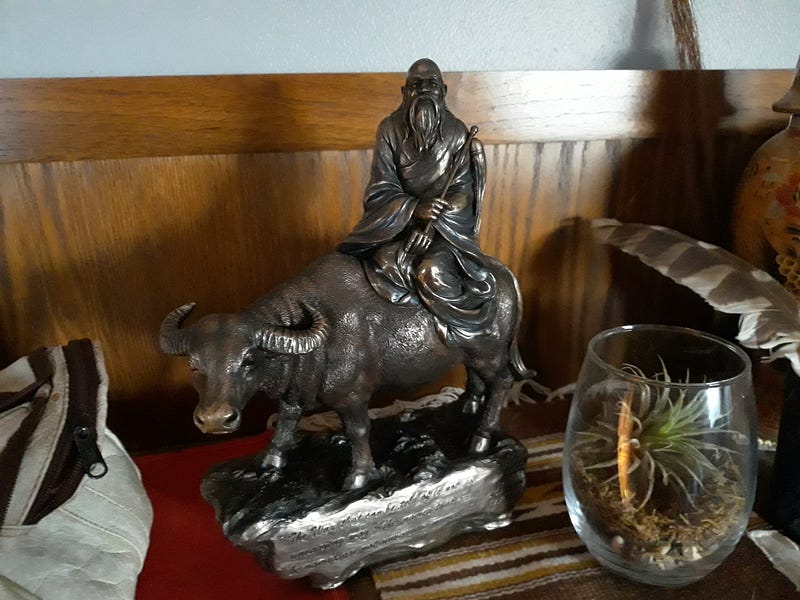
Master Bao rode his ox, Xi, along a wide, well-traveled road in the kingdom of Hwang-Liu. His pupil, Ping, walked alongside.
“Soon, Ping, we will be in the city of Peng-ho, the capitol of this kingdom. Since this is the Fifth day of the Fifth Moon, the date of the annual Dragon Boat Festival, we may need to sleep in one of the huts that are provided for the farmers and merchants coming from all over Hwang-Liu. All the inns will be filled.”
Ping was smiling broadly. “I saw a Dragon Boat race once, Master, when I was still at home. I have heard the ones on the River Chu in Peng-ho are wondrous to behold, eighty rowers in each Dragon Boat.”
“Yes, Ping. It is a great holiday for our hard-working people. It gives them a chance to eat traditional filled rice cakes and place bets on their favorite crew. It is rumored the Prince of Hwang-Liu will be giving away the prizes to the winning crew.”
“I have never seen a prince, Master, nor any member of a royal family.”
Master Bao smiled. “Perhaps today you will.”
An hour later, the travelers entered the gates of Peng-ho, found a stable for Xi, and a hut for themselves. The huts, canvas tents, had been erected to house the overflow of festival-goers.
“Come, Ping. The sun has set and the starting gong has sounded. Cheers from the crowd tell us the boats are coming into sight around the bend in the river. We can see the finish line from that knoll near the Prince’s floating palace. Ordinary citizens are not allowed near the Prince’s boat, but I’m sure the guards will not object to an old monk and his student standing quietly by.”
After a quick glance, the heavily armed guards ignored the Monk and Ping, and instead watched the large Dragon boats as they flew across the finish line.
The Prince of Hwang-Liu, a young man with no beard or mustache, sat on his throne which was covered in gold, in the stern of the floating palace. His brocade robe was elaborately embroidered and had wide gold sleeves. His black hat was trimmed in red.
A man with a gray beard was on his right, bent double in a low bow. Other men were gathered around the throne, all either bowing deeply or kneeling. One man, however, tall and covered in bright armor, stood behind the throne, torch light shining off his golden helmet.
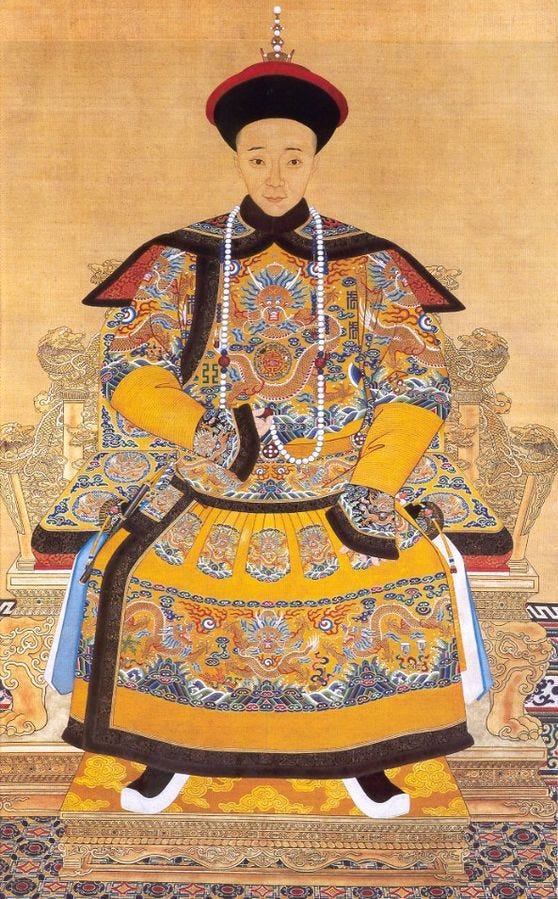
Master Bao, who had known many kings and princes, kept an eye on Ping. The glitter of the trappings and the obeisance of the men surrounding the prince seemed to hold Ping in awe. When the prince turned toward the Monk and Ping, the student dropped to his knees and knocked his forehead on the ground three times.
Master Bao merely gazed back at the monarch, who yawned and looked away.
Later, after the last boat had crossed the finish line and the Prince had handed out the prizes to the winners, Master Bao and Ping took their evening rice at a small restaurant on a side street.
After their simple meal, Ping stood and, his hands clasped inside his capacious sleeves, gave a deep bow. “Master, please enlighten this ignorant student. It is known that the common people must kneel in the presence of the royal family.
“But the men surrounding the Prince today were men of stature, with rich robes and hats. They had their own servants and palanquins. Why were they kneeling and bowing?”
“One word, Ping. Power.” the monk replied.
“I see power in the thunder and lightening,” Ping said. “There is power in the plants who grow despite the rocks, and the streams in the mountains pour forth power as they tumble down the slope.”
Master Bao thought for a long moment. “All things in this Universe, including humans, are given Power, but some see only the power outside themselves. They trade the power within for the power without, and see the Prince as the source of that power.”
“What, then, is power, Master? The Prince can have a man beheaded. Is that power?”
“Yes. He has the power to destroy, and that is a great power. History teaches us that it must be wielded with restraint, however, or he will lose the Mandate of Heaven and be destroyed himself.
“As a wise monarch, then, he uses his power to get others to do his bidding. For example, the Minister of Finance, who is the elderly man standing next to the throne, knows the Prince can reward him, so he bows to curry favor. This is known as reward power.
“The leader of the Goldworker’s Guild was also with the Prince, and he fears the Prince will withdraw his support of the gold prices, so he bows and kneels. This is known as threatening power.
“Behind the throne stood General Hong, the head of the Army. He respects the Mandate of Heaven and therefore the Prince’s authority as the legal ruler. He, among those men, will remain loyal. This is known as legitimate power.”
Ping bowed again. “The Prince could have had you beheaded for not kneeling. Why did he not use that power?”
“Because he recognized that is just the power over my body, not my spirit. He is wise, for he knows he cannot have my compliance by force. Therefore, he did not send his soldiers to arrest me, as would have a more arrogant prince.
“Beheading an elderly monk would not have increased his power, and may have led to an uprising among the People of this kingdom.
“An enlightened monarch knows he cannot take a man or woman’s spiritual power by force. Only their physical body.”
“How does one then lose their spiritual power?” Ping asked.
“We give it away, Student Ping. Anger, disappointment, or violence is giving away our power to others. If a man insults you and you become angry, you have given him the power to influence how you feel. If you strike another, it is because you have given him the power to push you into disharmony.
“The lesson, Ping, is to hold onto your power by remaining innocent, gentle, and accepting of the Will of Heaven.
“But for now, while still a student, it would be wise to kneel when expected.”
This story has not been published before. It’s original.
Thanks to “The Bases of Social Power” by Raven and French, in Group Dynamics, Harper and Row, 1959, for the idea.