Artificial Intelligence, Pop Culture, Art, Design & Creativity
Marvel’s “Secret Invasion” AI Art Sparks Controversy in Opening Credits
MCU conspiracy thriller taps fears of artists being replaced by AI
The most controversial AI art of 2023 has come from an unexpected place: Disney+. I predicted in April that Disney would soon add an AI component to their productions. I couldn’t have imagined it would happen so quickly—and be so bold-faced. It was in the first episode of their new Marvel series:
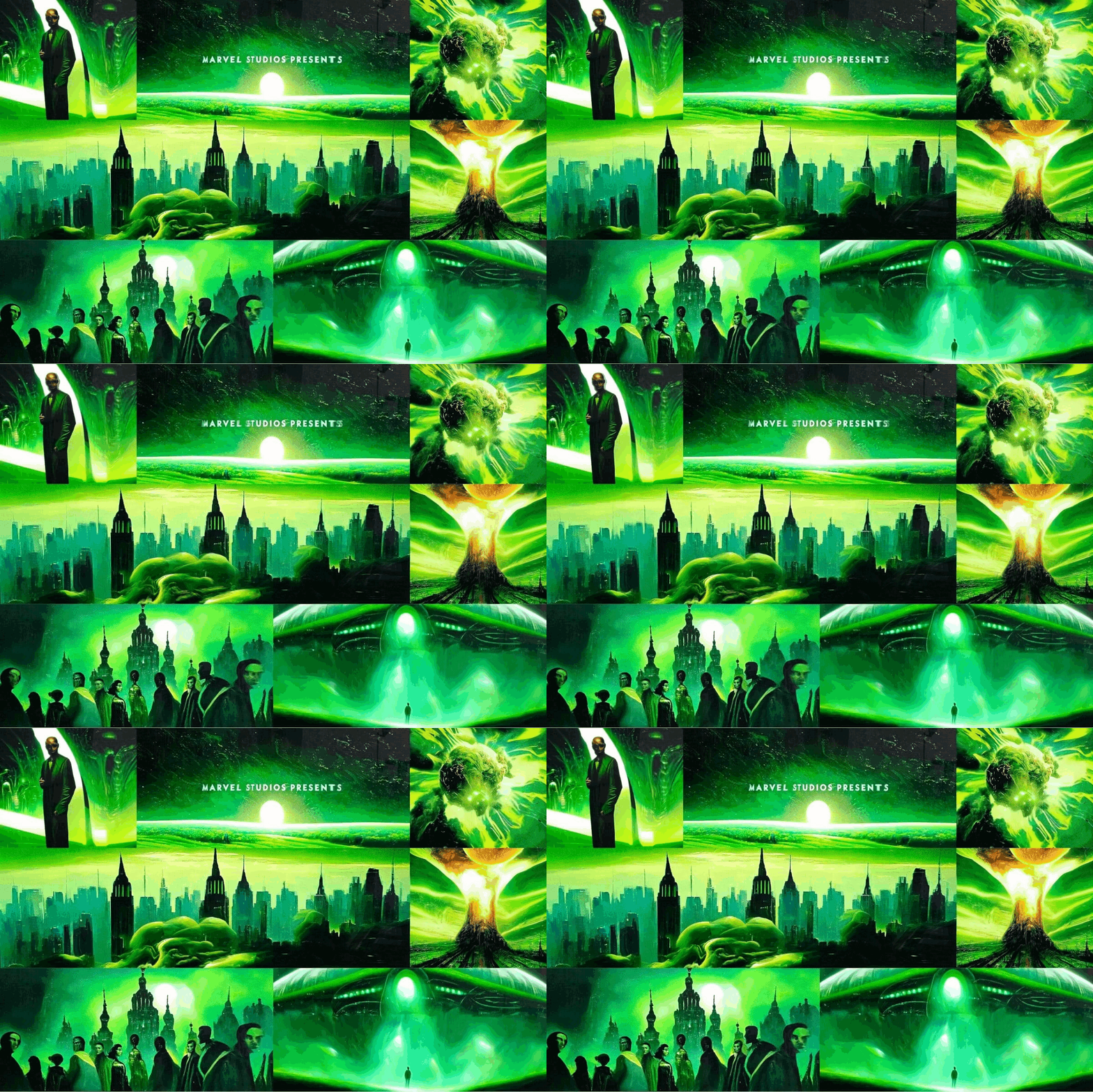
Marvel’s Secret Invasion opening titles prominently feature AI generated images. What’s interesting is that this sequence is obviously generated by AI; they don’t hide the fact, and it has an unedited quality. It’s proudly on display. AI plays in perfectly with the series’ themes of shapeshifters, copycats, face-stealers, and paranoid fears of humans being replaced.
Of course the internet is divided; some Marvel fans say it’s brilliant and thematic, some hate it and think Disney is betraying human artists by using AI. But isn’t that the point? Let’s delve in and declassify the AI invasion hidden in plain sight in Marvel’s latest espionage thriller.
Did Marvel really use AI artwork in Secret Invasion?
You better believe it. The show’s director and executive producer Ali Selim confirmed to Polygon that the artwork in the opening titles was generated using generative AI technology. Method Studios, the VFX house behind the shape shifting sequence, stated in The Hollywood Reporter that they used Deep Learning Models from commerical AI vendors (I’m guessing Dall-E) and an in-house custom AI tool (they probably just trained a data set on concept art from their art department) to create the desired ersatz effect:
“Method Studios’ team of designers skillfully skillfully leveraged the power of both existing and custom AI technologies to apply the otherworldly and alien look.”
Why does the AI art in Secret Invasion look so fake?
The opening titles have an off-green, painterly style, with poorly rendered faces and artefacts. The low frame-rate images flicker and shift, capturing how AI used to morph as it generated. The animation makes it seem like its rendering, and we’re watching the iterative process of AI occur in real time.
It’s a deliberate stylistic choice with artistic intent. They want your eye to register it as false and created by artificial intelligence. Artlessness is the most difficult art. To a trained eye — anyone with experience in AI art — it looks like they used an outdated model of Dall-E, several versions behind where the AI technology is now. If they wanted photorealism, the images could be done much “better” and virtually indistinguishable from reality:
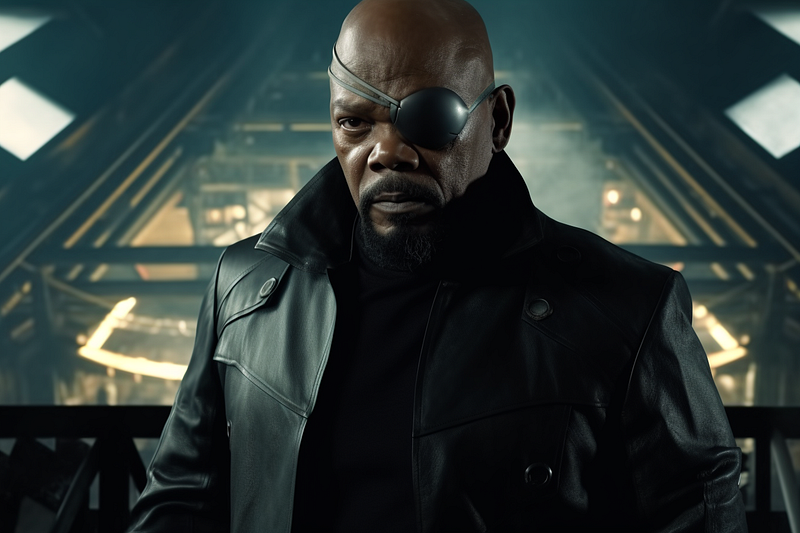
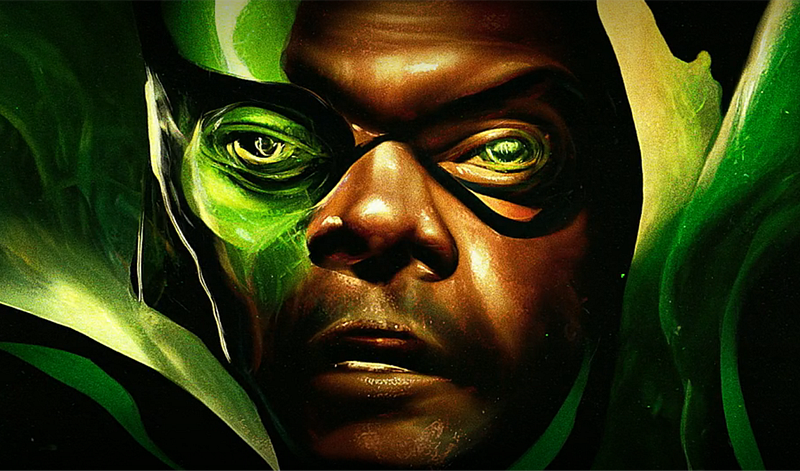
But that’s not the point. Marvel needs it to appear obviously fake to anyone with a passing acquaintance with AI art; for all viewers to share that shock of recognition. The show’s tagline put it best: “The world needs to know”.
Raising awareness of AI fakery
It’s my experience that the general public doesn’t realize how advanced AI art has become. That’s why Marvel needed to make it trippy and uncanny.
My “What if?” fake photo-series of impossible events (like Meghan Markle being crowned Queen of England) unintentionally attract hundreds of true believers—a worrisome phenomena with an election year coming up soon!
That’s why it’s more important than ever to be skeptical of images and to encourage AI literacy. One of my friends and colleagues in this space has started a website, Deepfakes Watch, to keep track of AI fake news. And I regularly publish informative guides to help the public detect AI images:
How do the themes of Secret Invasion embody fears of AI art?
It mirrors our own world’s struggle for truth in a wealth of misinformation. Duplicity is the new norm. Not only do we have to question if photographic evidence is real or not, but also whether artworks were created by humans. Both subject matter and source are drawn into question, evoking the iconic tagline of the Secret Invasion comic book series: “Who do you trust?”
The Skrull talent to steal faces by shapeshifting mimics how AI ingests the likenesses of human faces in their training sets (like Face App, Clearview and Lensa). And the Skrulls’ method of stealing identities is perhaps too close for comfort for the artists who feel their styles are impersonated.
AI allows us to create visuals that would be difficult or time consuming to produce manually, but it also inflames doubt and replaces human artists.
Disingenuous Disney: Skrulls in the House of Mouse
Of course, Disney has barged into this controversy like a behemoth by choosing AI tools over artists on such a prominent Disney+ show:

It hasn’t gone uncriticized. While Method Studios is at pains to emphasize that AI was just one tool in a collaborative process, to many it rang false. It seemed particularly insensitive given that AI generation is a huge point of contention for Hollywood during the current and ongoing writers’ strike.
Of course, Disney has never shied away from technology, and it was part of Walt’s entrepeneurial spirit (every classic animated feature introduced new techniques to animation). In fact, Disney was at the forefront of the AI tools to make actors appear older or younger. Coincidentally, Samuel L. Jackson himself was de-aged to play a 1980s version of Nick Fury in Captain Marvel.
On the other hand, artists have been trying to invoke the wrath of Disney to battle AI copyright on their behalf. “NO AI” activists started selling AI generated images of Mickey in an attempt to provoke legal action.
They hoped monetizing Disney’s intellectual property would embroil the cultural monolith in copyright debates, and force the juggernaut to help delegitimize AI art (AI images are currently considered public domain).
It didn’t work. On the contrary, Disney seems to have “picked a side” in the AI controversy. You can bet those opening titles are protected. As I’ve said before: Disney only stands to benefit from the ability to copyright AI art.
How Disney/Marvel could use AI art in the future
First, the obvious bad news: job cuts. There’s the concern that studios will replace artists, writers, and creative teams with these AI models, taking away opportunities to work. Never mind that much of Disney animation is farmed out to third party studios (and has been for decades. While Disney animators labored over the 6,469,952 spots in 101 Dalmatians (1961), they outsourced most of the bubbles (a mere 1 million) in The Little Mermaid).
The sidelining of real human artists is a slap in the face to ‘Ink and Paint’, especially considering that AI use large amounts of human-made images.
AI can however be used to offset unsustainable working conditions. Anime artists in Japan are notoriously underpaid and overworked. It’s not perfect, but some point to the positive collaboration of real human art directors and animators using machine learning tools in Spider-Man: Into the Spider-Verse.
For Spider-verse, the AI was trained on original content and used for tasks like ‘inbetweening’ (completing frames between keyframes) and to predict facial expressions in shots, freeing up the artists to work on other aspects. This way AI doesn’t replace artists, because you need creative teams for the entire process, from the initial storyboard phase to final compositing stage.
But where the real opportunity for Disney magic lies is building their own custom AI tool for personalized content. Disney could leverage its vast archive to create a commercial AI art generator for home users:
Additionally, Disney could offer personalized storytelling in which every viewer sees themselves represented and rendered into content. Imagine seeing yourself in Captain Jack Sparrow’s crew, or AI animated into The Aristocats. I’ve suggested this before, and Black Mirror recently did an albeit nightmarish take on this concept in the episode ‘Joan is Awful’.
But what is a Disney fairytale without a villain? There’s some dark magic too. In the worst-case scenario, if AI art become copyrightable, a massive media monolith could monololize all latent art. Imagine Disney batch prompting astronomical amounts of concept art before anyone else:
This is a variation on what Cory Doctorow calls “chokepoint capitalism”, in which a corporation owns all the possible images contained in their model. They’d be the only game in town. It would crush competition and creatives.
Secret Invasion did human artists an injustice
With all these complex concerns, it’s fair to say a little more critical self-awareness from Marvel would’ve gone a long way. It’s one thing for Secret Invasion to mirror what’s going on in the real world; it’s another to actually threaten (or at least normalize) job displacement in the creative industries.
While Marvel managed to successfully integrate the otherworldly ‘alien’ aesthetic that AI embodies into their narrative, they’ve missed out on the chance to provide a commentary on AI itself, and how it will affect artists.
It was an unapologetic embrace of AI without serious consideration of how it reshapes our world. Disney has shown us that AI is a significant player in our creative spaces. But they’ve done so without acknowledging the ethical implications of AI’s increasing role in creative spaces that this future holds.
How Marvel Studios could’ve done better with Secret Invasion
If that’s the look they wanted, I question why they didn’t use human artists, who could’ve employed conventional techniques to replicate the AI style. It would have brought attention to the blurring lines between human and AI.
Taking it further, if Marvel had interspersed human with AI art, it might’ve caused an amazing discussion as we scrambled to identify which was real.
Obviously, I think there is merit to AI art. But Secret Invasion had the golden opportunity to spark a conversation about the effects and implications of AI on society, particularly in the art world.
Instead, they allowed the tool to speak for itself. It felt like a blatant use of a controversial technology for the shock factor, for creating headlines, and for attracting attention to the series. But the discussion stopped there.
Just as the Skrulls in Secret Invasion try to trigger an identity crisis, so too does AI pose a threat to our sense of self in the digital world. The question is not just “Who do you trust?” but also “Who are you in the era of AI?” This is the conversation that Disney and Marvel could, and should, have started.
Who is Jim the AI Whisperer?
Jim the AI Whisperer offers private training in how to use AI generators to create stunning visuals, as well as how to write original and compelling content. If you’re interested in discovering more, feel free to contact me.
I’m also available for journalism opportunities, podcasts, interviews, fine-tuning AI prompts, and creating custom prompt libraries for companies.


