
“Man The Hunter” Wasn’t The Catalyst For Human Evolution
Nineteenth-century European beliefs and expectations informed early theories that ignored the role of women
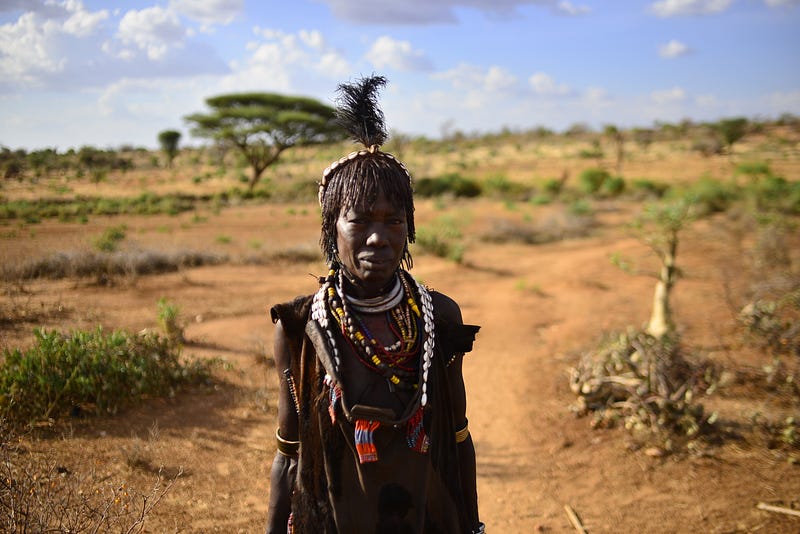
We have this idea in our heads of groups of male hunters out there chasing down a wooly mammoth while the women of the tribe tend the home fires and maybe pick a couple of berries. This story, and it’s really just a made-up story, informs a lot of how we think about men and women and their roles today. It infuses our belief systems with incorrect notions of how it always was, including marginalizing the role of women in human evolution.
One of the challenges of anthropology is to be able to evaluate what you are seeing through a clean lens, rather than through the lens of your own culture and the expectations that go with it. Because we have more awareness around that in modern times, researchers try to be more careful than they were in the past about not ascribing their own values to what they are studying.
None-the-less, those long-held beliefs about our human past have legs even though they are no longer currently scientifically supported. “Man the hunter” as the primary actor in human evolution is a particularly sticky one that continues to influence how we think about men and women in modern times. It fits in with patriarchal expectations of the world even though that’s a social system that is less than 10,000 years old.
One such belief is that even though the structural changes needed for bipedalism appeared long before stone tools came into use, it has long been assumed that male hunters learned to rise up their hind legs in order to see prey over tall grasses as well as to be able to wield primitive weapons.
This model of “Man the Hunter” is a modern manifestation of assumptions that first became popularized through the works of Charles Darwin in the mid-to late nineteenth century. However, they need to be contextualized historically as embedded in a particular cultural constellation of practices and attitudes of nineteenth-century Europe. When twentieth-century anthropologists revisited questions of human cultural origins, they again privileged Man the Hunter as the key to human development. differentiating us from other primates.
Bonvillain, Nancy. Women and Men: Cultural Constructs of Gender. p. 15
Because of these assumptions, male hunting behavior becomes the defining catalyst that is seen as leading to human inventiveness and achievement. By contrast, female behavior recedes into the background and is seen as passive and secondary. This dovetails nicely with another incorrect assessment that arose about the same time — Charles Darwin’s appraisal of men as randy and sexually assertive, eager to spread their seed far and wide, and women as sexually reticent and choosy.
Current research indicates that women are actually less inclined to monogamy than men and mating with several people would have increased a woman’s chance at a viable pregnancy. Multiple mating and cooperative child-rearing allows for a higher likelihood of reproductive fitness, the chance that offspring will go on to produce their own offspring. That’s recognized now but it didn’t make sense by Victorian patriarchal standards.
As primatologist Sarah Hrdy observed, “To Darwin, elusiveness was as integral to female sexual identity as ardor was to that of their male pursuers.” And the stakes of this distinction between male and female, ardent and elusive, active and passive, coy and eager, selfish and tender, were high. Indeed, all of civilization, Darwin and his contemporaries suggested, hung in the balance.
The English gynecologist William Acton was a well known and respected contemporary of Darwin. He undoubtedly influenced Darwin’s thinking and was another voice contributing to the notion of “inherent” female sexual restraint and even aversion. Acton wrote about this as a scientific fact, rather than an expression of the mores of the Victorian society that he lived in.
There are many females who never …the majority of women (happily for them) are not very much troubled with sexual feeling of any kind. What men are habitually, women are only exceptionally…There are many females who never feel any sexual excitement whatever. Others, again, immediately after each period do become, to a limited degree, capable of experiencing it; but this capacity is often temporary, and will cease entirely till the next menstrual period. The best mothers, wives, and managers of households know little or nothing of sexual indulgences. Love of home, children, and domestic duties are the only passions they feel.
Martin, Wednesday. Untrue (p. 125). Little, Brown and Company. Kindle Edition.
Because active, sexual men and passive, asexual women made sense to Darwin and the other scientists of his day, their work is infused with incorrect assumptions that were accepted as fact for many generations. Until 50 or 60 years ago, a lot of those same assumptions were still being widely held in scientific circles, and even as that has begun to change, the old beliefs are still a part of the cultural narrative and have not changed.
What we know now is that early hominids weren’t covered in hair in the same way as our primate cousins and so women had to carry their babies who could not cling to their mothers as other primates do. The earliest stone tools are “scrapers” and “choppers” probably used for processing food and perhaps hides — not spears or other weapons for hunting or killing. Other early tools were likely to have been baskets or other storage containers for transporting both infants and foodstuffs.
An alternative evolutionary model has now been proposed by scientists like Nancy Tanner, Jane Lancaster, Lila Leibowitz, and Adrienne Zihlman. This alternative view is that the erect posture required for the freeing of hands was not linked to hunting but rather to the shift from foraging (or eating as one goes) to gathering and carrying food so it could be both shared and stored.
Moreover, the impetus for the development of our much larger and more efficient brain and its use to both make tools and more effectively process and share information was not the bonding between men required to kill. Rather, it was the bonding between mothers and children that is obviously required if human offspring are to survive. According to this theory, the first human-made artifacts were not weapons. Rather, they were containers to carry food (and infants) as well as tools used by mothers to soften plant food for their children, who needed both mother’s milk and solids to survive.
This theory is more congruent with the fact that primates, as well as the most primitive existing tribes, rely primarily on gathering rather than hunting. It also is congruent with the evidence that meat eating formed only a miniscule part of the diet of ancestral primates, hominids, and early humans. It is further supported by the fact that primates differ from birds and other species in that typically only mothers share food with their young. Among primates we also see the development of the first tools, not for killing, but for gathering and processing food.
So, as Tanner writes of the still much earlier time that provided the foundation for the Old Society we have examined, “woman the gatherer,” rather than “man the hunter,” seems to have played a most critical role in the evolution of our species.
Eisler, Riane. The Chalice and the Blade . HarperOne. Kindle Edition.
This contribution to the survival of the group was integral and would have made ancient women a vital part of the band or tribe — not as has been depicted in our cultural imagination, largely passive homebodies tending to children and hearth while the men went out to provide. In fact, that isn’t an actual dynamic until the invention of the plow about 8 thousand years ago, an agricultural implement that needed superior upper body strength and could not be employed while caring for small children. This is when women were first relegated to the indoors and became more dependent on men to provide for them.
Observation of toolmaking and tool-using behavior in non-human primates suggests a greater likelihood of female involvement than of male involvement. For instance, more frequently than males, female chimpanzees at Gombe in Tanzania modify twigs to extract termites from tree trunks and branches, transporting their “tools” for use to other locations. Female chimpanzees observed in Guinea and Ivory Coast are more likely than males to use stone hammers to extract nuts from shells. Females in these groups also transport nuts and stone hammers for reuse, creating “archeological sites” (McBrearty and Moniz, 1991, p. 76).
Bonvillain, Nancy. Women and Men: Cultural Constructs of Gender. p. 18
The point of this is not to marginalize the contributions of males. They too gathered and foraged and brought in meat, either through scavenging or hunting. It is to recognize that contrary to popular belief, females played a very important and even intrinsic part — something that has largely been unrecognized outside of scientific circles. Paleolithic peoples survived because they all cooperated with each other. In fact, anthropologist and primatologist, Christopher Boehm, believes that suppressing our primate ancestors’ dominance hierarchies by enforcing these egalitarian norms was a central adaptation of human evolution. Enhanced cooperation lowered the risks of Paleolithic life for small, isolated bands of humans and was crucial to our survival and evolutionary success.
Like many men today, Darwin and Acton would not conceive of anything other than the patriarchal structures that they’d always known. They could not imagine women with sex drives that equaled those of men, even though the vibrator was invented about this same time, in order to help treat the symptoms of sexual frustration in women — known at the time as hysteria. Women weren’t asexual, they were sexually repressed by their culture and it’s expectations of what a well-bred and socially appropriate woman was like.
Most people are unaware of how off base Darwin actually was about much of his theory of evolution because it suits our society’s continued patriarchal beliefs to maintain it. The view of men as active and inventive and of women as passive, ornamental, and best suited for caring for the home and children is still deeply ingrained in our culture.
What would it do to our concept of ourselves and our roles in the world if we were to embrace the truth — that women weren't relying on a provider until about the last 3% of human history? In fact, for much of that time, women were primary providers, feeding themselves and their children and playing a fundamental role not only in the survival of their tribe but in the evolution of our species. It is only as our ancestors began to more regularly eat large game and then later began to have plowed agriculture, that this dynamic shifted.
Woman the mother, and woman the gatherer played a much larger role in our evolution than has previously been given credit and it’s time for that to change. Continuing to uphold Victorian beliefs just because they are more comfortable is not an excuse to keep ignoring modern scientific understanding of our ancient ancestors and our evolutionary trajectory.
© Copyright Elle Beau 2020 Elle Beau writes on Medium about sex, life, relationships, society, anthropology, spirituality, and love. If this story is appearing anywhere other than Medium.com, it appears without my consent and has been stolen.