
Full Hips And Large Breasts Don’t Actually Signal Fertility
Our notions about beauty are cultural, not evolutionary
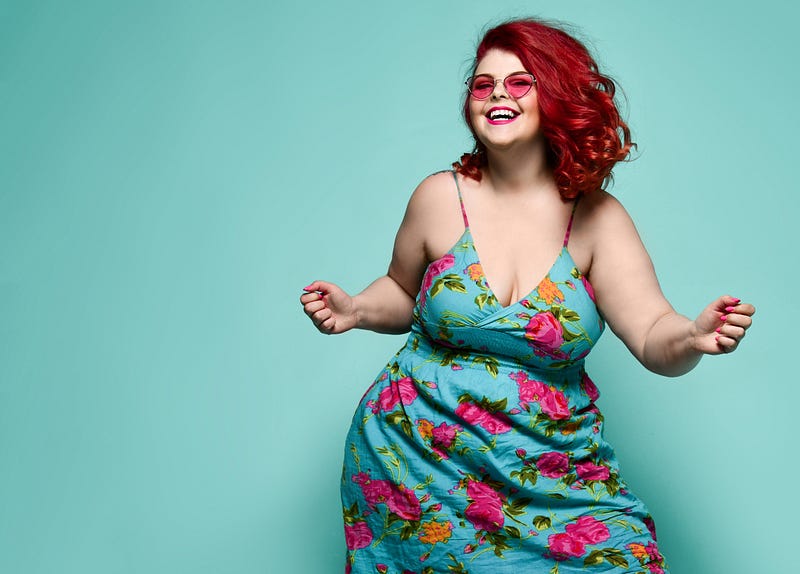
There’s this pervasive cultural narrative that early women looked for the best hunter/provider and only wanted to mate with him. Early men looked for the woman most likely to bear him healthy children, and large breasts and wide hips were an indication of this. I’m not sure how these notions arose, but they don’t have a lot of basis in reality.
In fact, there are so many things wrong with this narrative that I almost don’t know where to begin. Let’s start with the most glaring. If it were indeed the case that voluptuous women were the most fertile, it would be to our evolutionary advantage for the woman pictured above to have been the beauty ideal throughout history. In fact, she’d still be our ideal woman, rather than one who looks like she hasn’t eaten in months with a great “thigh gap.” Despite the recent popularity of Kim Kardashian, a woman who looks like she is just a few steps above a concentration camp victim is still a prevalent ideal presented to our society.
Throughout history and across cultures, beauty standards have always been somewhat variable. For much of the past 10K years, a plumper woman was considered to be more healthy, because she clearly wasn’t starving, but that still doesn’t have a direct correlation with fertility. In ancient Egypt and the roaring 1920s in America, it was a slim, small-breasted woman who was considered most desirable.
William Lassek and Steven Gaulin, anthropologists from UC Santa Barbara, have reviewed the research on body shape, attractiveness, and fertility. As well as waist-to-hip ratio, they looked at the impact of body mass index (or BMI).
Men tend to prefer women with very low waist-to-hip ratios (whose waists are much narrower than their hips), but these women are actually less likely to conceive than women with a less pronounced hourglass figure. (emphasis mine) Younger women are more likely to have an hourglass figure, and age is related to fertility, but the most attractive waist-to-hip ratios are generally found in women in their late teens, whereas women’s fertility tends to peak in their mid to late twenties.
Paleolithic women were so physically active and had so little body fat that they only menstruated about 4 times per year. Paleolithic peoples ate very little meat, so the role of gathers in feeding the tribe was a critical one. In fact, it’s been hypothesized that we became bipedal in order to allow females to carry home what they’d gathered while also carrying a baby. In other words, they didn’t look like Raquel Welch in the movie One Million B.C. And yet, the species not only survived, but it thrived.
The second major issue with this cultural narrative is the idea that women are sexually choosy, willing to only mate with the best provider they can get. Charles Darwin assumed that humans mirrored the animals he studied because that fit in with Victorian notions about female sexuality.
As primatologist Sarah Hrdy observed, “To Darwin, elusiveness was as integral to female sexual identity as ardor was to that of their male pursuers.” And the stakes of this distinction between male and female, ardent and elusive, active and passive, coy and eager, selfish and tender, were high. Indeed, all of civilization, Darwin and his contemporaries suggested, hung in the balance.
The English gynecologist William Acton, author of the ambitious and influential The Functions and Disorders of the Reproductive Organs in Childhood, Youth, Adult Age, and Advanced Life, Considered in the Physiological, Social, and Moral Relations (1857), may have influenced Darwin’s thinking and was another voice contributing to the culture’s discourse about “inherent” female sexual restraint and even aversion to sex.
Women with sex drives, asserted this well-respected thought leader of his time (who also believed that masturbation depleted life energies and contributed to illness), were exceptional:
“There are many females who never …the majority of women (happily for them) are not very much troubled with sexual feeling of any kind. What men are habitually, women are only exceptionally…There are many females who never feel any sexual excitement whatever. Others, again, immediately after each period do become, to a limited degree, capable of experiencing it; but this capacity is often temporary, and will cease entirely till the next menstrual period. The best mothers, wives, and managers of households know little or nothing of sexual indulgences. Love of home, children, and domestic duties are the only passions they feel.”
Martin, Wednesday. Untrue (p. 125). Little, Brown and Company. Kindle Edition.
In many places in modern-day South America and some parts of Asia, partible paternity and even polyandry are still practiced. Cooperative breeding, with several fathers taking responsibility for the welfare of children, doesn’t mesh with what we’ve been taught about the Standard Model of Human Evolution, which says that “A woman having sex with another man is always a threat to the man’s genetic interests, because it might fool him into working for a competitor’s genes.”
This theory may sound reasonable, particularly from a patriarchal perspective, but there is significant evidence, both from the past and from modern examples, which indicate that it just doesn’t actually work that way. Human beings are hardwired for cooperation and taking care of each other, and that, rather than out and out competition, is what best ensures that your genes will go on to propagate themselves.
There is a growing consensus among anthropologists that we evolved not as monogamous dyads but as cooperative breeders. The culturally strong image of the brave pre-historic hunter bringing home the bacon to his mate who is sitting back at the cave waiting to be provided for is really just a cultural myth. For most of human history, small bands of men and women raised young collectively, and almost certainly mated with multiple partners.
This is a lifestyle with a lot of evolutionary benefits. Multiple mating in primates establishes and continually reinforces social bonds so that there are low levels of conflict, and there is every reason to believe the same was true of our hunter-gatherer ancestors. Enhanced cooperation meant all were more likely to look after one another and their young, thus improving each individual’s reproductive fitness (the odds that their offspring would go on to produce offspring).
Recent research has also shown that women are actually less inclined toward monogamy than men are. “Psychologist Marta Meana summarized it very succinctly when she told me, “Long-term relationships are particularly hard on female desire.” We’re so sure that it’s men who are “wired to roam” and get bored with monogamy faster than women do. But women are the ones who struggle especially with the institutionalization of roles and domesticity dampening their desire, as experts including Esther Perel and Meana have found.”
Until the onset of patriarchy, about 10K years ago, most cultures traced lineage through the mother. Cooperative breeders living in small bands of 20–50 people would have cared for all the children of the tribe regardless of who the father was. In fact, they all cared for each other, because it was in the best interest of the survival of their clan.
And since meat was only a small part of most Paleolithic diets, women had little incentive to align themselves with one provider. For the most part, they were providing as much or more sustenance to the tribe. The cultural conditions that we have been taught to think of as timeless and inevitable are actually the byproduct of specific conditions that took place in particular geographic regions in the relatively recent past.
It is only when women were no longer allowed to provide for themselves and were forced indoors to only care for hearth and children and when they were dependent only on one man for their survival that the importance of a good provider becomes a factor. But that only took place in the past 3% of human history and according to a recent Pew study, both men and women most highly value partners who are compassionate and caring, and it is men who actually value being a good provider even more than women do.
We’ve been told a tale based on outdated theories influenced by patriarchal dynamics and Victorian mores. What recent science is indicating is an entirely different story. Women are just as sexual as men and get bored with monogamy before they do. Cooperative and not competitive breeding is what allowed our species to survive and the shape of a woman’s body has little to do with her ability to successfully bear and feed offspring.
Our notions about female beauty are influenced by our culture and not by evolutionary factors. What we think we know is completely off base. But because it’s been a part of human history in our most recent past, we tend to believe it’s always been that way. It suits patriarchal narratives to have everything be binary and cut and dried as relates to gender and gender roles, but the actual human experience is a lot more nuanced.
For most of human history, our species was undoubtedly propagated by wiry, small-breasted women who worked hard every day to help feed their children and their clan. They weren’t waiting to be provided for; they were active in the survival of their tribe. They were sexually promiscuous because it ensured a better chance of being inseminated by high-quality sperm, and their offspring were raised by the tribe as a whole.
Our culture and society are very different now. It makes it hard to conceive of anything else, particularly since we’ve been so indoctrinated into those beliefs that tell us the recent past is the history of humanity. It isn’t — and this means that we have more latitude to chart a different course, should we so choose. Those cultural narratives are only stories, and we do not need to be confined by them.


