avatarAaron Meacham

Free AI web copilot to create summaries, insights and extended knowledge, download it at here

2821

Abstract

tle serving as the exposition. And yet, its essential function is dismissed time and again by readers who make it halfway through the poem before throwing their hands up in frustration. Failing to read the title is like picking up <i>Romeo and Juliet </i>in Act 2 to find Romeo in the Capulets’ backyard wooing this pretty girl. Wow, he’s a real charmer! You missed the parts where dad tells a potential suitor that she’s not turned 14 yet and where Romeo laments that the woman he’s crushing on won’t have sex with him…among other essential details.</p><p id="5501">So don’t just read the title, but read the title and consider it with the same attention you would give to the opening chapter(s) of a book. Chances are high that it’s trying to clue you in to essential information for later on so you’re not hopelessly lost.</p><h1 id="0a45">A Title Putting in Work</h1><p id="756d">In the previous installment, I left off with some links to recommended poems that demonstrate a clear turning point. I want to revisit a poem to talk about the work its title does.</p><ol><li>Robert Frost’s <a href="https://www.poetryfoundation.org/poems/42891/stopping-by-woods-on-a-snowy-evening">“Stopping by Woods on a Snowy Evening”</a></li></ol><p id="348f">This one seems obvious at first. The title is providing the reader with details about the setting. It’s nighttime. It’s cold. We’re out in the woods, so probably isolated and apart from civilization and from other people. And this is where most readers move on to the first stanza.</p><p id="c9ec">But the title isn’t “Woods on a Snowy Evening.” It could have been. It would be shorter, more concise. And isn’t that what good writing should be? Cut the unnecessary?</p><p id="030f">But the entire poem, though it appreciates the beauty of this scene, actually hinges on the <i>stopping</i>. That’s why the speaker is able to appreciate the scene in the first place. That’s what the horse finds so strange. That’s why the turn comes with the breaking of the rhyme pattern when the speaker <i>starts moving again</i>.</p><p id="b7cb">If this were a pop song, it might be titled “Promises to Keep” to give it appeal or set up the chorus (assuming it chooses to repeat the catchy turn), but that wouldn’t do a thing to help us make sense of the opening line. We wouldn’t really get context until line four — 25% of the way through!</p><p id="bc2a">If this were a short story, it might be titled “Miles to Go.” But it would spend more time establishing the setting and probably work harder on setting up a theme of distance and time, drawing out the moment and contrasting it with the labor. Maybe even build up a conflict between the speaker and the landowner. Maybe even name one of the characters “Miles.”</p><p id="dc77">But what Frost has done is give his readers just enoug

Options

h information to navigate his poem without overwhelming them. He’s clear, intentional, and concise.</p><p id="9d6d">When reading (or writing!) poems yourself, consider how a title can work to establish a foundation for what’s to come. Does it suggest a mood or tone? Does it provide necessary setting details? Does it establish what structure or form the poem utilizes?</p><p id="0665">Some wonderful poems that make great use use of their title:</p><p id="dce8">Billy Collins’s “<a href="https://www.poemhunter.com/poem/another-reason-why-i-don-t-keep-a-gun-in-the-hou/">Another Reason Why I Don’t Keep A Gun In The House</a></p><p id="a1fb">Pablo Neruda’s “<a href="https://poets.org/poem/ode-my-socks">Ode to My Socks</a></p><p id="c38f">Heather McHugh’s “<a href="https://quod.lib.umich.edu/m/mqrarchive/act2080.0026.002/00000033">From 20,000 Feet</a></p><p id="291f">Have some favorite poems with strong, effective titles? Drop a link and share what you like. And don’t forget to suggest topics for future posts!</p><p id="b7f6"><i>More in this series:</i></p><div id="a299" class="link-block"> <a href="https://readmedium.com/making-poetry-more-accessible-3-207f62823b03"> <div> <div> <h2>Making Poetry More Accessible #3</h2> <div><h3>Making Sense of Imagery</h3></div> <div><p>medium.com</p></div> </div> <div> <div style="background-image: url(https://miro.readmedium.com/v2/resize:fit:320/1*gCmk7aU4SEAujC-kedJ0qQ.jpeg)"></div> </div> </div> </a> </div><div id="e186" class="link-block"> <a href="https://readmedium.com/making-poetry-more-accessible-4-38a261198691"> <div> <div> <h2>Making Poetry More Accessible #4</h2> <div><h3>Making Poetry More Accessible #4 — Repetition</h3></div> <div><p>medium.com</p></div> </div> <div> <div style="background-image: url(https://miro.readmedium.com/v2/resize:fit:320/1*_LIZb90b9Tik6UIHmPcgSQ.jpeg)"></div> </div> </div> </a> </div><div id="85f7" class="link-block"> <a href="https://readmedium.com/making-poetry-more-accessible-5-341c4c000f44"> <div> <div> <h2>Making Poetry More Accessible #5</h2> <div><h3>Structural Design Processing</h3></div> <div><p>medium.com</p></div> </div> <div> <div style="background-image: url(https://miro.readmedium.com/v2/resize:fit:320/1*j3CvU8UZLZGQSwJ4zumcaw.jpeg)"></div> </div> </div> </a> </div></article></body>

Making Poetry More Accessible, Round 2

Title Bout

Photo by Attentie Attentie on Unsplash

When considering the fighting style of poetry, it’s easy to get distracted by some of its flashier moves: rhyme, meter, figurative language. These elements represent more of the techniques you’d expect to find in the mid-to-late rounds of the fight, techniques that build upon the momentum established earlier in the fight. And the thing about making it to the later rounds? You have to survive the beginning.

One of the biggest frustrations I find in readers learning to understand poetry is that they don’t often make it to the later rounds — they get winded, worn-out, start breathing through their mouth. It’s tempting to blame this on stamina, but technique is just as essential in this fight. And one of the most useful techniques happens to be one of the most overlooked: the title.

What a Title Does

A title in a poem often functions differently than a title in a song or a short story or a novel. A song title is often something catchy and alluring.
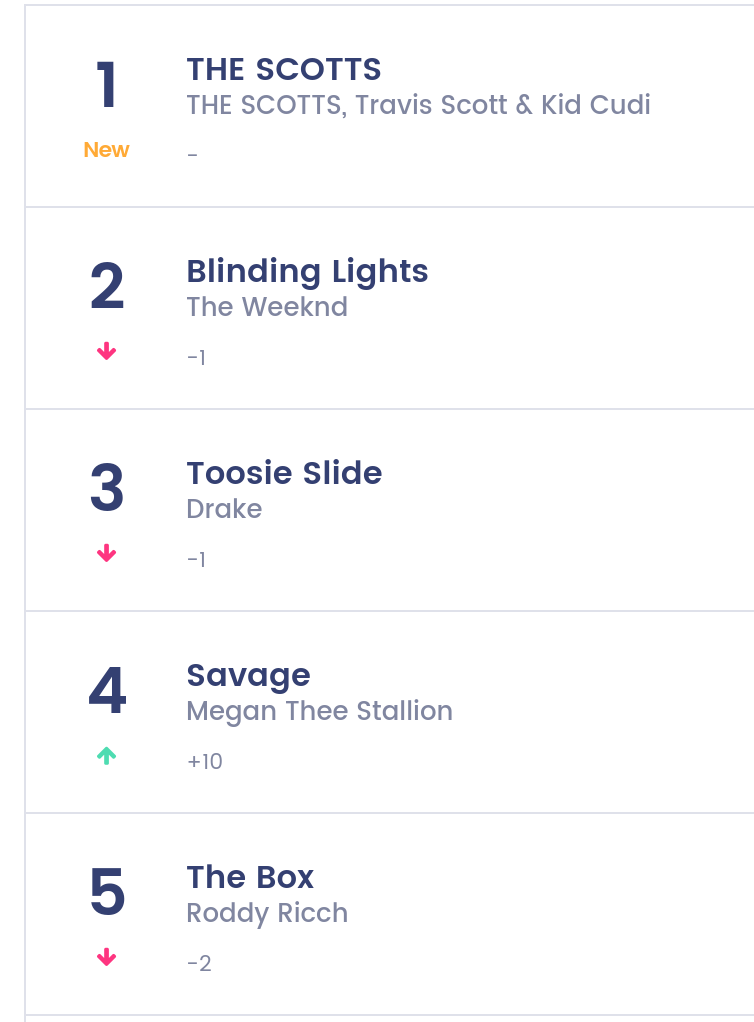
Image from billboard.com (week of May 9)

With the exception of “Tootsie Slide,” which indicates song structure, the others are short, punchy, cool-sounding — usually under three words. Scrolling down the rest of the Top 100 list, much of the same appears.

Short story titles often work to share the load of underscoring the ironic twist that’s so common to the medium: Jackson’s “The Lottery,” Palahniuk’s “Guts,” Poe’s “Cask of Amontillado.”

Novels may clue into a trope, as with Martin’s A Game of Thrones and A Clash of Kings, or foreshadow some event, as with Eggers’s The Parade. If the title does offer context, it’s usually slight. That’s what dust jackets and opening chapters are for, after all. Failing to consider a novel’s title with attention seldom detracts from the experience of reading it.

But not so with a poem.

In the opening of this series, I explained how the poem follows a condensed version of the Freytag Triangle, with the title serving as the exposition. And yet, its essential function is dismissed time and again by readers who make it halfway through the poem before throwing their hands up in frustration. Failing to read the title is like picking up Romeo and Juliet in Act 2 to find Romeo in the Capulets’ backyard wooing this pretty girl. Wow, he’s a real charmer! You missed the parts where dad tells a potential suitor that she’s not turned 14 yet and where Romeo laments that the woman he’s crushing on won’t have sex with him…among other essential details.

So don’t just read the title, but read the title and consider it with the same attention you would give to the opening chapter(s) of a book. Chances are high that it’s trying to clue you in to essential information for later on so you’re not hopelessly lost.

A Title Putting in Work

In the previous installment, I left off with some links to recommended poems that demonstrate a clear turning point. I want to revisit a poem to talk about the work its title does.

  1. Robert Frost’s “Stopping by Woods on a Snowy Evening”

This one seems obvious at first. The title is providing the reader with details about the setting. It’s nighttime. It’s cold. We’re out in the woods, so probably isolated and apart from civilization and from other people. And this is where most readers move on to the first stanza.

But the title isn’t “Woods on a Snowy Evening.” It could have been. It would be shorter, more concise. And isn’t that what good writing should be? Cut the unnecessary?

But the entire poem, though it appreciates the beauty of this scene, actually hinges on the stopping. That’s why the speaker is able to appreciate the scene in the first place. That’s what the horse finds so strange. That’s why the turn comes with the breaking of the rhyme pattern when the speaker starts moving again.

If this were a pop song, it might be titled “Promises to Keep” to give it appeal or set up the chorus (assuming it chooses to repeat the catchy turn), but that wouldn’t do a thing to help us make sense of the opening line. We wouldn’t really get context until line four — 25% of the way through!

If this were a short story, it might be titled “Miles to Go.” But it would spend more time establishing the setting and probably work harder on setting up a theme of distance and time, drawing out the moment and contrasting it with the labor. Maybe even build up a conflict between the speaker and the landowner. Maybe even name one of the characters “Miles.”

But what Frost has done is give his readers just enough information to navigate his poem without overwhelming them. He’s clear, intentional, and concise.

When reading (or writing!) poems yourself, consider how a title can work to establish a foundation for what’s to come. Does it suggest a mood or tone? Does it provide necessary setting details? Does it establish what structure or form the poem utilizes?

Some wonderful poems that make great use use of their title:

Billy Collins’s “Another Reason Why I Don’t Keep A Gun In The House

Pablo Neruda’s “Ode to My Socks

Heather McHugh’s “From 20,000 Feet

Have some favorite poems with strong, effective titles? Drop a link and share what you like. And don’t forget to suggest topics for future posts!

More in this series:

Poetry
Writing
Reading
Education
Self Improvement
Recommended from ReadMedium