
Making Poetry More Accessible — Imagery
Making ‘sense’ of images
I was recently asked about what makes a particular poem or a poet “accessible.” Why do I push Robert Frost, Billy Collins, or Mary Oliver when the world of poetry is so vast? And why do those poets seem to offer such a reliable in-road for new or struggling readers (and writers!) of poetry?
The answer always comes down to imagery.
More accessible poetry opens from a more level surface, one that can bring anyone to the conversation. Direct sensory detail is the shortest route. Ezra Pound and the Imagists understood this when they wrote their poetry for the average person using clean, clear language rooted in the image:
In a Station of the Metro
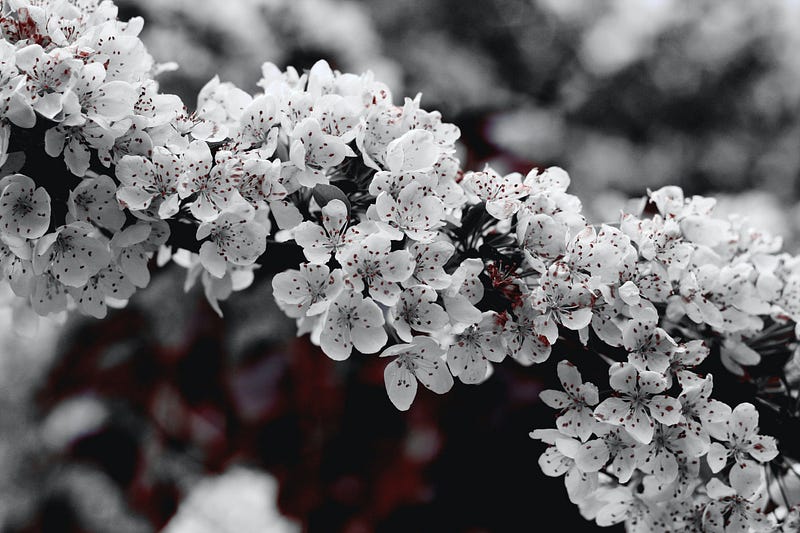
The apparition of these faces in the crowd: Petals on a wet, black bough.
As noted previously, the title works here to contextualize the setting for this poem, which is a direct comparison based on the image. It’s a visualization that we can all engage with. It requires very little unpacking. It’s specific and concrete. It avoids untethered abstraction.
Compare this to a Robert Frost poem that I hardly direct people to.
Fire and Ice
Some say the world will end in fire, Some say in ice. From what I’ve tasted of desire I hold with those who favor fire. But if it had to perish twice, I think I know enough of hate To say that for destruction ice Is also great And would suffice.
Who are these ethereal “some”? What is the taste of desire? What is the scale of fire or ice in this depiction? The planet as a burning ember? Human bodies frozen in giant blocks of ice?
It becomes clear to even novice readers that the fire and ice have metaphorical meaning, but are they also literal?
When the poem begins with abstraction, readers can struggle to find their footing. A solid, clear image in the opening is a highly-effective way to engage the reader’s senses and gain their trust to follow you along through the rest of the poem.
It’s one of the reasons that haiku is such a popular form of poetry, even among people who “don’t read poetry.” Haiku was a heavy influence on Pound and the Imagists with its focus on direct engagement with the image (not so much the adherence to syllablic patterns many think of today) followed by an insightful turn.
Extrasensory perception?
Most readers hear imagery and think of the classical concept of the “five senses” — sight, smell, taste, touch, and hearing. They look for concrete descriptions that tap into these mechanisms which the human animal uses to engage directly with its environment.
In Pound’s example above, “wet, black bough” checks the boxes of sight and touch. We can see the darkness and imagine touching the damp bark of the tree branch, its slick surface a magnet for the blossom petals. We’re invested in this scene and our imagination pulls us deeper into the folds of the moment.
But we have more than five ways to interpret the world and ourselves. If we limit ourselves to only considering our “five senses,” we cut ourselves off from a greater capacity for understanding. So what other “senses” can the poet use imagery and detail to appeal to?
Body/Self — perhaps the most overlooked sense, as well as the most diverse. If you want to get technical, call it proprioception. So much of this one often gets lumped in with “touch,” but it’s so much more than that. You have an awareness of your body’s balance and its condition. When it’s damaged, it produces pain, which is very distinct from the tactile feel of touching a surface or texture (note: several theories claim pain destroys language, but it remains a mechanism for navigating our environment, despite difficulties of expression). We experience nausea and arousal and disorientation though this body sense, it alerts us when things are going very wrong, and also very right. See: throb.
Temperature — this applies to the body, but also the environment. And we can usually discern when the fluctuation of our body’s temperature is due to a change in the environment rather than a biological condition (sickness). The mentions of “fire and ice” in the above poem avoid being imagery due to a lack of detail to evoke this sense of temperature. Sweat? Mirage? Chill? Frozen breath? Nothing that triggers our temperature sense or allows us to envision the scene through out temperature sense.
Time — we may not have a good sense of time, but we do have a sense of it all the same. And while measuring the passage of time proves very difficult without some external indicator, we still sense that time is passing. Seasons and solar position are two of the more visual ways time gets depicted, but the listing of multiple activities can denote time passing as well. (Also, while not imagery, punctuation ties in closely with timing; periods indicate stops, commas pauses, dashes immediate transitions, and ellipses omissions or jumps.)
Motion/Direction — one of my favorites, especially as it relates to showing change (or a turn) taking place. The motion of accelerating straight ahead is perceptibly different from turning in a circle. Motion can describe patterns or routines, which can also then be broken/stopped. As mentioned in Round 2, the title of Frost’s “Stopping by Woods on a Snowy Evening” juxtaposes the speaker’s stopping with the motion of work and duty. It’s also worth noting that motion depicts life and vibrancy by depicting activity; death is stillness.
Moral/Social—one of the trickier senses. This can be a depiction of body language or behavior, and works especially well if that description conflicts with an expectation (as between the speaker and “students” in Billy Collins’s “Introduction to Poetry”). Indignation has its own feel. The sweat of guilt is distinct from the sweat of food poisoning, from the sweat of a July afternoon.
Imagery opens the door to so many other elements of poetry. The associations we make with different sensory descriptions help us identify tones, themes, turns, figurative language, and so much more. So if you’re looking to improve your reading or writing of poetry, consider the use of imagery to help you out.
Some wonderful poems that utilize imagery to deepen our engagement with the subject matter:
Mary Oliver’s “The Kingfisher”
Ocean Vuong’s “Aubade with Burning City”
Edna St. Vincent Millay’s “The Snow Storm”
Leave a comment below sharing some of your favorite poems that exemplify imagery. What are some other senses that I overlooked?
More in this series: