
The Paradox of Progress and Why We’re Chasing an Illusion
Lost in an Ever-Creeping Future
An anthropological inflection point
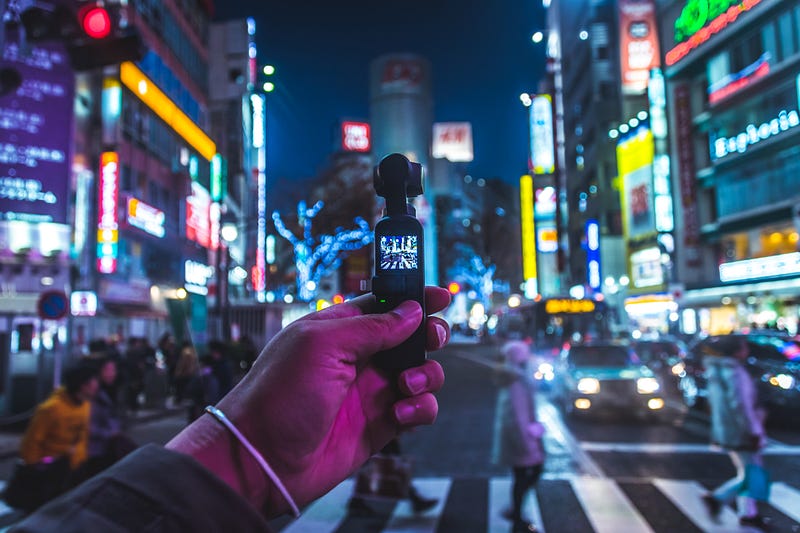
If we let our phones fall to the ground, would we see the forest for the trees? Would we understand this intricate web that we’re each a part of? Would we see where it is that we’ve drifted? How far we’ve come?
One of the strangest features of time is that it never stops. “The world spins madly on,” as The Weepies once said. Because it never pauses, though, it can be hard to have true perspective. We’re mired enough in our day to day lives that the thuds of an ineffable future pounding at our doorstep are easily missed beneath the oddities and intricacies embedded within each passing moment.
Sometimes the power of a story depends upon its details. They can breathe life and veracity into the most outrageous fictions. But when even the realities we’re living through are outrageous, it’s precisely those details that we turn toward: the sun on our skin, the hug of a loved one, the exchange of a meme, or the smell of popcorn. They keep us from sinking into existential despair.
The problems we’re facing are unprecedented. To face such a constant overflow of demanding threats each time we examine the infinite information machines in our pockets… it’s stultifying. To absorb all of it in true colors is more than most of us can manage.
But the ability to discuss each arising issue over FaceTime with the people I love, while wearing an octopus Animoji… well, it’s centering. That we share funny posts in the face of issues that threaten our existence… it’s grounding. It keeps us from sticking our head in the sand completely but it leaves us feeling numb toward the gravity of our place in time. It leaves us struggling to process the very context of our lives.
“In the future, you won’t need to bring your wallet with you. You’ll just pay for things directly with your phone!” people loftily used to fantasize in the not-so-distant past. Surely they didn’t envision the paradigm shift of a world suddenly using Apple Pay for their groceries being drowned beneath a cascade of TikTok videos.
“In the future, you’ll be able to video chat with people anywhere in the world! From your phone!” people dreamily used to hope. I doubt they could have foreseen the leap forward in human ingenuity that it took for me to video conference with people all across the world from my bed in my underwear. And I’m almost certain they couldn’t have foreseen the magnitude of the achievement going largely unnoticed behind funny filters and exaggerated backgrounds.
“In the future, there will come a time when technological achievement becomes uncontrollable and irreversible. Machines will build machines. It will be known as the technological singularity,” some of our brightest minds have been warning us for decades.
But the future outpaces our perception of it. The world doesn’t stop spinning just because ChatGPT can code itself. Even while we can’t assemble the 10 billion+ transistor microchips that drive our world’s economy without the help of the very computers we apply them to, we rotate ever-onward without skipping a beat. Even at that hallowed moment when we create sentient machines, even if they can act on their own accord, the Earth’s rotation will never falter — at least until our sun collapses.
When I was younger, I had a more naive perception of time. I thought surely if something was momentous enough, that this unceasing spin of ours might relent, even if only for a second. It might give us time to stop and reflect instead of pushing ever-forward like slaves of interminable cycles. But we lurch through this new age with a bleary-eyed detachment to this overarching paradigm shift we’re all a part of. We never steadied ourselves but we never stopped.
When the atomic bombs fell, could time really keep creeping on as it had? Could it really be that there were places on the Earth that continued to laugh and joke and play while those atoms were ripped violently apart? I’ve come to realize, though, that even a war of mushroom clouds won’t remove us from the moment. We’re temporally myopic.
We’re inextricably attached to this present of ours. Even as our minds drift freely between distant pasts and far away futures, we remain here. And if those futures we once fantasized about do arrive, we’ll welcome them as unceremoniously as we did iPhones and Alexas.
“Hey Alexa, turn on the lights.”
It’s almost absurd to think we’ll allow ourselves a grace period when we begin implanting Neuralink chips into our heads. We’ll give ourselves about as much time to pause and reflect on the change as we did when we purchased our first computers and phones with internet connections.
We’ll jump right into a brave new world with a trigger-happy disregard of the implications. We’ll confront moral gray areas that a species composed of cells and synapses could never properly prepare for. We’ll ridicule the people who don’t know how to navigate the fog and we’ll penalize those who don’t want to.
This ever-spinning world of ours can be unforgiving. It didn’t yield when we landed on the moon and it didn’t when we launched GPS satellites.
“Hey Siri, directions to Anchorage.”
“Starting route to Anchorage, Alaska.”
The reply is nonchalant. She’s unfazed by the 81 hour, 4,580 mile journey. Did the world stop for Siri when an update granted her the ability to instantaneously plan international road trips on the drop of an impromptu request?
There was a time when cellphones seemed like an unattainable goal. But then, there was a time that the internet was never even conceived of. There was a time when homes suddenly lit up with electricity. That even fire once needed to be controlled and harnessed is a fact that it’s important to remember as we grapple with artificial intelligences. It’s important to understand the impossible precipice we were born onto.
To look out at the world from such a staggering peak of innovation has meant facing problems that defy comparison. 99.9% of the humans who’ve walked this Earth before us couldn’t begin to comprehend these issues we’re now facing.
Social media, the internet… climate change, deep fakes, atomic bombs and artificial intelligence? The enormity of it all is desensitizing. It can be difficult not to feel numb in the face of the thousand strange features of our time. Confronting this growing tsunami of multiplying issues, many have surrendered entirely. But many more have simply grown used to slowly sinking beneath this rising tide of insurmountable problems.
Even as we wind along increasingly dire straits, we stay seated on this dizzying, dizzying ride. Even as things grow more complicated, intricate, craven, bizarre, hilarious and chaotic, there’s no side-stepping the present moment. We’re lost in the minutia; it’s what keeps us grounded.
We approach incomparable new situations with unwavering humanity. We look at the encroachment of the AI programs that could spell the beginning of the end, and we task them with writing never-ending Seinfeld episodes. We face the first pandemic in a century with drive-thru tests, Zoom concerts and thematic masks. We hack our electric cars to subvert monthly bills over heated seats imposed by tech billionaires. We make memes in the face of wars, epidemics, climate change and biodiversity collapse.
And while we make humor of these harrowing threats, our galaxy soars through a boundless void of staggering inconsequence at incomprehensible speeds. While we complete careening revolutions around the sun, we achieve fusion reactions here on Earth. We reanimate dead pig cells. We decode entire genomes. We launch colossal, computerized space telescopes. To think that it was only a few revolutions ago that we discovered fire is difficult to fathom.
It’s only in the rarest of moments we’re given a chance to sit in awe before the grandeur of our astonishing leaps forward. More often than that, we’re rooted enough in the moment to unironically lament that our Wi-Fi can’t be a little faster. We complain that the airplanes soaring through the sky can’t have moderately more comfortable seats and slightly more enjoyable movie selections.
Perspective is important. We’re tiny creatures in a boundless expanse of empty space and smoldering stars. We may not be alone, but the conditions for life are uncommon enough that we can reasonably feel pretty special to even be here. Many physicists believe that there are an unthinkably huge number of other universes out there, branching off from one another at each and every decision that each and every one of us makes.
In some of them, the conditions for life may never have been there to begin with. That we exist at all isn’t even a given. Not just life here on Earth… but matter itself.
Our universe and everything in it might never have happened. Some experts believe that it’s just as likely or more likely that it would have simply never come into being at all. According to a calculation performed by physicist Lee Smolin, the chances that a universe would have a law of physics even conducive to life were an infinitesimal 1 in 10²²⁹.
To be here right now — participants of a solar system rapidly increasing its understanding of itself — is extraordinary. And on a cosmic scale, to be a part of the species that transcended fire circles in caves to move on to building rockets and artificial intelligences, with half of our sun’s life still to go, well… it’s spectacular beyond words.
To evolve from single cells in churning seas into sentient, self-aware beings is remarkable. We’re saddled with a complicated consciousness that took billions of years to evolve. But it’s exactly that pesky, fascinating feature of aliveness that confines our perspective.
As we’re scrolling through social media mindlessly or filing taxes soullessly or working jobs unhappily, sometimes it’s important to remember that life didn’t need to happen at all. Love and loss and joy and laughter and art and music could all just be unrealized concepts floating in meaningless, timeless eternities. But we each happened onto the reality where we have all of those things. High five!
I’d say that’s proof of something pretty grand. Whether it’s a god or gods or some disembodied mass of energy, I’m reluctant to field any guesses. The fundamental realities of the universe, though, are unyielding in the scope of their beauty.
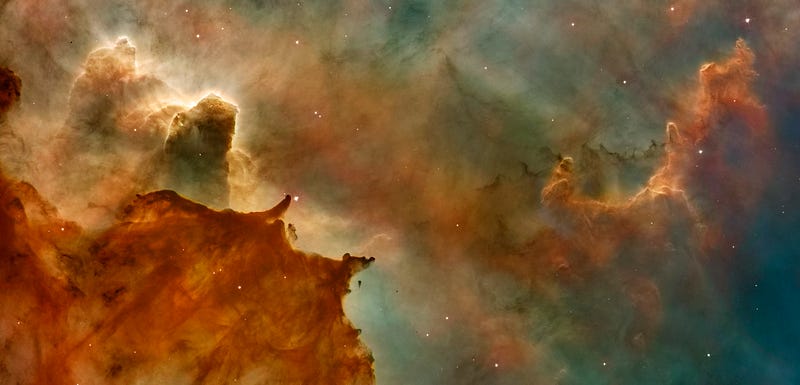
That we’ve gone on casually living our lives as we’ve grown to understand our place in the cosmos is some of the most overtly telling proof of how hopelessly entrapped we are in the here and now. There’s no discovery we can’t normalize. There’s no reality we can’t work into our hardened routines.
Whether anti-matter exists, black holes suck up galaxies, or quantum entanglement is a prevailing force of the universe, we’ll still probably awake in bed tomorrow. Whether we’re uploading our minds to clouds, or building cities on Mars, we’ll remain forever intertwined with the present moment. Even as we stare into the eyes of the great chaotic everything, we can find our footing in love, loss and laughter. Our perspective confines us to the present moment, but, in a way, that’s one of the most beautiful things about us.
You know what costs just over 3/5 of a gumball per day? Supporting the aspiring writer whose article you just finished! Additionally, by the powers vested in me, I’ll grant you unlimited access to the work of all the writers on this platform. All you have to do is sign up through this link here! Can you spare the equivalent of just over 3/5 of one gumball per day? 🧐