
TECHNOLOGY|DIGITAL LIFE
The Brain, the Soul and the Point of Singularity
When artificial intelligence surpasses human intelligence
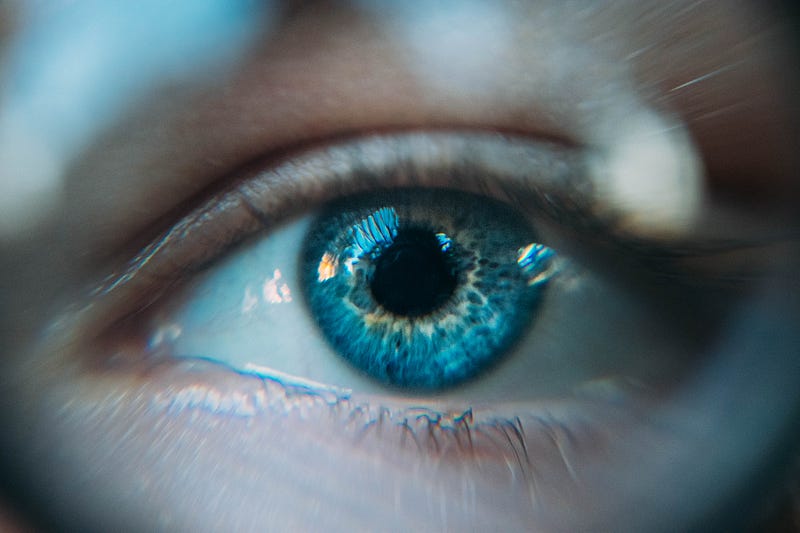
Critical to the conversation about Artificial Intelligence is the question of whether or not human intelligence is actually unique. Is there something in our biology that computers could never simulate? Are the complexities of our mind something impossible for artificial intelligence to recreate? Or do brains have measurable limits? Is there a point at which artificial intelligence will surpass human intelligence?
One of the common sentiments surrounding this burgeoning new field of computing technology is the idea that humans are special by nature — that our subjective experiences are something imperceptible to computers and incompatible with the binary systems through which they view the world.
“Surely there must be something novel about our awareness, right?” many are asking.
“If you look deep enough within our biology, you’d eventually find what many refer to as ‘the soul,’ something that could never be mimicked,” some experts are convinced.
But is consciousness simply a phenomenon that occurs when you put enough cells and synapses together? Are all of the neurons firing through our brains what make us us? Would a complicated enough computer think and feel? Would it dream?
Within the last few months, artificial intelligence has become an inescapable topic of conversation. Between the plethora of AI art generators, ChatGPT and its emerging competitors, and the advent of AI pornography creation programs, it’s difficult to deny the ways in which this field of technology has quickly snowballed into one of the great issues of our time. Even in the age of the internet, the rapid proliferation of these tools has risen to something completely unprecedented.
For those who have doubts about the ways that artificial intelligence will shape our future, I ask that they consider the ways that social media has shaped our present. What seemed in the early 2000's merely like innovative new tools of connectivity had fully reshaped the way we interact with technology within only a matter of years.
When Twitter, Facebook and Instagram first entered the scene, so many of us considered their potential with a wide-eyed optimism. Even once these platforms had achieved points of critical mass, few predicted the ways in which they would eventually sway elections, spread misinformation and foment revolutions.
But where it required time for all of these media giants to achieve such viral reach, ChatGPT has differed in eerie ways with its rapid takeover. Facebook took four years to reach 100 million users. For Snapchat it was three years and for Instagram, two. Even Google, the most widely recognized search engine on Planet Earth, took almost a year to reach its 100 million user mark.
ChatGPT, however, crossed over that bench mark in a mere three months. Stranger still is the fact that the chat bot could achieve this benchmark so quickly without even offering a connection between people.
The AI art generators, too, have propagated throughout our world in impressive ways. While not yet quite as prolific as ChatGPT, each of these programs has experienced almost exponential growths in their use since they first became available. And just as fast as they’re spreading, they’re improving.
In 2015, the first image generation softwares were in their most infantile stages. But by 2022, it was difficult to deny the beauty of the artwork they were producing. In just the four or five months that I’ve experimented with them since, I’ve been floored by the ways that they’ve already evolved. That these artificial intelligences will only continue to develop over time is inevitable and what the change will represent is unpredictable.
Wikipedia defines a technological singularity as “a hypothetical future point in time at which technological growth becomes uncontrollable and irreversible, resulting in unforeseeable changes to human civilization.” By what standard have we not already met this definition?
ChatGPT can write its own code; the 10 billion+ transistor microchips that drive our world’s economy are well beyond our ability to create without the help of the very computers we apply them to. The notion that we haven’t already soared well beyond the singularity point seems hopeful at best. We’re just entrenched enough in our ever-creeping future that we’ve grown numb to these metrics.
Is there anything about this rate of innovation we’ve established that is “controlled?” How could these oddities that we’re now facing have possibly been “foreseen” by just about any of those who came before us? And the only “reverse” I can envision here is the future in which this entire digital world we’ve created simply goes dark. Short of that, we’re likely to continue confronting more and more of these situations we’re utterly unequipped to contextualize.
In May of 2021, philosopher and neuroscientist Sam Harris spoke on a podcast with Lex Fridman regarding his fears about AI. “Given the assumption that we just continue making incremental progress… at a certain point [AI] will get to human level intelligence and beyond,” he explained.
Judging from the last few months alone, it seems unlikely that the progressions in this field will be of the modest and incremental variety.
Harris made the point that if artificial intelligences continue to play a greater role in our lives, it’s essential that they can align with our interests. But aligning with the interests of such a complicated species is something that’s far easier to do wrong than it is to do correctly. And the penalties of a superhuman intelligence diverging with our interests are as difficult to fathom as they are to overstate.
“It’s a failure of imagination to think that being in a relationship with something more intelligent than yourself isn’t in most cases a circumstance of real peril,” Harris went on to say. “If we’re building something more intelligent than ourselves, by definition we’re building something whose horizons of value and cognition can exceed our own in ways that we can’t necessarily foresee…”
Whether The Terminator future was one we needed to begin preparing for was something that Harris was still loathe to admit. The effects that AI could wreak on our world, he clarified, depend largely on humans. There are paths forward where people learn to work alongside their AI companions, as they’re beginning to already.
There are futures in which these computerized intelligences are the tools that propel us forward. There are futures in which these superhuman algorithms are our friends. But the days, months and years ahead hinge on our ability not to jump full speed ahead into the profound gray areas that each of these new technologies open.
“[we need to be vigilant of] the people who will flip a switch on, not knowing what’s going to happen — just hoping it’s not going to blow up the world,” Stated Harris. “We are apes with egos who are massively constrained by very short term self-interest even when we’re contemplating some of the deepest and most interesting, most universal problems we could ever set our attention toward.”
What will come of the world of AI remains impossible to predict, but it’s critical for our species that we tread this new water carefully. What lies beneath it is an unexplored chapter in our history.
You know what costs just over 3/5 of a gumball per day? Supporting the aspiring writer whose article you just finished! Additionally, by the powers vested in me, I’ll grant you unlimited access to the work of all the writers on this platform. All you have to do is sign up through this link here! Can you spare the equivalent of just over 3/5 of one gumball per day? 🧐


