
DIGITAL LIFE | COVID-19
Is the Future a thing of the Past?
Corona, the cosmos and these strange digital days
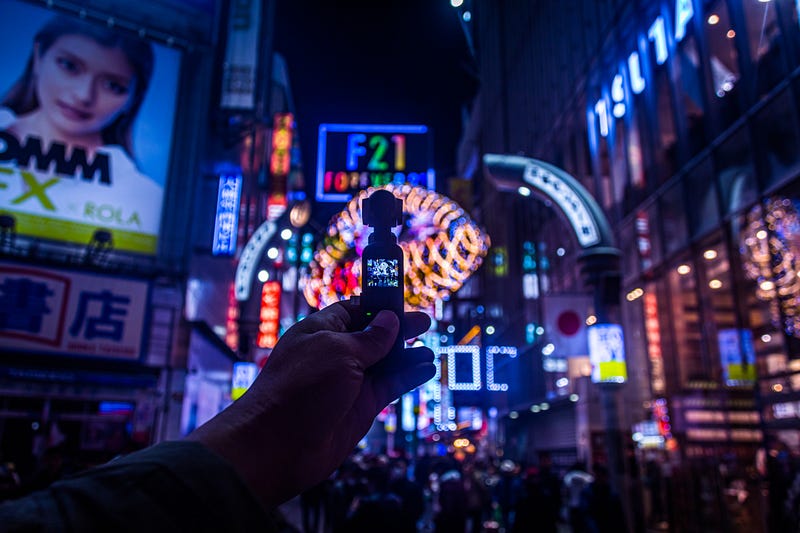
An interesting feature of the present is that we’re all time travelers now. I can’t believe we’ve spent over two entire years like this. None of us can. I’m hardly the first to point it out, but the “Tiger King” phase of Corona feels as though it was a decade ago. Vigorously wiping down all of our food and groceries with disinfectant wipes feels like a distant memory. They feel like memories from a different world, from this very brief limbo period when it was okay not to be okay. Maybe I just imagined it; it didn’t last for very long.
But 7.7 billion routines were all upended simultaneously. It felt like walking into a brave new world. It felt different enough for us to maybe, finally, transcend the ills of our old world. It’s ironic that a pandemic could do that to us. It was painful growing to accept that little of it could last — little besides our inflated prices, our heightened neuroses, and an over-saturation of the N-95 masks that conceal the few smiles we have left. The tombstones are here to stay as well; we’ve surpassed one million. It’s all a standard part of our routine now.
What felt in March of 2020 like something we could never grow used to had worked its way into our scheduled programming by about May. The foolhardy resistance to accepting new normals was chipped away rapidly. At about three months in it was replaced almost entirely by a hard-wrought and begrudging acceptance of the new realities we’re all still contending with today. We were united in our fears before we were divided by our hostilities.
Now, all of the masks and anxieties and hostilities and defeat is just background noise to a routine so standard we can hardly even complain about it. The rat race continued as though it never even stopped and reminds us of what it is to be American. We’re too numb and driven to sit down and reflect on everything that’s happened — everything that’s changed. Are our distractions really alluring enough for so many of us to keep pretending that what we’re living through is normal? Do I need to start using Tiktok?
But there are some good things that have come out of the past couple of years. An article from businessinsider.com reported on one study that found that over 90% of people who’d switched jobs during the pandemic did so because “life is too short to stay in a job they weren’t passionate about.” If there’s anything I’ve learned from the pandemic it’s that life is too short for a lot of things. It’s too short to work ourselves to death; it’s too short not to spend it with the people we love and, on good days, I’ll even understand that it’s too short to worry what others think.
I saw a quote from J.D. Sallinger recently that really stuck with me. “I’m sick and tired of not having the courage to be an absolute nobody.” And I am. If part of being somebody is losing ourselves to the sad cycles of adulthood then I’m not sure it’s something I want. I’m not sure why so many of us still do. If most of us are such ‘busy adults’ that even spending time together demands a careful syncing of calendars, then I think I’d rather just go back to the playground and play tag.
The pandemic made the transition into these grinding ruts of our adult lives disconcertingly seamless. I try to rise above the fray but it’s hard to stay there for very long when I remember that existing costs money — I can only imagine the ways we’d be spending our lives if it didn’t.
Always when I pictured the future, there was a loftiness to it. I expected there to be a clear delineation, that I’d reach a certain point in time and simply accept that the future was now my home. I expected there to be some clear dividing line, some extremes so extreme that I’d be forced to accept it. Surely the Jetsons knew they were living in the future, right?
But the present is so exhaustively intricate, each facet so uncompromisingly unusual that, even while we have phones that unlock with our faces, it’s impossible for us to accept that the future is the place we now inhabit. We get lost in the details. We miss the forest for the trees. We see Nathan Apodaca going viral for skateboarding to work with a bottle of cranberry juice in hand and a well-picked Fleetwood Mac song and… the humanity of it is oddly centering.
Social media is strange. I saw a Facebook post… of a screen grab… from (bear with me) the Twitter account @JoushuaPotash that read “the future is a very weird place. Ukrainians are uploading videos on TikTok about how to drive abandoned or captured Russian military vehicles.” This isn’t how I imagined the beginning of World War III. But somehow, a more realistic approach wouldn’t have felt quite as realistic.
“It’s crazy that there is a livestream of a burning nuclear power plant in a battlefield between two major European countries, but before you can see it you have to watch a Dominos ad,” commented Reddit user Algoresball.
Sometimes it seems that baked into the very fabric of our generation is this light and capricious understanding of how doomed we all may be. “We all deserve Oscars for our stunning performances as high-functioning humans in a crumbling society,” tweeted NotNikyatu. It’s not that we don’t understand what we’re living through, it’s just that to function at all sometimes demands that we forget about it… or at least pretend we do.
This must not be the future… so many of our friends and family members have made it here with us; it all feels believable enough for us to turn a blind eye to our strange world of Tiktok stars, cryptocurrencies, and Prime deliveries. Taken at face value, these certainly sound like the hallmarks of some futuristic quasi-dystopia. But that I can take out the infinite information machine in my pocket and discuss these ideas over FaceTime with the people that make Planet Earth feel like a home — that brings me back — even in spite of the fact that so many of the most sci-fi ideas I spent my elementary school career staring out of a window and day-dreaming about have worked their way into our hardened normality.
We’re an odd species. We’re unique in our understanding of the universe. We’re the only species on Earth that has such an evolved conception of self and we’re the only species saddled with an awareness of our cosmic insignificance. It’s a burden that goes unspoken.
Our galaxy soars through a boundless void at 1.3 million miles per hour.
Our solar system travels at 448 thousand miles per hour through it.
Planet Earth travels at 67,000 miles per hour through that while spinning on its axis at a velocity of one thousand miles per hour.
We have ways of determining with relative precision the age of the universe itself, locating the moment in time when something replaced nothing. (It’s 13.813±0.038 billion years old, according to Wikipedia.) It would take light 93 billion years to travel from one end of our universe to the other and, from what we can tell, most of that space in between is stark and lifeless.
These glimpses into our fundamental aloneness demand trigger warnings that aren’t afforded to us in Morgan Freeman’s soothing narrations about collapsing supernovas, or in our field trips to the museum and planetarium where we’re introduced to the all-consuming black holes that replace them.
But that we go about our lives uninterrupted as we grow to understand our place in the universe just shows that there’s nothing at all we can’t grow used to. What an incredibly fascinating idea it is to be on the other side of this great evolution experiment, to be the humans advanced enough to either destroy ourselves instantly in a war-torn cloud of atomic ash or to build spaceships and leave our atmosphere, to plan seriously for the habitation of other worlds!
It almost seems silly now to think we’d let a pandemic faze us. We’ve doordashed, drive-thru tested and laggy Zoom meeting’d our way through this storm and it’s been — beautiful in an odd sort of way. Coronavirus didn’t anticipate a foe like our modern world. We’ve still gotten to see our loved ones, but not without stark interruptions. The one-up contests of our Instagram feeds have glossed conveniently over a lot of the darker days of these past couple of years for us. In spite of everything, though, our ability to post graduations and concerts and dates and a world largely unaffected by all the turmoil surrounding us reflects an admiring resilience.
When I picture the 1918 pandemic, I imagine a world simply mired in its grief — suspended, isolated, and diseased. It’s strange to think that even in the midst of today’s pandemic, that we haven’t been prevented from making new memories — that we can still find ourselves surrounded by so much culture, art, and life. And if these are what our bad days look like, then maybe there’s still a future worth looking forward to… after all, what if it’s in our lifetimes that we leave Planet Earth?
What if it’s in our lifetimes that we unravel the mysteries behind our dreams? Behind consciousness? Will we be the first generation to begin uploading our minds to the cloud, backing up our most important memories and deleting our most painful ones? Will we transcend our age-addled bodies and upload our minds into new ones? Will we prevail over our changing climate or succumb to it? These questions fall squarely on us to answer, and their answers will change what it means to exist. That it’s these grand questions that provide the context to our lives is one of the most privileged burdens that could be imagined. It’s quite a load to bear.
Turning inward is a reasoned response to an honest look at the world around us; we’re blameless in our need to numb ourselves. We’re sitting at the doorstep of terrifying unknowns — exhilarating unknowns. It’s not because of weakness that we spend so much of our time scrolling through social media and rewatching The Office — the times we’re living in often do necessitate escape. Our present realities are formidable and the decisions we’ll ultimately face are incomparable. What a time to be alive!


