
Lighting Our Own Hearth
The feminist lesson of fairy tales that we too often forget.
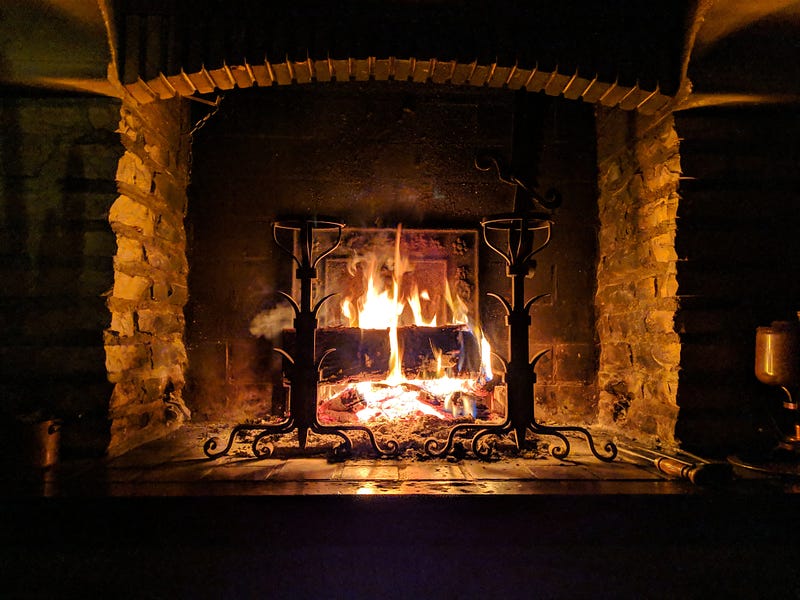
If you ask women what they remember most about the fairy tales they heard growing up, they will likely answer you by saying, “They all lived happily ever after.” The princesses, once the abused maidens of their household, in charge of tending the hearths, married their princes and rode off together into the sunset, to a castle in the hills where they never had to sweep out a fireplace or sleep near the embers again.
From hearth to hearth we remember these symbolic journeys, these transformations, and it stokes the flames within us to tend our own happy hearth that will warm our homes, partners, and children.
There is, however, an entire chapter missing from these memories. No, more than a chapter — most of the plot. The heroine in these stories does not journey from her family’s cruel hearth to her husband’s sovereign one. She has to travel through the underworld, first, a journey that forces her to own her power, to light her own hearth.
The princesses, once the abused maidens of their household… married their princes and rode off together into the sunset...
Cinderella, whose name is a play on “girl from the cinders” (or, in French, Cendrillon, “of the ashes”) literally spent her childhood on the floor of her house, in front of her family’s hearth. Her cruel stepsisters named her Cinderella because she was always covered in soot from the fireplace.
In order to escape from her enslavement to someone else’s hearth and claim her own, she had to find the identity that she lost when her father died. This required her to first reacquaint herself with that identity, which gave her just enough power to play the role of “lady of means” (i.e. a woman with the power to create the life she wants) and catch the attention of the prince.
Later in the story, she had to step forward, voluntarily leaving her dismal but comfortable servitude, in order to declare herself as the owner of the lost slipper and take her place of power (no longer just playing a role), beside the prince.
The Handless Maiden made a similar, albeit more violent, journey when she was forced by the devil to leave the comfort of her family home, helpless, handless, hopeless. She wandered the woods (the underworld), relying on the kindness of strangers and magical benefactors to help her survive, facing her fears all on her own.
Eventually, after finding the strength to stand on her own two feet, she became the prince’s bride, taking on her own household, her own hearth, healing into wholeness with the help of the silver hands he made for her.
Some stories, however, are much more literal in describing the necessary journey into the underworld in order to retrieve the fire we need to light our own hearths. One of my favorites is the Russian folktale, Vasalisa. The young, titular heroine starts out in circumstances much like Cinderella’s — enslaved by her stepmother and stepsisters, dirty and ragged, sleeping on the floor in front of the fireplace.
Eventually, after finding the strength to stand on her own two feet, she became the prince’s bride, taking on her own household, her own hearth, healing into wholeness…
One day, however, the fire goes out — and we all know that when the hearth darkens, the life inside the house will wither away soon after.
Vasalisa’s stepmother sends her into the deep, dark woods in order to retrieve an ember that will relight the fire from the evil witch, Baba Yaga. It is evident that there’s no more terrifying task for a young woman to undertake than this.
Vasalisa brings with her a spiritual companion — a doll given to her by her mother who guides her through the woods, preventing her from becoming lost in the twisting, turning pathways.
When Vasalisa reaches the house that sits not on a foundation, but on chicken legs, surrounded by a fence made of spinal columns, Baba Yaga gives her a series of menial tasks to complete — sorting through piles of seeds, for instance.
Eventually, Vasalisa’s courage and tenacity prove her to be a worthy recipient of the precious ember, which Vasalisa carries home, proudly. When she arrives, this ember burns her stepmother and stepsisters into a pile of ash, leaving Vasalisa as the head of the household. She earned the ember, after all — she is now the rightful keeper of the hearth.
Modern culture doesn’t recognize the necessity of journeying through the underworld in order to retrieve the ember that will light our hearthfire. We too often sustain ourselves with passive princess dreams of early marriages, bountiful wombs, and hearths that belong to our partners and promise to warm and protect our domestic bliss.
Hearths, however, must be earned. We know instinctively that we cannot live off the light and warmth of our family of origin’s hearth. We must create our own.
Similarly, we cannot live off the light and warmth of our partner’s hearth, either. We have to bring our own hearth to our unions.
We too often sustain ourselves with passive princess dreams of early marriages, bountiful wombs, and hearths that belong to our partners and promise to warm and protect our domestic bliss.
The hearth is a symbol of our rootedness and self-sufficiency in the physical world. Trying to avoid the hardships of our journey by grasping for someone else’s hearth often leaves us with a fire that eventually dies. No matter what, we will have to go into the forest and retrieve the ember from Baba Yaga. Only then can we light and sustain our own hearths.
And that — not living happily ever after — is the greatest gift we can give to ourselves.
© Yael Wolfe 2020


