
CULTURE
Life Lessons From the Illiterate Poets of Brazil
Modern writers have a lot to learn from the oral literary tradition

People often come to me saying they want to write but can’t. It’s not that they don’t have time. Their “can’t” comes from the fear of not being good enough — the insecurity of not knowing enough grammar or not having enough vocabulary.
I’ve so far managed to convince a few to start writing simply by telling them that most of my literary gurus are illiterate. “What??” They exclaim in disbelief.
Yes, when I started to write in adolescence, my major influences were popular poets from Brazil.
Many of these poets, especially the early ones, were and some still are illiterate. Yet, they produce some of the most beautiful poems I’ve ever seen, in shape and form that makes envious even the most erudite of Literary Academy members.
A Bit of History of Oral Literary Tradition
Not much is known or discussed these days about oral literary tradition, but it’s worth noting that two of the world’s most famous poems pre-date the invention of the alphabet.
Iliad and Odyssey were passed down through generations of oral poets, also known as aoidos, meaning “singers”, until they were, presumably, first transcribed from Homer, around 800 BC.
Literacy levels remained extremely low throughout the Roman Empire and medieval Europe, ranging between 10 and 25% at best. So the Greek oral tradition traveled west as the main storytelling venue for illiterate folks.
Some of these “singers” made their way across the Atlantic during the colonization years. In Brazil, they are called “repentistas.”
Life Lessons From a Repentista
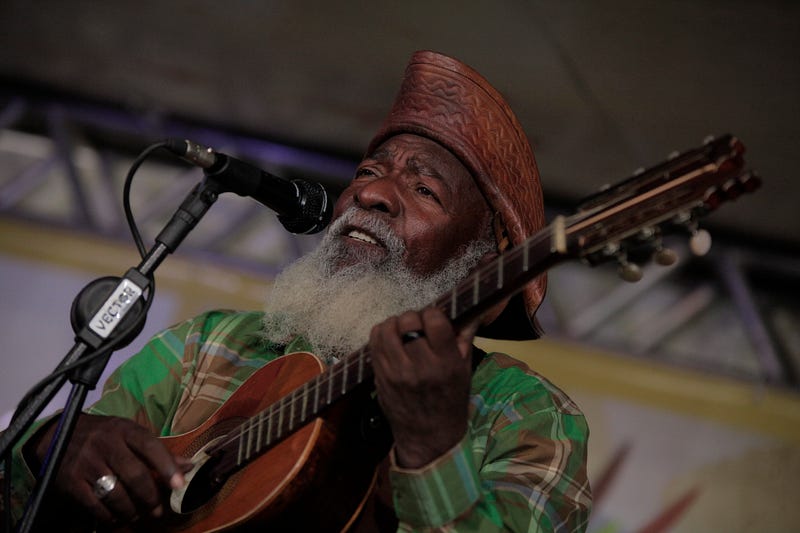
Some years ago, Leonardo Bastião’s neighbor bought a camera and started recording his oral poems. They were recently put together in a short documentary on YouTube.
Bastião is only one of the hundreds of unknown poets in his small town of Pajeú, in the dryland region of the state of Pernambuco. All quotes below are from him and accompanied by my own translations and commentary.
On Nature
Tudo que o homem estudou Pra natureza foi pouco Que ele não faz um coqueiro Se inventar fica louco Caçando a encanação Que leva a água do chão Pra dentro do coco
(Translation)
Everything man has studied Become too little when compared to nature Man would go crazy If they try to recreate the plumbing To bring water into a coconut from the ground
Nature is Bastião’s main inspiration. In the poem, Bastião says though man studied everything, it becomes little compared to the mystery of nature. For example, a man cannot make a coconut tree.
“I look at what’s around me, and a verse comes,” he says during the documentary.
His poem above is a simple and beautiful reminder that nature provides everything that man needs, and if we destroy it, we will never be able to replicate it.
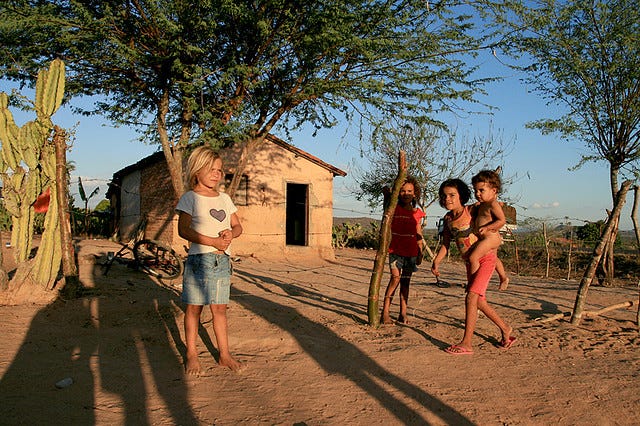
Bastião, like most people in his region, survives from what he grows in his land in the Brazilian Sertão. What was once fertile land has now descended into extreme poverty as it turns into a desert because of the deforestation in the adjacent Amazon region.
O Sertão não presta mais Mas ele só ficou ruim Depois que o homem deu fim A mata e aos animais O chão foi ficando enxuto E a terra negando fruto E o corpo passando fome E quem destruiu a beleza Não deu fé que a natureza Tá se vingando do homem
(Translation)
The Sertão is no longer good As man destroyed the forest and animals And now it turned bad The ground is getting dry The earth is denying fruits And the body starts to starve Those who destroyed beauty lacked the faith That Nature would turn against man

On Solitude
Passo o dia aqui sozinho No Rancho da Solidão Não tem quem faça comida E eu fico olhando o fogão E vendo as manchas do passado Da mesma cor do carvão
E quando passa a ilusão Parece que o tempo avoa A velhice abre ferida No coração da pessoa E se for lembrar do passado Fica pior que amagoa
(Translation)
I spend the entire day alone in Solitude Ranch There’s no one else to make the food So I stare at the stove Watching the stains from the past The same color as the coal
And when the illusion fades Time seems to fly Old age opens wounds in a person’s heart And as he remembers the past, It gets worse, it hurts.
Who said we need school to learn figures of speech, ay?
My translations really did not do justice to the poetry. I apologize. The metric and form from the poems above are impeccable. It’s hard to believe that they come from a man who has never read a book in his life. But they do.
Oral poetry in Brazil is called repente, which translates as “sudden,” or “outburst,” or an “explosion.” It is an eruption of creativity coming straight from the inside.
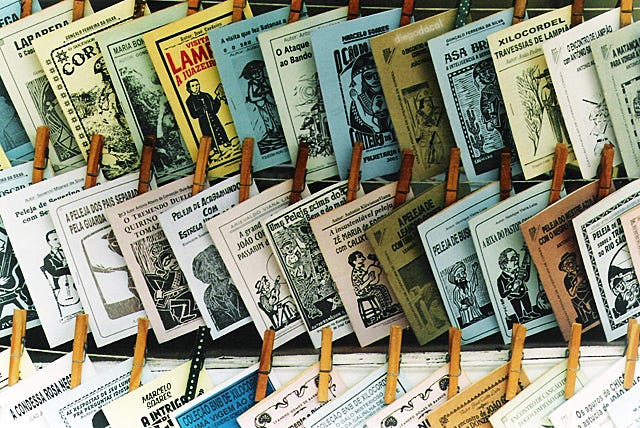
The verses are usually in 7 syllables, called a redondilha or round. Repentes are sometimes registered in small homemade booklets called Cordel. The cover always features a xylogravure or woodcut printing.
On Writing
“Pra fazer verso não carece fazer estudo, não. As vezes fica errado mas eu também não vivo de cantoria. Se errar tanto faz.”
“To create verses, we don’t need to study, no. Sometimes it may be wrong, but I don’t make a living from singing. If it’s wrong, it doesn’t matter.”
It is perhaps the main ingredient of our poets’ creativity: They don’t make money from poetry, and they don’t intend to. They make poetry out of love.
Bastião says in the documentary that he doesn’t even consider himself a poet. He just takes “a ride” in nature’s affairs, the creations from God. No matter how poor he becomes, he would never play the lottery — he said. Because he would be scared of winning, and his life would be over.
Oral Tradition Accidentally Goes Viral on YouTube
When Bastião’s neighbor first started recording him, he had strict instructions from the poet not to make it public. The neighbor, who was 57 at the time, promised he would record it only for himself as a memory.
Not knowing anything about computers or the internet, he heard from a friend that he could “save” the videos on YouTube and that he’d have a password with which only he could access his account.
So, he uploaded his videos and typed in the numbers 1, 2, and 3 as the titles. No metadata or SEO whatsoever.
Around 05 years later, when he checked his account, he discovered that the videos had millions of views.
He was surprised, and although the money he made so far from the videos was not a lot, it was enough to repair Bastião’s house in the Sertão.
Takeaways
You can write, even if you don’t know how to write. Write out of love keeping in mind that great content finds its audience (even without trying).
And most importantly, have a firm belief that man is nothing without nature. So, have a good connection with the natural world.
Thank you for reading.
If you are interested to read more of my writings, you may read the following one published in The Masterpiece.