avatarDaniele Ihns

Free AI web copilot to create summaries, insights and extended knowledge, download it at here

3608

Abstract

peared in the Holy City of Jericho. The “<a href="https://en.wikipedia.org/wiki/Plastered_human_skulls">Jericho Skulls</a>” were decorated human skulls, believed to be our first attempt at representing a continuation of life after death. It was an icon of reassurance.</p><p id="1bf0">Mummifications, burial grounds, and the novel you’re working on all have this one thing in common: The underlying intention to reassure us of the continuation of life after death, the powerful concept of the afterlife, in the form of remembrance.</p><p id="8d5c">Humans are fascinated with legacy, be it in the shape of a literary masterpiece or the cure for a disease, or simply having children. <b>It guarantees that your name, or genes, will transcend death and be carried into eternity.</b></p><figure id="db80"><img src="https://cdn-images-1.readmedium.com/v2/resize:fit:800/1*LLbInJ4mxTVnBkimkhd-XA.jpeg"><figcaption>Plaster skulls on exhibition at the Israel Museum, Jerusalem. Image Credit: <a href="https://www.flickr.com/photos/101561334@N08/28346956557/">Gary Todd</a>.</figcaption></figure><h2 id="ef8d">Manipulation</h2><p id="e75e">Symbols of death have been used to manipulate people into behaving in one way or another throughout history. It’s no coincidence that during the Nazi era, the SS adopted the Totenkopf, or Death’s Head, as its symbol and wore it as an emblem on their hats.</p><blockquote id="479b"><p><b><i>Reminding people of their own deaths is the quickest path to submission.</i></b></p></blockquote><p id="2a13">Much earlier than that, the pre-Columbian civilizations in Central and South America had already figured it out and performed human sacrifices on an industrial scale. They built walls of human skulls that were designed not to reassure but to frighten and instill loyalty and obedience to their leaders.</p><p id="90e1">The exploitation of the fear of death for manipulation purposes is very well and alive today. You just have to look around, and you’ll see it everywhere. It’s the manipulation mechanism used by terrorists, tabloids, and warmongers.</p><p id="28da">Its ultimate outcome is the limitation of our freedoms. We should all be aware of where and how it’s being applied to avoid falling into its traps.</p><figure id="1050"><img src="https://cdn-images-1.readmedium.com/v2/resize:fit:800/1*YP_oBdimkDs_OYVAM_1LYQ.jpeg"><figcaption>SS Uniform Hat at the Norwegian Armed Forces Museum. Source <a href="https://commons.wikimedia.org/wiki/File:German_SS_uniform._Peaked_visor_cap_with_skull_emblem_(Totenkopf)._Norwegian_Armed_Forces_Museum_(Forsvarsmuseet)_Oslo,_Norway_2019-03-31_DSC01647.jpg">Wikipedia</a>.</figcaption></figure><h2 id="639d">Redemption</h2><p id="5963">The Etruscans, an ancient civilization from pre-Rome Italy, were the first to invent the notion of heaven and hell. And in doing so, they were also the first to give meaning to another powerful death-related concept: <b>redemption</b>.</p><p id="bffb">Before the rise of the Roman empire, Etruscan tombs were a place of reassurance. They resembled cozy homes where the dead could rest for eternity.</p><blockquote id="dc90"><p><b><i>As soon as their civilization started to be threatened by the Romans, Etruscan leaders had to find a way to motivate soldiers to fight back — even though their chances of survival were minimal.</i></b></p></blockquote><p id="8910">They did it by creating an image of a demon who would torture the men who failed to fight. These images of demons and hell started to appear in their tombs dated from around the time of the rise of the Roman Empire.</p><p id="ee69">

Options

Those who fought, on the other hand, would be saved from evil, or redeemed, and given a direct pass to heaven for a comfortable afterlife.</p><p id="d41f">The Romans realized the power of this new concept, a mixture of reassurance and fear, and brought it into the Catholic Church. The image of Jesus on a cross is the ultimate and most widespread reminder of death in Western culture and also a symbol of redemption.</p><p id="c024">The concept of redemption can have positive and negative outcomes. It can be a great reminder that we should acknowledge and take responsibility for our actions and seek forgiveness.</p><blockquote id="0878"><p><b><i>But it can also be used for fear and manipulation purposes in the hands of opportunistic leaders.</i></b></p></blockquote><figure id="342a"><img src="https://cdn-images-1.readmedium.com/v2/resize:fit:800/1*Hum5pG5s5od970mvO-tSuQ.jpeg"><figcaption>Statue of Christ the Redeemer, in Rio de Janeiro. Photo by <a href="https://unsplash.com/@rissi?utm_source=unsplash&amp;utm_medium=referral&amp;utm_content=creditCopyText">Gabriel Rissi</a> on <a href="https://unsplash.com/s/photos/christ-the-redeemer?utm_source=unsplash&amp;utm_medium=referral&amp;utm_content=creditCopyText">Unsplash</a></figcaption></figure><h2 id="90c7">An Alternative to Fear</h2><p id="0f36">While an animal will fear its death when it’s in imminent danger, humans conceptualize and fear death even in an environment of safety, causing a lot of unnecessary anxiety.</p><p id="db9b">An animal’s fear-instinct is practical and built in to save its life. Our conceptual fear of death, most of the time, serves us no purpose.</p><p id="caf6">Ideally, we should be able to acknowledge our mortal condition and use it as a source of inspiration, without fear. But how?</p><h2 id="7531">Back to the Graffiti</h2><p id="1f42">Let’s get back to our philosophical vandal, who drew the graffiti from my childhood. Why fear if the future is death?</p><p id="50c5">Maybe he read Epicurus? “If I am, death is not. If death is, I am not. So why fear something that can only exist when I do not.”</p><p id="9c35">Since those early childhood days, when the fear of death took over my peace of mind, the message from this graffiti has helped me cope with it. The message it carries is an important one:<b> fear is an option</b>.</p><p id="0612"><b>Only with this freedom can we dare to live life to the full.</b></p><p id="3c1c">This brings me to my next favorite childhood quote:</p><p id="35b5" type="7">“ Those who almost die are still alive but those who almost live are already dead.”</p><p id="fb95">Unfortunately, I don’t know where I heard it from. If you know it, please drop it in the comments.</p><p id="213e"><b><i>Thank you for reading.</i></b></p><p id="7694">If you are interested to read more of my writings, you may read the following one published in <a href="https://readmedium.com/the-masterpiece-submission-requirements-5fdafb3a0446">The Masterpiece</a>.</p><div id="c513" class="link-block"> <a href="https://readmedium.com/it-sucks-to-be-in-the-shadow-4d7d674d1bb2"> <div> <div> <h2>It Sucks to Be in the Shadow</h2> <div><h3>Notes from an anonymous conversation with a chronically depressed man</h3></div> <div><p>medium.com</p></div> </div> <div> <div style="background-image: url(https://miro.readmedium.com/v2/resize:fit:320/1*fFi2XNm5ggfuevQ-YhKOpw.jpeg)"></div> </div> </div> </a> </div></article></body>

CULTURE

Why Fear if the Future Is Death?

How understanding the fear of death can lead to a better life

Photo by Mathew MacQuarrie on Unsplash

When I was a child, on my way to school, there was one badly drawn graffiti on a wall with the words: Why fear if the future is death?’ I looked at it every day, and it made me wonder.

At the time, I was only 05 years old, but death was around me. My mother’s cousin had a car crash and died with his 10-year-old son. They were our neighbors.

A few months after that, his wife died of a rare form of heart cancer. Probably brought about by the emotional pain, I thought, or maybe my mother said it, and I agreed. Their youngest son became an orphan and moved in with us temporarily.

Fear of Death

I was scared. I feared that my parents could also die soon. Or I could die, and they would be sad. I didn’t want that to happen.

Throughout my school years, for at least 10 years after that, that graffiti stayed there. It was my daily reminder of our inevitable mortality. And each time, it made me think of something different.

I imagined the person who wrote it. It was probably a kid from the favela, a young drug dealer trying to convince himself that the risks of a criminal life were worth taking.

I thought about my own life. How was I most likely to die? I was scared of robbers and lost bullets. It’s the sad reality of growing up in Rio.

I never spoke to my parents about these fears. In Rio, people don’t. We are taught to adopt a very blase attitude towards the violence that surrounds us. We make fun of it. It’s our way to cope with the stress of living in one of the most dangerous cities in the world.

Whether through humor, horror, or healing, throughout history, our ancestors have created powerful symbols to negotiate our fear of death. The understanding of their messages can help us cope with our fears today.

Understanding Our Symbols of Death

Fast forward a few years, I had moved to Wales, a much safer place, and was studying Cultural Criticism at Cardiff University.

We had a module called “Fear,” where we studied in depth the cultural importance and manifestations of the fear of death.

We, humans, are the only animals who can think conceptually about our own deaths and understand its inevitability. Death is our only certainty, and yet, it remains the ultimate unknown.

We all know we are going to die, but we can’t know how or when, or what it will feel like because no one has yet been able to return from death to give us a firsthand account of the experience.

Humans are afraid to die, period. And this fear has produced a wide range of cultural symbols, with the most varied underlying intentions, some positive and some quite sinister.

Reassurance

Archeologists believe that the first cultural representation of death appeared in the Holy City of Jericho. The “Jericho Skulls” were decorated human skulls, believed to be our first attempt at representing a continuation of life after death. It was an icon of reassurance.

Mummifications, burial grounds, and the novel you’re working on all have this one thing in common: The underlying intention to reassure us of the continuation of life after death, the powerful concept of the afterlife, in the form of remembrance.

Humans are fascinated with legacy, be it in the shape of a literary masterpiece or the cure for a disease, or simply having children. It guarantees that your name, or genes, will transcend death and be carried into eternity.
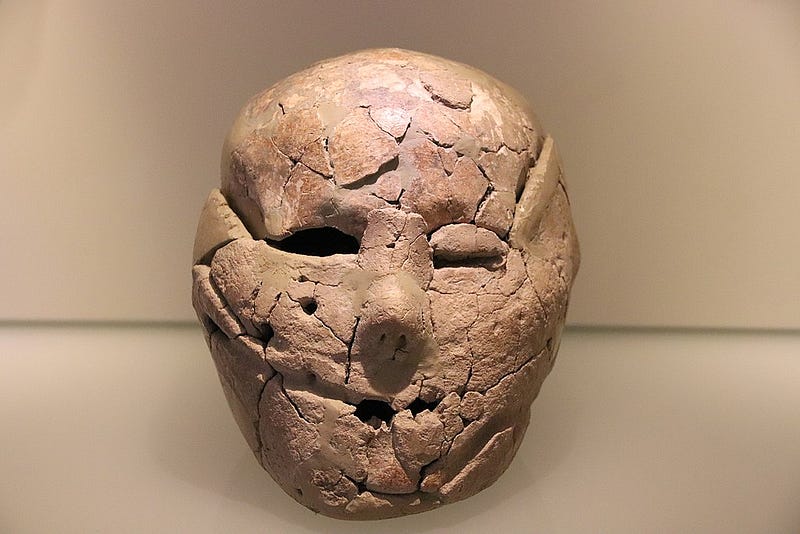
Plaster skulls on exhibition at the Israel Museum, Jerusalem. Image Credit: Gary Todd.

Manipulation

Symbols of death have been used to manipulate people into behaving in one way or another throughout history. It’s no coincidence that during the Nazi era, the SS adopted the Totenkopf, or Death’s Head, as its symbol and wore it as an emblem on their hats.

Reminding people of their own deaths is the quickest path to submission.

Much earlier than that, the pre-Columbian civilizations in Central and South America had already figured it out and performed human sacrifices on an industrial scale. They built walls of human skulls that were designed not to reassure but to frighten and instill loyalty and obedience to their leaders.

The exploitation of the fear of death for manipulation purposes is very well and alive today. You just have to look around, and you’ll see it everywhere. It’s the manipulation mechanism used by terrorists, tabloids, and warmongers.

Its ultimate outcome is the limitation of our freedoms. We should all be aware of where and how it’s being applied to avoid falling into its traps.
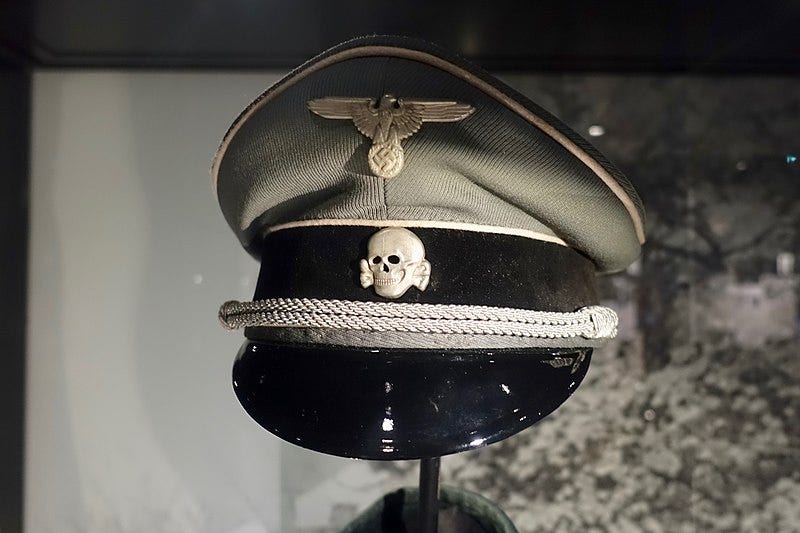
SS Uniform Hat at the Norwegian Armed Forces Museum. Source Wikipedia.

Redemption

The Etruscans, an ancient civilization from pre-Rome Italy, were the first to invent the notion of heaven and hell. And in doing so, they were also the first to give meaning to another powerful death-related concept: redemption.

Before the rise of the Roman empire, Etruscan tombs were a place of reassurance. They resembled cozy homes where the dead could rest for eternity.

As soon as their civilization started to be threatened by the Romans, Etruscan leaders had to find a way to motivate soldiers to fight back — even though their chances of survival were minimal.

They did it by creating an image of a demon who would torture the men who failed to fight. These images of demons and hell started to appear in their tombs dated from around the time of the rise of the Roman Empire.

Those who fought, on the other hand, would be saved from evil, or redeemed, and given a direct pass to heaven for a comfortable afterlife.

The Romans realized the power of this new concept, a mixture of reassurance and fear, and brought it into the Catholic Church. The image of Jesus on a cross is the ultimate and most widespread reminder of death in Western culture and also a symbol of redemption.

The concept of redemption can have positive and negative outcomes. It can be a great reminder that we should acknowledge and take responsibility for our actions and seek forgiveness.

But it can also be used for fear and manipulation purposes in the hands of opportunistic leaders.
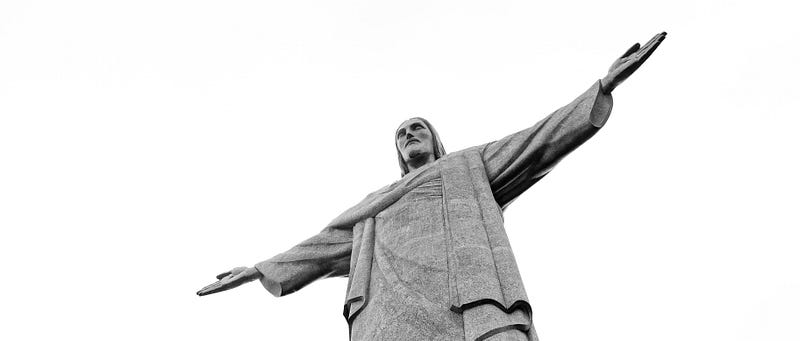
Statue of Christ the Redeemer, in Rio de Janeiro. Photo by Gabriel Rissi on Unsplash

An Alternative to Fear

While an animal will fear its death when it’s in imminent danger, humans conceptualize and fear death even in an environment of safety, causing a lot of unnecessary anxiety.

An animal’s fear-instinct is practical and built in to save its life. Our conceptual fear of death, most of the time, serves us no purpose.

Ideally, we should be able to acknowledge our mortal condition and use it as a source of inspiration, without fear. But how?

Back to the Graffiti

Let’s get back to our philosophical vandal, who drew the graffiti from my childhood. Why fear if the future is death?

Maybe he read Epicurus? “If I am, death is not. If death is, I am not. So why fear something that can only exist when I do not.”

Since those early childhood days, when the fear of death took over my peace of mind, the message from this graffiti has helped me cope with it. The message it carries is an important one: fear is an option.

Only with this freedom can we dare to live life to the full.

This brings me to my next favorite childhood quote:

“ Those who almost die are still alive but those who almost live are already dead.”

Unfortunately, I don’t know where I heard it from. If you know it, please drop it in the comments.

Thank you for reading.

If you are interested to read more of my writings, you may read the following one published in The Masterpiece.

Self-awareness
Death
The Masterpiece
History
Life
Recommended from ReadMedium